Placing mint in pots near your door is a smart way to naturally deter pests like ants, mosquitoes, and flies, thanks to its strong scent that pests dislike. Mint acts as a natural barrier, repelling insects before they enter your home, and is eco-friendly, safe for kids and pets. Using containers keeps the mint manageable and prevents overgrowth. To discover effective tips on maximizing your pest control strategy with mint, continue exploring how you can benefit more.
Key Takeaways
- Placing mint pots near doors creates a natural pest-repelling barrier using strong scents like menthol.
- Mint’s pest deterrent properties help keep ants, mosquitoes, and flies away from entry points.
- Container-grown mint prevents overgrowth, making maintenance easier and ensuring continuous pest control.
- Mint supports eco-friendly pest management without harming beneficial insects or using chemicals.
- Regular watering and strategic placement near doorways maximize mint’s effectiveness in pest prevention.
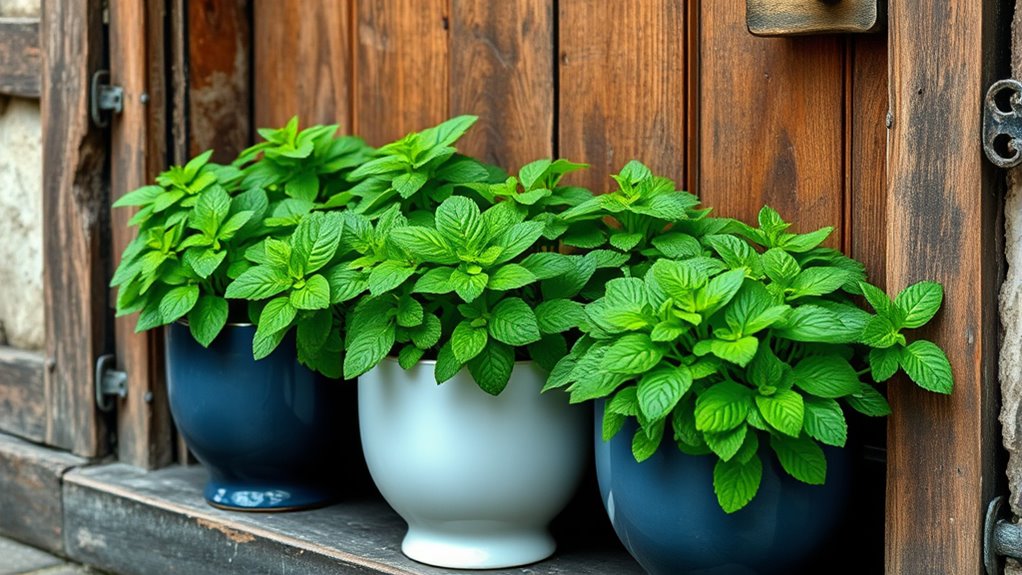
Mint in pots not only adds a fresh aroma to your space but also serves as a natural pest repellent. Placing mint near your doors is a smart move for pest management, especially when you consider companion planting and natural repellents. By growing mint in pots, you create a barrier that pests find unappealing, helping keep unwanted critters at bay. This method leverages the natural properties of mint, which contains compounds like menthol and pulegone that pests dislike, making it an effective and eco-friendly pest control solution.
When you position mint pots near your entrances, you’re fundamentally creating a protective zone. Pests such as ants, mosquitoes, flies, and even certain beetles tend to avoid mint because of its strong scent. This is where natural repellents come into play; mint acts as a plant-based deterrent that reduces the likelihood of pests sneaking inside. Unlike chemical repellents, mint in pots doesn’t pose health risks to children or pets, and it won’t harm beneficial insects like bees or ladybugs that help your garden thrive. It’s a sustainable solution you can rely on.
In addition to its pest-repelling qualities, mint is excellent for companion planting. When used strategically, it can enhance the growth of nearby plants by repelling pests that target specific crops. For example, planting mint near vegetables like tomatoes, peppers, or lettuce can help protect them from aphids and other common pests. You can place mint in decorative pots near your doorways or garden beds, creating a natural barrier that benefits your entire garden ecosystem. Just remember to keep mint in pots so it doesn’t take over your garden, as it’s known for its vigorous growth. Additionally, understanding the role of attention in creative practice can help you develop a mindful approach to maintaining your mint plants effectively.

Mighty Mint Peppermint Oil Plant Protection Spray – Insect & Pest Control for Gnats, Spider Mites & Aphids – Plant-Based, Easy-to-Use with Microfiber Cloth- 32 oz
- Plant-Based Pest Protection: Protects against gnats, mites, aphids
- Peppermint Oil Formula: Deters pests naturally with peppermint oil
- Safe for People and Pets: Safe when used as directed
As an affiliate, we earn on qualifying purchases.
As an affiliate, we earn on qualifying purchases.
Frequently Asked Questions
Can Mint in Pots Attract Any Harmful Insects Near Doors?
Yes, mint in pots near doors can attract pests, which may pose risks to indoor air quality and your home’s comfort. While mint repels some insects, it can also draw pests like aphids or ants if overgrown or neglected. To minimize pest attraction risks, keep mint well-maintained, avoid overwatering, and ensure good airflow. Proper care helps prevent pest buildup and keeps your indoor environment healthier.
Are There Specific Mint Varieties Better for Pest Control?
Some mint varieties, like spearmint and peppermint, are better for pest control effectiveness because their strong scents repel pests effectively. You should choose these varieties for your pots near doors, as they release powerful aromas that deter insects like ants and mosquitoes. Keep in mind, the pest control effectiveness varies with the mint type, so selecting the right variety can make a real difference in keeping pests away naturally.
How Often Should I Replace Mint in Pots for Pest Management?
You should replace your mint in pots every 6 to 12 months for pest management. Regularly check your watering schedule and guarantee proper soil maintenance, like replacing or revitalizing the soil when it becomes compacted or depleted of nutrients. This helps keep your mint healthy and pest-free. If you notice pests or disease signs, consider replacing the plant sooner to maintain an effective pest control barrier near your doors.
Will Mint in Pots Repel All Types of Pests?
Mint in pots can help with pest prevention, but it won’t repel all types of pests. Its strong scent deters many insects like ants and mosquitoes, especially when placed near doors. To maximize its effectiveness, you should carefully consider plant placement, ensuring mint is accessible to pests but not invasive. Keep in mind, combining mint with other pest management strategies will give you better overall protection against a variety of pests.
Is Mint Safe for Pets When Placed Near Doorways?
Mint near doorways isn’t completely safe for pets, so don’t assume it’s harmless. While mint itself is generally non-toxic, excessive consumption can cause upset stomachs or other health issues in some pets. You need to be cautious about pet safety and consider mint toxicity, especially if your animals tend to nibble on plants. To stay safe, keep mint out of your pets’ reach, and consult your vet if you’re unsure.
Conclusion
Placing mint in pots near your doors is a simple, natural way to keep pests away. Some might think it’s not enough, but mint’s strong scent effectively deters many bugs without chemicals. Plus, it’s easy to maintain and adds greenery to your entryway. So, give it a try—you’ll enjoy a pest-free space and fresh herbs. Don’t worry if it’s not perfect at first; with consistent care, mint becomes a reliable, natural pest barrier.