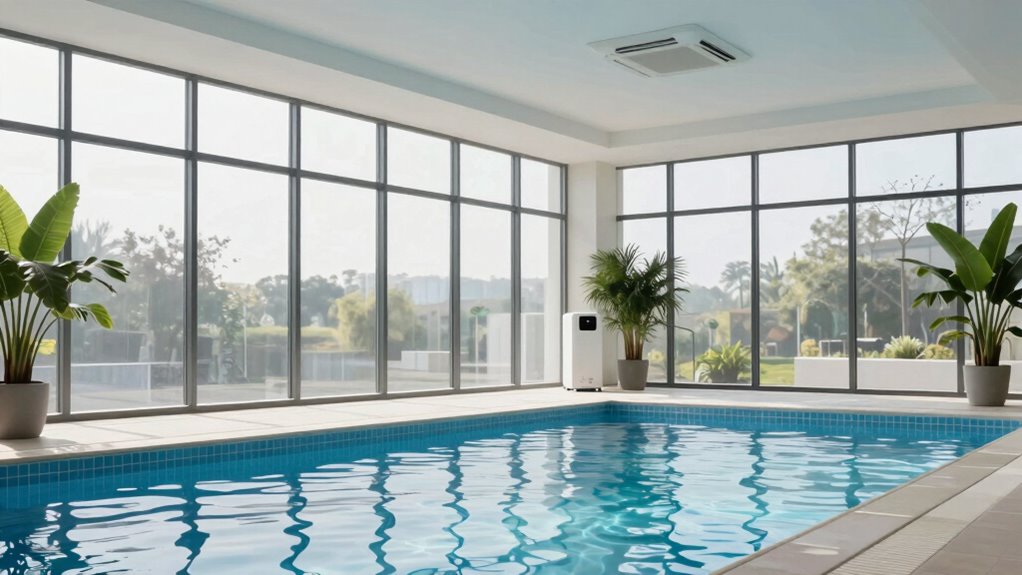

To improve air quality in your indoor pool room, focus on proper ventilation by using exhaust fans and opening windows, and combine natural with mechanical airflow. Control humidity with dehumidifiers and monitor levels regularly to prevent mold and odors. Manage chemicals carefully, keeping them properly stored and balanced, while using air purifiers with HEPA filters to trap contaminants. Keep filters maintained and airflow unobstructed. If you want to learn more tips to keep your indoor air fresh and healthy, keep exploring.
Key Takeaways
- Enhance ventilation with a mix of natural and mechanical systems to promote fresh air circulation.
- Use dehumidifiers and hygrometers to maintain optimal humidity levels and prevent mold growth.
- Install air purifiers with HEPA and carbon filters to remove airborne contaminants and odors.
- Regularly inspect and clean vents, filters, and ducts to ensure efficient airflow and air quality.
- Monitor chemical levels and ensure proper storage to reduce harmful fumes and maintain a safe environment.
indoor pool air purifier with HEPA filter
As an affiliate, we earn on qualifying purchases.
As an affiliate, we earn on qualifying purchases.
What Causes Poor Indoor Air Quality in Pool Rooms?
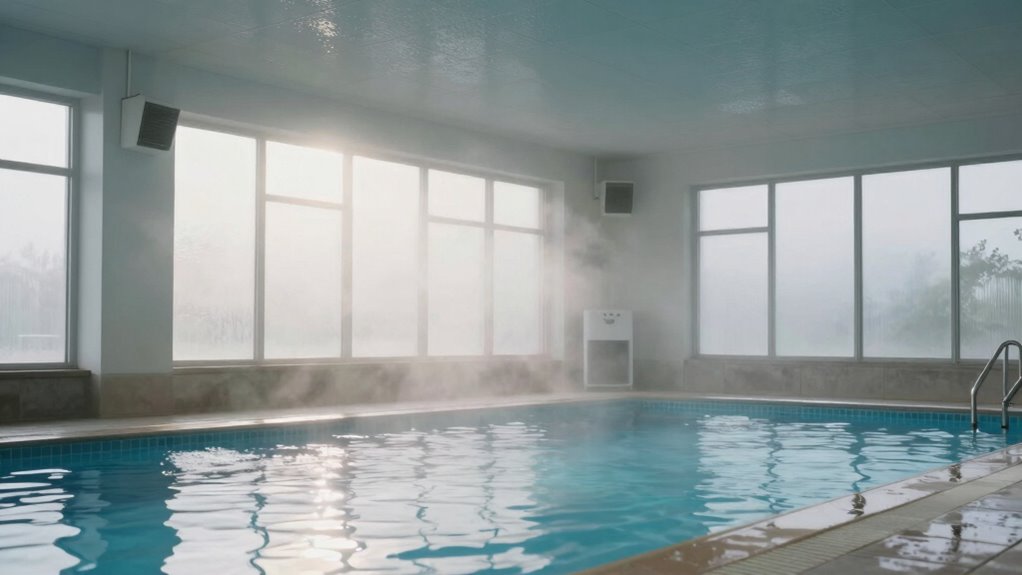
Poor indoor air quality in pool rooms often results from the combination of high humidity and inadequate ventilation. When humidity levels rise, moisture accumulates, creating a breeding ground for mold and bacteria. Poor air circulation prevents these pollutants from dispersing, allowing them to linger and worsen air quality. If your pool maintenance routines overlook proper humidity control or neglect regular cleaning, airborne contaminants can increase markedly. Additionally, many pool rooms lack proper cable safety measures, which can contribute to fire hazards that further compromise air quality. Insufficient ventilation means that harmful chemicals like chloramine fumes, which are released from pool chemicals reacting with organic matter, stay trapped indoors. Recognizing the signs of air quality issues can prompt timely interventions to improve the environment. To keep the air fresh and safe, you need to focus on improving pool maintenance practices that address moisture levels and assure adequate air circulation, reducing the buildup of airborne pollutants and creating a healthier indoor environment. Incorporating ventilation systems such as exhaust fans or air purifiers can significantly help remove airborne contaminants and improve overall air quality. Furthermore, employing regular cleaning routines can prevent the buildup of organic matter that reacts with chemicals, helping to maintain cleaner air and water quality without relying heavily on chemical treatments.
How to Effectively Ventilate Your Indoor Pool Area
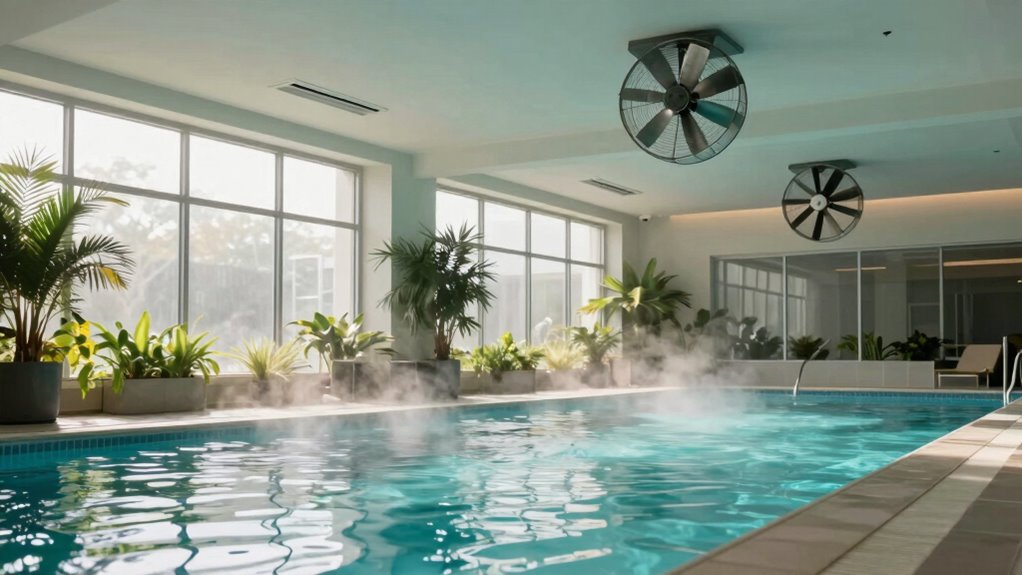
Effective ventilation is key to maintaining good indoor air quality in your pool area. Incorporate natural ventilation by opening windows or using vents to allow fresh air to flow in and stale air to escape. Good air circulation helps prevent the buildup of chloramine compounds and reduces airborne contaminants. Use exhaust fans strategically placed near the pool and bathroom areas to remove humid, contaminated air efficiently. Make sure these fans are properly vented outside to avoid recirculating moisture and pollutants. Combining natural ventilation with mechanical systems creates a balanced airflow, reducing odors and improving air quality. Regularly inspect and maintain your ventilation systems to keep them functioning at their best. Proper ventilation ensures a healthier environment for everyone using your indoor pool, especially when air quality management and exploring new solutions for better air quality. Additionally, implementing ventilation strategies that adapt to changing humidity levels can further enhance air exchange and comfort. Incorporating humidistat controls can help regulate moisture levels effectively and prevent excess humidity buildup. To optimize performance, consider integrating humidity control systems that automatically adjust ventilation based on real-time conditions.
Ways to Reduce Humidity and Control Moisture
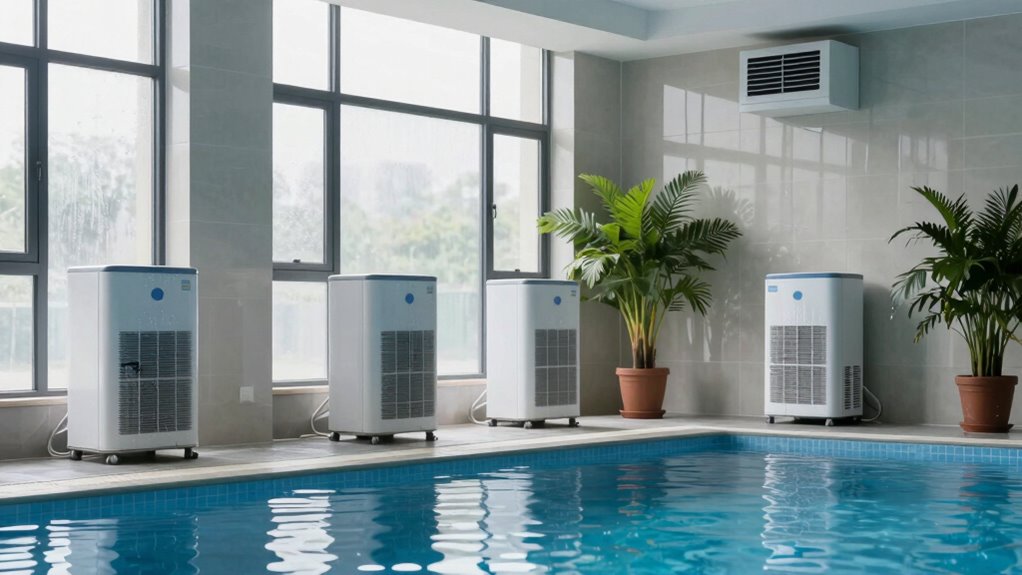
Controlling humidity levels in your indoor pool area is essential to prevent mold growth, reduce condensation, and improve air quality. Proper dehumidifier placement is key; position it where it can efficiently extract moisture from the air, such as near the pool’s humid zones but away from vents or obstructions. Regularly monitor humidity levels with a reliable hygrometer to guarantee they stay between 50-60%. If humidity rises above this range, increase dehumidifier settings or add additional units. Keeping moisture in check reduces condensation on walls and ceilings, minimizes mold risk, and creates a more comfortable environment. Additionally, using medical alert wearables that monitor environmental conditions can provide real-time alerts for humidity spikes, ensuring prompt action to maintain optimal air quality. To ensure your dehumidifier operates safely and effectively, it’s also important to follow extension cord standards and use weatherproof tool storage for any electrical devices in the area. Proper ventilation strategies can further enhance moisture control and air circulation within the space. Implementing humidity sensors throughout the room can help detect uneven moisture distribution and optimize dehumidifier placement for better climate control.
Managing Chemicals to Keep the Air Safe
To keep the air safe in your indoor pool area, managing the chemicals used for sanitation is essential. You need to maintain proper chemical balance to prevent harmful fumes and guarantee safe air quality. Regularly test chlorine and pH levels, adjusting them as needed to avoid overuse or imbalance, which can release noxious gases. Use appropriate storage and handling procedures to reduce chemical leaks or vapors that could compromise air safety. Proper ventilation plays a critical role in dispersing any chemical byproducts, so make sure your ventilation system is functioning effectively. Additionally, monitoring chemical levels can help prevent chemical buildup and ensure ongoing air safety. Implementing proper chemical storage practices can further minimize accidental releases and exposure. By carefully monitoring and adjusting your chemical levels, you help create a healthier environment, preventing chemical buildup and protecting the air you breathe. Proper chemical management practices are also vital to minimizing risks associated with indoor air quality. Additionally, ensuring proper air purifier maintenance can further improve air quality by effectively removing airborne contaminants.
Using Dehumidifiers and Air Purifiers for Better Air Quality
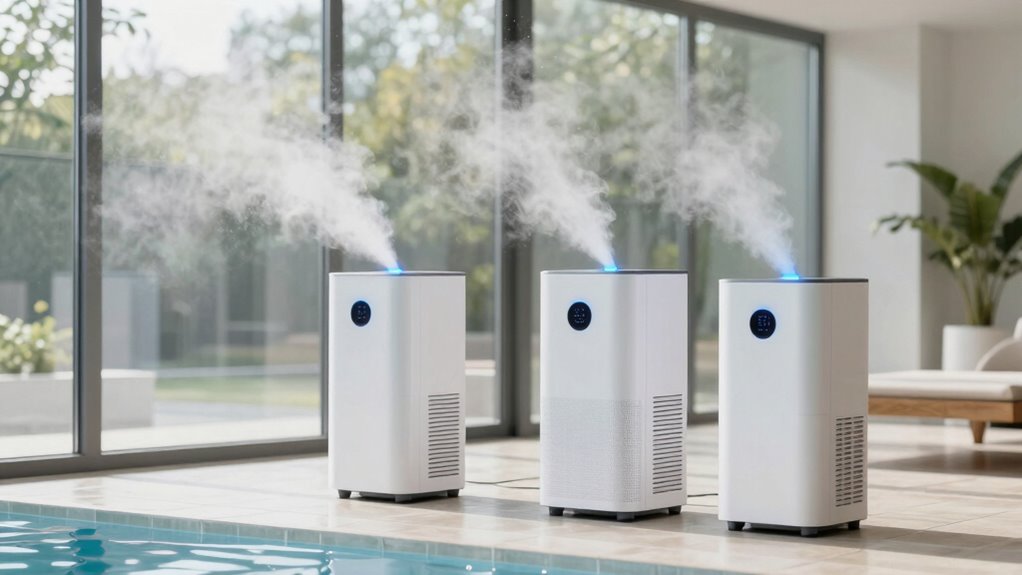
Maintaining proper chemical balance is key to guaranteeing safe indoor air, but it’s also important to address humidity and airborne pollutants directly. Using a combination of dehumidifiers and air purifiers helps keep the air quality ideal. Proper dehumidifier placement ensures efficient moisture removal, preventing mold growth and reducing dampness. Regular air purifier maintenance is essential to keep filters clean and functioning effectively. Choose units with HEPA filters to trap airborne particles like mold spores and bacteria. Additionally, avoid placing dehumidifiers near vents or corners where airflow is restricted. Keep air purifiers away from walls to maximize coverage. Consider the room size when selecting units to ensure you’re not under- or over-sizing. Indoor air quality, including controlling humidity and airborne pollutants, plays a crucial role in creating a healthier environment. Proper air circulation is also vital to prevent stagnant air and distribute purified air evenly throughout the space. Together, these tools considerably improve indoor air quality, making your pool environment safer and more comfortable.
How to Monitor Indoor Air Quality Over Time
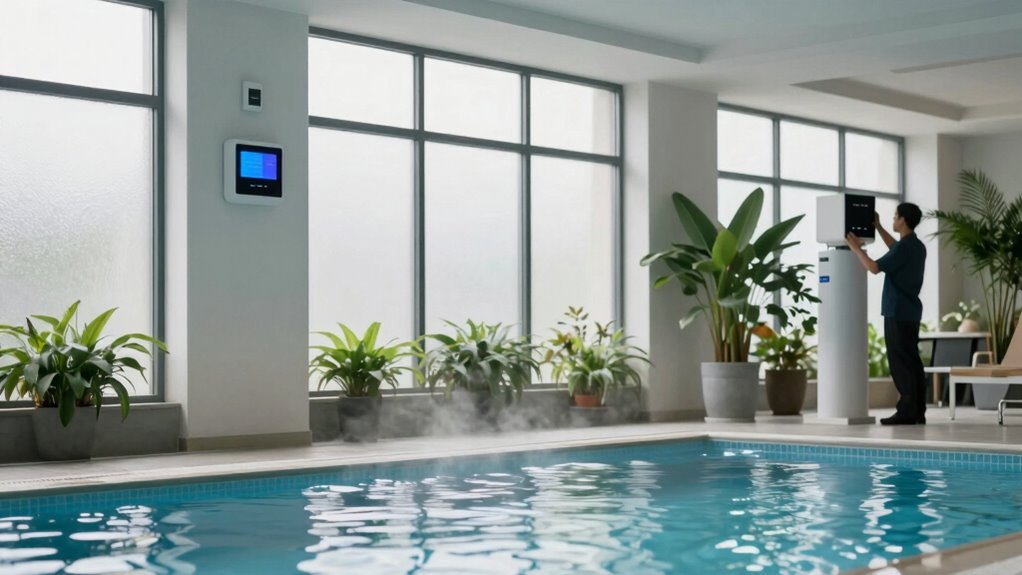
Monitoring indoor air quality over time is essential to guarantee your pool environment remains safe and comfortable. Using air quality sensors allows you to continuously track pollutants, humidity, and other airborne contaminants. These sensors provide real-time data, giving you immediate insight into your indoor air conditions. Regular data analysis helps identify trends and detect potential issues early, so you can take proactive steps to improve ventilation or filtration systems. Proper sensor placement is crucial to ensure accurate readings and reliable data collection. By consistently monitoring, you ensure your indoor pool stays within safe air quality levels, reducing health risks for swimmers and maintaining a pleasant environment. Incorporating air quality gear such as HEPA, carbon, and UV-C filters can further enhance air purification efforts. Additionally, understanding how to optimize ventilation systems plays a crucial role in maintaining high air quality standards. Regularly reviewing air quality standards helps ensure your indoor environment meets safety guidelines and adapts to changing conditions. Implementing air quality monitoring techniques can also help you better understand how different activities or equipment affect indoor air quality.
Common Mistakes to Avoid in Indoor Pool Air Management
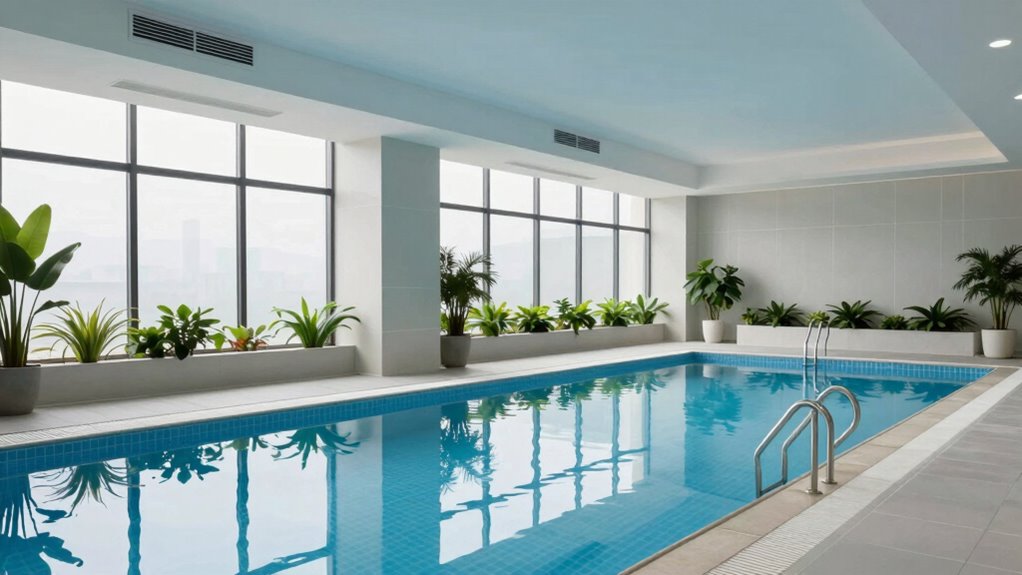
While using air quality sensors provides valuable data, many indoor pool operators make common mistakes that can undermine air management efforts. One mistake is neglecting ventilation efficiency, which can lead to poor air circulation and increased humidity. Another is ignoring the chemical balance, risking corrosive or unhealthy air conditions. Failing to regularly maintain ventilation systems or adjust airflow based on sensor data can cause stale air buildup. Additionally, over-relying on mechanical systems without monitoring air quality can be problematic. Finally, ignoring humidity levels and their impact on air quality can lead to mold growth and discomfort. To avoid these pitfalls, prioritize proper ventilation, maintain chemical balance, and regularly check sensor readings to keep your indoor pool environment safe and healthy.
Simple Tips to Keep Your Indoor Pool Air Fresh and Healthy

To keep your indoor pool air fresh and healthy, start by improving your ventilation systems to guarantee proper airflow. Using air purifiers can help reduce contaminants and odors, making the air cleaner. Additionally, maintaining the right humidity levels prevents mold growth and keeps the environment comfortable.
Enhance Ventilation Systems
Ever wondered how proper ventilation can transform your indoor pool experience? Enhancing your ventilation system is key to maintaining fresh, healthy air. Good air exchange removes humidity, chloramine fumes, and odors, improving comfort. Modern ventilation technology can maximize airflow, ensuring stale air is replaced efficiently. To get the best results:
- Regularly inspect and clean vents and ducts
- Upgrade to energy-efficient ventilation systems
- Use sensors to monitor humidity and air quality
- Ensure proper placement of exhaust fans
- Balance air intake and exhaust for ideal air exchange
Use Air Purifiers
Have you considered how air purifiers can substantially improve your indoor pool environment? These devices help remove chlorine fumes, mold spores, and airborne contaminants, making the air safer and fresher. To keep them effective, proper air purifier maintenance is essential; regularly check the unit and clean or replace filters as needed. Filter replacement is vital because clogged or dirty filters reduce purifying power and can circulate pollutants back into the air. Choose an air purifier designed for large spaces and high humidity, ensuring it can handle the pool’s specific needs. By maintaining your air purifier properly, you’ll enhance air quality consistently, reduce odors, and create a healthier environment for everyone using your indoor pool.
Maintain Proper Humidity
Maintaining proper humidity levels is key to keeping the air around your indoor pool fresh and healthy. Too much humidity can promote mold, while too little causes dryness and discomfort. To manage this, regularly check and adjust your humidifier to guarantee proper humidifier maintenance. Use a hygrometer to monitor humidity levels, ideally between 50-60%. Optimize airflow by ensuring vents are unobstructed and fans are working efficiently, helping control moisture buildup. Consider installing dehumidifiers if needed. Keep an eye on temperature and humidity trends, and adjust your systems accordingly. Proper humidity not only improves air quality but also protects your pool area from mold and structural damage. Staying proactive with airflow optimization and humidifier maintenance creates a healthier, more comfortable indoor pool environment.
Frequently Asked Questions
What Are the Health Risks Associated With Poor Indoor Pool Air Quality?
Poor indoor pool air quality can pose serious health risks, especially due to chemical fumes from chlorine and other disinfectants. These fumes can irritate your respiratory system, causing coughing, throat irritation, or asthma attacks. Long-term exposure may lead to chronic respiratory issues or decreased lung function. To protect your respiratory health, it’s essential to maintain proper ventilation, reduce chemical fumes, and guarantee good air circulation in the pool area.
How Often Should Air Quality Tests Be Conducted in Indoor Pool Rooms?
You should conduct air quality tests in indoor pool rooms at least every three to six months. Regular testing helps guarantee your air filtration and ventilation systems are effectively removing chlorine vapors, humidity, and other pollutants. If you notice persistent odors or humidity issues, increase testing frequency. Consistent monitoring allows you to identify potential problems early, maintaining a healthy environment and preventing health risks associated with poor air quality.
Are There Eco-Friendly Options for Maintaining Indoor Pool Air Quality?
Think of your indoor pool as a garden needing gentle care. You can use eco-friendly filtration systems that reduce chemical use and energy consumption, like bio-filtration methods. Natural deodorizers, such as essential oils or activated charcoal, help neutralize odors without harsh chemicals. These options keep the air fresh and healthy, demonstrating that environmentally conscious choices not only protect your space but also promote sustainable, safe swimming environments.
How Does Outdoor Weather Affect Indoor Pool Air Quality?
Outdoor weather impacts your indoor pool air quality through outdoor humidity and wind influence. High outdoor humidity can increase indoor moisture levels, leading to mold and poor air quality. Wind influence can bring in pollutants, dust, or pollen, affecting air purity. To manage this, guarantee proper ventilation and humidity control systems are in place, and use air purifiers to maintain a healthy, comfortable atmosphere inside your indoor pool room regardless of outdoor weather conditions.
Can Plants Improve Air Quality in Indoor Pool Areas?
Ever wondered if plants can boost indoor pool air quality? Yes, aquatic plants are great for air purification, helping to reduce humidity and absorb airborne pollutants. They introduce fresh oxygen and can even diminish unpleasant odors. By adding aquatic plants to your indoor pool area, you create a healthier environment. Isn’t it worth considering natural ways to enhance air quality while enjoying your pool?
Conclusion
Improving your indoor pool room’s air quality is like tending a garden—you need regular care and attention. By ventilating properly, managing humidity, controlling chemicals, and using the right equipment, you create a fresh, healthy environment. Keep monitoring the air and avoid common mistakes, and you’ll enjoy a space that’s as invigorating as a breath of crisp mountain air. Stay proactive, and your indoor oasis will stay clean and inviting for everyone.