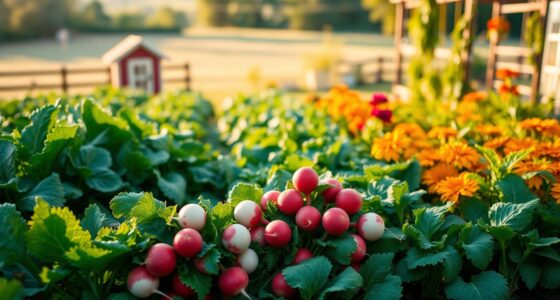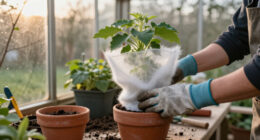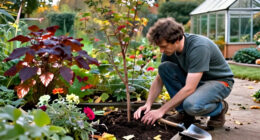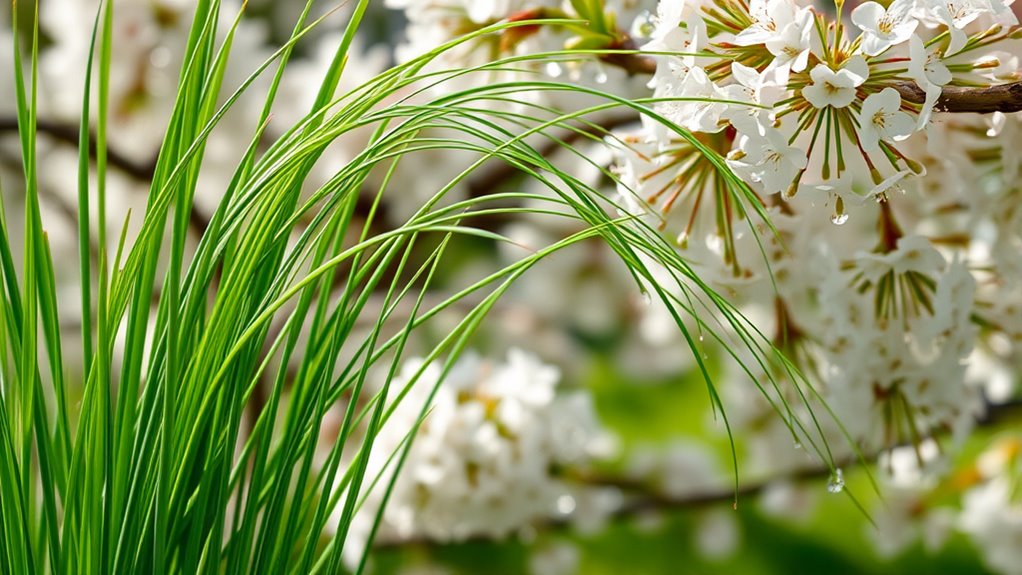

Planting chives near your fruit trees can boost blossom health and fruit yield by attracting pollinators and beneficial insects. Chives also help deter pests with their strong aroma, masking scent signals that insects use to find their targets. Additionally, they improve soil health by releasing nutrients and aerating roots. These simple companion planting tricks support organic growth and reduce pest problems. Keep going to discover more ways chives can truly assist your fruit trees.

Get garden gear delivered free with Prime
- Fast, free delivery on millions of items
- Prime Video, Amazon Music and more included
- Member-only deals all year
Key Takeaways
- Chives attract pollinators, boosting fruit tree blossom pollination and fruit set.
- Their scent masks pest signals, reducing pest attraction during flowering.
- Chives’ sulfur compounds help prevent soil-borne diseases around fruit tree roots.
- Planting chives nearby improves soil health, supporting healthier blossom development.
- Chives act as a natural pest deterrent, protecting blossoms from harmful insects.
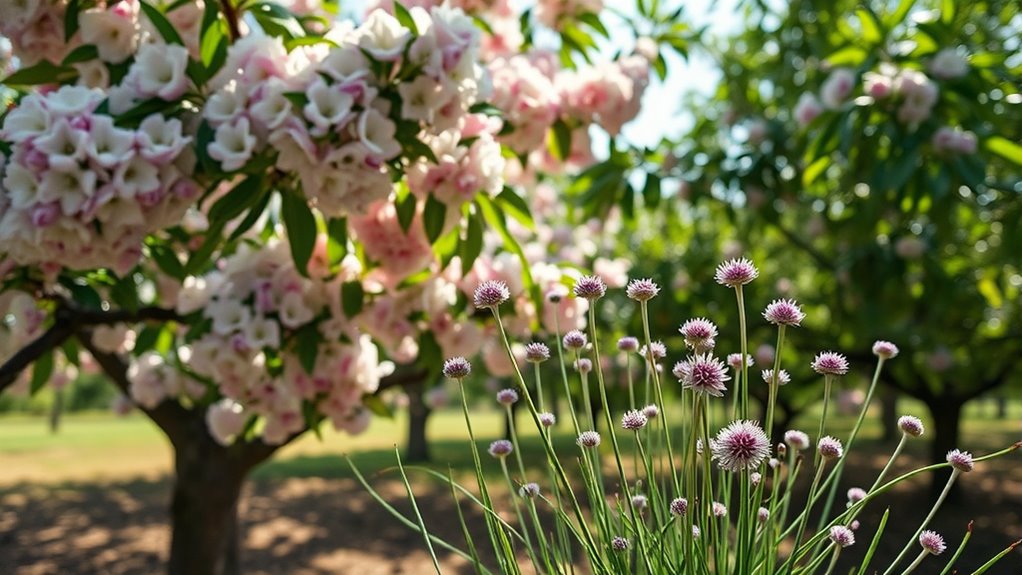
Planting chives near fruit trees can be a simple way to enhance your garden’s health and productivity. When you consider companion planting, chives stand out as a versatile and effective partner that benefits your fruit trees in multiple ways. Their presence can improve soil health, attract beneficial insects, and serve as natural pest deterrents. You might notice fewer issues with common pests like aphids, Japanese beetles, and borers when chives are part of your planting scheme. Their strong aroma acts as a natural repellent, confusing or deterring pests that would otherwise target your fruit trees. This means less need for chemical interventions, helping you maintain a more organic and eco-friendly garden.
Planting chives by fruit trees boosts soil health, attracts beneficial insects, and naturally deters pests for a healthier garden.
Chives are easy to incorporate into your existing garden layout. You don’t need a large space; even a small patch or border planting around your fruit trees can make a noticeable difference. As a member of the allium family, chives release sulfur compounds into the soil, which can suppress soil-borne diseases and pests. This natural pest deterrent works by masking the scent signals that pests rely on to locate their preferred hosts, making your fruit trees less attractive to hungry insects. Additionally, chives attract beneficial insects like pollinators and predatory insects, which help keep pest populations in check naturally. Research shows that chives also contribute to soil health by releasing nutrients as they decompose, supporting healthy root growth in nearby plants.
Planting chives near your fruit trees also encourages healthy growth by improving soil quality. Their roots help aerate the soil and can prevent the buildup of harmful fungi or bacteria. Plus, as they grow, chives produce flowers that attract pollinators, boosting fruit production. This symbiotic relationship is a prime example of effective companion planting, where both plants thrive together, increasing your overall garden yield. With minimal effort, you can establish a chive border around your fruit trees or interplant them between trees to maximize benefits.
Furthermore, chives are low-maintenance and resilient, making them a practical choice for gardeners of all experience levels. They require little watering once established and can grow back year after year, providing ongoing pest deterrents and soil benefits. By integrating chives into your garden, you not only help protect your fruit trees from pests but also contribute to a healthier, more balanced ecosystem. This natural approach to pest control reduces reliance on chemical pesticides and encourages biodiversity, which is essential for a thriving garden.
chives for garden companion planting
As an affiliate, we earn on qualifying purchases.
As an affiliate, we earn on qualifying purchases.
Frequently Asked Questions
Can Chives Improve Fruit Tree Disease Resistance?
Yes, planting chives near your fruit trees can boost disease prevention by enhancing plant synergy. Chives release natural compounds that may help deter harmful pathogens, strengthening your trees’ defenses. This symbiotic relationship encourages healthier growth and reduces disease risks. By incorporating chives into your garden, you create a natural barrier, promoting a resilient orchard where fruit trees flourish with less need for chemical treatments.
Are Chives Effective Against Specific Pests on Fruit Trees?
Pest control problems? Chives can be quite effective against specific pests on fruit trees. Their strong scent confuses and repels insects like aphids, Japanese beetles, and certain moths. As part of companion planting, chives attract beneficial insects that help keep pests in check while deterring harmful ones. You’ll find them a simple, sustainable solution, enhancing your fruit trees’ defenses naturally and effectively.
How Do Chives Influence Soil Health Around Fruit Trees?
Planting chives around your fruit trees improves soil health by enhancing soil aeration and promoting nutrient cycling. As you grow chives, their roots create space in the soil, allowing better airflow and helping prevent compaction. Additionally, chives decompose and release nutrients, enriching the soil naturally. This process supports healthy root development for your fruit trees, leading to better growth and fruit production.
Can Chives Be Grown Indoors Near Fruit Trees?
Yes, you can cultivate chives indoors near fruit trees. Indoor cultivation allows you to create a cozy, controlled environment, perfect for companion planting. Keep chives in a sunny spot, provide ample airflow, and water regularly to keep them thriving. By pairing chives with your fruit trees indoors, you promote pest prevention, enhance plant health, and enjoy fresh herbs year-round, making your garden more vibrant and versatile.
What Is the Best Planting Time for Chives Near Fruit Trees?
You should plant chives near fruit trees during the early spring or late fall, as these are the ideal timings for their growth. The planting season ideally aligns with when your soil is workable and temperatures are moderate, helping chives establish before the heat of summer or winter. By choosing the right planting time, you’ll guarantee healthy chives that can support your fruit trees effectively.
Conclusion
By planting chives near your fruit trees, you create a tiny army that fights off pests and boosts growth. Imagine your orchard transforming into a thriving paradise, bursting with vibrant blossoms and juicy fruits, all thanks to these humble herbs. With just a little effort, you’ll turn your garden into a masterpiece of nature’s brilliance—more spectacular than you ever thought possible. So go ahead, plant some chives and watch your fruit trees flourish beyond your wildest dreams.
Halloween Picks
halloween
As an affiliate, we earn on qualifying purchases.