For sunny city balconies, choose drought-tolerant plants like succulents—such as echeveria, sedum, and agave—or native species like lavender, rosemary, and yarrow. These plants need minimal watering, thrive in full sun, and add visual interest to small outdoor spaces. Group similar plants, use mulch or gravel to conserve moisture, and consider self-watering containers to keep watering efficient. Keep exploring to discover even more tips for maintaining a low-water, lush balcony garden.

Get garden gear delivered free — and shop member deals
- Fast, free delivery on millions of items
- Access to Prime Big Deal Days deals on October 6–7
- Prime Video, Amazon Music and more included
Key Takeaways
- Select succulents like echeveria, sedum, or agave for low-water needs and sun tolerance.
- Incorporate native species such as lavender, rosemary, or yarrow suited for sunny, dry balcony conditions.
- Use containers with good drainage and place them in full sun for optimal growth.
- Group drought-tolerant plants together to reduce water runoff and enhance water efficiency.
- Apply mulch or gravel in containers to retain moisture and minimize evaporation.
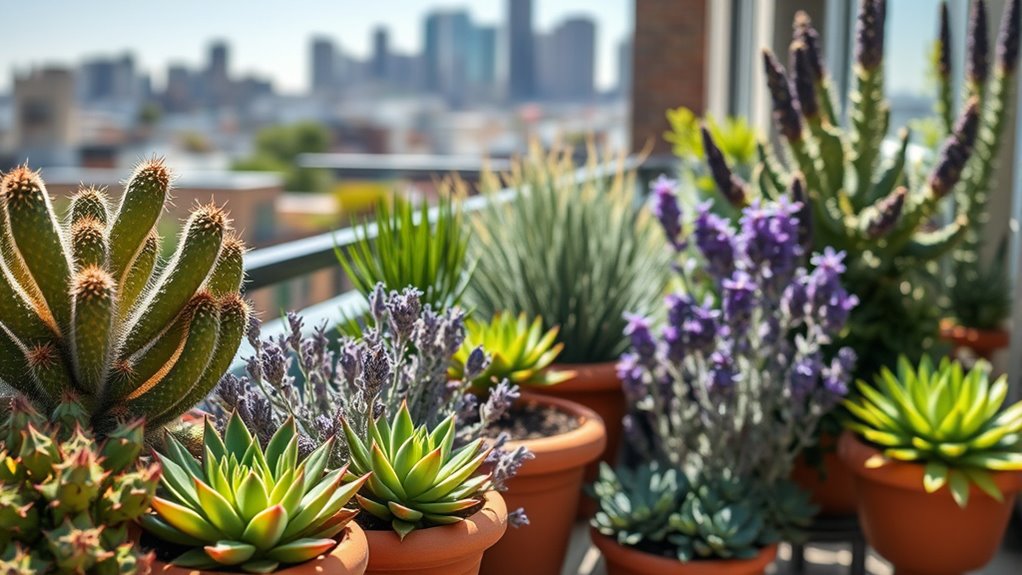
Are you looking for ways to keep your garden green without wasting water? If so, exploring drought-tolerant plants for your sunny city balcony is a smart move. Urban landscaping often faces space and water restrictions, making it essential to choose plants that thrive with minimal irrigation. Incorporating xeriscape design principles can transform your outdoor space into a vibrant, sustainable oasis that requires less maintenance and conserves resources.
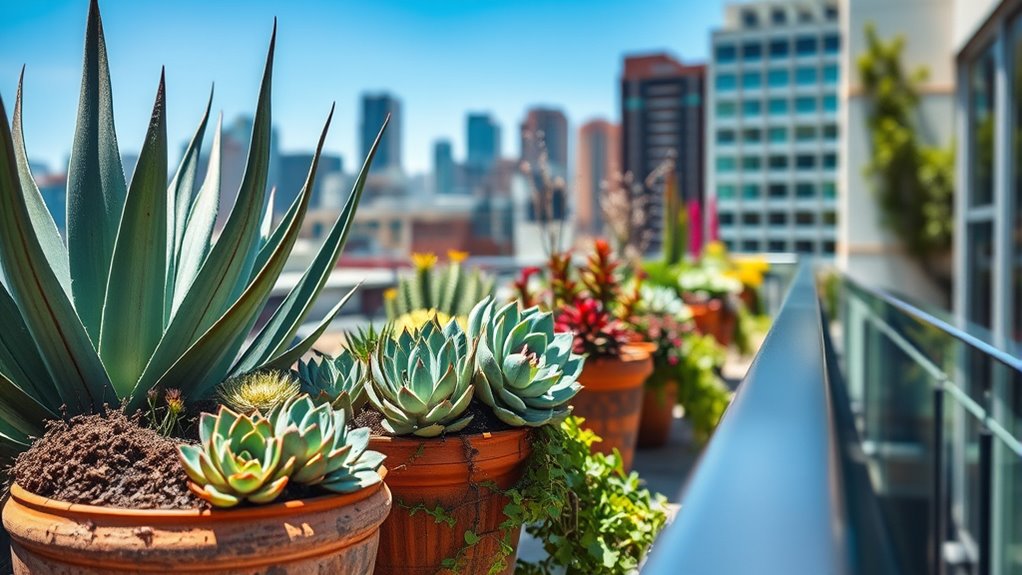
Start by selecting plants that naturally adapt to dry conditions. Succulents like sedum, echeveria, and agave are excellent options because they store water in their thick leaves and can withstand prolonged droughts. These plants not only look striking but also add architectural interest to your balcony. Additionally, native drought-tolerant species such as lavender, rosemary, and yarrow are well-suited for sunny spots and require little watering once established. Their resilience makes them ideal choices for urban landscaping where water conservation is a priority.
Using xeriscape design techniques, you can create a low-maintenance, water-efficient garden that looks lush and appealing. Group drought-tolerant plants together to reduce water runoff and ensure they receive adequate moisture without overwatering. Incorporate mulch around your plants to retain soil moisture and suppress weeds, which compete for water and nutrients. Using gravel or decorative stones as ground cover also helps minimize evaporation, keeping the soil moist longer and reducing the need for frequent watering.
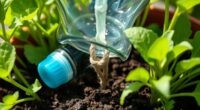
Incorporating container gardening with drought-tolerant plants allows you to control water usage more precisely. You can use self-watering containers or water only when necessary, making your watering routine more efficient. Position your containers in spots that receive full sun, and choose pots with good drainage to prevent waterlogging. This approach not only saves water but also makes it easier to move plants around to optimize sunlight exposure.
To further support your drought-tolerant garden, consider installing drip irrigation systems. They deliver water directly to the roots, minimizing waste and evaporation. Set the system on a timer to water early in the morning or late in the evening, when evaporation rates are lowest. This ensures your plants get consistent moisture without overdoing it, keeping them healthy and vibrant.
drought-tolerant succulents for containers
As an affiliate, we earn on qualifying purchases.
As an affiliate, we earn on qualifying purchases.
Frequently Asked Questions
Which Drought-Tolerant Plants Thrive in Container Gardens?
You’ll find that succulent varieties like echeveria, sedum, and aloe thrive in container gardens, especially in sunny city balconies. Native drought plants such as lavender and yarrow also do well, requiring minimal water and care. These plants are resilient, drought-tolerant, and perfect for small spaces. Just guarantee your containers have good drainage, and you’ll enjoy lush, low-maintenance greenery all season long.
How Often Should I Water Drought-Tolerant Balcony Plants?
You should water your drought-tolerant balcony plants about once every 2-3 weeks, depending on weather conditions. Stick to a consistent watering schedule, and check the soil moisture before watering to guarantee proper plant hydration. During hotter or windier days, you might need to water a bit more. Remember, these plants thrive with minimal watering, so avoid overwatering to prevent root rot.
Can Drought-Tolerant Plants Survive Winter on a Balcony?
Yes, drought-tolerant plants can survive winter on your balcony if you provide proper plant protection. While they’re hardy, cold temperatures pose a challenge, so consider insulating containers and shielding plants from harsh winds. You might also move potted plants to a sheltered spot or wrap them with burlap. With these precautions, your resilient plants will stand a good chance of winter survival and continue thriving come spring.
Are There Any Specific Soil Requirements for These Plants?
Yes, these plants need well-draining soil with proper pH levels. You should add soil amendments like compost or sand to improve drainage and nutrients. Keep an eye on pH levels, aiming for slightly acidic to neutral (around 6.0 to 7.0), depending on the plant. This guarantees your drought-tolerant plants stay healthy and thrive in sunny balcony conditions. Regularly check soil quality to maintain ideal growth.
How Do I Prevent Pests on Drought-Tolerant Balcony Plants?
Ever wonder how to keep pests at bay? You can prevent pests on your drought-tolerant balcony plants by choosing pest-resistant varieties and implementing natural pest control methods like introducing beneficial insects or using neem oil. Regularly inspect your plants for early signs of pests, remove affected leaves, and keep your balcony clean. These simple steps help protect your plants without harmful chemicals, ensuring they stay healthy and thriving.
Conclusion
By choosing drought-tolerant plants for your sunny city balcony, you’re turning your space into a resilient oasis amidst a parched landscape. These plants are like steadfast guardians, thriving where others wilt, transforming your balcony into a vibrant, green sanctuary that withstands the harshest conditions. With a little care, you’ll create a living tapestry that dances with life, proving that even in the driest moments, beauty can bloom and flourish under your nurturing touch.
Fall yard work Picks
leaf blowers
As an affiliate, we earn on qualifying purchases.