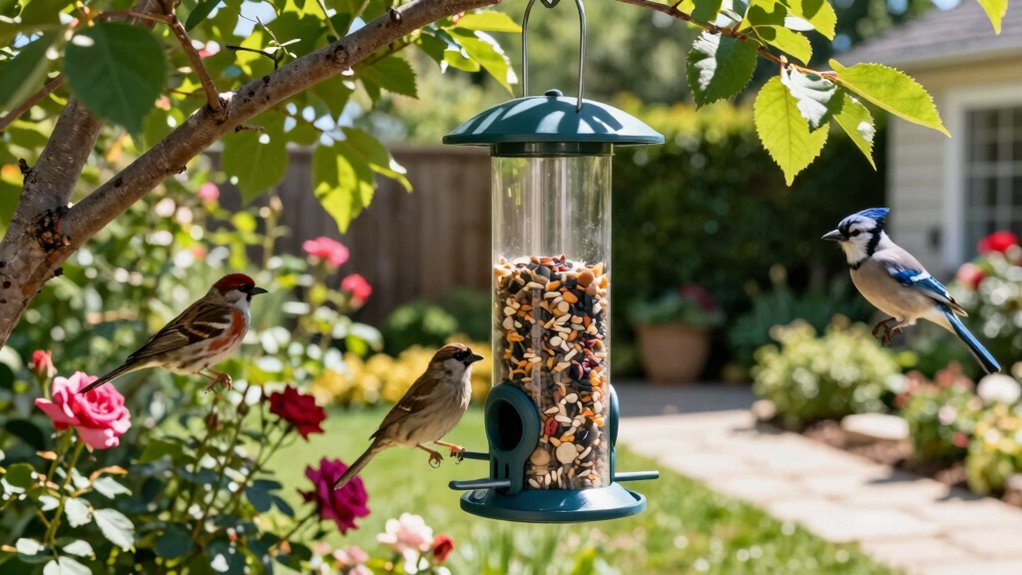
Smart bird feeders transform your backyard observation by providing real-time video, sensors, and automated feeding, making it easier to watch and identify different bird species. They help you understand bird behavior and patterns through data collection, while integrated alerts alert you to refills and cleaning needs. Plus, their placement strategies and technology features enhance your experience and attract more birds. Keep exploring to discover how these innovations can turn your backyard into a birdwatching haven.
Key Takeaways
- Smart bird feeders provide real-time footage and data, enhancing the ability to observe bird behaviors remotely.
- They enable species identification and activity tracking through integrated sensors and cameras.
- Automated features like seed dispensers ensure consistent bird access, encouraging diverse visits.
- Alerts for low seed levels or cleaning needs help maintain optimal observation conditions.
- Data collection from smart feeders offers insights into bird patterns, improving overall backyard birdwatching.
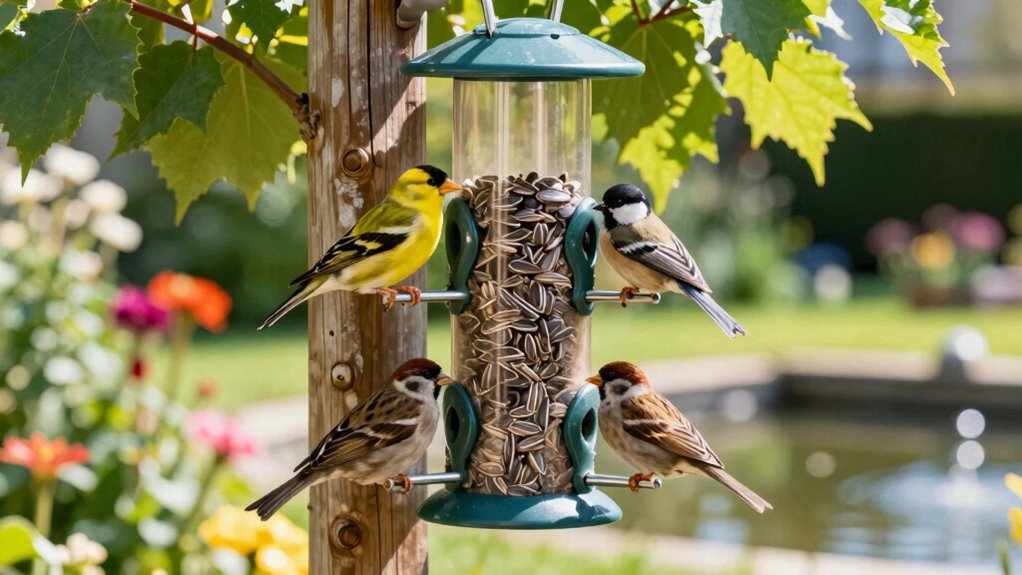
Bird feeders are a simple yet effective way to attract a variety of birds to your yard, providing both enjoyment and a glimpse into nature’s daily activities. With the advent of smart bird feeders, this experience becomes even richer. These innovative feeders are designed to enhance your observations, making it easier to identify different species and understand their behaviors. The key to maximizing their effectiveness lies in thoughtful bird feeder placement and regular bird feeder maintenance. When you position your smart feeder properly, it becomes a welcoming hub for birds, while consistent upkeep ensures it continues to serve as a reliable source of food and observation.
Placement is essential. You want to find a spot that offers a good view but also provides safety for the birds. Ideally, you should hang your smart bird feeder within sight from windows where you often sit, but far enough from cover where predators like cats can lurk. Placing it near trees or shrubs provides natural perches and shelter, encouraging more birds to visit. Keep in mind that different species have preferences for feeder locations, so experimenting with height and distance from cover can help attract a diverse array. An ideal position also considers wind and weather; placing the feeder in a sheltered spot reduces seed waste and keeps it cleaner longer. Additionally, understanding bird behavior can help you choose the best location, as different species have unique preferences for feeding spots. Regularly observing these behaviors can also guide you in adjusting the placement for better results. Using appropriate feeder types tailored to specific bird species can further enhance your observation experience. Incorporating technology features like cameras and sensors can also help you monitor bird activity more effectively. It’s helpful to keep track of seasonal changes that influence bird movement and feeding habits for optimal placement.
Once your smart feeder is in place, bird feeder maintenance becomes essential. These feeders often feature automatic seed dispensers, cameras, and sensors, which require regular cleaning and refilling to function properly. Neglecting maintenance can lead to mold, seed spoilage, or blockages, discouraging birds from visiting. You should plan to clean the feeder thoroughly every couple of weeks, especially if you notice mold or debris, and refill it with fresh seed regularly. This not only keeps the feeder inviting but also prevents the spread of disease among birds. Smart feeders often alert you when supplies are low or if cleaning is needed, simplifying upkeep. Consistent maintenance ensures the technology works seamlessly and that your observation remains clear and rewarding. Incorporating preventive measures like disinfecting parts of the feeder can further reduce the risk of disease transmission among visiting birds.
As an affiliate, we earn on qualifying purchases.
Frequently Asked Questions
How Do Smart Bird Feeders Detect Bird Species?
Smart bird feeders detect bird species through advanced sensor technology, which captures images or sounds as birds visit. These sensors analyze features like size, shape, and calls for bird identification. You can then access this data via a connected app, helping you learn about different species. This technology makes backyard observation more engaging by effortlessly providing detailed insights into the birds frequenting your feeder.
Can Smart Feeders Be Used Outdoors Year-Round?
Absolutely, you can enjoy year-round wildlife attraction with smart bird feeders outdoors. Their weather-resistant design and technological integration allow them to withstand various seasonal elements, making them reliable companions for your backyard. These smart feeders not only attract birds continuously but also provide real-time updates and data, enhancing your observation experience. Just make certain you select a model suited for outdoor conditions to keep the connection strong and your feathered guests happy year-round.
What Maintenance Do Smart Bird Feeders Require?
Smart bird feeders require regular maintenance, including seed refilling and cleaning to prevent mold and pests. You should check the seed levels frequently and refill as needed. Weather protection is essential; make certain your feeder’s weather-resistant features are working properly to avoid seed spoilage during rain or snow. Additionally, clean the feeding area periodically to keep it hygienic for visiting birds, maintaining an inviting environment year-round.
Are Smart Bird Feeders Suitable for All Bird Types?
You might be surprised, but smart bird feeders aren’t suitable for every bird type. While they attract a variety of species, during bird migration seasons, different birds with unique seed preferences might overlook them. These feeders mainly support seed dispersal for smaller birds like finches and sparrows, but larger species such as woodpeckers or pigeons may struggle to access the technology. So, consider your backyard’s bird diversity before investing.
How Do Smart Feeders Conserve Seed and Prevent Waste?
Smart bird feeders conserve seed and prevent waste by using advanced technology to control seed release based on bird activity. You’ll notice improved seed efficiency because they dispense only when birds are present, reducing unnecessary spill and overfeeding. Waste reduction is achieved through features like perches that minimize seed spillage and sensors that detect actual bird presence, ensuring you use less seed while attracting more birds, making your backyard feeding more sustainable.
Conclusion
As you watch the birds flock to your smart feeder, it’s almost like the feeder knew exactly when they’d arrive, turning your backyard into a lively, synchronized symphony. Suddenly, those quiet mornings become moments of connection, where technology and nature blend seamlessly. You realize that these smart feeders didn’t just change how you observe birds—they transformed your outdoor space into a living, breathing scene of delightful surprises and everyday magic.