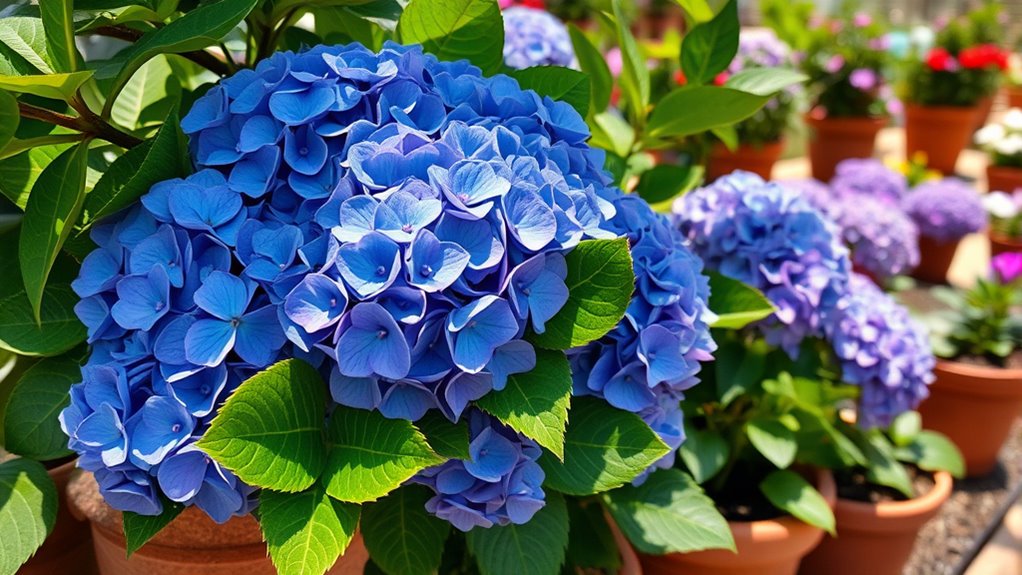

To care for hydrangeas in pots and small yards, use rich, well-draining, slightly acidic soil and guarantee proper drainage. Keep the soil consistently moist but not waterlogged, using mulch or careful watering. Prune new or old wood varieties at the right times—after flowering for old wood types and late winter for new wood ones. Proper pruning and soil management lead to vibrant blooms; if you’re enthusiastic to learn more, you’ll discover some key tips to keep your hydrangeas thriving.
Key Takeaways
- Use well-draining, slightly acidic soil with organic amendments in containers and garden beds.
- Regularly check soil moisture, keeping it consistently moist but not waterlogged.
- Prune old-wood hydrangeas after flowering and new-wood varieties in late winter or early spring.
- Select containers with drainage holes and use specialized acid-loving plant potting mix.
- Maintain proper soil pH, moisture, and timely pruning to ensure vibrant blooms and healthy growth.

Hydrangeas are stunning flowering shrubs that can brighten any garden, but they require proper care to thrive. When growing hydrangeas in pots or small yards, paying attention to soil preparation is essential. The soil you choose should be rich, well-draining, and slightly acidic, with a pH between 5.2 and 6.2. To achieve this, mix organic matter like compost or peat moss into your planting soil, which will improve drainage while providing necessary nutrients. Avoid heavy, clayey soils that retain too much water, as this can cause root rot. If you’re planting in a pot, select a container with drainage holes and use a high-quality potting mix tailored for acid-loving plants. Regularly check the soil moisture, ensuring it stays consistently moist but not waterlogged. Proper soil preparation sets a solid foundation for your hydrangea’s health and vibrant blooms.
Pruning is another critical aspect of hydrangea care that influences both flowering and shape. Your pruning techniques depend on the type of hydrangea you have. For example, if you’re growing a mophead or lacecap hydrangea, which bloom on old wood, prune immediately after flowering. Remove dead or weak stems, and cut back about one-third of the previous season’s growth to encourage vigorous new blooms. Conversely, if you have a panicle or smooth hydrangea that blooms on new wood, you can prune in late winter or early spring. Cut back stems to just above a healthy pair of buds to promote larger, more abundant flowers. Always use clean, sharp pruning tools to prevent disease transmission. Proper pruning not only shapes your hydrangea but also stimulates healthy growth and abundant flowering.

MOVA LiDAX Ultra 2000 Robot Lawn Mower with 4G for 0.5 Acre, No Wire No RTK+360° 3D LiDAR+AI Vision Auto Mapping, Zero-Edge Cutting, Cut Height 1.2"-3.9", 45% Slope, 150 Mowing Zones, Anti-Theft
Wireless, RTK-Free Setup — AI-Assisted Auto-Mapping with 360° 3D LiDAR: With AI vision and 360° 3D LiDAR, LiDAX...
As an affiliate, we earn on qualifying purchases.
Frequently Asked Questions
Can Hydrangeas Survive Winter Outdoors in Cold Climates?
Yes, hydrangeas can survive winter outdoors in cold climates if you provide proper winter protection. You should consider climate considerations, like mulching around the roots and adding a burlap wrap or straw to shield the plant from harsh winds and freezing temperatures. These steps help insulate your hydrangea, ensuring it stays healthy through winter. With attentive winter protection, your hydrangea can thrive year after year, even in chilly weather.
What Pests Commonly Attack Hydrangeas in Containers?
You’ll often face aphid infestations and spider mites on container hydrangeas. Aphids cluster on new growth, causing deformities and stunted leaves, while spider mites create tiny webs and speckled foliage. To control these pests, regularly inspect your plants, spray them with a strong stream of water to dislodge pests, and apply insecticidal soap or neem oil as needed. Consistent monitoring keeps your hydrangeas healthy and pest-free.
How Often Should I Fertilize My Potted Hydrangea?
You should fertilize your potted hydrangea every 4 to 6 weeks during the growing season. Stick to a balanced fertilizer schedule that meets its nutrient requirements, providing essential nutrients like nitrogen, phosphorus, and potassium. Avoid over-fertilizing, which can cause lush foliage but fewer blooms. Consistent feeding guarantees healthy growth, vibrant blooms, and strong roots—keeping your hydrangea thriving in its container.
Are There Drought-Tolerant Hydrangea Varieties for Small Yards?
Yes, you can choose drought-resistant cultivars like xeriscape hydrangeas for small yards. These varieties are specially bred to withstand dry conditions, making them ideal if water conservation is a priority. Look for species labeled as drought-tolerant or xeriscape hydrangeas, and plant them in well-draining soil. Once established, they require less frequent watering, helping you maintain a beautiful garden with less effort during dry spells.
Can Hydrangeas Be Grown Indoors Successfully?
You can grow hydrangeas indoors successfully if you choose the right varieties, like Endless Summer or Hydrangea macrophylla. Make sure you provide bright, indirect light and maintain consistent moisture. Indoor pruning helps promote healthy growth and flowering. Keep the environment humid and avoid drafts. With proper care, your hydrangea will thrive indoors, adding beauty to your space. Just remember to select suitable varieties and follow specific care guidelines for indoor growth.

LawnMaster 13.5 Amp 18” Electric Tiller – TE1318M
EFFICIENT SOIL CULTIVATION: 6 rust-resistant steel blades cut through rough terrain at 380-RPM
As an affiliate, we earn on qualifying purchases.
Conclusion
With proper watering, timely pruning, and the right placement, you’ll enjoy vibrant hydrangeas all season long. Keep an eye on soil moisture, protect them from harsh sun, and feed them with suitable fertilizer. Stay consistent with your care, be patient as they thrive, and enjoy their stunning blooms. By following these simple steps, you’ll cultivate healthy, beautiful hydrangeas in pots or small yards—bringing color, charm, and life to your outdoor space.
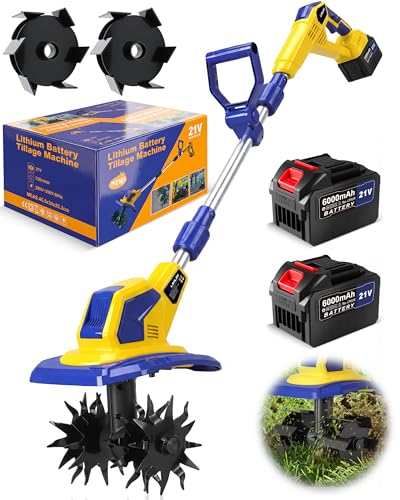
21V Cordless Tiller Cultivator, 720RPM Electric Garden Tiller, with 2 * 6.0Ah Batteries & Charger, 1 * Soil Tilling Blade and 1 * Weed Removal Blade for Lawn/Gardening/Soil Cultivation (Yellow)
INDUSTRIAL-GRADE POWER MOTOR : Our cordless tiller is driven by a high-performance motor and built with 4 sturdy...
As an affiliate, we earn on qualifying purchases.
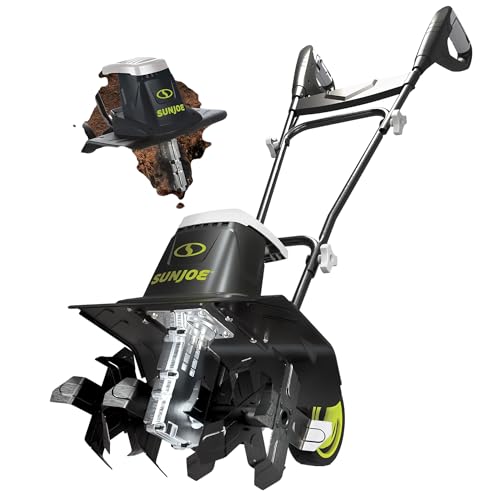
Sun Joe Corded Electric Garden Tiller & Cultivator with Steel Tines, 16", 13.5-Amp Motor - Heavy-Duty Tilling Machine for Lawn, Yard, and Gardening Care, TJ604E
Power Unleashed: Dominate your garden with the 13.5-AMP motor that slices through soil at 370 RPM, preparing your...
As an affiliate, we earn on qualifying purchases.