To encourage your Hoya to bloom indoors, guarantee proper watering—allow the top inch of soil to dry out between thorough waterings—and keep the plant in bright, indirect light. Regularly check for pests like mealybugs and scale, and act quickly if you spot any signs. Good airflow and pest prevention are key, along with consistent watering. Keep these tips in mind, and you’ll discover more ways to help your wax plant thrive and flower beautifully inside.
Key Takeaways
- Provide bright, indirect light to encourage blooming indoors.
- Water thoroughly when the top inch of soil dries out, especially during spring and summer.
- Maintain proper humidity and well-draining soil to support healthy flower development.
- Regularly inspect for pests and ensure good airflow to prevent infestations.
- Be patient, as Hoya flowers may take several years to bloom indoors, with proper care.
Taking proper care of your Hoya plant makes sure it stays healthy and vibrant. One of the most important aspects of caring for your wax plant is understanding its watering frequency. Unlike many houseplants, Hoyas prefer to be on the drier side. You should water your plant thoroughly when the top inch of soil feels dry to the touch. During the growing season, usually spring and summer, this might mean watering once every one to two weeks. In winter, cut back on watering, perhaps to once every three or four weeks, since the plant’s growth slows down. Overwatering can lead to root rot, so always make certain excess water drains out of the pot and that the soil dries out between waterings. Proper watering helps keep the plant healthy, encourages blooming, and prevents issues like fungal diseases.
In addition to watering, pest prevention plays a vital role in maintaining your Hoya’s health. Hoyas are generally hardy but can fall prey to common pests like mealybugs, spider mites, and scale insects. Regularly inspect your plant’s leaves and stems, especially the undersides, where pests tend to hide. Early detection is key; if you notice tiny white cottony spots or webbing, act quickly by wiping the affected areas with a damp cloth or applying insecticidal soap. Keeping the plant in a well-ventilated area and avoiding overwatering can also reduce the risk of pest infestations, as damp environments foster pest growth. Quarantining new plants before introducing them to your collection helps prevent bringing pests into your home.
Your Hoya’s care routine should include paying close attention to its watering needs and keeping an eye out for pests. Proper watering not only ensures healthy growth but also helps the plant resist pests and diseases. Pest prevention involves vigilance and early action, which keeps your plant thriving and reduces the need for chemical treatments. Remember, Hoyas generally prefer bright, indirect light, well-draining soil, and moderate humidity, but watering and pest prevention are foundational to keeping your wax plant happy and blooming indoors. When you follow these simple practices, your Hoya will reward you with stunning, fragrant flowers and lush, attractive foliage year-round. Consistency and attentiveness are your best tools for successful Hoya care, making sure your plant remains a beautiful focal point in your home.
As an affiliate, we earn on qualifying purchases.
Frequently Asked Questions
How Often Should I Water My Hoya Indoors?
You should water your hoya indoors every 1-2 weeks, depending on your watering schedule and soil moisture levels. Check the soil, and only water when it feels dry about an inch below the surface. Overwatering can lead to root rot, so make certain excess water drains well. Adjust your watering frequency seasonally—less in winter, more in active growing months—keeping soil moisture balanced for healthy growth and flowering.
What Temperature Is Ideal for Hoya Flowering?
Did you know that maintaining an ideal temperature between 65-80°F (18-27°C) can unexpectedly boost your hoya’s flowering? Keep humidity levels moderate and guarantee good airflow. Pruning techniques like pinching back stems encourage more blooms. When temperatures stay steady within this range, your hoya is more likely to produce those beautiful, fragrant flowers, turning your indoor space into a lush, flowering paradise.
Can Hoya Survive in Low Light Conditions?
Hoya plants have low light tolerance, so they can survive in low light conditions, but their growth may slow, and flowering could be less abundant. You should make lighting adjustments, like moving your hoya to brighter spots or supplementing with artificial light, to encourage better health and blooming. Keep in mind, while they adapt to lower light, providing brighter, indirect light yields the best results for your plant’s overall robustness.
How Long Does It Take for Hoya to Bloom?
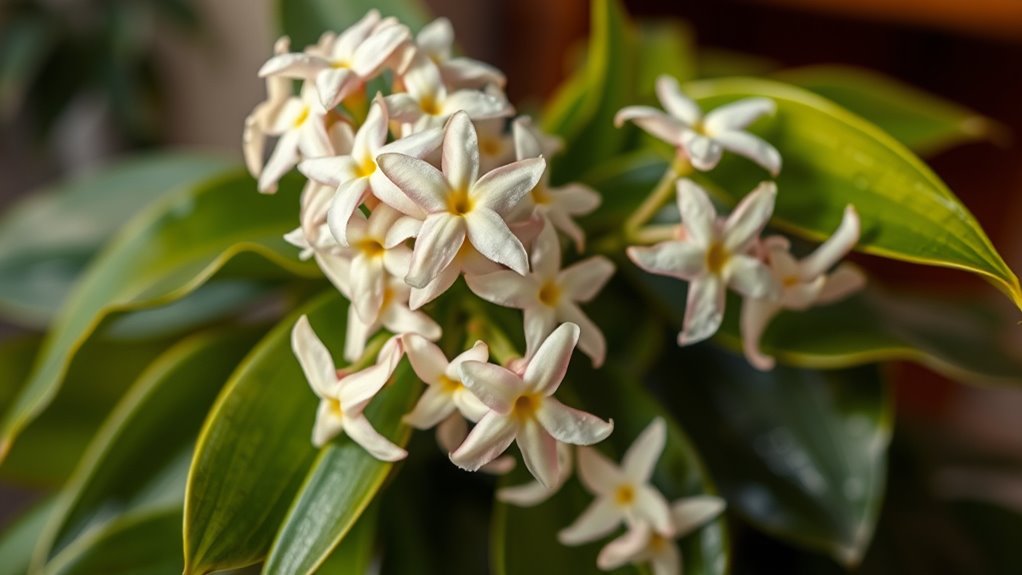
Hoya typically takes about 2 to 3 years to bloom, depending on its blooming cycle and growing conditions. You’ll notice flower development begins with the formation of buds, which gradually open into star-shaped flowers. To encourage blooming, guarantee your hoya gets bright, indirect light and proper watering. Patience is key, as consistent care fosters healthy growth and eventually rewards you with beautiful, fragrant flowers.
Are There Specific Fertilizers That Benefit Hoya Flowers?
Imagine your hoya thriving with vibrant blooms—specific fertilizers like flowering boosters can help achieve this. You should use a balanced fertilizer with a higher phosphorus content, such as a 10-20-10 blend, to promote flowering. Regularly applying these fertilizer types encourages healthy blooms, ensuring your wax plant produces stunning flowers. Keep in mind, consistent feeding during the growing season maximizes your hoya’s flowering potential.
Conclusion
With a little love and patience, your wax plant will flourish like a hidden treasure, revealing its delicate blooms as a reward for your care. Remember, each leaf and flower is a whisper of nature’s artistry, waiting to brighten your space and your days. Nurture it gently, and watch your indoor garden become a lush symphony of life, reminding you that beauty often blooms quietly, in the most unexpected places.