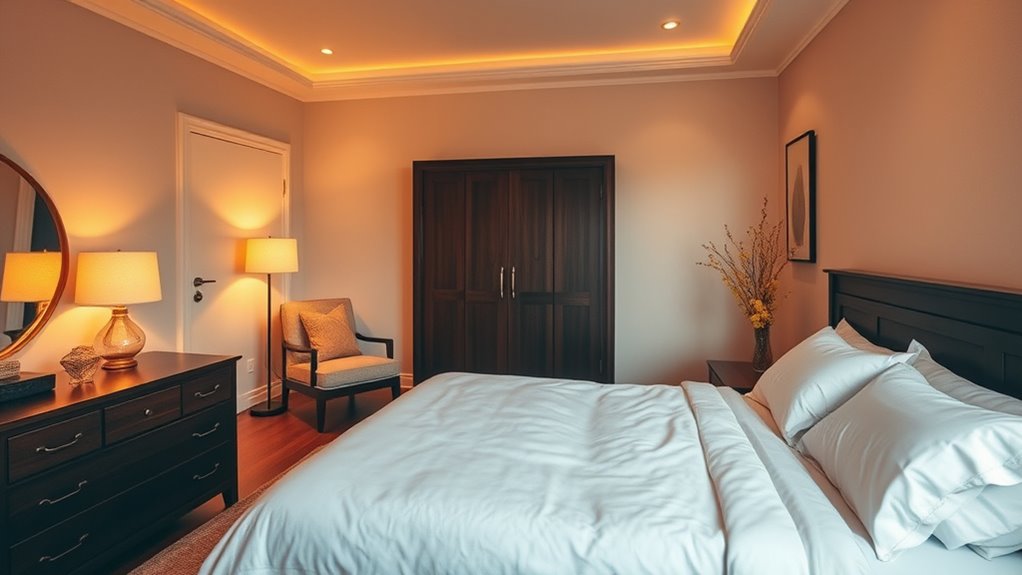

To create circadian-friendly bedroom lighting without blue overload, choose warm-colored bulbs (2700K–3000K) in your lamps and fixtures, especially in the evening. Limit exposure to screens or use blue light filters at least an hour before bed. Dim the lights gradually or use smart lighting controls to mimic natural sunset and sunrise cycles. Maintaining low, warm lighting helps your body produce melatonin naturally. Keep exploring to learn more ways to optimize your sleep environment effectively.
Key Takeaways
- Use warm, low-color-temperature bulbs (2700K–3000K) in the evening to minimize blue light exposure.
- Schedule smart lighting to gradually shift from cool daytime light to warm, dim evening lighting.
- Limit screen time before bed and utilize blue light filters or glasses to reduce blue wavelength interference.
- Incorporate dimmer switches and full-spectrum bulbs to create a relaxing, circadian-friendly environment.
- Maximize natural daylight during the day and maintain warm, low-intensity lighting at night to support sleep cycles.
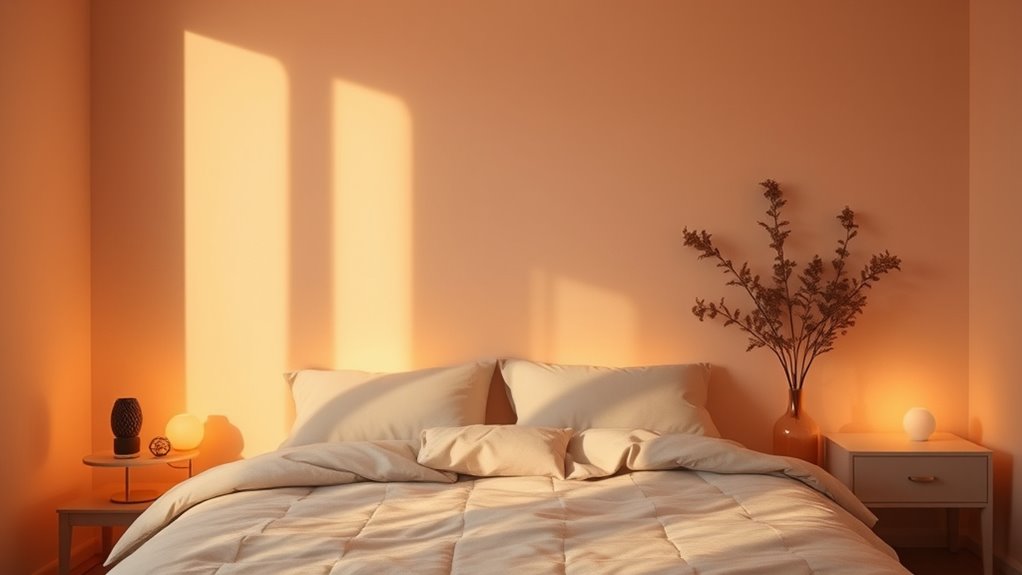
Creating the right lighting in your bedroom can considerably improve your sleep quality and overall well-being. When you pay attention to light temperature and how it affects your environment, you set the stage for restful nights and energized mornings. Light temperature, measured in Kelvins, influences how warm or cool your space feels, and it plays a vital role in regulating your circadian rhythm. During the evening, warmer light with lower Kelvin temperatures (around 2700K to 3000K) helps your body prepare for sleep by signaling that it’s time to wind down. Conversely, cooler, bluish light (above 5000K) can disrupt your sleep patterns, making it harder to fall asleep and affecting the quality of your rest.
To optimize your bedroom lighting for better sleep quality, start by adjusting the light temperature in the evening. Use warm-colored bulbs in lamps, overhead fixtures, or smart lighting systems that allow you to shift from bright, cool light during the day to softer, warmer tones as bedtime approaches. This shift helps your body produce melatonin naturally, the hormone responsible for sleep. If you’re using smart bulbs, set schedules to gradually change the light temperature, mimicking sunset and sunrise cycles. Avoid bright, cool light at least an hour before bed, as blue light suppresses melatonin production and can keep you alert when you should be winding down.
Adjust your evening lighting with warm bulbs and smart schedules to support natural melatonin production and improve sleep.
Another key aspect is controlling light intensity and avoiding blue overload. Blue light, especially from screens, can interfere with your circadian rhythm even if the color temperature isn’t overly cool. Limit screen time before bed, or use blue light filters and glasses designed to block blue wavelengths. Instead, opt for dim, warm lighting that provides enough illumination for reading or relaxing without overstimulating your brain. Dimming your lights in the evening can also signal to your body that it’s time to relax, enhancing your sleep quality. Additionally, high-quality home theater projectors often feature adjustable brightness and color settings that can help create a calming environment conducive to restful sleep.
During the day, take advantage of natural light by opening curtains or blinds. Bright, natural light helps regulate your circadian rhythm and boosts alertness. Keep your bedroom windows unobstructed to maximize daylight exposure. When natural light is limited, use full-spectrum bulbs that mimic daylight, but still keep the light temperature warm in the evening. By managing both light temperature and intensity, you create a balanced environment that supports your sleep cycle and overall health. This mindful approach to bedroom circadian lighting guarantees you wake up refreshed and sleep deeply without the blue overload that can throw off your natural rhythm.
warm white LED bulbs 2700K 3000K
As an affiliate, we earn on qualifying purchases.
As an affiliate, we earn on qualifying purchases.
Frequently Asked Questions
How Does Circadian Lighting Affect Sleep Quality Long-Term?
Circadian lighting improves your long-term sleep quality by regulating melatonin production and syncing your sleep cycle. When you use lighting that mimics natural day-night patterns, your body naturally releases melatonin at the right times, making it easier to fall asleep and stay asleep. Over time, this consistent approach helps maintain a healthy sleep cycle, reducing sleep disturbances and boosting overall restfulness, so you wake up refreshed and alert.
Can Circadian Lighting Help With Jet Lag Recovery?
Yes, circadian lighting can help with jet lag recovery. By using light therapy that mimics natural sunlight, you reset your internal clock faster. Incorporate good sleep hygiene by adjusting your lighting to match your destination’s time zone. This approach minimizes blue overload, helping you adapt more quickly, improve sleep quality, and feel alert during the day. Proper circadian lighting supports your body’s natural rhythm after travel.
Are There Specific Brands Known for Blue-Free Bedroom Lighting?
You’ll be surprised to find some brands excel at blue-free lighting, helping you avoid that unwanted blue overload. For brand recommendations, consider Casper Glow or Lumie—they focus on circadian-friendly, blue-free lighting options that gently support your sleep cycle. Ironically, in a world obsessed with blue LEDs, these brands prioritize warm, soothing hues, making your bedroom a true sanctuary without sacrificing style or function.
What Is the Best Time to Switch Lighting to Night Mode?
You should switch your lighting to night mode about an hour before bedtime to support good sleep hygiene. This change helps your body prepare for rest by reducing blue light, which can interfere with melatonin production. Using light therapy devices designed for evening use can also enhance this effect. Making this habit consistent allows your body’s circadian rhythm to stay aligned, ensuring better sleep quality and overall well-being.
How Does Circadian Lighting Impact Mental Health and Mood?
Circadian lighting positively impacts your mental health and mood by supporting melatonin regulation, which helps you sleep better. When your lighting mimics natural day-night patterns, it stabilizes your mood and reduces stress. Proper lighting also boosts alertness during the day and encourages relaxation at night. By aligning your lighting with your biological clock, you can experience improved mood stability and overall mental well-being, making your days more balanced and restful.
Conclusion
Imagine your bedroom as a cozy garden that blooms with the right light. By avoiding blue overload, you create a peaceful space where your body naturally winds down, just like a sunset signals bedtime. When you choose circadian lighting thoughtfully, you’re nurturing your sleep garden, helping it flourish. Think of it as tending to your own personal oasis—calm, balanced, and perfect for restful nights. Simple lighting choices can truly transform your sleep landscape.