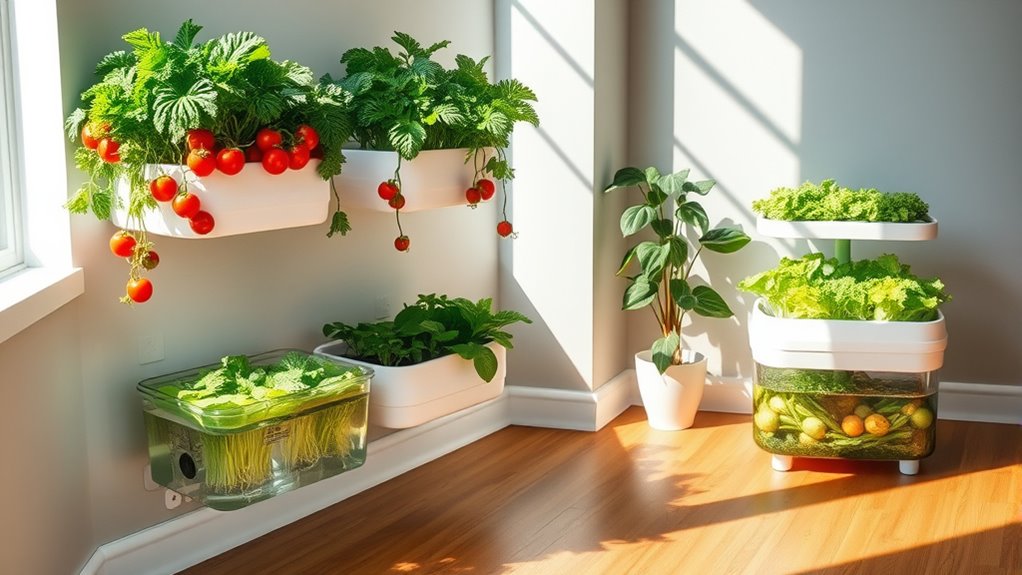

Even without a yard, you can successfully grow fresh veggies indoors by optimizing your lighting, choosing containers with good drainage, and using quality soil. LED grow lights mimic natural sunlight and keep your plants healthy, while appropriately sized containers support strong roots. Consistent watering and proper placement make all the difference. With the right setup, you’ll enjoy homegrown produce year-round—if you keep exploring, you’ll discover more tips to boost your indoor garden.

Get garden gear delivered free with Prime
- Fast, free delivery on millions of items
- Prime Video, Amazon Music and more included
- Member-only deals all year
Key Takeaways
- Use grow lights to provide sufficient spectrum and duration for healthy indoor vegetable growth.
- Select containers with drainage holes and appropriate size for different vegetables to promote healthy roots.
- Maximize natural light by placing plants near south-facing windows or supplement with LED grow lights.
- Choose high-quality, well-draining soil to support strong plant development and prevent root rot.
- Maintain consistent watering and environmental conditions to optimize indoor vegetable production year-round.
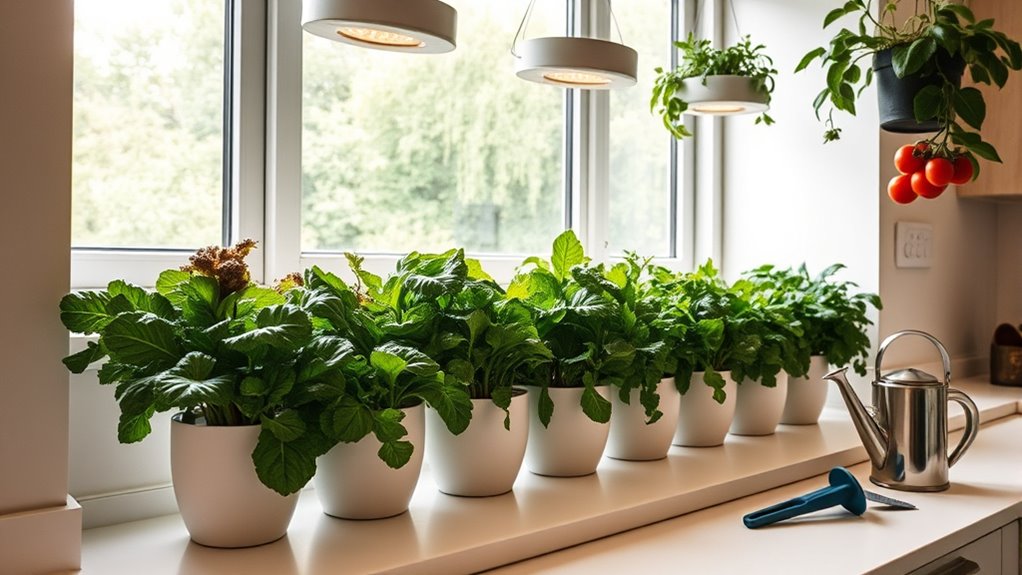
Growing veggies indoors is an excellent way to enjoy fresh produce year-round, regardless of outdoor weather conditions. When you’re starting your indoor garden, the key to success lies in understanding how to provide your plants with the right environment. Two critical factors are indoor lighting and container selection. These elements directly influence how well your veggies grow and how healthy they become.
First, consider indoor lighting. Natural sunlight is ideal, but it’s often limited indoors, especially if you don’t have a south-facing window. To compensate, invest in grow lights that mimic the spectrum of natural sunlight. LED grow lights are popular because they’re energy-efficient and provide the necessary light spectrum for photosynthesis. Position your lights about 12-24 inches above your plants, depending on the type of grow light, and keep them on for at least 12-16 hours daily to ensure your veggies get enough light to thrive. Proper lighting not only boosts growth but also helps prevent issues like legginess or weak stems, which happen when plants stretch toward insufficient light. Additionally, using appropriate lighting duration can significantly enhance plant development.
Next, think about container selection. The containers you choose will impact root development, drainage, and overall plant health. Opt for pots with drainage holes to prevent water from pooling at the bottom, which can cause root rot. Depending on the type of vegetables you’re growing, select appropriately sized containers—smaller for herbs and leafy greens, larger for root vegetables like carrots or tomatoes. Use high-quality potting soil designed for container gardening, as it promotes good aeration and retains moisture without becoming overly soggy. Additionally, consider choosing containers made from materials like terracotta or plastic, which are lightweight and durable. If space allows, use self-watering containers to help maintain consistent moisture levels, reducing the risk of underwatering or overwatering.
LED grow lights for indoor vegetables
As an affiliate, we earn on qualifying purchases.
As an affiliate, we earn on qualifying purchases.
Frequently Asked Questions
What Are the Best Vegetables for Small Indoor Spaces?
When growing veggies indoors, choose compact options like lettuce, radishes, and herbs. These plants thrive in small spaces and can be easily managed. Practice companion planting to optimize growth and naturally control pests, reducing the need for chemicals. You’ll find that mixing basil with tomatoes or chives with carrots helps keep pests at bay, making your indoor garden healthier and more productive without requiring a yard.
How Much Light Do Indoor Veggies Need Daily?
Indoor veggies generally need about 12-16 hours of light daily, but it varies with plant type. You should use artificial lighting with adequate light intensity to mimic sunlight. Place grow lights close enough to the plants without causing heat stress, and consider using full-spectrum or LED grow lights for ideal growth. Regularly monitor your plants to guarantee they get enough light and adjust as needed for healthy indoor gardening.
Can I Grow Veggies on a Windowsill Year-Round?
Yes, you can grow veggies on a windowsill year-round if you provide enough light and manage pests effectively. Use vertical gardening techniques to maximize space and keep plants healthy. Regular indoor pest management is essential to prevent issues. Make certain your windowsill gets ample sunlight daily, and consider grow lights if needed. With proper care, you’ll enjoy fresh veggies indoors all year, even without a yard.
What Type of Soil Is Ideal for Indoor Gardening?
Did you know that using the right soil can boost plant growth by up to 30%? For indoor gardening, you want a well-draining, nutrient-rich soil mix. Use soil amendments like compost or peat moss to improve fertility, and choose containers with good drainage to prevent root rot. Proper container selection and enriched soil create the ideal environment for your veggies to thrive year-round indoors.
How Often Should I Water Indoor Vegetable Plants?
You should water your indoor vegetable plants when the top inch of soil feels dry to the touch. Typically, this means watering about once a week, but it can vary depending on your indoor humidity levels. If your home has high humidity, you might need less frequent watering, while dry air requires more. Keep an eye on your plants and adjust your watering frequency to keep the soil consistently moist but not soggy.
Conclusion
Growing veggies indoors proves you don’t need a backyard to enjoy fresh, tasty produce. With a little effort, your space becomes a lush garden, much like a tiny oasis in the city. Just like a gardener nurtures plants, you can nurture your green thumb and harvest delicious veggies year-round. So, don’t let limited space hold you back—think of your indoor garden as a vibrant, thriving sanctuary where nature and your kitchen meet.
Fall yard work Picks
leaf blowers
As an affiliate, we earn on qualifying purchases.