
TL;DR

Get garden gear delivered free with Prime
- Fast, free delivery on millions of items
- Prime Video, Amazon Music and more included
- Member-only deals all year
A gardening report from Ideal Home explains how mycorrhizal fungi form networks with plant roots and may help new shrubs and trees access water and nutrients. Experts cited in the report describe potential benefits for establishment and growth, but the article does not provide trial data or evidence that every plant will respond in the same way.
Ideal Home has reported that mycorrhizal fungi, applied to soil when planting, may help new shrubs and trees establish by extending plants’ access to water and nutrients. The gardening guidance draws on comments from Envii, plant adviser Dave The Plantman and New Build Manifesto founder Andrew Jackson; it presents the fungi as a potential aid, not a guaranteed way to produce larger plants.
Mycorrhizal fungi form a relationship with plant roots. Their fine fungal threads, known as mycelium, spread through soil and can reach beyond the roots themselves. Envii told Ideal Home that these networks help plants absorb nutrients including phosphorus and nitrogen. The source report also says fungi can help plants access water, although it gives no measurements of how much uptake changes.
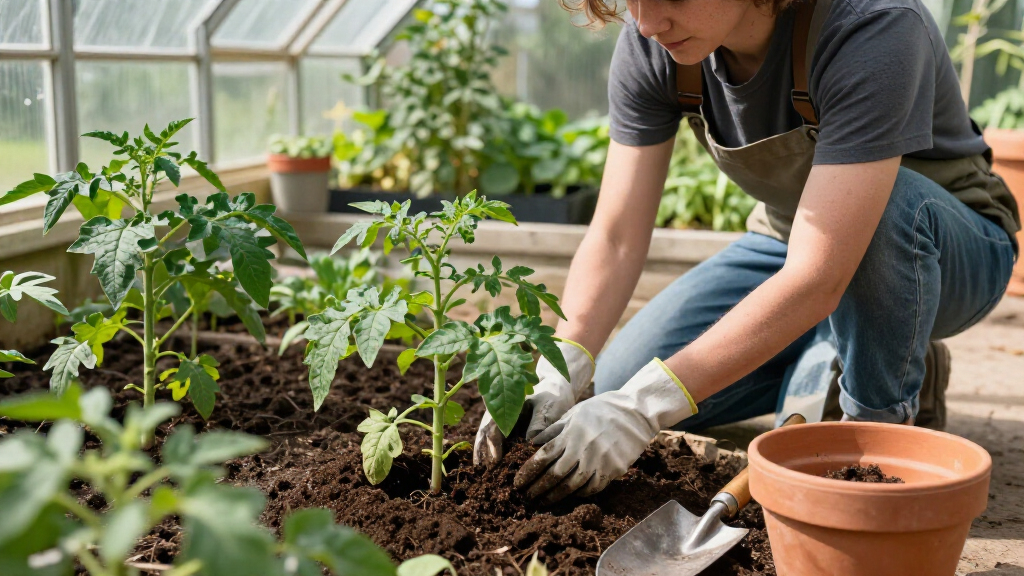
Gardeners commonly apply mycorrhizal products when putting a new shrub or tree into the ground. The report describes sprinkling a product into the planting hole before setting the plant in place. Jackson said the fungi can support root development and improve access to water and nutrients, which may help plants establish. Dave The Plantman, speaking with Mims Pottery, said the fungi can almost double a plant’s root system.
The report also relays Envii’s claim that mycorrhizal fungi may help plants withstand disease and toxins. It says the fungi occur naturally in soil, while suggesting that chemicals and fertilisers can damage fungal networks over time. It does not identify particular chemicals, quantify any damage, or offer comparative trials of products. Its practical advice is to consider an appropriate mycorrhizal product at planting, rather than treating the claimed benefits as certain.
How Fungal Networks Support Roots
For gardeners planting shrubs or trees, successful establishment matters: a plant needs to develop roots that can reach moisture and nutrients in its new location. Mycorrhizal fungi may extend the area from which a plant can draw those resources, according to the experts cited by Ideal Home. That makes the treatment relevant to planting decisions, especially where gardeners are seeking to help newly planted specimens settle in.
The article’s claims should be read as guidance, not as a promise of a particular result. It supplies no controlled research, growth figures or details about which species benefit most. Soil conditions, plant type and care are not assessed in the source. The key takeaway is narrower: fungi can partner with roots and may aid access to resources, while the size and reliability of any benefit are not established here.
Products Worth Considering

Philips Hue Play Gradient 65-Inch Smart TV Light Strip

Dyson Airwrap i.d. Multi-Styler for Straight and Wavy Hair

Dyson V8 Cyclone Cordless Vacuum
As an affiliate, we earn on qualifying purchases.
Fungi Already Live in Soil
Mycorrhizal fungi are not simply a manufactured planting additive. The source report says they occur naturally in soil and form a network of microscopic threads around or in connection with plant roots. Envii described the relationship as symbiotic, meaning the fungi and plants interact in ways that can benefit plant nutrition and growth.
Garden products are one way to introduce fungi at planting, and the Ideal Home report also notes that some products are marketed for use with plants already growing in a garden. It names several commercial products, but provides no independent comparison of their contents or effectiveness. The report’s main focus is the general role of mycorrhizal fungi, rather than a recommendation based on product testing.
“Mycorrhizal fungi increase nutrient intake.”
— Envii, as quoted by Ideal Home
Benefits Vary by Plant and Soil
The source does not establish how much mycorrhizal fungi improve growth, whether the reported near-doubling of root systems applies broadly, or which plant species and soil conditions are most likely to benefit. It also gives no details of controlled trials, sample sizes or comparisons between treated and untreated plants. Envii’s statements about resistance to disease and toxins are not supported with specific evidence in the report.
It is also unclear how much additional fungi are needed when they are already present naturally in soil, or how gardeners should account for existing soil conditions and fertiliser use. Product-specific performance is not verified. Readers should treat the stated outcomes as potential benefits rather than guaranteed effects.
Check Planting and Product Guidance
The report does not announce a new study or a formal change in gardening advice. Gardeners considering a mycorrhizal product can check its label for application instructions and suitability for the plant being put in the ground. The source describes application in the planting hole but does not provide a universal dose or timing for all products.
Further evidence would be needed to compare outcomes across plant types, products and soil conditions. Until then, the claims reported by Ideal Home remain expert guidance rather than quantified guarantees; the source provides no scheduled research or follow-up findings.
Key Questions
What are mycorrhizal fungi?
They are fungi that form networks of fine threads in soil and associate with plant roots. The report says these networks can help plants access water and nutrients.
When do gardeners apply mycorrhizal fungi?
Ideal Home describes using them when planting a new shrub or tree, by adding the product to the planting hole. Follow the specific product label, since the source does not give a universal dose.
Will mycorrhizal fungi make every plant bigger?
The report does not establish that. Experts describe possible support for root development and nutrient uptake, but results by plant species and growing conditions are not detailed.
Are the fungi already present in garden soil?
The source says mycorrhizal fungi occur naturally in soil. It does not explain how to determine whether a particular garden has enough fungal activity or whether adding a product will improve results.
Source: rss