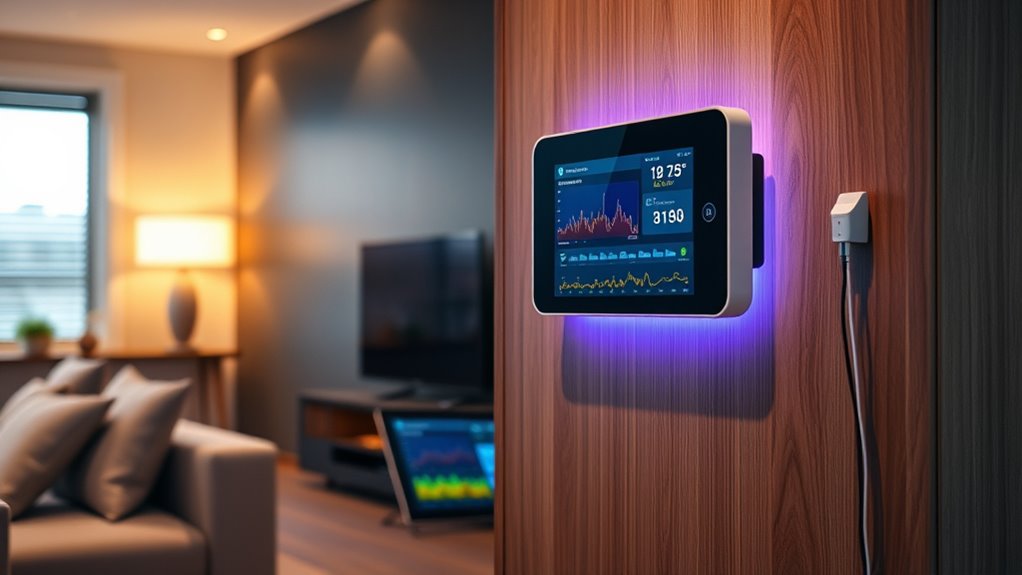

For anyone aiming to optimize home energy use, smart home energy monitors offer valuable insights into consumption patterns. The best options provide real-time data, easy connectivity, and compatibility with smart home systems. Refoss Smart Home Energy Monitor stands out as a top overall pick thanks to its local data storage and reliable sensors, making it ideal for detailed tracking. Meross Smart Energy Consumption Monitor offers a solid balance of features and affordability, especially for users seeking straightforward setup. The main tradeoffs involve balancing advanced features like API access and device compatibility against ease of use and price. Keep reading for a full breakdown of the top options to find your best fit.

Get garden gear delivered free with Prime
- Fast, free delivery on millions of items
- Prime Video, Amazon Music and more included
- Member-only deals all year
Complete the kit



Key Takeaways
- The best monitors combine real-time data with easy app control for clear energy insights.
- Higher sensor count improves accuracy, especially for complex or larger electrical systems.
- Compatibility with smart home platforms like Home Assistant greatly enhances automation potential.
- Price varies widely; premium models often include features like API access and solar tracking.
- Ease of installation and user interface can make or break the overall experience.
| Refoss Smart Home Energy Monitor with Circuit Sensors and Local Data Storage |  | Best Overall for Privacy and Detailed Circuit Data | Circuit Sensors: 16x60A | Supported Systems: Single-phase, Split-phase, 3-phase 4-wire Wye | Data Storage Duration: 5 years | VIEW ON AMAZON | See Our Full Breakdown |
| Smart Home Energy Monitor 2×80A, Dual-Channel WiFi Electricity Usage Tracker with App Control |  | Best for Solar and High-Power Appliance Monitoring | Channels: 2 | Current per channel: 80A | Connectivity: WiFi | VIEW ON AMAZON | See Our Full Breakdown |
| Smart Home Energy Monitor with 16 50A Circuit Sensors, Real-Time Power & Cost Tracking, Compatible with Home Assistant |  | Best for Privacy-Conscious, Multi-Circuit Monitoring | Number of Sensors: 16 | Sensor Current Rating: 50A | Supported Voltages: up to 415Y/240VAC | VIEW ON AMAZON | See Our Full Breakdown |
| Meross Smart Home Energy Monitor with 18 Circuit Monitoring, Home Assistant Support, Real-Time Energy Usage Tracking, Solar Surplus Detection, Smart Alerts, No Subscriptions, 2-Year Warranty |  | Best for Solar Integration and Circuit-Level Detail | Circuit Monitoring: 18 circuits | Compatibility: Home Assistant | Monitoring Type: Real-time energy usage | VIEW ON AMAZON | See Our Full Breakdown |
| Emporia Vue 3 Home Energy Monitor – Real-Time Electricity Usage and Power Consumption Meter |  | Best for Safety and Certified Reliability | Certification: UL Listed | Supported Systems: Single phase, Single-split phase, 2-wire, 3-wire, 3-phase, 4-wire Wye | Sensors: Sixteen 50A branch sensors | VIEW ON AMAZON | See Our Full Breakdown |
| Meross Smart Energy Consumption Monitor with 18 Circuit Monitoring, Electricity Usage Monitor, Real-Time Power Usage Monitor, Home Assistant Support, Smart Alerts, No Subscriptions, 2-Year Warranty |  | Best Overall for Circuit-Level Home Energy Management | Circuit Monitoring Capacity: Up to 18 circuits | Data Storage: Up to 5 years | Connectivity: Local via Home Assistant, Open API | VIEW ON AMAZON | See Our Full Breakdown |
| WiFi Home Energy Monitor with 3 80A CT Clamps, Circuit-Level Monitoring, Real-Time Electricity Usage, Smart Life/Tuya App |  | Best for Easy Circuit Monitoring with App Control | Input Voltage: AC 100–240V | Clamp Capacity: 80A per clamp | Number of Clamps: 3 | VIEW ON AMAZON | See Our Full Breakdown |
| SIEMENS Inhab Smart Home Energy Monitor with Circuit Sensors |  | Best for Professional Panel Installation and Real-Time Monitoring | Circuit Sensor Range: 16-50Amp | Main Sensors: 2-200Amp | Compatibility: USA and Canada | VIEW ON AMAZON | See Our Full Breakdown |
| Refoss Smart Home Energy Monitor with Open API & Web UI |  | Best for Privacy-Focused Local Control and AI Integration | Accuracy: ±1% | Current Range: 200A (main), 1–60A (branch) | Data Storage: Up to 5 years | VIEW ON AMAZON | See Our Full Breakdown |
| Smart Home Energy Monitor with 2 x 120A CTs, Live Electricity Usage Tracking, Bi-Directional Power Tracking, Supports Single-Phase 3-Wire System, 2.4GHz Wi-Fi |  | Best for Solar and Battery Storage with Bi-Directional Monitoring | Current Range: 200A (main), 1–60A (branch) | Bi-Directional Power: Yes | Power Accuracy: Class 1 | VIEW ON AMAZON | See Our Full Breakdown |
| smart home energy monitors to track usage | Connectivity | Warranty |
|---|---|---|
| Refoss Smart Home Energy Monit | Wi-Fi, Open API, MQTT, WebSocket | 2 years |
| Smart Home Energy Monitor 2×80 | WiFi | — |
| Smart Home Energy Monitor with | WiFi 2.4GHz, MQTT | 1 year |
| Meross Smart Home Energy Monit | — | 2 years |
| Emporia Vue 3 Home Energy Moni | 2.4 GHz Wi-Fi | 1 year |
| Meross Smart Energy Consumptio | Local via Home Assistant, Open API | 2 years |
| WiFi Home Energy Monitor with | WiFi 2.4GHz | — |
| SIEMENS Inhab Smart Home Energ | — | — |
| Refoss Smart Home Energy Monit | — | — |
| Smart Home Energy Monitor with | Wi-Fi 2.4GHz | — |
More Details on Our Top Picks
Refoss Smart Home Energy Monitor with Circuit Sensors and Local Data Storage
The Refoss Smart Home Energy Monitor stands out for its ability to track up to 18 circuits with high granularity, offering real-time insights without relying on cloud services. Compared with the Emporia Vue 3, it provides more circuits and local data storage for privacy-conscious users, though it demands a higher level of technical skill for installation. The device supports multiple electrical configurations and stores data for up to 5 years, making it ideal for users who want comprehensive analytics without ongoing subscriptions. Its reliance on app-based data access might deter those looking for a simple display, but for tech-savvy households, this setup offers maximum control and privacy.
Pros:- Provides detailed real-time monitoring for up to 18 circuits
- Supports local data storage and privacy without cloud dependency
- Compatible with home automation platforms like Home Assistant
- Supports solar energy management and custom alerts
Cons:- Requires technical knowledge for installation and setup
- Limited to single-phase, split-phase, and 3-phase systems
- No built-in display; relies solely on app or web interface
Best for: Homeowners with technical knowledge seeking detailed, privacy-focused energy monitoring across multiple circuits
Not ideal for: Less experienced users or those preferring plug-and-play solutions with built-in displays
- Circuit Sensors:16x60A
- Supported Systems:Single-phase, Split-phase, 3-phase 4-wire Wye
- Data Storage Duration:5 years
- Connectivity:Wi-Fi, Open API, MQTT, WebSocket
- Certification:ETL
- Warranty:2 years
Our verdict“This monitor suits advanced users who prioritize detailed analytics and privacy over ease of setup.”
Smart Home Energy Monitor 2×80A, Dual-Channel WiFi Electricity Usage Tracker with App Control
Compared with the Refoss model, this dual-channel monitor offers simplicity with clamp-style sensors and straightforward WiFi setup, making it accessible for users with standard household systems. Its capacity for bi-directional power flow monitoring makes it especially suitable for homes with solar panels or backup power sources, providing real-time insights into both consumption and generation. However, it only supports two channels, which might limit its usefulness in larger or more complex setups. While installation is quick and app-based, users need a stable WiFi connection to maximize its features, and it lacks a built-in display, relying entirely on the app interface.
Pros:- Real-time energy tracking for two channels with high current capacity
- Supports bi-directional energy flow for solar or backup systems
- Easy clamp-on installation without wiring modifications
- Integrates with popular smart home apps like Tuya/Smart Life
Cons:- Limited to 2 channels, may not fit larger systems
- Requires stable WiFi connection for full functionality
- No dedicated display; data is accessed via app
Best for: Homeowners with solar systems or high-power appliances needing real-time, dual-channel monitoring
Not ideal for: Large households with more than two circuits or users seeking a stand-alone display unit
- Channels:2
- Current per channel:80A
- Connectivity:WiFi
- App Compatibility:Tuya/Smart Life
- Installation:Clamp-style sensors
- Supported systems:Standard household, solar, backup power
Our verdict“Best suited for solar-equipped homes or users with specific high-power appliances that need quick, dual-channel insights.”
Smart Home Energy Monitor with 16 50A Circuit Sensors, Real-Time Power & Cost Tracking, Compatible with Home Assistant
This energy monitor offers detailed real-time power and cost data across 16 circuits, ideal for shared housing or rental properties where privacy and control are priorities. Compared to the Meross model, it emphasizes local control via MQTT and LAN, avoiding cloud dependence. Its clamp-on sensors are easy to install, but it supports only single-phase or three-phase configurations, which might limit compatibility with some electrical panels. While lacking a built-in display, it provides comprehensive data via network protocols, making it well-suited for users comfortable with smart home integrations.
Pros:- Supports detailed real-time energy and cost monitoring
- Supports privacy with LAN and MQTT-only operation
- Easy clamp-on installation in most circuit panels
- Ideal for shared and rental properties
Cons:- Requires technical setup for MQTT and Home Assistant
- Limited to single-phase or three-phase systems; no Delta support
- No built-in display; data access is via network
Best for: Energy-conscious renters or owners who want local, customizable energy analytics without cloud reliance
Not ideal for: Users seeking a plug-and-play device with a display or those with complex three-phase systems requiring Delta support
- Number of Sensors:16
- Sensor Current Rating:50A
- Supported Voltages:up to 415Y/240VAC
- Connectivity:WiFi 2.4GHz, MQTT
- Monitoring Range:Real-time, hourly, daily, weekly, monthly, yearly
- Warranty:1 year
Our verdict“This pick caters to users wanting detailed, private monitoring with flexible integration options for small to medium systems.”
Meross Smart Home Energy Monitor with 18 Circuit Monitoring, Home Assistant Support, Real-Time Energy Usage Tracking, Solar Surplus Detection, Smart Alerts, No Subscriptions, 2-Year Warranty
Compared to the Refoss and Emporia models, the Meross monitor offers extensive circuit coverage with 18 circuits and supports solar surplus detection, making it a versatile choice for solar homes. Its integration with Home Assistant enhances automation, and the clamp-on design simplifies installation. However, it is limited to 2 main circuits and 16 branch circuits, which could be restrictive for larger homes, and it relies on the app for data display, lacking a built-in screen. Its accuracy within ±2% and comprehensive long-term data storage make it a compelling choice for users wanting detailed control and solar management.
Pros:- Supports 18 circuits with detailed monitoring
- Includes solar surplus detection and smart alerts
- Integrates smoothly with Home Assistant for automation
- Stores up to 5 years of energy data
Cons:- Limited to 2 main circuits and 16 branch circuits
- Requires familiarity with home energy systems for setup
- No built-in display; relies on app for data
Best for: Solar owners or energy-focused households with multiple circuits looking for detailed, automation-ready monitoring
Not ideal for: Very large homes with extensive circuits or those needing a built-in display for quick info
- Circuit Monitoring:18 circuits
- Compatibility:Home Assistant
- Monitoring Type:Real-time energy usage
- Solar Support:Solar surplus detection
- Warranty:2 years
- Certifications:ETL, UL 61010
Our verdict“Ideal for solar households wanting circuit-level insight with automation integration without subscription fees.”
Emporia Vue 3 Home Energy Monitor – Real-Time Electricity Usage and Power Consumption Meter
The Emporia Vue 3 is distinguished by its UL certification, offering a level of safety assurance that appeals to cautious homeowners. It provides real-time data for up to 16 circuits, with sensors that are easy to install, similar to the Meross and Refoss options. Its data retention of 7 days at 1-minute intervals is more limited than others, but it compensates with compatibility across iPhone, Android, and web platforms, making it accessible for diverse users. This device is best for those who prioritize safety certifications and straightforward automation, but less so for users needing extensive long-term data or advanced privacy controls.
Pros:- UL-listed for safety and reliability
- Supports real-time monitoring and automation
- Multiple sensors for critical load tracking
- Compatible with multiple platforms including web and mobile
Cons:- Limited to 7 days of data at 1-minute resolution
- Additional sensors needed for some system configurations
- No built-in display; data accessed via app
Best for: Safety-conscious homeowners wanting reliable, UL-listed monitoring with simple setup
Not ideal for: Advanced users requiring extensive long-term data or local control without cloud dependencies
- Certification:UL Listed
- Supported Systems:Single phase, Single-split phase, 2-wire, 3-wire, 3-phase, 4-wire Wye
- Sensors:Sixteen 50A branch sensors
- Connectivity:2.4 GHz Wi-Fi
- Data Retention:7 days
- Warranty:1 year
Our verdict“This monitor suits safety-minded users seeking reliable, certified monitoring with broad device compatibility.”
Meross Smart Energy Consumption Monitor with 18 Circuit Monitoring, Electricity Usage Monitor, Real-Time Power Usage Monitor, Home Assistant Support, Smart Alerts, No Subscriptions, 2-Year Warranty
This monitor stands out for its comprehensive circuit-level tracking and seamless integration with Home Assistant, making it ideal for solar homes and those seeking detailed energy insights. Unlike the SIEMENS Inhab, which focuses more on mains and circuit sensors without smart automation, the Meross offers a broader range of circuit monitoring up to 18 circuits, plus smart alerts and data export capabilities. Its local data processing and no subscription model prioritize privacy and cost-effectiveness, although the installation can be complex for some users. The device’s ability to analyze five years of data and support solar surplus detection makes it a top choice for energy-conscious homeowners who value automation and privacy. The tradeoff: it requires some technical setup, and its comprehensive features may be more than needed for casual users.
Pros:- Supports up to 18 circuits with detailed monitoring
- Integrates with Home Assistant for advanced automation
- Stores up to 5 years of data with export options
- No subscriptions, prioritizing privacy
Cons:- Installation may require technical skills and electrical work
- Setup can be time-consuming for beginners
Best for: Homeowners with solar setups or those wanting detailed circuit-level data and automation support
Not ideal for: Renters or those seeking a simple plug-and-play device without complex wiring
- Circuit Monitoring Capacity:Up to 18 circuits
- Data Storage:Up to 5 years
- Connectivity:Local via Home Assistant, Open API
- Supports Solar Surplus Detection:Yes
- Warranty:2 years
Our verdict“This monitor is perfect for tech-savvy homeowners aiming for detailed, private energy management and solar optimization.”
WiFi Home Energy Monitor with 3 80A CT Clamps, Circuit-Level Monitoring, Real-Time Electricity Usage, Smart Life/Tuya App
This monitor excels in supporting multiple high-power circuits with its three 80A clamps and real-time monitoring via the popular Smart Life or Tuya app. Compared with the Refoss model, which emphasizes local control and API access, this device prioritizes user-friendliness and app-centric features. Its installation requires electrical wiring, making it better suited for users with basic electrical knowledge or professional installers. The temperature alerts and remote circuit control are convenient, but the device’s limited 80A clamp capacity means it isn’t suitable for very high-power circuits, such as large HVAC systems. For users who want straightforward circuit monitoring and remote control in a user-friendly app, this pick offers a balanced approach, though it sacrifices some advanced automation options.
Pros:- Supports three circuits simultaneously with 80A clamps
- Real-time and historical data via app
- Includes temperature alerts and remote ON/OFF control
- Easy to see energy patterns and respond quickly
Cons:- Requires electrical wiring and professional setup
- Limited to circuits within 80A; not suitable for large loads
Best for: Homeowners who want circuit-level insights with simple app control and moderate installation effort
Not ideal for: Users with very high-power circuits exceeding 80A or those seeking deep automation without app reliance
- Input Voltage:AC 100–240V
- Clamp Capacity:80A per clamp
- Number of Clamps:3
- Connectivity:WiFi 2.4GHz
- Dimensions:4.2 x 2.5 x 1.2 inches
- App Compatibility:Smart Life/Tuya
Our verdict“This device is well-suited for homeowners wanting quick, app-based circuit monitoring without complex integrations.”
SIEMENS Inhab Smart Home Energy Monitor with Circuit Sensors
This model is tailored for users who prefer professional installation directly into the electrical panel, offering real-time energy data for mains and circuits with solid UL and CE certification. Compared to the Meross, which offers extensive circuit monitoring and automation, the SIEMENS device leans toward more traditional utility-level management with a focus on safety and compliance. Its installation, while straightforward for electricians, limits use for DIY homeowners. The personal alerts and detailed monitoring help identify abnormal activity, making it ideal for energy-conscious households or small businesses. However, it is limited mostly to North American markets and requires professional setup, so users without electrical expertise may find it less accessible.
Pros:- Supports detailed monitoring at mains and circuit levels
- Real-time data via mobile app
- Easy installation in existing panels
Cons:- Requires professional installation
- Limited to USA and Canada
Best for: Homeowners or small business owners seeking professional-grade, panel-installed energy monitoring
Not ideal for: Renters or DIY enthusiasts without electrical wiring experience
- Circuit Sensor Range:16-50Amp
- Main Sensors:2-200Amp
- Compatibility:USA and Canada
- Standards:CE, UL Listed
Our verdict“This is best suited for users needing reliable, panel-level energy monitoring installed by professionals.”
Refoss Smart Home Energy Monitor with Open API & Web UI
This monitor excels in privacy and advanced local control, supporting integration with Home Assistant, MQTT, and AI automation. Compared to the Meross and Siemens options, which focus on circuit or panel monitoring, Refoss emphasizes data privacy and long-term data storage with ±1% accuracy, making it ideal for tech-savvy users concerned about cloud reliance. Its support for solar energy management and circuit-level monitoring makes it a versatile choice for energy optimization. The need for physical installation in circuit panels and specific current ranges could be a limitation for some, but the local data handling and open API make it highly adaptable for custom setups. This device makes the most sense for users prioritizing privacy, API access, and long-term data analysis over plug-and-play simplicity.
Pros:- Local data control with no cloud reliance
- Supports Home Assistant and MQTT
- High accuracy with ±1% measurement
- Supports solar and circuit-level monitoring
Cons:- Requires physical installation in circuit panels
- Limited current ranges for very high loads
Best for: Energy enthusiasts and developers seeking local control, privacy, and AI automation integration
Not ideal for: Casual users or those uncomfortable with DIY wiring and technical setup
- Accuracy:±1%
- Current Range:200A (main), 1–60A (branch)
- Data Storage:Up to 5 years
- Integration:Home Assistant, MQTT, Web UI
- Certifications:ETL, UL 61010
Our verdict“This is an excellent choice for users who prioritize privacy, customization, and long-term energy tracking.”
Smart Home Energy Monitor with 2 x 120A CTs, Live Electricity Usage Tracking, Bi-Directional Power Tracking, Supports Single-Phase 3-Wire System, 2.4GHz Wi-Fi
This monitor specializes in detailed, highly accurate energy tracking, especially suited for homes with solar panels and battery systems, thanks to its bi-directional power measurement. Compared with the Meross or Refoss models, which focus on circuit or local control, this device emphasizes grid export/import monitoring with Class 1 accuracy, making it invaluable for optimizing solar use and reducing costs. Its straightforward plug-in terminals and compatibility with the Smart Life app simplify setup, though it may be less suitable for very high loads beyond 120A or for those seeking extensive automation features. For households aiming to maximize solar efficiency and manage energy flow precisely, this pick offers a clear advantage, with some tradeoffs in complexity and load capacity.
Pros:- Highly precise bi-directional power measurement
- Supports dynamic load balancing and zero export mode
- Plug-and-play installation with app control
- Optimized for solar and battery systems
Cons:- Limited to 120A per clamp, not for very high loads
- Requires compatible app and setup for full features
Best for: Solar households and energy managers seeking precise, bi-directional energy tracking
Not ideal for: Users without solar panels or those needing simple, non-bi-directional monitors
- Current Range:200A (main), 1–60A (branch)
- Bi-Directional Power:Yes
- Power Accuracy:Class 1
- Connectivity:Wi-Fi 2.4GHz
- Installation:Pluggable terminals
Our verdict“This monitor is best for solar owners wanting detailed energy export and import data for maximizing efficiency.”
How We Picked
These products were selected based on their ability to deliver accurate, real-time energy data with user-friendly interfaces. We prioritized devices with multiple circuit sensors, compatibility with popular smart home platforms, and reliable build quality. Ease of installation and ongoing maintenance also played key roles, as did the availability of features like local data storage and API access. The ranking reflects a balanced view of value, versatility, and performance—aiming to help different types of users find a monitor that fits their technical comfort level and energy management goals.Factors to Consider When Choosing Smart Home Energy Monitors To Track Usage
Choosing the right smart home energy monitor involves considering several important factors to ensure it meets your specific needs. Beyond basic data collection, think about how the device integrates with your existing smart home ecosystem, its accuracy, and ease of use. Proper selection can prevent frustration and maximize the value you get from your investment. Understanding these key considerations will help you avoid common pitfalls and select a monitor that provides meaningful insights for your household.Sensor Capacity and System Compatibility
Assess how many circuits the monitor can track simultaneously, especially if you have a larger or more complex electrical system. A higher sensor count usually translates to more detailed and accurate data. Equally important is compatibility with your existing smart home ecosystem, such as Google Home, Alexa, or Home Assistant, to enable automation and centralized control. Opting for a device with open APIs or broad platform support can offer future-proofing and customization options.
Ease of Installation and Setup
Many monitors require installing sensors around your breaker panel, which can be a delicate task. Choose a product with straightforward instructions, clear labeling, and minimal wiring complexity if you’re less experienced. Some units are designed for DIY installation, while others may benefit from professional setup. Remember that overly complicated installation may deter consistent use, reducing overall effectiveness.
Data Access and Reporting
Consider whether the monitor provides real-time data via an app or web interface, and if it offers historical tracking. Local data storage can be a plus for privacy and independence from internet outages. API access is valuable for advanced users who want to integrate energy data into custom dashboards or automation routines. Clear, intuitive reporting makes it easier to identify consumption patterns and savings opportunities.
Price and Value
Devices range from budget-friendly options to premium models loaded with features. Cheaper monitors often provide basic real-time tracking but may lack compatibility or advanced analytics. High-end options tend to include additional sensors, API access, and integration capabilities, justifying their higher cost for power users. Weigh your budget against the features you genuinely need to avoid overspending on unnecessary extras or missing out due to limited functionality.
Long-Term Reliability and Support
Look for products with good build quality, reliable sensors, and responsive customer support. A monitor that frequently malfunctions or has poor software updates can frustrate ongoing use. Warranty and manufacturer reputation matter, especially if you plan to rely on the device for critical energy management. Reading user reviews can also reveal common issues or particularly strong points of each model.
Frequently Asked Questions
Can a smart home energy monitor track individual appliances?
Most smart home energy monitors focus on whole-system or circuit-level tracking rather than individual devices. While some models can differentiate between circuits, identifying specific appliances usually requires additional smart plugs or specialized sensors. If detailed appliance-level data is critical, consider combining a circuit monitor with smart plugs on individual devices. This approach can provide a more granular view of energy consumption for specific appliances or electronics.
Is it necessary for my energy monitor to connect to Wi-Fi?
Wi-Fi connectivity is generally essential for real-time data access, remote monitoring, and integration with smart home systems. Monitors without Wi-Fi often rely on local or manual data retrieval, which can limit usability. Wi-Fi-enabled devices typically offer more seamless setup and ongoing access via apps or web portals. However, ensure your network is secure, as exposing energy data online can pose privacy concerns if not properly managed.
How accurate are these energy monitors compared to utility meters?
Smart home energy monitors are designed to provide close approximations rather than exact utility readings. Their accuracy depends on sensor quality, installation precision, and the complexity of your electrical system. While they are generally reliable for tracking trends and identifying high consumption appliances, they may not match the exact precision of professional utility meters. For most household needs, their accuracy is sufficient to guide energy-saving decisions.
Can these monitors help reduce my energy bills?
Yes, by providing detailed insights into when and how you use energy, these monitors enable you to identify inefficiencies and adjust behaviors accordingly. For example, you might discover that certain appliances consume excessive power or that your system runs inefficiently during peak hours. Over time, this awareness can lead to smarter usage and potential savings, especially when combined with automation or behavioral changes. Keep in mind that the actual savings depend on how actively you use the data to modify habits.
Are there any privacy concerns with smart energy monitors?
While most monitors store data locally or within trusted cloud services, privacy depends on the manufacturer’s data policies and security practices. Devices with open APIs or local data storage options tend to offer more control over your information. It’s advisable to review privacy policies and ensure your network security is robust, especially if the monitor transmits sensitive data over the internet. Choosing a reputable brand reduces the risk of data misuse or breaches.
Conclusion
The best overall choice for most users is the Refoss Smart Home Energy Monitor, thanks to its combination of local data storage and reliable sensors. If you’re seeking value without sacrificing core features, the Meross Smart Energy Consumption Monitor stands out for its affordability and compatibility. For those willing to invest more, the Emporia Vue 3 offers advanced analytics and extensive sensor options. Beginners or casual users should prioritize models with simple setup and intuitive apps, while power users will benefit from monitors supporting API access and integrations. Matching your technical comfort and goals will ensure you pick the right device for a more energy-efficient home.
Fall Picks
fall essentials
As an affiliate, we earn on qualifying purchases.