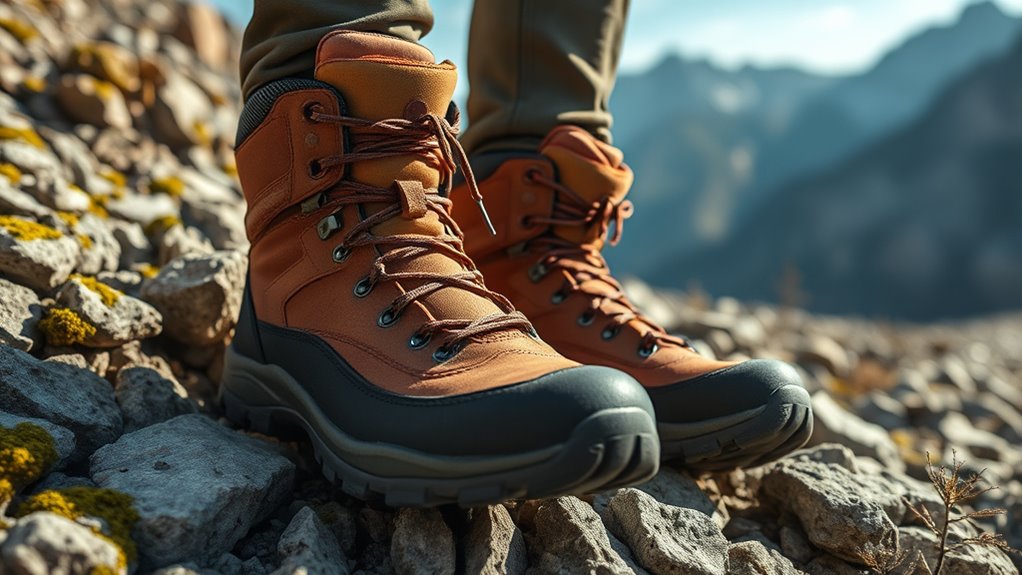

For a strong balance of rugged-trail support, weather protection, and manageable weight, I’d put the SCARPA Kinesis Pro GTX at the top of this roundup, with the Asolo TPS 520 GV Evo and Kenetrek Mountain Extreme standing out for demanding loads and rough ground. These boots differ in how much support and break-in they ask of you: robust leather designs favor stability and durability, while lighter hikers can feel easier over long days but offer less structure under heavy packs. Waterproof membranes help in wet conditions, though they can run warmer and dry more slowly than non-waterproof builds. Fit and intended load matter as much as the boot’s rugged reputation. Read on for the full breakdown and a guide to matching a boot to your trails.

Get garden gear delivered free with Prime
- Fast, free delivery on millions of items
- Prime Video, Amazon Music and more included
- Member-only deals all year
Complete the kit


Key Takeaways
- The lineup splits between supportive backpacking boots and lighter hikers: the Asolo TPS 520 GV Evo, SCARPA Kinesis Pro GTX, and Kenetrek Mountain Extreme are the more structured choices for heavy loads and rough terrain.
- Kenetrek’s models serve different demands: Mountain Extreme prioritizes a protective, supportive build, while the Corrie II Hiker and Hardscrabble Hiker offer distinct alternatives for hikers who want a less specialized fit or use case.
- Danner’s Mountain 600 family favors a more approachable feel: the standard, GTX, and EVO versions are worth comparing for their construction and weather protection rather than assuming the shared name means identical performance.
- Waterproofing is not an automatic upgrade: GTX and other waterproof builds suit wet trails, but can retain more heat; the non-insulated Kenetrek Mountain Extreme avoids added insulation for a different balance in changing conditions.
- The Merrell and Oboz options broaden the field beyond stiff backpacking boots: Moab 3 Mid, Speed Strike 2 Mid LTR WP, and Bridger Mid B-DRY offer alternatives for buyers prioritizing easier everyday wear, while still requiring a careful fit check for rugged terrain.
| Asolo Men’s TPS 535 LTH V EVO Leather Hiking Boots |  | Best for Heavy-Load Treks | Upper: 2.6–2.8 mm water-resistant full-grain leather | Lining: Cambrelle | Midsole: Co-injected polyurethane | VIEW ON AMAZON | See Our Full Breakdown |
| Kenetrek Men’s Mountain Extreme Non-Insulated Hiking Boots |  | Best for Severe, Load-Bearing Terrain | Upper material: 100% leather | Shaft height: 10 inches | Insulation: Non-insulated | VIEW ON AMAZON | See Our Full Breakdown |
| SCARPA Men’s Rush TRK GTX Hiking Boots |  | Best for Wet, Multi-Day Trekking | Upper: Suede leather and fabric | Lining: GORE-TEX ePE Bluesign, PFC-free | Insole: P-Flex Lite, DST TPU Frame | VIEW ON AMAZON | See Our Full Breakdown |
| Danner Mountain 600 Men’s Hiking Boots |  | Best for Wet-Trail Grip | Outer material: Leather or suede | Waterproofing: Danner Dry barrier | Shaft height: Ankle | VIEW ON AMAZON | See Our Full Breakdown |
| Merrell Men’s Moab 3 Mid Waterproof Hiking Boots |  | Best for Comfortable Day Hikes | Upper: Pig suede leather and breathable mesh | Waterproofing: Waterproof membrane | Shaft height: Ankle | VIEW ON AMAZON | See Our Full Breakdown |
| Danner Skyridge Hiking Boots for Men – Waterproof, Suede & Cotton Ripstop Upper, Breathable Lining, Comfort Footbed & Traction Outsole |  | Best for Trail-to-Town Use | Upper: Suede and cotton ripstop | Fabric: 100% leather and textile | Shaft height: Ankle | VIEW ON AMAZON | See Our Full Breakdown |
| Merrell Men’s Speed Strike 2 Mid LTR WP |  | Best for Lightweight Day Hikes | Upper: Full-grain leather | Shaft height: Mid | Shaft circumference: 4 inches | VIEW ON AMAZON | See Our Full Breakdown |
| Danner Men’s Mountain 600 ID Gore-Tex Hiking Boots – Waterproof, Durable, and Comfortable for All-Day Adventures |  | Best for Wet, Rugged Day Trails | Outer material: Nylon | Waterproofing: GORE-TEX | Water resistance: Waterproof | VIEW ON AMAZON | See Our Full Breakdown |
| Asolo Men’s TPS 520 GV Evo Waterproof Backpacking Boots |  | Best for Heavy-Load Backpacking | Shaft height: Ankle | Shaft circumference: 13 inches | Upper: 2.6–2.8 mm full-grain leather | VIEW ON AMAZON | See Our Full Breakdown |
| SCARPA Men’s Kinesis Pro GTX Hiking Boots |  | Best for Technical Terrain | Origin: Italy | Weight: 1 lb 14 oz | Upper: 2.4 mm PFAS-free smoothout leather | VIEW ON AMAZON | See Our Full Breakdown |
| Kenetrek Men’s Corrie II Hiker Hiking Boots |  | Best Lightweight Pick for Rugged Trails | Upper material: 100% leather | Shaft height: 7 inches | Waterproofing: Windtex membrane | VIEW ON AMAZON | See Our Full Breakdown |
| Merrell Men’s Moab 3 Mid Waterproof Hiking Boots |  | Best for Familiar, Cushioned Trail Comfort | Shaft height: Mid | Shaft circumference: 4 inches | Upper: Pig suede leather and breathable mesh | VIEW ON AMAZON | See Our Full Breakdown |
| Kenetrek Men’s Hardscrabble Hiker Hiking Boots |  | Best for Extended, Demanding Hikes | Material: 100% leather | Lining: Synthetic | Sole: Rubber | VIEW ON AMAZON | See Our Full Breakdown |
| Danner Men’s Mountain 600 EVO 4.5″ Hiking Boot – Waterproof GORE-TEX Leather, Vibram Megagrip Traction, OrthoLite Footbed |  | Best Premium Grip for Day Hikes | Shaft height: 4.5 inches | Shaft circumference: 11.02 inches | Upper material: Full-grain leather | VIEW ON AMAZON | See Our Full Breakdown |
| Oboz Men’s Bridger Mid B-DRY Waterproof Hiking Boots |  | Best Structured Support with Detailed Underfoot Specs | Fabric type: 100% leather | Origin: Made in the USA or imported | Sole material: Rubber | VIEW ON AMAZON | See Our Full Breakdown |
| premium hiking boots for rugged trail | Shaft height | Midsole | Outsole | Upper |
|---|---|---|---|---|
| Asolo Men’s TPS 535 LTH V EVO | Ankle | Co-injected polyurethane | Asolo/Vibram Triple Power Structure | 2.6–2.8 mm water-resistant full-grain leather |
| Kenetrek Men’s Mountain Extrem | 10 inches | 7 mm nylon | K-Talon | — |
| SCARPA Men’s Rush TRK GTX Hiki | — | 2D EVA-CM | PRESA TRK-01, Supergum | Suede leather and fabric |
| Danner Mountain 600 Men’s Hiki | Ankle | Rubberized EVA | Vibram Fuga with Megagrip compound | — |
| Merrell Men’s Moab 3 Mid Water | Ankle | Super Rebound Compound | — | Pig suede leather and breathable mesh |
| Danner Skyridge Hiking Boots f | Ankle | EVA | Slip-resistant Mountain Tread with multidirectional lugs | Suede and cotton ripstop |
| Merrell Men’s Speed Strike 2 M | Mid | Lightweight EVA foam | — | Full-grain leather |
| Danner Men’s Mountain 600 ID G | — | Vibram SPE | Danner Plyolite | — |
| Asolo Men’s TPS 520 GV Evo Wat | Ankle | Dual-density polyurethane | Asolo/Vibram TPS Evo | 2.6–2.8 mm full-grain leather |
| SCARPA Men’s Kinesis Pro GTX H | — | 2D PU | Vibram Biometric, XS Trek | 2.4 mm PFAS-free smoothout leather |
| Kenetrek Men’s Corrie II Hiker | 7 inches | — | Grapon | — |
| Merrell Men’s Moab 3 Mid Water | Mid | Super Rebound Compound | Vibram TC5+ | Pig suede leather and breathable mesh |
| Kenetrek Men’s Hardscrabble Hi | 7 inches | — | — | — |
| Danner Men’s Mountain 600 EVO | 4.5 inches | — | Vibram Megagrip | — |
| Oboz Men’s Bridger Mid B-DRY W | 4.5 inches | — | — | — |
More Details on Our Top Picks
Asolo Men’s TPS 535 LTH V EVO Leather Hiking Boots
For rugged routes where a full-grain leather build and underfoot support matter more than a light step, I’d put the Asolo TPS 535 LTH V EVO near the front of the pack. Its 2.6–2.8 mm water-resistant leather upper and co-injected polyurethane midsole are suited to long hikes and heavier loads, while the Asolo/Vibram Triple Power Structure outsole adds traction across varied ground. The Cambrelle lining is designed to help manage moisture, though the upper is described as water-resistant rather than fully waterproof.
Compared with the Kenetrek Mountain Extreme, this Asolo has an ankle-height shaft rather than a 10-inch shaft, making it the less coverage-focused option. It may also suit hikers seeking substantial leather support without committing to the Kenetrek’s taller profile. The tradeoff is that the product data gives no weight or fit feedback, so I’d be cautious if pack weight or a well-documented fit is a priority.
Pros:- Thick, water-resistant full-grain leather upper is suited to repeated trail use
- Co-injected polyurethane midsole offers cushioning and support for long hikes
- Asolo/Vibram outsole is designed for grip on varied terrain
- Cambrelle lining helps manage moisture inside the boot
Cons:- Water resistance is specified, but a waterproof membrane is not listed
- No boot weight is provided, making pack-weight comparisons difficult
- No fit feedback is included to help predict sizing or break-in needs
Best for: Backpackers carrying substantial loads who want a supportive, leather ankle boot for varied trails and do not require a stated waterproof membrane
Not ideal for: Hikers who need confirmed waterproof construction, a lightweight boot, or detailed weight and fit information before choosing
- Upper:2.6–2.8 mm water-resistant full-grain leather
- Lining:Cambrelle
- Midsole:Co-injected polyurethane
- Outsole:Asolo/Vibram Triple Power Structure
- Shaft height:Ankle
- Shaft circumference:13 inches
- Sole material:Rubber
- Origin:Imported
Our verdict“Choose the Asolo for load-carrying hikes that call for durable leather support, but skip it if you need confirmed waterproofing or a known lightweight build.”
Kenetrek Men’s Mountain Extreme Non-Insulated Hiking Boots
The Kenetrek Mountain Extreme is the lineup’s most coverage-focused choice: its 10-inch shaft, full-grain leather construction, and 7 mm nylon midsole are aimed at demanding mountain terrain and heavy loads. A Windtex waterproof membrane adds weather protection, while the K-Talon outsole is built for traction. Because this version is non-insulated, it avoids an insulated boot’s extra warmth but is a less suitable match for cold-weather trips without warm socks or other foot protection.
Compared with the ankle-height Asolo TPS 535, the Kenetrek offers a taller shaft and a more specialized, rugged profile; that added coverage comes with a likely cost in weight and flexibility. The product description also flags stiffness and a possible break-in period, so I would not pick it for casual hikes or hikers who want a forgiving boot straight out of the box. Its strengths make the most sense when support takes priority over nimbleness.
Pros:- Full-grain leather construction is suited to rough, repeated use
- Windtex membrane provides waterproof protection with breathability
- 10-inch shaft offers more coverage than the ankle-height Asolo TPS 535
- 7 mm nylon midsole and K-Talon outsole target support and rugged-terrain traction
Cons:- Heavy and stiff construction may feel tiring on long, fast-moving hikes
- May require a break-in period before it feels comfortable
- Non-insulated design may not provide enough warmth in winter conditions
Best for: Experienced hikers and hunters carrying heavy loads over rough mountain terrain who want a tall, waterproof, non-insulated leather boot
Not ideal for: Day hikers seeking a light, flexible boot, or winter hikers who need built-in insulation and immediate comfort
- Upper material:100% leather
- Shaft height:10 inches
- Insulation:Non-insulated
- Waterproof membrane:Windtex
- Midsole:7 mm nylon
- Outsole:K-Talon
- Sole material:Rubber
- Origin:Imported
Our verdict“Pick the Kenetrek for rough, load-bearing mountain trips where tall waterproof support matters more than low weight or flexibility.”
SCARPA Men’s Rush TRK GTX Hiking Boots
The SCARPA Rush TRK GTX brings a weather-ready construction to multi-day trail trekking: suede leather and fabric form the upper, while a GORE-TEX ePE lining supplies waterproof, breathable protection. Its P-Flex Lite insole, DST TPU frame, and 2D EVA-CM midsole are intended to combine structure with shock absorption; the PRESA TRK-01 outsole uses Supergum for trail grip. That mix makes it a more trekking-oriented option than the cushioned, medium-support Merrell Moab 3 Mid.
The tradeoff is weight: the listed half-pair weight is 19.5 ounces in size 42, which may feel like a burden on long days for hikers focused on moving quickly. The SCARPA’s technical waterproofing and supportive build may suit rough, wet routes better than a simpler day-hiking boot, but it is not the pick for anyone prioritizing a minimal feel. The listed size is EU 44, equivalent to US men’s 10.5.
Pros:- GORE-TEX ePE lining provides waterproof, breathable weather protection
- Suede leather and fabric upper balances rugged materials with a trekking-focused design
- DST TPU frame and supportive insole add structure underfoot
- PRESA TRK-01 outsole with Supergum is designed for trail traction
Cons:- Listed half-pair weight may feel tiring over long distances
- More structured build may be excessive for easy day hikes
- Product data lists limited color options
Best for: Trekking hikers who want waterproof protection, structured support, and shock absorption for wet, multi-day routes
Not ideal for: Fast-moving hikers who prioritize low weight, or buyers who want a simpler day-hike boot with less technical construction
- Upper:Suede leather and fabric
- Lining:GORE-TEX ePE Bluesign, PFC-free
- Insole:P-Flex Lite, DST TPU Frame
- Midsole:2D EVA-CM
- Outsole:PRESA TRK-01, Supergum
- Weight:19.5 oz per half pair, size 42
- Listed size:EU 44; US men’s 10.5 / women’s 11.5
Our verdict“Choose the SCARPA for wet, multi-day trekking when waterproofing and structured support outweigh a lighter feel.”
Danner Mountain 600 Men’s Hiking Boots
The Danner Mountain 600 is a strong match for rugged trails that turn slick: its waterproof Danner Dry barrier is paired with a Vibram Fuga outsole with Megagrip, specified for grip on wet and dry surfaces. A triple-density OrthoLite polyurethane footbed and rubberized EVA midsole add cushioning, giving it a comfort-focused setup that differs from the stiffer, load-oriented Kenetrek Mountain Extreme. The Mountain 600’s ankle-height shaft also makes it a less coverage-heavy choice than Kenetrek’s 10-inch design.
Full-grain leather or suede uppers support a durable build, but sturdy materials may add weight, and the product notes a possible break-in period. This is not the lightest or most immediately forgiving option in the group. I’d favor it for hikers who encounter wet rocks, muddy paths, and mixed conditions, while those carrying especially heavy loads may prefer the more supportive profile of the Kenetrek or Asolo.
Pros:- Danner Dry barrier provides waterproof protection
- Vibram Fuga outsole with Megagrip is specified for wet and dry grip
- Triple-density OrthoLite footbed offers cushioned support
- Leather or suede upper provides a durable alternative to lighter mesh-led builds
Cons:- Durable materials may make the boot feel heavy to some hikers
- May need breaking in before reaching its most comfortable fit
- Less shaft coverage than the 10-inch Kenetrek Mountain Extreme
Best for: Trail hikers who regularly cross wet or slick surfaces and want waterproof protection with a grippy outsole and cushioned footbed
Not ideal for: Hikers seeking the lightest possible boot, or backpackers who want the taller coverage and load-focused build of the Kenetrek Mountain Extreme
- Outer material:Leather or suede
- Waterproofing:Danner Dry barrier
- Shaft height:Ankle
- Footbed:Triple-density OrthoLite polyurethane
- Midsole:Rubberized EVA
- Outsole:Vibram Fuga with Megagrip compound
- Lace options:Two sets included
- Origin:Imported
Our verdict“Choose the Danner Mountain 600 for waterproof confidence and wet-trail grip, but look to a taller boot if you need more coverage for heavy-load terrain.”
Merrell Men’s Moab 3 Mid Waterproof Hiking Boots
The Merrell Moab 3 Mid Waterproof is the accessible-feeling pick in this rugged-trail group: an ankle-height pig suede and breathable mesh upper, waterproof membrane, removable contoured footbed, and Super Rebound Compound midsole focus on practical cushioning. The medium support and reinforced heel cushioning make it better suited to day hikers and moderate loads than the more structured Kenetrek Mountain Extreme. A Vibram rubber outsole adds grip, while the removable footbed gives buyers the option to replace it or adjust their setup.
Its lighter, more flexible approach comes with less emphasis on heavy-load support than the Asolo TPS 535 or Kenetrek. The product data does not give a weight or specify the membrane brand, so I would not choose it on the basis of a particular waterproof technology or a precise weight target. For hikers tackling rough trails at a day-hike pace, it offers a more comfort-focused alternative to the lineup’s taller, stiffer boots.
Pros:- Waterproof membrane helps keep feet dry while allowing moisture to escape
- Removable contoured footbed includes reinforced heel cushioning
- Super Rebound Compound midsole is designed to absorb shock
- Vibram rubber outsole provides trail grip
Cons:- Medium support is less suited to heavy loads than the Asolo or Kenetrek
- Product data does not identify the waterproof membrane brand
- No weight information is provided for hikers comparing pack weight
Best for: Day hikers who want waterproof ankle coverage, cushioned heel support, and a removable footbed for moderate rugged trails
Not ideal for: Backpackers carrying heavy loads who need the stiffer, more substantial support of the Asolo TPS 535 or Kenetrek Mountain Extreme
- Upper:Pig suede leather and breathable mesh
- Waterproofing:Waterproof membrane
- Shaft height:Ankle
- Shaft circumference:4 inches
- Footbed:Removable Kinetic Fit ADVANCED contoured footbed with reinforced heel cushioning
- Support:Medium
- Midsole:Super Rebound Compound
- Sole material:Rubber
Our verdict“Pick the Merrell for cushioned, waterproof day hikes on rugged trails, but choose a more supportive boot for heavy backpacking loads.”
Danner Skyridge Hiking Boots for Men – Waterproof, Suede & Cotton Ripstop Upper, Breathable Lining, Comfort Footbed & Traction Outsole
The Danner Skyridge suits hikers who want waterproof protection and trail grip without choosing a boot aimed solely at heavy backpacking. Its suede and cotton ripstop upper pairs durable material with a less technical look, while the Mountain Tread outsole’s multidirectional lugs help on varied everyday trails. The Ortholite triple-density footbed and EVA midsole add cushioning for long days on foot.
Compared with the more supportive, leather-built Asolo TPS 520 GV Evo, the Skyridge is a more casual, mixed-use option, but its materials and stated specs give less reason to choose it for demanding loads or technical ground. It may also feel heavier than a hiking shoe, and its initial stiffness can call for a break-in period. I’d pick it for moderate rugged trails and daily wear, not for buyers prioritizing a lightweight feel or maximum backpacking support.
Pros:- Waterproof construction and breathable lining suit wet, extended outings.
- Suede and cotton ripstop upper blends trail-ready materials with a casual appearance.
- Multidirectional Mountain Tread lugs provide grip across varied terrain.
- Ortholite triple-density footbed and EVA midsole offer cushioning underfoot.
Cons:- May feel heavier than lightweight hiking shoes on fast-moving routes.
- Can be stiff initially and may need a break-in period.
- Its mixed-use design is less focused on demanding backpacking support than the Asolo TPS 520 GV Evo.
Best for: Hikers who split their time between moderate trails and everyday wear and want waterproof coverage with a casual-looking upper.
Not ideal for: Backpackers carrying heavy loads or hikers seeking a lightweight, flexible boot; its weight and potential break-in stiffness may be limiting.
- Upper:Suede and cotton ripstop
- Fabric:100% leather and textile
- Shaft height:Ankle
- Waterproof:Yes
- Lining:Breathable lining
- Footbed:Ortholite triple-density polyurethane
- Midsole:EVA
- Outsole:Slip-resistant Mountain Tread with multidirectional lugs
Our verdict“Choose the Skyridge for waterproof comfort and everyday versatility on moderate rugged trails, but look to a more supportive backpacking boot for heavy loads.”
Merrell Men’s Speed Strike 2 Mid LTR WP
The Merrell Speed Strike 2 Mid LTR WP is the movement-first choice in this group: it combines a full-grain leather upper and waterproof protection with a lightweight EVA midsole. That balance makes it appealing for day hikers who want more coverage than a low-cut shoe without carrying the bulk of a sturdier backpacking boot. A breathable recycled-mesh lining and removable EVA footbed add practical comfort for regular trail use.
Against the Danner Skyridge, Merrell emphasizes easier movement and leather construction rather than a suede-and-ripstop mix. But the supplied details do not specify an outsole lug design or a more substantial support system, so I’d be cautious about choosing it for technical terrain or heavy pack weight. Its mid-height shaft may not suit every preference, and lightweight construction is not the same as the more rugged build of the Asolo TPS 520 GV Evo.
Pros:- Lightweight EVA midsole supports easier movement on day hikes.
- Waterproof construction helps keep feet dry in wet conditions.
- Full-grain leather upper offers a durable alternative to textile-heavy designs.
- Recycled breathable mesh lining and removable EVA footbed add comfort and flexibility.
Cons:- Mid-height shaft may not suit hikers who prefer low shoes or taller ankle coverage.
- The listed specs do not describe a specialized lug pattern for technical terrain.
- Less clearly geared to heavy-load backpacking than the Asolo TPS 520 GV Evo.
Best for: Day hikers who want a waterproof mid-height leather boot with a lighter feel for moderate trails and frequent walking.
Not ideal for: Hikers tackling technical terrain with heavy packs who want detailed, rugged-outsole or backpacking-support features.
- Upper:Full-grain leather
- Shaft height:Mid
- Shaft circumference:4 inches
- Waterproof:Yes
- Lining:Recycled breathable mesh
- Footbed:Removable EVA foam
- Midsole:Lightweight EVA foam
- Sole:Rubber
Our verdict“Pick the Speed Strike 2 Mid LTR WP for lightweight waterproof day hiking, not for demanding routes where detailed traction and load support are priorities.”
Danner Men’s Mountain 600 ID Gore-Tex Hiking Boots – Waterproof, Durable, and Comfortable for All-Day Adventures
The Danner Mountain 600 ID Gore-Tex stands out for combining weather protection with a lighter trail feel. Its GORE-TEX waterproofing addresses sustained wet conditions, while the Vibram SPE midsole and OrthoLite footbed provide cushioning and support for long days on uneven ground. The listed nylon outer material also points toward a different approach from the leather-forward Asolo TPS 520 GV Evo and SCARPA Kinesis Pro GTX.
Compared with the more substantial SCARPA Kinesis Pro GTX, this Danner is positioned as the more agile choice, but its supplied specs give less detail about the outsole compound and upper construction. A break-in period may still be needed, and the premium-material build can come with a higher outlay. I’d favor it for wet day hikes where comfort and mobility matter more than a particularly heavy-duty leather upper; hikers carrying demanding loads may prefer the Asolo’s thick full-grain leather and structured shock-absorption system.
Pros:- GORE-TEX waterproofing is suited to wet trail conditions.
- Vibram SPE midsole is specified for support and comfort.
- OrthoLite footbed adds cushioning for extended outings.
- Lightweight design favors agility compared with more substantial leather boots.
Cons:- May require a break-in period before it feels comfortable.
- Nylon outer material may not appeal to buyers seeking a thick full-grain leather upper.
- The listed specs provide limited detail about outsole construction compared with the SCARPA Kinesis Pro GTX.
Best for: Hikers who take long day trips on wet, uneven trails and want waterproof coverage with cushioning in a lighter design.
Not ideal for: Backpackers seeking a clearly specified heavy-duty leather upper and structured support for demanding loads.
- Outer material:Nylon
- Waterproofing:GORE-TEX
- Water resistance:Waterproof
- Midsole:Vibram SPE
- Footbed:OrthoLite
- Outsole:Danner Plyolite
- Sole material:Rubber
Our verdict“Choose this Mountain 600 for wet day hikes where waterproofing and a lighter feel lead; choose a leather backpacking boot for heavier loads.”
Asolo Men’s TPS 520 GV Evo Waterproof Backpacking Boots
For buyers putting support and durability ahead of a light, quick feel, the Asolo TPS 520 GV Evo is the most backpacking-focused option here. Its 2.6–2.8 mm full-grain leather upper, dual-density polyurethane midsole, and Triple Power Structure shock absorbers are geared toward rugged terrain and loaded hikes. The GORE-TEX Performance Comfort lining supplies wet-weather protection, while the Asolo/Vibram TPS Evo outsole targets grip on rough trails.
Compared with the Merrell Speed Strike 2 Mid LTR WP, this is a more substantial, support-oriented boot rather than a lightweight day-hiking pick. The tradeoff is a heavier, less nimble feel, and the product information does not list boot weight, so I can’t compare its burden precisely. Its micro-pulley lacing system allows adjustment, but it may feel more specialized than a simple casual hiker. I’d choose it for multi-day routes and heavier packs, not fast day hikes where low weight is the priority.
Pros:- Thick 2.6–2.8 mm full-grain leather upper is built for durability.
- GORE-TEX Performance Comfort lining combines waterproofing with breathability.
- Dual-density polyurethane midsole and Triple Power Structure target shock absorption and support.
- Asolo/Vibram TPS Evo outsole is designed for rugged-trail grip.
Cons:- More substantial construction may feel less nimble than the Merrell Speed Strike 2 Mid LTR WP.
- The supplied product data does not list weight, making pack-weight comparisons difficult.
- Its backpacking-focused feature set may be more boot than needed for casual trail walks.
Best for: Backpackers carrying substantial loads over rugged trails who want thick leather, shock absorption, and waterproof lining.
Not ideal for: Fast-moving day hikers or buyers prioritizing a lightweight, flexible boot; this is a more substantial backpacking design.
- Shaft height:Ankle
- Shaft circumference:13 inches
- Upper:2.6–2.8 mm full-grain leather
- Lining:GORE-TEX Performance Comfort Footwear
- Midsole:Dual-density polyurethane
- Shock-absorption structure:Triple Power Structure
- Outsole:Asolo/Vibram TPS Evo
- Lacing system:Micro Pulley
- Sole material:Rubber
Our verdict“Choose the TPS 520 GV Evo for rugged backpacking with heavier loads; skip it if a light, flexible day-hiking boot matters more.”
SCARPA Men’s Kinesis Pro GTX Hiking Boots
The SCARPA Kinesis Pro GTX is aimed at hikers who need durable construction and dependable footing on technical, changing terrain. A 2.4 mm PFAS-free smoothout leather upper and GORE-TEX PFAS-free lining form a weather-ready build, while the Vibram Biometric XS Trek outsole is specified for grip. Its efficient lacing allows fit adjustment, and the 2D PU midsole adds structure beneath the foot.
Compared with the Danner Mountain 600 ID Gore-Tex, the SCARPA leans more toward a substantial leather build and technical traction than a lighter, more agile day-hiking feel. That comes with a meaningful cost in carry weight: the listed 1 lb 14 oz may tire hikers who favor fast, lightweight outings. The product data also lists EU 41 / US 8–8.5, so buyers should confirm that this size information matches the specific offering before choosing. I’d reserve it for technical routes and long treks, not casual hikes where lighter footwear is preferable.
Pros:- Vibram Biometric XS Trek outsole is designed for reliable grip.
- GORE-TEX PFAS-free lining provides waterproof protection.
- 2.4 mm PFAS-free smoothout leather upper supports a durable build.
- Efficient lacing and a 2D PU midsole offer fit adjustment and structure.
Cons:- Listed weight of 1 lb 14 oz may feel tiring on fast or weight-sensitive outings.
- Product data lists EU 41 / US 8–8.5, limiting its appeal to buyers outside that size information.
- Its substantial technical build is less suited to casual hikes than the lighter-feeling Danner Mountain 600 ID.
Best for: Hikers tackling technical terrain and long treks who want leather durability, waterproof lining, and a specified high-grip outsole.
Not ideal for: Fast day hikers, weight-conscious backpackers, or buyers who need a size other than the listed EU 41 / US 8–8.5.
- Origin:Italy
- Weight:1 lb 14 oz
- Upper:2.4 mm PFAS-free smoothout leather
- Lining:GORE-TEX PFAS-free
- Insole:Activ Plus
- Midsole:2D PU
- Outsole:Vibram Biometric, XS Trek
- Last:BD
- Listed size:EU 41 / US 8–8.5
Our verdict“Choose the Kinesis Pro GTX for technical trails where leather durability and outsole grip matter more than a lightweight feel.”
Kenetrek Men’s Corrie II Hiker Hiking Boots
The Corrie II is the Kenetrek choice for hikers who want rugged-trail support without a heavier-feeling build. Its 7-inch leather upper, 5mm nylon midsoles, and Windtex waterproof membrane bring structure and wet-weather coverage, while the Grapon outsole is intended for traction on rocky, uneven ground. Compared with the Kenetrek Hardscrabble Hiker, the Corrie II is positioned as the lighter option, making it a better fit for long days when reducing boot heft matters. That lighter feel does not make it a minimalist boot: the tall shaft and supportive midsole still favor stability over unrestricted ankle movement. The tradeoffs are a possible break-in period and leather care, and the supplied product details do not give a weight figure for comparing directly with other boots. I’d choose it for demanding day hikes where lower weight and support both matter.
Pros:- Lighter positioning than the Kenetrek Hardscrabble Hiker
- Windtex membrane provides waterproof protection
- 5mm nylon midsoles add support on uneven ground
- Reinforced toe and heel guards and multi-row stitching support durability
Cons:- May need a break-in period before it feels comfortable
- Leather construction calls for ongoing care
- No boot weight is provided in the supplied specifications
Best for: Hikers tackling long, rocky day routes who want waterproof leather protection and a supportive boot without choosing the heavier Hardscrabble.
Not ideal for: Hikers who want a flexible, ready-to-wear boot with little break-in, or buyers who need a published weight to compare before choosing.
- Upper material:100% leather
- Shaft height:7 inches
- Waterproofing:Windtex membrane
- Midsole support:5mm nylon midsoles with supportive footbeds
- Outsole:Grapon
- Sole material:Rubber
- Construction:Double and triple stitching with reinforced toe and heel guards
- Origin:Imported
Our verdict“Choose the Corrie II if you want Kenetrek-style support and waterproof protection with a lighter feel for rugged day hikes.”
Merrell Men’s Moab 3 Mid Waterproof Hiking Boots
The Moab 3 Mid makes the most sense for hikers who prioritize cushioning and an accommodating mix of leather and mesh over a particularly burly boot build. Its waterproof protection, supportive insole, and Super Rebound Compound midsole are aimed at smoothing out long walking days, while the Vibram TC5+ outsole adds dependable grip. Compared with the Kenetrek Corrie II, the Moab emphasizes cushioning and breathable mesh rather than a leather-forward upper and 5mm nylon support system. That makes it a sensible pick for established trails and mixed day hikes, though it may feel heavier than a hiking shoe and its mid-height shaft can limit ankle freedom for some. I’d favor it over the more support-focused Kenetreks when comfort underfoot is the priority; for rough routes demanding a more structured feel, I’d look at the Hardscrabble instead.
Pros:- Waterproof protection for wet trail conditions
- Pig suede leather and mesh upper balances durability and ventilation
- Vibram TC5+ outsole provides trail traction
- Cushioned insole and shock-absorbing midsole support long walks
Cons:- Heavier than lightweight hiking shoes
- Mid-height shaft may restrict ankle movement for some wearers
- Less focused on firm support than the Kenetrek options in this lineup
Best for: Day hikers who want a waterproof mid boot with cushioning for established trails and a leather-mesh upper that balances durability with breathability.
Not ideal for: Hikers who prioritize low weight, unrestricted ankle movement, or a more structured boot for demanding uneven terrain.
- Shaft height:Mid
- Shaft circumference:4 inches
- Upper:Pig suede leather and breathable mesh
- Waterproofing:Waterproof
- Outsole:Vibram TC5+
- Midsole:Super Rebound Compound
- Insole:Supportive, cushioned
Our verdict“Pick the Moab 3 Mid if cushioned comfort on day hikes matters more to you than a lighter or more structured boot.”
Kenetrek Men’s Hardscrabble Hiker Hiking Boots
The Hardscrabble Hiker is the more substantial Kenetrek option here, aimed at hikers who value full-grain leather durability and stable support over a featherweight feel. Its 7-inch shaft, Windtex waterproof membrane, and rugged outsole suit extended routes where rough footing and changing weather are part of the plan. Against the Corrie II, the Hardscrabble is the more weight-conscious choice only in its listed specifications? The product data lists it at 3.5 pounds, so buyers should expect a noticeably substantial pair and compare that figure carefully with their preferred hiking load. The Corrie II is described as lightweight, making it the clearer option for those seeking less heft. The Hardscrabble’s full-grain leather and sturdy build also call for care and may need a break-in period. I’d pick it for demanding terrain, not casual walks.
Pros:- Full-grain leather construction is suited to demanding trail use
- Windtex membrane provides waterproof, breathable protection
- 7-inch shaft and support structure favor stability
- Rugged outsole is designed for challenging terrain
Cons:- Listed pair weight of 3.5 pounds may feel heavy on long hikes
- Full-grain leather requires maintenance
- May need break-in before extended use
Best for: Experienced hikers carrying a day load on rough, extended routes who prefer a durable full-grain leather boot and stable feel over lower weight.
Not ideal for: Fast-moving hikers, weight-conscious backpackers, or casual walkers who do not need a substantial leather boot for rugged terrain.
- Material:100% leather
- Lining:Synthetic
- Sole:Rubber
- Shaft height:7 inches
- Weight:3.5 pounds
- Water resistance:Waterproof
- Toe style:Round toe
- Closure:Lace-up
Our verdict“Choose the Hardscrabble if durability and a stable build matter more to you than keeping pack and boot weight down.”
Danner Men’s Mountain 600 EVO 4.5″ Hiking Boot – Waterproof GORE-TEX Leather, Vibram Megagrip Traction, OrthoLite Footbed
The Mountain 600 EVO pairs GORE-TEX waterproofing with Vibram Megagrip in a 4.5-inch full-grain leather boot, making it a strong choice for day hikers facing wet ground and variable surfaces. Megagrip is the standout distinction: compared with the Merrell Moab 3 Mid and its Vibram TC5+ outsole, the Danner is positioned around grip on both wet and dry surfaces, while its OrthoLite footbed adds cushioning underfoot. Its shorter shaft also offers a different balance from the 7-inch Kenetrek boots: less upper coverage, but a less tall profile for hikers who do not want a high shaft. The tradeoffs are a potential break-in period and a heavier feel than minimalist footwear. Product details describe it as lightweight, but provide no weight figure, so I would not choose it on a weight comparison alone.
Pros:- GORE-TEX lining provides waterproof and breathable protection
- Vibram Megagrip outsole is designed for grip on wet and dry surfaces
- Full-grain leather upper offers a durable build
- OrthoLite footbed adds cushioning
Cons:- May need a break-in period for comfort
- Can feel heavier than minimalist hiking footwear
- No weight figure is provided for direct comparison
Best for: Day hikers who want a full-grain leather waterproof boot with strong wet- and dry-surface grip and a shorter shaft than the Kenetrek models.
Not ideal for: Hikers seeking maximum ankle coverage, a boot that needs no break-in, or a verified weight specification for packing decisions.
- Shaft height:4.5 inches
- Shaft circumference:11.02 inches
- Upper material:Full-grain leather
- Waterproofing:GORE-TEX lining
- Outsole:Vibram Megagrip
- Footbed:OrthoLite
- Construction:Lightweight, durable
Our verdict“Choose the Mountain 600 EVO for premium waterproofing and grip on day hikes, provided its shorter shaft and break-in needs suit you.”
Oboz Men’s Bridger Mid B-DRY Waterproof Hiking Boots
The Bridger Mid stands out for hikers who want a supportive underfoot package for rough ground, not just a waterproof upper. Its triple-density EVA insole, TPU chassis, and nylon shank create a more structured setup than the cushioned insole described for the Merrell Moab 3 Mid. Trail Tread HD rubber and reinforced waterproof nubuck and textile add grip and protection for demanding paths. At 19 ounces per half pair, it has a stated weight buyers can compare directly, though that still may feel substantial over long distances. The 4.5-inch shaft is shorter than the 7-inch Kenetrek Corrie II and Hardscrabble, so it gives less upper coverage. I’d choose Oboz for its clearly specified support components and reinforced build, but skip it if you want a lighter, more flexible boot or prefer a taller shaft.
Pros:- Triple-density EVA insole, TPU chassis, and nylon shank provide structured support
- B-DRY membrane supplies waterproof protection
- Trail Tread HD rubber outsole is intended for rugged-terrain traction
- Reinforced waterproof nubuck and textile upper protects against trail wear
Cons:- At 19 ounces per half pair, it may feel heavy on extended hikes
- 4.5-inch shaft offers less coverage than the 7-inch Kenetrek boots
- Structured chassis may feel restrictive to hikers who prefer a flexible boot
Best for: Hikers who want a waterproof boot with a defined support chassis, nylon shank, and reinforced upper for rugged day routes.
Not ideal for: Weight-conscious hikers seeking a highly flexible boot, or those who want the taller ankle coverage of the Kenetrek Corrie II and Hardscrabble.
- Fabric type:100% leather
- Origin:Made in the USA or imported
- Sole material:Rubber
- Shaft height:4.5 inches
- Weight:19.0 oz per half pair
- Waterproofing:B-DRY waterproof membrane
- Insole and midsole:Triple-density EVA insole; single-density EVA midsole
- Chassis and shank:TPU chassis; nylon shank
- Traction and upper:Trail Tread HD rubber; waterproof nubuck and durable textile
Our verdict“Pick the Bridger Mid if you value a clearly specified support system and durable traction more than a light, flexible feel.”

How We Picked
I ranked these boots by how well their design suits rugged trails: dependable traction, underfoot protection, ankle and midfoot support, weather resistance, and construction suited to repeated outdoor use. I also weighed practical usability, including boot weight, expected break-in demands, ventilation, and the fit considerations buyers should check before committing. A boot can have a rugged build yet be a poor match for a fast day hike or a warm, wet climate, so I treated intended use as part of performance.
The order favors options with a strong balance of support, durability, and versatility for demanding terrain, then distinguishes specialized heavy-load boots from lighter, more approachable hikers. Closely related models are not treated as interchangeable: waterproofing, materials, and construction can change who benefits from each one. The provided list includes the Merrell Moab 3 Mid Waterproof twice, so I treat those entries as one distinct model rather than presenting a duplicate as a separate choice. Since fit varies by foot shape and no single boot fits everyone, I give meaningful weight to tradeoffs and advise buyers to verify sizing and return terms.
Factors to Consider When Choosing Premium Hiking Boots For Rugged Trails
Before choosing a rugged-trail boot, match the boot’s support and weather protection to your actual routes, pack weight, and foot shape. I’d start with those factors rather than a feature checklist: a heavier, stiffer boot can be reassuring on rough ground but tiring on easier miles, while a flexible boot may feel comfortable yet lack the structure a loaded pack calls for.
Match support to pack weight and terrain
Boot height alone does not tell you how much support a boot provides. Stiffness through the midsole and torsional resistance affect how the boot handles uneven rock, loose slopes, and a loaded pack. For frequent backpacking with substantial weight, a more structured boot can reduce the feeling of the ground pushing through the sole, though it may feel restrictive on casual walks. Day hikers and people carrying light packs often benefit from a more flexible design that moves naturally. A common mistake is buying the stiffest boot available for every hike, then finding it cumbersome on ordinary trails. Match support to the most demanding use you expect, not to a single dramatic outing.
Choose waterproofing for your climate, not by default
Waterproof membranes can help on wet vegetation, rain-soaked trails, and shallow puddles, but they do not make a boot immune to water entering over the collar. In warm conditions, the same membrane may reduce airflow and leave feet feeling hot, particularly during strenuous climbs. A non-waterproof boot can dry faster after getting soaked, though it offers less protection from persistent wet ground. Buyers often focus on keeping water out and overlook how quickly their feet sweat. Consider typical weather, trail conditions, and whether you can change socks or let boots dry between days. For year-round use, ventilation and drying time may matter as much as membrane coverage.
Prioritize fit at the heel, midfoot, and toes
A secure heel and midfoot help limit movement on descents, while enough room at the toes helps prevent bruising when feet slide forward. Try boots late in the day, when feet are more likely to be swollen, and wear the socks you plan to hike in. Walk down an incline or use a ramp if available; a boot that feels fine on level flooring may let toes hit the front on steep terrain. Do not assume a wider size solves every pressure point, since excess volume can create heel lift and friction. Insoles and lacing changes can refine fit, but they cannot correct a boot shape that conflicts with your foot. Give special attention to instep height and toe-box shape, not just the size printed on the box.
Balance durability against weight and break-in
Heavier leather and reinforced construction can make sense for frequent rough-trail use, especially when abrasion and pack support are priorities. That durability often comes with more weight and a longer period of adjustment than a lighter, more flexible hiker. For occasional trips, a boot that feels comfortable sooner may get more use than a demanding model bought for its rugged image. Do not plan a long backcountry trip around an unbroken-in pair; build up wear gradually and check for hot spots. A premium boot is not automatically a better choice if its weight or stiffness makes your usual hikes less enjoyable. Compare expected lifespan with how often and where you hike.
Treat traction as a match for trail conditions
Outsole grip depends on tread pattern, rubber compound, and the surfaces you encounter; a deep lug pattern is not a guarantee of secure footing on every surface. Mud and loose dirt often call for open, more aggressive lugs, while smooth rock can reward a different rubber-and-contact balance. Very deep tread may feel less smooth on pavement or hard-packed paths, which matters if your route includes long approaches. Buyers can mistake a rugged-looking sole for universally strong traction. Think about wet rock, scree, clay, and packed dirt on your regular routes, then look for a tread suited to that mix. Even a capable outsole cannot replace careful foot placement on steep or slick ground.
Pay for features you will use repeatedly
Spending more makes the most sense when a boot’s support, durable materials, or weather protection answers a recurring need. A backpacker carrying weight over rocky terrain may gain more from a stable, protective build than a day hiker on maintained paths. Conversely, extra structure, a heavier upper, or waterproofing can become drawbacks if your hikes are short, warm, and mostly dry. Look beyond the word “premium” and ask what the construction changes about comfort, protection, and upkeep. Check whether the boot can be resoled or repaired if that matters to your use, and follow the maker’s care guidance for leather and membranes. A well-matched simpler boot can serve you better than a more elaborate one that stays at home.
Frequently Asked Questions
Should I choose the SCARPA Kinesis Pro GTX or the Asolo TPS 520 GV Evo for a loaded backpack?
Both are positioned as supportive backpacking options, so the better choice depends on fit and how much structure you prefer rather than a universal winner. Compare heel hold, toe room, and pressure across the instep while wearing your hiking socks. Consider the weight and stiffness you are willing to carry over long approaches, since a protective boot can feel less nimble on easier sections. Try each with the pack weight you expect to carry if a shop allows it. If one creates rubbing or pressure during a short fitting, do not assume it will disappear on a long trip.
Are waterproof boots a good choice for hot-weather rugged trails?
They can work in hot weather if routes include regular rain, wet brush, or damp ground, but waterproof membranes may feel warmer during sustained climbs. If your hikes are mostly dry and temperatures run high, ventilation and faster drying may matter more than keeping out occasional splashes. Also consider how water can enter over the boot collar during stream crossings, since a waterproof membrane cannot prevent that. Your sock choice and pace affect comfort as well. Base the decision on repeated conditions rather than assuming waterproof construction is always the safer option.
Can I use a lighter boot like the Danner Mountain 600 or Merrell Moab 3 Mid for rocky backpacking?
That depends on your pack weight, foot strength, route difficulty, and how much protection you need underfoot. Lighter hikers can be more comfortable on mixed trails and long approaches, but may feel less supportive than a structured backpacking boot on rough ground with a heavy load. Test them on shorter rocky hikes before relying on them for an extended trip. Pay attention to foot fatigue, sole protection, and stability on descents rather than judging only by comfort indoors. If you regularly carry substantial weight over broken terrain, compare them closely with the more supportive Asolo, SCARPA, and Kenetrek options.
How should I break in a stiff leather hiking boot before a long trip?
Start with short walks and gradually add distance, carrying the socks and any insoles you plan to use on trail. Increase the time and terrain difficulty only when you can do so without developing persistent hot spots. Check heel movement, lace pressure, and toe contact on descents; those issues can become blisters during a long day. Do not try to force a boot to soften by soaking it or applying unapproved treatments, since that can damage materials. If pain or numbness continues, reassess the fit rather than expecting more break-in to fix the shape.
What should I check when two boots from the same product family have different waterproof labels?
Read the exact model name and construction details rather than relying on the family name alone. Waterproof versions may add a membrane that changes warmth, drying time, and breathability, while other versions can differ in materials or outsole details. Confirm that the listing matches the boot you intend to buy, especially when similar names appear across multiple versions. Fit can also vary between models, so try the exact version if possible. For this roundup, the Danner Mountain 600, Mountain 600 ID GTX, and Mountain 600 EVO are separate entries with distinctions worth checking rather than assuming they are the same boot.
Conclusion
For most hikers who want a premium boot built for demanding trails, I’d start with the SCARPA Kinesis Pro GTX as the best overall balance in this selection. The Merrell Moab 3 Mid Waterproof is my best-value direction for buyers who want a more approachable hiker rather than a highly structured backpacking boot, while the Asolo TPS 520 GV Evo is the best premium fit for hikers who prioritize supportive construction for serious trips. Beginners should compare the Danner Mountain 600 and Moab 3 Mid for a less specialized starting point, choosing by fit and the level of support they need. For heavy loads and demanding ground, look closely at the Kenetrek Mountain Extreme; for a lighter, more flexible feel, compare the Danner Mountain 600 family, Merrell Speed Strike 2 Mid LTR WP, and Oboz Bridger Mid B-DRY. My final recommendation is to try the leading candidates with hiking socks and assess downhill toe room before choosing—the right fit matters more than the most rugged-sounding spec.
Fall yard work Picks
leaf blowers
As an affiliate, we earn on qualifying purchases.