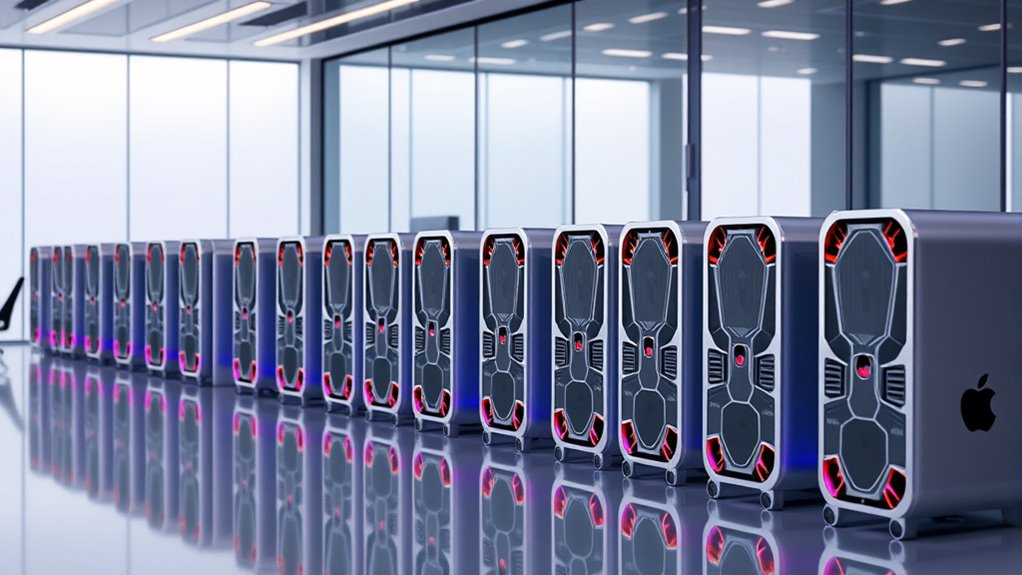

For 3D and simulation on a Mac, my best overall pick is the Mac Studio with M3 Ultra, 256GB memory, and an 80-core GPU: it pairs substantial memory capacity with desktop-class graphics for demanding projects. The 16-inch MacBook Pro with M5 Max and 128GB memory is a stronger fit when you need high performance away from a desk, while the M5 Pro MacBook Pro offers a more measured entry point for lighter scenes and workloads. The main tradeoffs are GPU and memory headroom versus portability, upgrade flexibility, and the limits of Apple silicon software support. The older Intel Mac Pro models may suit specific legacy or PCIe expansion needs, but they are not direct performance substitutes for current Apple silicon systems. Read on for how these options compare and which one fits your workload.

Get garden gear delivered free with Prime
- Fast, free delivery on millions of items
- Prime Video, Amazon Music and more included
- Member-only deals all year
Complete the kit


Key Takeaways
- The M3 Ultra Mac Studio leads for memory-heavy work: its 256GB unified memory and 80-core GPU give it the broadest stated headroom in this lineup, but it is a desktop rather than a portable workstation.
- M5 Max is the portable performance tier: the 128GB configurations are better suited to large scenes than the 64GB model, while the 2TB and 4TB storage versions differ in project-space capacity rather than listed CPU and GPU cores.
- M5 Pro models favor balanced workloads: the 16-inch version’s 48GB memory is a more comfortable starting point for substantial projects than the 14-inch version’s 24GB, though neither is the lineup’s GPU-heavy choice.
- The renewed Intel Mac Pros serve a narrower purpose: their Xeon processors and 32GB or 64GB memory may appeal for legacy workflows or expansion requirements, but buyers should check app compatibility and the limits of older hardware.
- Model names alone do not settle the choice: workload compatibility, memory needs, sustained rendering behavior, and whether you need a built-in display matter as much as the chip family.


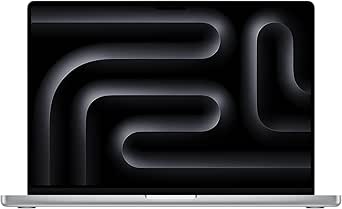


| mac pro for 3d and simulation | Storage | Ports | Processor | Memory |
|---|---|---|---|---|
| Apple Mac Pro ‘Quad Core’ 3.7G | 512GB SSD | Six Thunderbolt 2, four USB 3.0, one HDMI 1.4 | Quad-core 3.7GHz Xeon | 64GB 1866MHz DDR3 ECC SDRAM |
| Apple 2026 MacBook Pro Laptop | 1TB SSD | Three Thunderbolt 5, MagSafe 3, SDXC, HDMI, headphone jack | Apple M5 chip, 10-core CPU | 32GB unified memory |
| Apple 16.2-inch MacBook Pro wi | 1TB SSD | Three Thunderbolt 5, MagSafe 3, SDXC card slot, HDMI, headphone jack | — | 48GB unified memory |
| Apple Mac Pro 3.7GHz Xeon | 512GB SSD | Six Thunderbolt 2, four USB 3.0, one HDMI 1.4 UltraHD | 3.7GHz Xeon | 32GB |
| Apple MacBook Pro Laptop with | 2TB SSD | Three Thunderbolt 5, MagSafe 3, SDXC, HDMI, headphone jack | Apple M5 Max, 18-core CPU | 128GB unified memory |
| Apple MacBook Pro 16.2-inch wi | 2TB SSD | Three Thunderbolt 5, MagSafe 3, SDXC, HDMI, headphone jack | — | 64GB unified memory |
| Apple Mac Studio with M3 Ultra | 1TB SSD | — | Apple M3 Ultra | — |
| Apple 2026 MacBook Pro Laptop | 1TB SSD | Three Thunderbolt 5, MagSafe 3, SDXC, HDMI, headphone jack | Apple M5 Pro | 48GB unified memory |
| Apple MacBook Pro 16.2-inch wi | 4TB SSD | — | Apple M5 Max | — |
| Apple 14.2-inch MacBook Pro wi | 2TB SSD | Three Thunderbolt 5, MagSafe 3, SDXC card slot, HDMI, headphone jack | — | 24GB unified memory |
| Apple Mac Studio Desktop Compu | — | Four Thunderbolt 5, two USB-C, two USB-A, HDMI, SDXC card slot, headphone jack | Apple M5 Max | — |
More Details on Our Top Picks
Apple Mac Pro ‘Quad Core’ 3.7GHz Xeon (ME253LL/A) – 64GB RAM, 512GB SSD (Renewed)
I’d choose this refurbished Mac Pro over the 32GB Mac Pro model in this roundup when a 3D scene or simulation benefits more from memory capacity than from a newer platform. Its 64GB of ECC RAM gives larger projects more room than the other Xeon option, while the 3.7GHz quad-core Xeon is a better fit for established, CPU-focused workflows than for heavily parallel rendering. The dual FirePro D300 GPUs and six Thunderbolt 2 ports suit a fixed workstation setup with compatible peripherals, but they’re an older graphics configuration; the 20-core GPU in the 16-inch M5 Pro MacBook Pro is a more compelling choice for current GPU-oriented work. The tradeoff is clear: this is a memory-rich legacy desktop, not a modern high-performance GPU workstation. Refurbished condition and a minimum 90-day warranty add purchase risk.
Pros:- 64GB of ECC memory provides more headroom for large scenes than the 32GB renewed Mac Pro in this roundup.
- Quad-core 3.7GHz Xeon suits CPU-focused professional tasks.
- 512GB SSD provides fast local storage for applications and active files.
- Six Thunderbolt 2 ports support a range of compatible workstation peripherals.
Cons:- Dual FirePro D300 GPUs are an older graphics configuration for demanding modern 3D workloads.
- The 512GB SSD may be restrictive for large asset libraries and simulation files.
- Certified refurbished condition comes with a minimum 90-day warranty and may show cosmetic wear.
Best for: 3D artists or simulation users who need 64GB of memory in a stationary Mac Pro and can work with older FirePro graphics and Thunderbolt 2 peripherals.
Not ideal for: GPU-rendering specialists, buyers who need a long warranty, or anyone whose software requires current graphics hardware and connectivity.
- Processor:Quad-core 3.7GHz Xeon
- Memory:64GB 1866MHz DDR3 ECC SDRAM
- Storage:512GB SSD
- Graphics:Dual AMD FirePro D300, 2GB GDDR5 each
- Ports:Six Thunderbolt 2, four USB 3.0, one HDMI 1.4
- Condition:Certified refurbished
- Warranty:Minimum 90 days
- Model:ME253LL/A
Our verdict“Choose this refurbished Mac Pro when 64GB of ECC memory matters more than modern GPU performance or a long warranty.”
Apple 2026 MacBook Pro Laptop with M5 Chip, 14.2-inch Liquid Retina XDR Display, 32GB RAM, 1TB SSD, Space Black
This 14-inch MacBook Pro is the portability pick, not the strongest rendering machine in this group. Its 10-core M5 CPU and 10-core GPU, paired with 32GB of unified memory, suit modeling, viewport work, and moderate projects that need to move between locations. Compared with the 16-inch M5 Pro MacBook Pro, it has a smaller display, fewer CPU and GPU cores, and less memory, so I’d favor the larger model for sustained simulation or complex scenes. The 1TB SSD is more accommodating than the 512GB drives in the refurbished Mac Pros, while the 14.2-inch XDR display keeps the system easier to carry than the 16-inch laptops. The compromise is capability: 32GB and a 10-core GPU can become limiting as scenes and simulation datasets grow.
Pros:- Compact 14.2-inch form factor is easier to carry than the 16-inch MacBook Pro models.
- 10-core M5 CPU and GPU support general creative and 3D workloads.
- 32GB unified memory gives moderate projects more capacity than entry-level configurations.
- 1TB SSD offers more local workspace than either renewed Mac Pro in this selection.
Cons:- 10-core GPU and 32GB memory provide less headroom than the 16-inch M5 Pro and M5 Max models.
- The smaller screen offers less room for timelines, viewports, and simulation controls.
- The listed specifications do not identify support for multiple external displays.
Best for: Students and mobile 3D generalists who need a portable Mac for modeling, viewport review, and moderate project workloads.
Not ideal for: Artists running large simulations, GPU-heavy rendering, or complex scenes that call for more memory and graphics cores.
- Processor:Apple M5 chip, 10-core CPU
- Graphics:10-core GPU
- Display:14.2-inch Liquid Retina XDR
- Memory:32GB unified memory
- Storage:1TB SSD
- Ports:Three Thunderbolt 5, MagSafe 3, SDXC, HDMI, headphone jack
- Wireless:Wi-Fi 7, Bluetooth 6
- Color:Space Black
Our verdict“Pick this 14-inch model for portable, moderate 3D work, but step up to the 16-inch M5 Pro for heavier simulation.”
Apple 16.2-inch MacBook Pro with M5 Pro, 18-core CPU, 20-core GPU, 48GB Memory, and 1TB SSD
I’d rank this as the most balanced mobile workstation in the group: its 18-core CPU, 20-core GPU, and 48GB unified memory offer a stronger mix for modeling, simulation, and rendering than the 14-inch M5 MacBook Pro, without jumping to the 128GB M5 Max configuration. That makes it a practical middle ground for artists who need meaningful compute headroom but still want a portable system. The 16.2-inch XDR display also gives complex interfaces and model details more working space than the smaller laptop. Compared with the M5 Max MacBook Pro, it gives up GPU cores and memory capacity, so very large scenes or GPU-heavy production can favor that higher tier. At 4.71 pounds, it is not a lightweight travel machine, and the supplied specifications don’t state a specific battery runtime.
Pros:- 18-core CPU and 20-core GPU provide substantially more compute capacity than the 14-inch M5 MacBook Pro.
- 48GB unified memory offers more project headroom than the 32GB models in this batch.
- 16.2-inch XDR display gives more room for 3D interfaces and detailed viewport work.
- Supports up to three external displays and includes Thunderbolt 5, HDMI, and SDXC.
Cons:- The M5 Max model offers a larger 40-core GPU and 128GB memory for more demanding scenes.
- At 4.71 pounds, it is less convenient to carry than the 14-inch MacBook Pro.
- The listed product data does not provide a specific battery runtime.
Best for: 3D professionals who need a capable portable workstation for modeling, simulation, and moderate-to-large projects, without requiring the M5 Max tier.
Not ideal for: Users working with exceptionally large scenes or GPU-intensive rendering who need the 128GB memory and 40-core GPU of the M5 Max model.
- Chip:Apple M5 Pro
- CPU:18-core
- GPU:20-core
- Display:16.2-inch Liquid Retina XDR
- Memory:48GB unified memory
- Storage:1TB SSD
- Ports:Three Thunderbolt 5, MagSafe 3, SDXC card slot, HDMI, headphone jack
- Weight:4.71 pounds
Our verdict“Choose this M5 Pro MacBook Pro for a strong balance of mobile 3D performance, memory capacity, and screen space.”
Apple Mac Pro 3.7GHz Xeon, 32GB Memory, 512GB SSD (Renewed)
This renewed Mac Pro is the simpler desktop choice for buyers who want the cylindrical Mac Pro’s ports and Xeon-based setup without needing the 64GB configuration of the other renewed model. Its 32GB of memory and dual FirePro D300 GPUs can support established workflows and moderate scenes, but the 64GB version gives larger projects more memory room for a relatively direct comparison. Neither refurbished Mac Pro matches the newer graphics hardware in the 16-inch M5 Pro MacBook Pro, which is the better direction for contemporary GPU-focused work. The six Thunderbolt 2 ports are useful for a desk built around compatible older peripherals, yet they also limit how attractive this system is for a new workstation setup. I’d treat its 512GB SSD and minimum 90-day warranty as practical constraints, not minor details.
Pros:- 3.7GHz Xeon provides a workstation-oriented CPU for compatible professional workflows.
- Dual AMD FirePro D300 GPUs support graphics tasks across two processors.
- 512GB SSD provides fast local storage for applications and active projects.
- Six Thunderbolt 2 ports, four USB 3.0 ports, and HDMI offer varied wired connectivity.
Cons:- 32GB memory offers less room for large scenes than the 64GB renewed Mac Pro.
- Older FirePro graphics are a weaker fit than the M5 Pro MacBook Pro for modern GPU-heavy work.
- Refurbished condition and a minimum 90-day warranty provide less reassurance than a new system.
Best for: Budget-conscious 3D users who need a fixed Mac workstation for moderate projects and already have Thunderbolt 2-compatible peripherals.
Not ideal for: Professionals handling large scenes, modern GPU-rendering workloads, or projects that require more than 32GB of memory.
- Processor:3.7GHz Xeon
- Memory:32GB
- Storage:512GB SSD
- Graphics:Two AMD FirePro D300 GPUs with 2GB GDDR5 each
- Ports:Six Thunderbolt 2, four USB 3.0, one HDMI 1.4 UltraHD
- Condition:Certified refurbished
- Warranty:Minimum 90 days
Our verdict“Choose this refurbished Mac Pro for a lower-memory legacy desktop setup, but prefer the 64GB model for larger scenes.”
Apple MacBook Pro Laptop with M5 Max, 16.2-inch Display, 128GB Memory, 2TB SSD, Space Black
For laptop-based 3D work with demanding memory needs, this M5 Max configuration has the most generous headroom among the five products here. Its 40-core GPU and 128GB unified memory make it a better fit for complex scenes and compute-heavy creative workflows than the M5 Pro MacBook Pro, while the 2TB SSD leaves more room for active assets than that model’s 1TB drive. The 16.2-inch XDR display and Thunderbolt 5, HDMI, and SDXC connections also suit a portable workstation that regularly docks at a desk. This is not automatically the right choice for every simulation: software compatibility and the workload’s ability to use the GPU still matter. It is also a large, heavy laptop, and the M5 Pro offers a more restrained configuration for users whose scenes don’t need 128GB of memory.
Pros:- 40-core GPU provides more graphics capacity than the 20-core GPU in the M5 Pro MacBook Pro.
- 128GB unified memory supports larger working sets than any other product in this batch.
- 2TB SSD offers more room for active scenes and assets than the 1TB laptop drives.
- 16.2-inch XDR display and Thunderbolt 5, HDMI, and SDXC support workstation-style use.
Cons:- The 16.2-inch chassis is less portable than the 14-inch M5 MacBook Pro.
- The M5 Pro model may be a more sensible fit when projects do not need this much memory or GPU capacity.
- The listed product data gives no exact weight or battery runtime.
Best for: 3D artists and technical professionals who need a portable Mac with extensive memory for large scenes, demanding GPU work, and substantial local assets.
Not ideal for: Users with moderate projects, strict portability needs, or software that cannot take advantage of the M5 Max GPU and large unified-memory capacity.
- Processor:Apple M5 Max, 18-core CPU
- Graphics:40-core GPU
- Display:16.2-inch Liquid Retina XDR
- Memory:128GB unified memory
- Storage:2TB SSD
- Ports:Three Thunderbolt 5, MagSafe 3, SDXC, HDMI, headphone jack
- Wireless:Wi-Fi 7, Bluetooth 6
- Color:Space Black
Our verdict“Choose this M5 Max MacBook Pro when large scenes and GPU-heavy work justify its 128GB memory and 40-core GPU.”
Apple MacBook Pro 16.2-inch with M5 Max, 18-core CPU, 40-core GPU, 64GB Memory, 2TB SSD, Space Black
I’d put this 16-inch M5 Max configuration high on the list for 3D artists who need a capable workstation away from a desk. Its 40-core GPU and 64GB of unified memory give it more room for complex scenes and GPU-heavy creative work than the M5 Pro MacBook Pro with a 20-core GPU. The 2TB SSD also leaves more space for active assets and project files than the 1TB M5 Pro models here. Thunderbolt 5, HDMI, and SDXC make a multi-device setup less dependent on adapters, while support for four external displays suits a studio desk. The tradeoff is that the M5 Max may be unnecessary for lighter modeling or occasional rendering, and a Mac Studio can provide a more desk-focused setup. I’d choose this when mobility matters as much as performance.
Pros:- 40-core GPU is better suited to demanding GPU-accelerated creative workloads than the listed M5 Pro configurations.
- 64GB unified memory gives complex scenes and multiple creative applications more working room.
- 2TB SSD provides more local project and asset space than the 1TB configurations in this roundup.
- Thunderbolt 5, HDMI, SDXC, and support for up to four external displays suit a flexible workstation setup.
Cons:- The M5 Max configuration is excessive for basic modeling, office tasks, and lighter creative projects.
- A portable laptop is less suited than a desktop Mac Studio to a permanently docked workstation.
- The 16.2-inch design is less compact to carry than the 14.2-inch M5 Pro model.
Best for: 3D artists and technical creatives who move between locations but still need a strong GPU, substantial memory, and room for large project files.
Not ideal for: Buyers who mostly work at one desk or run modest scenes; a desktop Mac Studio or an M5 Pro MacBook Pro may fit those workflows better.
- Chip:Apple M5 Max
- CPU:18-core
- GPU:40-core
- Display:16.2-inch Liquid Retina XDR
- Memory:64GB unified memory
- Storage:2TB SSD
- Ports:Three Thunderbolt 5, MagSafe 3, SDXC, HDMI, headphone jack
- External displays:Up to four
Our verdict“Choose this M5 Max MacBook Pro if you need serious GPU capability and a generous local workspace in a portable system.”
Apple Mac Studio with M3 Ultra, 32-Core CPU, 80-Core GPU, 256GB Memory, 1TB SSD
For a fixed workstation handling large scenes or memory-heavy simulation projects, this Mac Studio has the most substantial listed memory and GPU configuration in this batch: 256GB unified memory and an 80-core GPU. That gives it a different role from the M5 Max MacBook Pro models, which trade some desktop focus for portability. Its support for up to eight displays at resolutions up to 8K may also appeal to studios building a broad visualization setup, and 10Gb Ethernet is useful for fast network storage workflows. The clear compromise is the 1TB SSD, which leaves less room for local assets than the 2TB and 4TB laptops here. Product details also mix M3 Ultra and M4 Max references, so I’d verify the exact configuration before buying. This is a specialized desk-side pick, not the flexible choice.
Pros:- 256GB unified memory gives large datasets and demanding multitasking more capacity than the listed MacBook Pro configurations.
- 80-core GPU is the highest stated GPU core count among these five products.
- Supports up to eight displays with resolutions up to 8K for expansive visualization setups.
- 10Gb Ethernet and Thunderbolt 5 support high-bandwidth desk-side workflows.
Cons:- The 1TB SSD offers less local storage than the 2TB and 4TB MacBook Pro options.
- The supplied description mixes M3 Ultra and M4 Max details, making the exact configuration worth verifying.
- As a desktop system, it does not suit buyers who need to take their workstation between locations.
Best for: Simulation teams and 3D professionals who work at a fixed desk, need very high unified memory for large datasets, and connect multiple high-resolution displays.
Not ideal for: People who need a portable workstation, want substantial built-in project storage, or cannot confirm the exact chip configuration from the seller.
- Processor:Apple M3 Ultra
- CPU:32-core
- GPU:80-core
- Unified memory:256GB
- Storage:1TB SSD
- Display support:Up to eight displays
- Maximum display resolution:Up to 8K
- Ethernet:10Gb
Our verdict“Pick this Mac Studio for a fixed, memory-hungry 3D or simulation workstation, after confirming the precise configuration.”
Apple 2026 MacBook Pro Laptop with M5 Pro Chip, 16.2-inch Liquid Retina XDR Display, 48GB RAM, 1TB SSD, Wi-Fi 7, Silver
This M5 Pro MacBook Pro is a sensible middle ground for 3D work that benefits from a large display and plenty of memory but does not demand the M5 Max GPU. Its 48GB unified memory is more generous than the 24GB in the 14.2-inch M5 Pro model, giving heavier scenes and concurrent applications more breathing room. Compared with the M5 Max laptops, though, its 20-core GPU is a step down for GPU-intensive rendering. That distinction makes this a better fit for modeling, look development, and mixed creative workloads than for buyers whose main priority is maximum render throughput. The 16.2-inch XDR screen and Thunderbolt 5, HDMI, and SDXC ports support a capable mobile setup. Its 1TB SSD may fill quickly with large asset libraries, so external storage could become part of the workflow.
Pros:- 48GB unified memory is a stronger fit for substantial scenes and multitasking than the 24GB 14.2-inch M5 Pro model.
- 16.2-inch Liquid Retina XDR display gives more workspace for modeling and timeline-heavy tasks.
- Thunderbolt 5, HDMI, and SDXC offer a useful mix of workstation and media connections.
- M5 Pro configuration avoids paying for the higher GPU tier when projects do not call for it.
Cons:- The 20-core GPU is less suited to GPU-heavy rendering than the 40-core M5 Max models.
- The 1TB SSD may require external storage for large asset libraries and project archives.
- The 16.2-inch laptop is less compact to carry than the 14.2-inch M5 Pro option.
Best for: 3D generalists and designers who want a roomy 16-inch screen and 48GB memory for substantial projects without stepping up to an M5 Max configuration.
Not ideal for: GPU-rendering specialists with demanding scenes, or artists who need several terabytes of internal project storage.
- Processor:Apple M5 Pro
- CPU:18-core
- GPU:20-core
- Display:16.2-inch Liquid Retina XDR
- Memory:48GB unified memory
- Storage:1TB SSD
- Wireless:Wi-Fi 7, Bluetooth 6
- Ports:Three Thunderbolt 5, MagSafe 3, SDXC, HDMI, headphone jack
Our verdict“Choose this model for a large-screen mobile 3D workflow where 48GB memory matters more than M5 Max-level GPU performance.”
Apple MacBook Pro 16.2-inch with M5 Max, 18-Core CPU, 40-Core GPU, 128GB Memory, and 4TB SSD
This is the strongest mobile pick here for artists whose projects strain both memory and local storage. It pairs the M5 Max 40-core GPU with 128GB unified memory and a 4TB SSD, doubling the memory and storage of the 64GB, 2TB M5 Max MacBook Pro. That extra capacity is most useful for large scenes, extensive asset libraries, and keeping more work local rather than relying on external drives. It retains the same 16.2-inch XDR display, port selection, and support for four external displays, so the premium is about capacity rather than a different form factor. Against the Mac Studio, it sacrifices desktop convenience and multi-display scale for portability. Buyers with moderate scenes should look at the 64GB M5 Max or 48GB M5 Pro instead; this configuration is for workloads that can use its headroom.
Pros:- 128GB unified memory offers the most capacity among the listed laptop configurations for memory-heavy scenes.
- 4TB SSD provides substantially more local project space than the other MacBook Pro options in this batch.
- M5 Max 40-core GPU targets demanding GPU-accelerated 3D workflows.
- Supports up to four external displays and includes Thunderbolt 5, HDMI, and SDXC.
Cons:- The extra memory and storage add little value for buyers whose scenes fit comfortably in smaller configurations.
- A laptop remains less suited than the Mac Studio to a permanently installed, multi-display workstation.
- Some advertised features depend on compatible Apple devices or apps.
Best for: Mobile 3D and simulation professionals who handle large scenes, keep extensive assets on the machine, and need high memory capacity away from a desk.
Not ideal for: Artists with modest projects or mostly desk-based workflows who would not use the extra memory and storage over the 64GB, 2TB M5 Max model.
- Processor:Apple M5 Max
- CPU:18-core
- GPU:40-core
- Display:16.2-inch Liquid Retina XDR
- Unified memory:128GB
- Storage:4TB SSD
- Peak brightness:1600 nits
- External display support:Up to four displays
Our verdict“Choose this premium M5 Max configuration when large scenes, high memory needs, and 4TB of local storage justify the added capacity.”
Apple 14.2-inch MacBook Pro with M5 Pro, 18-core CPU, 20-core GPU, 24GB Memory, and 2TB SSD
Among these five picks, this 14.2-inch MacBook Pro is the most portable route into an M5 Pro workstation setup. The 18-core CPU and 20-core GPU suit modeling and general creative work, while the 2TB SSD gives it more internal storage than the 1TB 16.2-inch M5 Pro model. Its smaller XDR screen and 24GB of unified memory are the limits: compared with that larger M5 Pro, it has half the listed memory, so complex scenes and several demanding applications may feel more constrained. It is also well behind the M5 Max models for GPU-heavy work. I’d favor it for artists who travel and value internal storage, but not for simulation workloads that routinely need a large memory pool. The supplied product data lists no specific drawbacks, but this memory ceiling is a meaningful tradeoff for 3D use.
Pros:- 14.2-inch format is more compact to carry than the 16.2-inch MacBook Pro options.
- 2TB SSD provides more internal storage than the 1TB 16.2-inch M5 Pro model.
- M5 Pro with a 20-core GPU supports demanding creative work beyond basic everyday tasks.
- Thunderbolt 5, HDMI, SDXC, and MagSafe 3 provide varied connection options.
Cons:- 24GB unified memory is more restrictive for large scenes than the 48GB M5 Pro and 64GB or 128GB M5 Max models.
- The 20-core GPU is a weaker fit for heavy rendering than either M5 Max configuration.
- The 14.2-inch display provides less workspace for detailed modeling than the 16.2-inch alternatives.
Best for: Traveling 3D students, freelancers, and designers working on moderate scenes who want a compact laptop with 2TB of internal storage.
Not ideal for: Simulation engineers or 3D artists working with large scenes, heavy multitasking, or GPU-intensive rendering; 24GB memory and the M5 Pro GPU are less suited to those demands.
- Chip:Apple M5 Pro
- CPU:18-core
- GPU:20-core
- Display:14.2-inch Liquid Retina XDR
- Memory:24GB unified memory
- Storage:2TB SSD
- Weight:3.52 pounds
- Ports:Three Thunderbolt 5, MagSafe 3, SDXC card slot, HDMI, headphone jack
Our verdict“Pick this compact M5 Pro for moderate 3D projects on the move, but choose a higher-memory model for complex scenes or simulation work.”
Apple Mac Studio Desktop Computer with M5 Max
The Mac Studio with M5 Max is the compact desktop pick for 3D artists and simulation teams who want a capable fixed workstation without the footprint of a tower. Its support for up to 128GB of unified memory and bandwidth up to 614GB/s gives memory-heavy scenes and creative workloads room to run, though actual capacity depends on configuration. Compared with the Mac Studio with M3 Ultra, this model is the smaller-footprint alternative, while the M3 Ultra configuration offers more memory headroom for workloads that need 256GB. Four Thunderbolt 5 ports, HDMI, USB-A, and an SDXC slot make it easier to connect storage and peripherals, and support for five displays suits multi-panel workflows. The tradeoff is that it needs a separate display, and its compact form does not provide the same expansion flexibility as a traditional workstation tower.
Pros:- M5 Max is designed for demanding creative, graphics, and on-device AI workflows.
- Supports up to 128GB of unified memory with bandwidth up to 614GB/s.
- Broad selection of ports, including four Thunderbolt 5 ports and an SDXC card slot.
- Compact 7.76-inch-square design supports up to five external displays.
Cons:- Memory and storage capacities vary by configuration, so buyers must select a setup suited to their workloads.
- A display is not listed as included.
- Offers less memory headroom than the listed M3 Ultra Mac Studio configuration.
Best for: 3D artists and simulation professionals who want a compact, multi-display desktop and can configure memory to match their project demands.
Not ideal for: Buyers running exceptionally memory-hungry scenes that need more than 128GB, or anyone who needs an included display or tower-style expansion.
- Processor:Apple M5 Max
- Maximum unified memory:Up to 128GB
- Memory bandwidth:Up to 614GB/s
- Ports:Four Thunderbolt 5, two USB-C, two USB-A, HDMI, SDXC card slot, headphone jack
- Wireless:Wi-Fi 7, Bluetooth 6
- External displays:Up to five
- Dimensions:7.76 x 7.76 x 3.74 inches
- Weight:5.94 pounds
Our verdict“Choose this Mac Studio for a compact M5 Max workstation with substantial memory and display support, but choose the M3 Ultra model if your 3D or simulation work needs more than 128GB of unified memory.”

How We Picked
I ranked these systems around the demands of 3D modeling, rendering, and simulation, giving the most weight to stated GPU capability and memory capacity. Those factors shape how comfortably a machine can handle complex scenes, large datasets, and concurrent applications; storage, screen size, portability, and overall system role helped separate close options. I also considered whether a machine is a current Apple silicon system or a renewed Intel Mac Pro, since software support and workflow fit can change the value of its hardware.
The order favors systems with the strongest stated resources for demanding work, then separates portable performance machines from more balanced or entry-level choices. I treat product names and listed specifications as the available evidence: where a listing does not provide core counts or memory details, I do not assume them. A high specification cannot compensate for an application that does not support the relevant chip or GPU features, so buyers should verify their own software requirements before choosing.
| mac pro for 3d and simulation | Ports |
|---|---|
| Apple Mac Pro ‘Quad Core’ 3.7G | Six Thunderbolt 2, four USB 3.0, one HDMI 1.4 |
| Apple 2026 MacBook Pro Laptop | Three Thunderbolt 5, MagSafe 3, SDXC, HDMI, headphone jack |
| Apple 16.2-inch MacBook Pro wi | Three Thunderbolt 5, MagSafe 3, SDXC card slot, HDMI, headphone jack |
| Apple Mac Pro 3.7GHz Xeon | Six Thunderbolt 2, four USB 3.0, one HDMI 1.4 UltraHD |
| Apple MacBook Pro Laptop with | Three Thunderbolt 5, MagSafe 3, SDXC, HDMI, headphone jack |
| Apple MacBook Pro 16.2-inch wi | Three Thunderbolt 5, MagSafe 3, SDXC, HDMI, headphone jack |
| Apple Mac Studio with M3 Ultra | — |
| Apple 2026 MacBook Pro Laptop | Three Thunderbolt 5, MagSafe 3, SDXC, HDMI, headphone jack |
| Apple MacBook Pro 16.2-inch wi | — |
| Apple 14.2-inch MacBook Pro wi | Three Thunderbolt 5, MagSafe 3, SDXC card slot, HDMI, headphone jack |
| Apple Mac Studio Desktop Compu | Four Thunderbolt 5, two USB-C, two USB-A, HDMI, SDXC card slot, headphone jack |
Factors to Consider When Choosing Mac Pro For 3d And Simulation
Choosing a Mac for 3D or simulation starts with your actual scenes, solvers, and software—not the model name. These broader checks can help you avoid paying for capacity you will not use or buying a system that runs out of headroom during real projects.
Match Memory to Scene and Dataset Size
Unified memory is shared across the CPU and GPU, so it serves more than one part of a 3D workflow. A complex scene, high-resolution textures, simulation data, and other open applications can all draw from the same pool. That makes the 24GB M5 Pro configuration a different proposition from a 48GB or 128GB system, even when the software opens on all of them. A common mistake is choosing memory based only on typical project files rather than the largest scene or dataset you expect to work with. If you regularly hit memory limits, extra capacity can matter more than moving up one storage tier.
Check Whether Your Software Uses Apple Silicon Well
3D and simulation applications do not all make equal use of Apple silicon, GPU acceleration, or macOS features. Before selecting a machine, check the current support notes for your renderer, solver, plugins, and any required extensions. Pay special attention to whether the workflow depends on CUDA, specific GPU drivers, or an Intel-only plugin, since those needs can make a powerful Mac a poor fit. For a studio pipeline, confirm that asset exchange and render outputs match what colleagues or clients use. Compatibility checks are more useful than assuming the highest GPU core count will speed up every task.
Separate Viewport Speed From Simulation and Render Time
A responsive viewport does not prove that a system will finish long simulations or final renders quickly. Modeling and scene navigation can favor GPU resources, while some solvers or render engines rely more heavily on CPU behavior, memory bandwidth, or application-specific optimization. Identify your slowest repeated task and find out which hardware resource it stresses before choosing a configuration. If possible, compare published benchmarks for the exact application and version you use rather than broad synthetic scores. This prevents spending on graphics capacity when a CPU-bound workflow is the real bottleneck.
Plan Storage Around Active Projects and Backups
Internal storage affects how much working material stays on the machine, but it should not be mistaken for a substitute for backups. Simulation caches, image sequences, textures, and source assets can consume space quickly, particularly when multiple versions must remain available. A 4TB configuration gives more local room than a 2TB or 1TB option, but external high-speed storage may be a better fit for a fixed desktop setup. Portable users should account for the added equipment and transfer routine before relying on external drives. Keep a separate backup plan for project files and caches that would be costly to recreate.
Choose Portability Only When the Work Requires It
A MacBook Pro includes a display and can move between workspaces, while Mac Studio systems prioritize a desk-based setup and require a separate monitor and peripherals. Portability is valuable for client reviews, classrooms, and work across locations, but the built-in screen does not replace a calibrated external display for every color-critical task. A stationary workstation can make more sense if your machine stays connected to large displays, storage, and input devices. Compare the whole setup you need, not just the computer. The renewed Intel Mac Pro models also appeal to a different kind of desktop buyer who may need a legacy workflow or expansion, but their age calls for extra compatibility checks.
Pay for Headroom When Project Growth Is Likely
Up-front capacity is most useful when it addresses a real constraint: larger scenes, more simultaneous applications, or longer local work without offloading. Paying for the 128GB M5 Max or 256GB M3 Ultra makes more sense for frequent memory-heavy work than for occasional modeling with modest assets. On the other hand, a larger SSD does not make simulations compute faster, and a higher GPU configuration cannot repair a software compatibility problem. Estimate the largest project you will handle over the system’s useful life, then prioritize the component most likely to limit it. For beginners, a balanced M5 Pro system can leave room to learn before committing to workstation-class capacity.
Frequently Asked Questions
Is the M3 Ultra Mac Studio a better choice than an M5 Max MacBook Pro for 3D work?
For a fixed workstation focused on large scenes and memory-heavy tasks, the Mac Studio’s listed 256GB unified memory and 80-core GPU give it more stated headroom than the M5 Max laptops. The MacBook Pro is the better fit if you need to work away from your desk or value an integrated display. Your application can change the answer: check support and performance for the exact renderer or solver you use. Also include the cost and space of a monitor and peripherals in your desktop decision. Choose based on the constraint you face most often, not just the product tier.
Should I choose the 128GB M5 Max MacBook Pro or the 64GB version?
The 128GB configurations make more sense if your scenes, textures, datasets, or simultaneous applications regularly push beyond what 64GB can comfortably handle. The 64GB model may suit smaller projects and keeps the listed configuration simpler, but it offers less room for growth. The 128GB listings also differ in SSD capacity, with 2TB and 4TB versions available, so decide whether local project space is a separate need. Check your real application memory use before paying for extra capacity. If memory is the bottleneck, a larger SSD will not solve it.
Can a renewed Intel Mac Pro still make sense for 3D and simulation?
It can fit a buyer tied to an Intel-only application, a legacy project, or a workflow that depends on specific expansion options. The two renewed listings provide different stated memory amounts—32GB and 64GB—but both use an older Xeon platform, so they should not be treated as equivalent to current Apple silicon systems. Verify operating-system support, application compatibility, parts condition, and the availability of service before committing. For new work built around modern Mac software, compare these carefully with the M5 Pro, M5 Max, and Mac Studio options. Their best case is a specific compatibility or expansion need, not a general assumption that a Mac Pro name guarantees superior 3D performance.
Is 24GB of memory enough for a beginner learning 3D on a Mac?
It can be enough for learning fundamentals, building modest scenes, and exploring applications that do not demand large datasets. It leaves less room for high-resolution assets, complex simulations, and running several heavy tools at once than the 48GB and larger configurations in this roundup. A beginner should first check the memory guidance for the intended software and consider how quickly project complexity may grow. If classes or client work require larger scenes, more memory can reduce the need to work around system limits. For occasional learning, a balanced configuration may be a more sensible starting point than a high-capacity workstation.
Should I prioritize a larger SSD or more memory for a simulation workstation?
Prioritize memory when projects are constrained by large scenes, datasets, or applications competing for RAM; prioritize SSD capacity when active files, caches, and assets do not fit locally. These solve different problems, so one is not a direct replacement for the other. Simulation output and cache storage can expand quickly, making external storage a practical option for a desk-based Mac Studio setup. Laptop users may prefer more internal space if they frequently work away from external drives. Keep backups separate from the working drive regardless of which capacity you choose.
Conclusion
For the strongest overall fit for demanding, desk-based 3D and simulation work, I would choose the M3 Ultra Mac Studio with 256GB memory. My best portable workstation is the 16-inch M5 Max MacBook Pro with 128GB memory, while the best balanced starting point is the 16-inch M5 Pro with 48GB. Beginners with modest scenes can look to the 14-inch M5 Pro with 24GB, provided their software and project needs fit that capacity. For a specific legacy or expansion-dependent workflow, the renewed Intel Mac Pro may still have a role, but I would verify support and condition first. Match memory and software compatibility to your actual workload, then choose portability and storage around how you work.