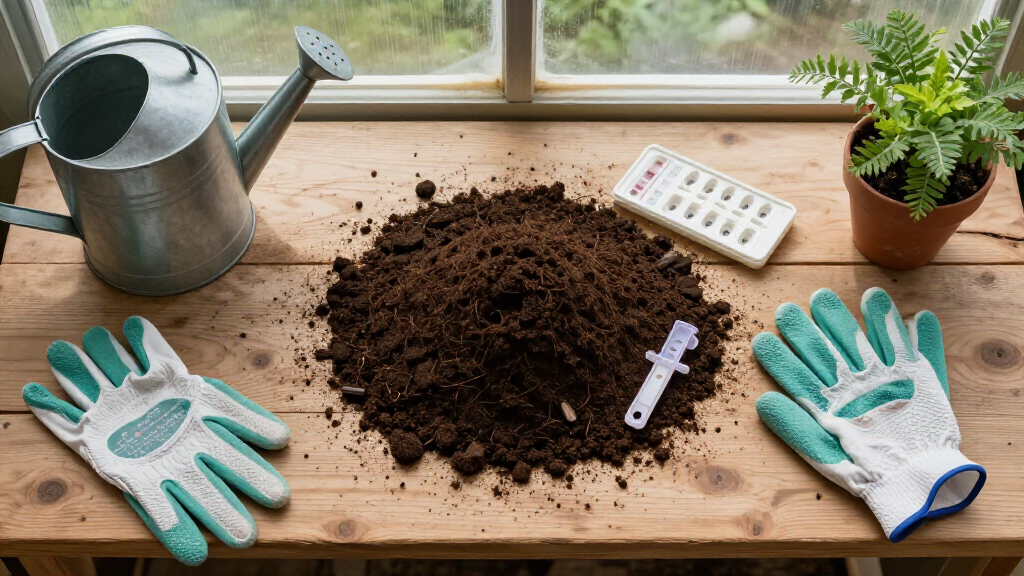

Every frustrated season of yellowing leaves, stunted tomatoes, or patchy grass usually traces back to the same hidden culprit: soil chemistry you can’t see. A good garden soil test kit takes the guesswork out of fertilizing, and the five options here cover very different approaches to getting answers. My top pick, the 140-Test Soil Test Kit, wins on sheer value and breadth — it adds ammonia testing on top of the usual pH, N, P, and K lineup. For gardeners who want lab-grade accuracy without lab-grade hassle, the MySoil Professional Test Kit mails your sample to a real laboratory and returns customized fertilizer recommendations. And if you just want a cheap, simple starting point, the Rapitest 20-Test Kit gets you going for the price of a couple of seed packets.

Get garden gear delivered free with Prime
- Fast, free delivery on millions of items
- Prime Video, Amazon Music and more included
- Member-only deals all year
The main tradeoff you’ll weigh throughout this roundup is speed and volume versus accuracy and interpretation. Chemical test kits give you instant color-coded results and dozens of repeat tests, but you’re the one judging shades of purple against a chart. Mail-in lab kits remove that subjectivity entirely and measure a wider panel of nutrients, but you’ll wait about a week for results and get only one sample per purchase. Neither approach is wrong — it depends on whether you’re monitoring an established garden over seasons or troubleshooting one problem bed right now.
Complete the kit


Key Takeaways
- The 140-Test Soil Test Kit offers the most tests per dollar and uniquely includes ammonia testing, making it the best pick for ongoing fertility management across multiple beds.
- MySoil is the only option with professional lab analysis of 13 nutrients plus pH, but results take 6–8 days and each kit covers just one soil sample.
- All three chemical test kits (140-test, 40-test, and 20-test Rapitest versions) rely on manual color comparison, so results depend on your interpretation under good lighting.
- The Luster Leaf 1663 hits a middle ground with 80 tests, a sturdy storage case, and soil improvement guidance — the best balance of organization and capacity for serious hobbyists.
- Budget shoppers should note the price-per-test gap: the 20-test Rapitest is cheapest upfront, but the 140-test kit costs far less per test over time.
| Soil Test Kit 140 Tests (2026 Updated Instructions) – pH, Nitrogen, Phosphorus, Potassium & Ammonia |  | Best Overall | Product Dimensions: 3 x 1 x 4 inches | Item Weight: 3.52 ounces | Number of Tests: 140 | VIEW LATEST PRICE | See Our Full Breakdown |
| MySoil Soil Test Kit – Complete Nutrient and pH Analysis with Recommendations |  | Best Premium / Lab-Grade Accuracy | Analysis Method: Professional laboratory (mail-in sample) | Parameters Tested: 13 nutrients plus pH | Results Time: 6–8 days | VIEW LATEST PRICE | See Our Full Breakdown |
| Luster Leaf 1663 Professional Soil Test Kit, 80 Tests |  | Best for Serious Hobbyists | Tests Included: 80 (20 each for pH, N, P, K) | Parameters Tested: pH, Nitrogen, Phosphorus, Potassium | Color: Green | VIEW LATEST PRICE | See Our Full Breakdown |
| Rapitest Soil Test Kit for Gardens, Vegetables, Flowers, and Lawns – 40 Tests |  | Best Value for Mid-Size Gardens | Test Types: pH, Nitrogen, Phosphorus, Potash | Number of Tests: 40 (10 per parameter) | Test Method: Capsule and color comparator | VIEW LATEST PRICE | See Our Full Breakdown |
| Rapitest Soil Test Kit for Gardens, Vegetables, Flowers, and Lawns – 20 Tests |  | Best for Beginners | Tests Included: 20 (5 each for pH, N, P, K) | Test Variables: Soil pH, Nitrogen, Phosphorous, Potash | Test Method: Capsule and color comparator | VIEW LATEST PRICE | See Our Full Breakdown |
| garden soil test kit | Skill Level | Parameters Tested | Test Method | Results Time |
|---|---|---|---|---|
| Soil Test Kit 140 Tests | Intermediate | pH, Ammonia, Nitrogen, Phosphorus, Potassium | Chemical color comparison | Minutes per test |
| MySoil Soil Test Kit | Beginner | 13 nutrients plus pH | — | 6–8 days |
| Luster Leaf 1663 Professional | Intermediate | pH, Nitrogen, Phosphorus, Potassium | — | — |
| Rapitest Soil Test Kit for Gar | Beginner to intermediate | — | Capsule and color comparator | Minutes per test |
| Rapitest Soil Test Kit for Gar | Beginner | — | Capsule and color comparator | — |
More Details on Our Top Picks
Soil Test Kit 140 Tests (2026 Updated Instructions) – pH, Nitrogen, Phosphorus, Potassium & Ammonia
This kit earns the top spot for one simple reason: no other option in this lineup gives you more testing capacity for the money. With roughly 140 tests across five parameters — including ammonia, which none of the other four kits measure — it supports a full season of monitoring across multiple garden beds, a lawn, and containers without running dry. Compared with the Rapitest 40-test kit, you’re getting more than three times the testing volume for a modest price increase, which changes the math entirely if you test more than once or twice a year.
The ammonia testing deserves a mention because it’s genuinely useful, not a gimmick. Elevated ammonia can indicate over-application of fertilizer or incomplete nitrogen conversion, so having that fifth parameter gives you a more complete picture of nitrogen cycling than the standard N-P-K triad. The 2026-updated instructions also address the most common failure point of chemical kits: user error during sampling and mixing.
The tradeoffs are real, though. Accuracy still depends on careful handling — contaminated water, wet hands, or rushing the settling time can skew color readings. And like the Luster Leaf 1663, this is a manual color-comparison system, so it demands good lighting and honest interpretation. Gardeners who want a definitive number rather than a color match should look at MySoil instead. But for the majority of people who want affordable, repeatable, reasonably reliable testing, this pick makes the most sense for the price.
Pros:- Roughly 140 tests provide outstanding cost per test for long-term use
- Unique ammonia parameter alongside pH, N, P, and K
- 2026-updated instructions reduce common user errors
- Compact and lightweight enough to store anywhere
Cons:- Results depend on careful sample handling and timing
- Color interpretation can be tricky in poor lighting
- Ammonia and other parameters require more steps than simple pH-only testers
Best for: Gardeners with multiple beds or a lawn who want to test repeatedly through the season without buying refill kits
Not ideal for: Anyone who needs precise, lab-grade nutrient numbers or who dislikes subjective color matching
- Product Dimensions:3 x 1 x 4 inches
- Item Weight:3.52 ounces
- Number of Tests:140
- Parameters Tested:pH, Ammonia, Nitrogen, Phosphorus, Potassium
- Test Method:Chemical color comparison
- Results Time:Minutes per test
- Skill Level:Intermediate
Our verdict“The best blend of capacity, parameter coverage, and price makes this the default choice for most home gardeners.”
MySoil Soil Test Kit – Complete Nutrient and pH Analysis with Recommendations
MySoil takes a fundamentally different approach from every other kit here: you collect a soil sample, mail it in a prepaid package, and a professional laboratory analyzes 13 nutrient levels plus pH. There’s no squinting at color charts, no guesswork about whether that vial is lavender or violet, and no risk of a dropped capsule ruining a test. Compared with the 140-test chemical kit, you give up volume entirely — one kit equals one sample — but what you get back is a level of detail no home chemistry set can match.
The real differentiator is the tailored fertilizer recommendations. Instead of translating nutrient levels yourself, you receive guidance specific to your soil and plants, covering both organic and conventional amendment options. That closes the gap between “here’s a number” and “here’s what to actually buy and apply,” which is where most home testing stalls. For anyone troubleshooting a persistent problem — blueberries that never thrive, a lawn that refuses to green up — this diagnostic depth is worth the wait.
And there is a wait: 6 to 8 days from mailing to results. If you’re standing in a garden center trying to decide what to buy this weekend, this is the wrong tool — grab the Rapitest instead. The per-sample cost is also much higher than chemical testing, so repeat monitoring across a large property adds up fast. This model is better suited to establishing a baseline or solving a specific mystery than to routine seasonal checks.
Pros:- Professional lab analysis of 13 nutrients plus pH
- Custom fertilizer recommendations for your specific soil and plants
- Eliminates subjective color-chart interpretation entirely
- Simple instructions and all mailing components included
Cons:- 6–8 day turnaround is slow for urgent decisions
- One sample per kit makes multi-bed testing expensive
- No instant, at-home result whatsoever
Best for: Gardeners diagnosing stubborn problems or establishing an accurate baseline before a major planting project
Not ideal for: Impatient gardeners, large properties needing many samples, or anyone on a tight per-test budget
- Analysis Method:Professional laboratory (mail-in sample)
- Parameters Tested:13 nutrients plus pH
- Results Time:6–8 days
- Tests Per Kit:1 soil sample
- Recommendations Included:Organic and non-organic fertilizer guidance
- Manufacturer:Predictive Nutrient Solutions, Inc
- Skill Level:Beginner
Our verdict“If accuracy and actionable advice matter more than speed, this lab-based kit outclasses every chemical option here.”
Luster Leaf 1663 Professional Soil Test Kit, 80 Tests
The Luster Leaf 1663 sits in a sweet spot between the smaller Rapitest kits and the big 140-test kit. With 80 tests — 20 each for pH, nitrogen, phosphorus, and potassium — it covers a multi-bed garden comfortably without the commitment of the largest kit. What separates it from the similarly sized Rapitest 40-test option is presentation and organization: everything arrives in a sturdy plastic case that keeps capsules, comparators, and instructions sorted between uses, which matters more than you’d think if your kit lives in a shed or gets carried to a community garden plot.
This kit also goes beyond raw testing with guidelines for soil improvement and plant selection, turning results into next steps rather than just numbers on a chart. That educational layer makes it a solid fit for hobbyists who enjoy the diagnostic side of gardening, and it’s a natural fit for educators running classroom or demonstration sessions where tidiness and repeatable setup count.
Where does it fall short? It tests the standard four parameters only — no ammonia like the 140-test kit, and obviously nothing close to MySoil’s 13-nutrient panel. Beginners may also find the manual color interpretation more challenging than the more hand-holding Rapitest capsule system, since the professional orientation assumes some comfort with reading comparators. If you’re new to soil testing, the 20-test Rapitest is a gentler entry point; this one rewards gardeners who already know what they’re looking at.
Pros:- 80 tests (20 per parameter) offer a strong capacity-to-price balance
- Durable case keeps components organized and portable
- Includes soil improvement and plant selection guidelines
- No batteries or electronics to fail
Cons:- Standard four parameters only — no ammonia or micronutrients
- Color matching can challenge beginners
- No warranty information provided
Best for: Experienced hobbyists, educators, and community gardeners who want organized, repeatable testing with room to grow
Not ideal for: First-time testers who want maximum guidance, or anyone needing contaminant or micronutrient testing
- Tests Included:80 (20 each for pH, N, P, K)
- Parameters Tested:pH, Nitrogen, Phosphorus, Potassium
- Color:Green
- Item Dimensions:1.25″ W x 9″ H
- Case:Sturdy plastic storage case
- Batteries Required:No
- Skill Level:Intermediate
Our verdict“A well-organized, generously sized kit that hits the middle of the market better than either smaller or cheaper rivals.”
Rapitest Soil Test Kit for Gardens, Vegetables, Flowers, and Lawns – 40 Tests
The 40-test Rapitest occupies a practical middle rung: double the capacity of its 20-test sibling for gardeners who’ve outgrown a single-use purchase but don’t need the 140-test kit’s volume. You get 10 tests per parameter across pH, nitrogen, phosphorus, and potash — enough to test several beds in spring and recheck after amending in fall. That verification loop is where this kit earns its keep; applying lime or sulfur without retesting is how gardeners overcorrect.
Rapitest’s color comparator system is the brand’s signature, and it’s genuinely approachable: you dissolve a capsule in water with soil, pour the liquid into the comparator, and match the color against a printed chart. Compared with the Luster Leaf 1663, the process feels more beginner-friendly even though the underlying chemistry is the same, and the included instructions walk you through each step without assuming prior knowledge.
The honest weakness is manual, subjective color reading. Two people can look at the same comparator and choose different values, and lighting makes a real difference — test near a window, not under a warm bulb. There’s no digital readout at any price in this chemical-kit category, so if that subjectivity bothers you, MySoil is the escape hatch. And at 40 total tests, a large property will burn through this kit in a season, at which point the 140-test option becomes cheaper per test.
Pros:- 40 tests provide enough capacity to test and retest a mid-size garden
- Clear color comparison system with detailed step-by-step instructions
- Fast at-home results with no mailing or waiting
- Trusted long-standing design suitable for beginners and veterans alike
Cons:- Color chart interpretation is subjective and lighting-sensitive
- Fewer tests than the 140-test kit at a worse per-test price
- No electronic or digital measurement option
Best for: Home gardeners with a few beds who want a dependable, affordable kit with enough tests to verify amendments
Not ideal for: Large properties, gardeners who want exact numeric values, or anyone needing micronutrient data
- Test Types:pH, Nitrogen, Phosphorus, Potash
- Number of Tests:40 (10 per parameter)
- Test Method:Capsule and color comparator
- Item Dimensions:5″ W x 5.91″ H
- Item Weight:4 ounces
- Results Time:Minutes per test
- Skill Level:Beginner to intermediate
Our verdict“A reliable, fairly priced workhorse that beats its smaller sibling on value while staying simpler than the big kits.”
Rapitest Soil Test Kit for Gardens, Vegetables, Flowers, and Lawns – 20 Tests
Of the five kits here, this is the one I’d hand to someone who has never tested soil before. The capsule system keeps everything dead simple — no measuring powders, no multi-step chemistry — and the whole package is small and unintimidating. Five tests each for pH, nitrogen, phosphorus, and potash let you check one or two problem areas immediately, which is exactly the scope a first-timer needs before deciding whether deeper testing is worth it.
The standout extra is the included pH preference list covering more than 450 plants. That single sheet transforms a pH number into an actual decision: suddenly you know your soil is too acidic for the asparagus you planned and fine for the blueberries you hadn’t. Neither the Luster Leaf nor the 140-test kit packages plant-specific guidance this accessibly, and it’s a big part of why this kit works as a learning tool rather than just a test.
The limitation is obvious: 20 tests go fast. Test three beds in spring and recheck in fall, and the kit is done — making it the most expensive option per test in this roundup by a wide margin. Manual color matching applies here too, with the same lighting caveats as the larger Rapitest. My advice is to treat this as an entry point: if soil testing clicks for you, graduate to the 140-test kit or MySoil; if it doesn’t, you’ve risked very little finding out.
Pros:- Simplest capsule-based system in the lineup, ideal for first-timers
- pH preference list for over 450 plants turns results into planting decisions
- Lowest upfront cost of any option here
- Quick at-home results with clear included instructions
Cons:- Only 20 tests — worst cost per test in this comparison
- May need a second kit after just one or two garden cycles
- Subjective color-chart reading with no digital alternative
Best for: First-time gardeners and casual growers who want a low-cost, low-commitment introduction to soil testing
Not ideal for: Anyone with multiple beds, repeat-monitoring plans, or a need for more than basic N-P-K and pH data
- Tests Included:20 (5 each for pH, N, P, K)
- Test Variables:Soil pH, Nitrogen, Phosphorous, Potash
- Test Method:Capsule and color comparator
- Extras:pH preference list for 450+ plants
- Designed and Assembled:USA
- Suitable For:Gardens, vegetables, flowers, lawns
- Skill Level:Beginner
Our verdict“The cheapest, friendliest way to start soil testing, with the understanding that you’ll outgrow it quickly.”
How We Picked
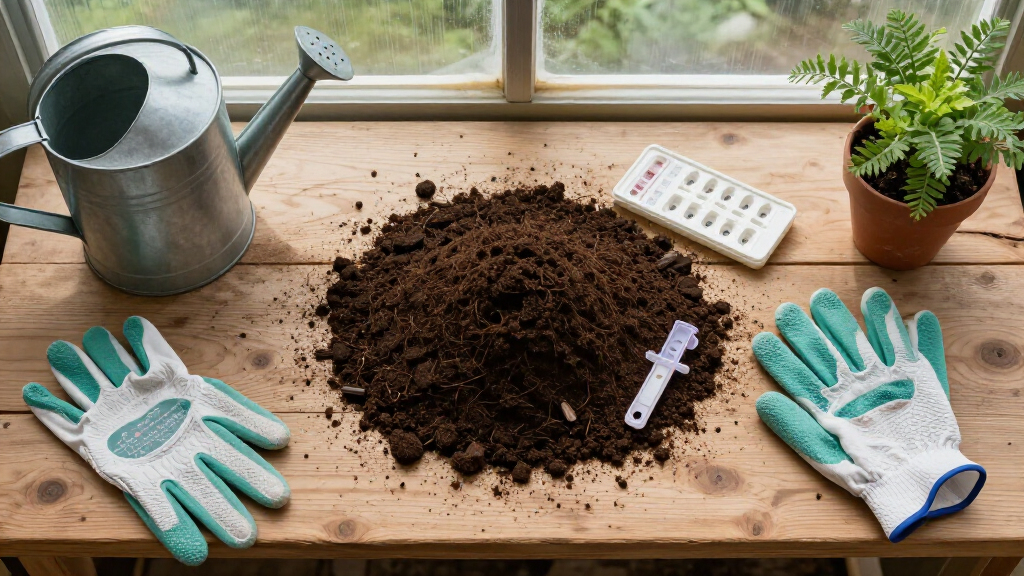
When I evaluated these garden soil test kits, I focused on the factors that actually change a buying decision rather than feature checklists. Cost per test was the first filter — a kit with 140 tests at a mid-range price beats a cheaper kit with 20 tests once you calculate what repeat sampling costs over a season. Accuracy and interpretation mattered just as much: color-comparator kits are only as good as your ability to match hues, so I paid close attention to how clearly each kit’s instructions and charts guide that process, and I gave credit to the one option that removes human judgment entirely through lab analysis.
I also weighed parameter coverage. All five kits test pH, nitrogen, phosphorus, and potassium, but only one adds ammonia and only one measures a full panel of 13 nutrients — differences that matter depending on whether you’re fine-tuning fertilization or diagnosing a mystery problem. Finally, I considered usability for the intended buyer: a beginner needs clear instructions and forgiving charts, while a seasoned gardener wants volume, durability, and portability. Kits that force you to buy replacements quickly, or that make results harder to read than necessary, were ranked accordingly. I did not rank on brand reputation alone — two of these are from the same family and land in very different spots because of capacity and design differences.
| garden soil test kit | Test Method | Skill Level |
|---|---|---|
| Soil Test Kit 140 Tests | Chemical color comparison | Intermediate |
| MySoil Soil Test Kit | — | Beginner |
| Luster Leaf 1663 Professional | — | Intermediate |
| Rapitest Soil Test Kit for Gar | Capsule and color comparator | Beginner to intermediate |
| Rapitest Soil Test Kit for Gar | Capsule and color comparator | Beginner |
Factors to Consider When Choosing Garden Soil Test Kits
Choosing a soil test kit comes down to three questions: how many tests you need, how precise the answers must be, and how quickly you need them. Here’s how I’d think through each factor before buying.Chemical Kit vs. Mail-In Lab Test
Chemical kits (four of the five options here) give you results in minutes at a low cost per test, but readings are color-based and subjective — you’re matching a liquid’s hue to a printed chart. Mail-in lab kits like MySoil deliver laboratory precision and a wider nutrient panel, plus tailored recommendations, but you’ll wait about a week and pay far more per sample. A sensible strategy for many gardeners is to use a chemical kit for routine monitoring and a lab test once every few years to establish an accurate baseline.
Parameters: What Each Test Actually Tells You
Every kit here measures pH, nitrogen, phosphorus, and potassium — the core four for fertility management. pH controls nutrient availability; if it’s far from your plants’ preferred range, fertilizing is wasted effort. Nitrogen drives leafy growth, phosphorus supports roots and flowering, and potassium strengthens overall vigor. Only the 140-test kit adds ammonia, useful for detecting fertilizer over-application, and only MySoil measures micronutrients like calcium, magnesium, and sulfur, which matter for long-term soil health.
Test Count and Cost Per Test
Divide the kit’s price by its test count before buying. The 20-test Rapitest is cheapest upfront but the priciest per test; the 140-test kit inverts that equation. If you plan to test in spring, retest after amending, and cover multiple beds, a larger kit pays for itself quickly. If you’re testing one raised bed once, a small kit is all you need.
Reading Color Comparators Accurately
Since most kits rely on your eyes, technique matters. Test in natural daylight rather than artificial light, hold comparators against a white background, and read at the recommended time — not early, not an hour late. Take consistent samples from several spots mixed together, since soil varies dramatically within a few feet. Following these habits narrows the accuracy gap with lab testing considerably.
How Often to Test
I’d suggest testing once in early spring before planting and again in fall after amendments have had time to work. Lawns and intensively cropped vegetable beds benefit from annual testing; established perennial beds can go every two to three years. More frequent testing than that rarely changes your decisions and just burns through kit capacity.
Frequently Asked Questions
How accurate are home soil test kits compared to lab testing?
Home chemical kits are accurate enough for guiding basic fertilization and pH adjustment — typically within a range rather than an exact number — but they can’t match laboratory precision. The color-comparison method introduces subjectivity: two people reading the same vial can land on adjacent values, and lighting shifts results further. That said, for deciding whether your soil is acidic, alkaline, or nitrogen-poor, a carefully performed home test is usually sufficient. If you’re making an expensive amendment decision, troubleshooting a persistent failure, or suspect micronutrient issues, a mail-in lab kit like MySoil gives you numbers you can act on with confidence.
What is the ideal soil pH for most garden plants?
Most vegetables and common garden plants thrive in a slightly acidic range of about 6.0 to 7.0, where the widest range of nutrients stays available to roots. Acid-lovers like blueberries, azaleas, and rhododendrons prefer 4.5 to 5.5, while some vegetables like asparagus favor closer to neutral or slightly alkaline soil. This is why the 20-test Rapitest’s pH preference list for over 450 plants is such a useful inclusion — knowing your number only helps once you know what your specific plants want. If your pH is more than a full point off target, amend gradually with lime to raise it or sulfur to lower it, retesting after a few months.
How do I collect a good soil sample for testing?
Collect several small samples from across the area — five or six spots for a typical bed — digging about 4 to 6 inches deep for gardens and 2 to 3 inches for lawns. Remove debris, mix the samples together in a clean container, and pull your test from that blend. This matters because soil chemistry varies sharply within a few feet, and a single scoop can misrepresent the whole bed. Avoid sampling right after fertilizing or heavy rain, both of which skew readings, and use clean tools and distilled water where the kit calls for it, since tap water chemistry can contaminate results.
Can these kits detect contaminants like lead or other heavy metals?
No — none of the five kits in this roundup test for lead, arsenic, cadmium, or other contaminants. They measure fertility parameters only: pH, nitrogen, phosphorus, potassium, and in one case ammonia. If you’re planting vegetables in urban soil, near an old structure with peeling paint, or on former industrial land, contaminant testing is a separate and necessary step. Contact a state extension service or an accredited environmental lab for heavy-metal analysis, which typically costs a bit more than a nutrient panel. MySoil’s 13-nutrient lab panel is broader than any chemical kit here, but even it focuses on fertility rather than safety screening.
Why do my soil test results differ each time I test?
Conclusion
Match the kit to the gardener, not the other way around. If you’re a first-time tester or just want to check one raised bed, start with the Rapitest 20-Test Kit — its 450-plant pH list and dead-simple capsules make it the gentlest entry point, and the low cost means little is lost if you never test again. Mid-size gardeners maintaining several beds should step up to the Rapitest 40-Test Kit, which adds enough capacity to test and verify amendments without overwhelming anyone.
Serious hobbyists, educators, and community gardeners get the best fit from the Luster Leaf 1663, whose 80 tests and organized case reward repeat, structured use. For most home gardeners, though, my overall recommendation is the 140-Test Soil Test Kit — its unmatched volume, ammonia testing, and low per-test cost make it the smartest long-term purchase in this group. And if you’re diagnosing a stubborn problem or planning a major planting, spend once on MySoil’s lab analysis for precision and recommendations no color chart can match. Whatever you choose, testing before fertilizing is the single cheapest improvement most gardens can make.
Columbus Day / Indigenous Peoples' Day Picks
long weekend sales
As an affiliate, we earn on qualifying purchases.