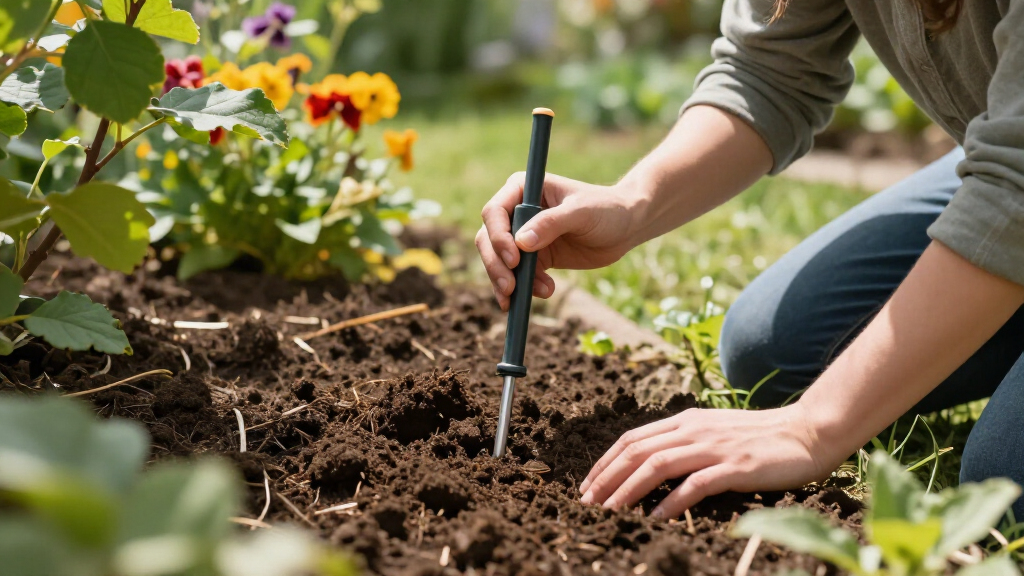

Choosing between garden soil testers mostly comes down to one tradeoff: speed and convenience versus accuracy and detail. Electronic probe meters give you instant readings for moisture, pH, and sometimes light or nutrients, but they sacrifice precision. Chemical test kits take more time but deliver lab-style results for pH, nitrogen, phosphorus, and potassium. For most home gardeners, the 7-in-1 Digital Soil Tester Kit is the best overall pick because it covers pH, moisture, temperature, conductivity, and nutrients in one fast device. If you want the most reliable nutrient data, the MySoil Soil Test Kit sends samples to a professional lab and stands out for accuracy. Budget shoppers should look at the SONKIR MS02 3-in-1, a simple analog-style meter that handles basic moisture, light, and pH checks for the price of a coffee. Keep reading for the full breakdown of all 15 testers and which one fits your garden.

Get garden gear delivered free with Prime
- Fast, free delivery on millions of items
- Prime Video, Amazon Music and more included
- Member-only deals all year
Complete the kit


Key Takeaways
- Digital 7-in-1 probes like the 7-in-1 Digital Soil Tester Kit and the HSLGOVE dominate the top of this roundup because they measure five or more variables in seconds — but none match the nutrient accuracy of lab-based kits like MySoil.
- Chemical kits (the 140-Test Kit and Rapitest) cost less per test than any electronic option and remain the only affordable way to get true NPK readings, though they require prep time and careful color matching.
- Every budget 3-in-1 meter we compared (SONKIR, and the 3-in-1 Fertility models) showed the same weakness: pH readings drift over time and should be treated as rough guides rather than exact numbers.
- Extra sensors create real tradeoffs — models with dual screens, air humidity, and temperature (HSLGOVE, the NPK EC meter) cost more and drain batteries faster without improving core soil accuracy.
- The solar-powered wireless probe model is the only pick suited to leaving in-ground long term, making it the right choice for monitoring raised beds rather than spot-checking.
| Moisture Meter for Plants, 7-in-1 Digital Soil Tester Kit |  | Best Overall | Dimensions: 11.61 x 2.68 x 1.85 inches | Weight: 5.6 ounces | Power: 4 x 1.5V AAA batteries (not included) | VIEW LATEST PRICE | See Our Full Breakdown |
| Soil Test Kit 140 Tests – pH, Nitrogen, Phosphorus, Potassium & Ammonia |  | Best Value for Nutrient Testing | Product Dimensions: 3 x 1 x 4 inches | Item Weight: 3.52 ounces | Number of Tests: 140 | VIEW LATEST PRICE | See Our Full Breakdown |
| MySoil Soil Test Kit for Lawn & Garden Nutrients and pH Analysis |  | Best Premium Lab-Grade Analysis | Brand: My Soil | Number of Packs: 1 | Unit Count: 1 | VIEW LATEST PRICE | See Our Full Breakdown |
| SONKIR Soil pH Meter, MS02 3-in-1 Soil Moisture/Light/pH Tester |  | Best for Beginners | Product Dimensions: 11.5 x 2 x 1.5 inches | Item Weight: 2.89 ounces | Model Number: MS02 | VIEW LATEST PRICE | See Our Full Breakdown |
| Soil Test Kit 3-in-1, Soil Moisture, pH, and Fertility Tester |  | Best Compact Analog Pick | Functions: Soil moisture, pH, fertility | Design: Single-probe, high-quality | Power: Battery-free | VIEW LATEST PRICE | See Our Full Breakdown |
| 4-in-1 Soil Moisture, pH, Light, and Nutrients Tester for Garden and Lawn |  | Best Battery-Free All-Rounder | Measurements: Moisture, pH, light, nutrients | Power: No batteries required | Dial: 90° rotating dial | VIEW LATEST PRICE | See Our Full Breakdown |
| 7-in-One Soil Test Kit with LCD Display for Garden and Lawn Care |  | Best Digital Upgrade for Everyday Gardeners | Functions: 7-in-1 (moisture, pH, fertility, sunlight, temperature, and more) | Display: LCD | Probes: Metal, corrosion-resistant | VIEW LATEST PRICE | See Our Full Breakdown |
| Soil Test Kit, 2-in-1 Soil Moisture and pH Meter for Plants, Garden, Lawn, Farm, Indoor & Outdoor Use |  | Best Budget Pick for the Essentials | Functionality: Soil moisture and pH testing | Design: Dual dial, large display | Power: Battery-free | VIEW LATEST PRICE | See Our Full Breakdown |
| 7 in 1 Soil Tester, NPK, pH, Temperature, Moisture, Conductivity, EC Meter Kit |  | Best Premium Pick for Serious Analysis | Parameters Measured: Nitrogen, phosphorus, potassium, pH, temperature, moisture, conductivity | Display: Large LCD screen, full-color interface | Data Storage: 100W data storage capacity with Excel export | VIEW LATEST PRICE | See Our Full Breakdown |
| Soil Moisture Meter, Soil pH/Light Tester for Indoor and Outdoor Plants |  | Best Lightweight Pick for Houseplants | Type: Soil moisture meter with pH and light testing | Power: No batteries needed | Probe Depth: 4–5 inches | VIEW LATEST PRICE | See Our Full Breakdown |
| YAMRON 4-in-1 Soil Moisture Meter Digital Plant Soil Tester |  | Best Backlit Display for Beginners | Functions: Soil moisture, pH, temperature, sunlight | Display: Large LCD with backlight | Power: 4 x AAA batteries (not included) | VIEW LATEST PRICE | See Our Full Breakdown |
| HSLGOVE 7-in-One Soil Test Kit with Dual Screen |  | Best for Data-Hungry Gardeners | Measurements: Soil moisture, pH, fertility, temperature, light, humidity | Modes: 7-in-1 | Display: Dual dial and LCD screen | VIEW LATEST PRICE | See Our Full Breakdown |
| Rapitest Soil Test Kit for Gardens, Vegetables, Flowers, and Lawns |  | Best for True Nutrient Analysis | Variables Tested: pH, Nitrogen, Phosphorous, Potash | Tests Included: 20 | Method: Capsule system with color comparators | VIEW LATEST PRICE | See Our Full Breakdown |
| 7-in-1 Soil Moisture Meter with Solar Wireless Probe |  | Best Premium Setup for Continuous Monitoring | Soil Measurements: Moisture, temperature, pH, fertility (EC) | Air Measurements: Temperature, humidity, sunlight | Probe Type: Wireless, solar-powered | VIEW LATEST PRICE | See Our Full Breakdown |
| Soil Tester 3-in-1 Moisture, Nutrient, and pH Meter Kit |  | Best Budget Pick for Basic Checks | Measurements: Moisture, pH, fertility | Moisture Range: 1-10 | pH Range: 7 to 4 | VIEW LATEST PRICE | See Our Full Breakdown |
| garden soil tester | Power |
|---|---|
| Moisture Meter for Plants | 4 x 1.5V AAA batteries (not included) |
| Soil Test Kit 140 Tests | — |
| MySoil Soil Test Kit for Lawn | — |
| SONKIR Soil pH Meter | None — battery-free |
| Soil Test Kit 3-in-1 | Battery-free |
| 4-in-1 Soil Moisture | No batteries required |
| 7-in-One Soil Test Kit with LC | — |
| Soil Test Kit | Battery-free |
| 7 in 1 Soil Tester | — |
| Soil Moisture Meter | No batteries needed |
| YAMRON 4-in-1 Soil Moisture Me | 4 x AAA batteries (not included) |
| HSLGOVE 7-in-One Soil Test Kit | 3 x AAA batteries (not included) |
| Rapitest Soil Test Kit for Gar | — |
| 7-in-1 Soil Moisture Meter wit | — |
| Soil Tester 3-in-1 Moisture | No batteries required |
More Details on Our Top Picks
Moisture Meter for Plants, 7-in-1 Digital Soil Tester Kit
This pick earns the top spot because it covers the widest range of everyday plant-care questions in one device. Beyond the usual moisture, pH, temperature, and light readings, it also measures water quality parameters like TDS and EC, which the SONKIR MS02 simply cannot touch. The large backlit LCD means readings stay legible in dim corners of a greenhouse or at dusk in the garden, an advantage over analog dial-style meters that force you to squint at a needle. Compared with the chemical-based 140-test kit, this model gives instant feedback you can act on the same day. The tradeoff is power: it runs on four AAA batteries (not included), so it needs occasional upkeep that battery-free options skip entirely, and the probe can fight you in bone-dry, compacted soil.
Pros:- Seven measurement functions in one device, including TDS and EC water quality
- Backlit LCD display readable in low-light conditions
- Fast, modern probe readings suitable for indoor and outdoor use
- Instant results without the waiting period of chemical or lab kits
Cons:- Requires four AAA batteries that need periodic replacement
- Probe insertion is difficult in very dry or hardened soil
- Not designed for measuring liquids directly
Best for: Serious gardeners and hydroponics hobbyists who want instant digital readings across moisture, pH, light, temperature, and water quality in one tool
Not ideal for: Buyers who want a zero-maintenance grab-and-go meter — the battery requirement and multi-parameter setup add friction the simpler analog picks avoid
- Dimensions:11.61 x 2.68 x 1.85 inches
- Weight:5.6 ounces
- Power:4 x 1.5V AAA batteries (not included)
- Parameters Measured:Moisture, pH, temperature, light, TDS, EC, and more
- Display:Large backlit LCD
- Use Environment:Indoor and outdoor
Our verdict“If you want one device that answers nearly every soil and water question instantly, this is the most complete tool in the lineup.”
Soil Test Kit 140 Tests – pH, Nitrogen, Phosphorus, Potassium & Ammonia
Where digital meters like the 7-in-1 tester excel at moisture and pH, they generally can’t tell you nitrogen, phosphorus, and potassium levels — and that’s exactly where this chemical kit delivers. With roughly 140 tests included, the per-test cost is a fraction of what you’d pay mailing samples to the MySoil lab, making this the smart economic choice for gardeners testing multiple beds season after season. The ammonia test is a nice bonus most competitors skip. The catch is technique: results depend on following instructions carefully, so sloppy sampling produces misleading numbers. And unlike a probe meter that gives a reading in seconds, each test takes time and effort, which makes it a poor fit for someone who just wants to check whether a houseplant needs water today.
Pros:- Tests the full nutrient panel: pH, nitrogen, phosphorus, potassium, and ammonia
- About 140 tests make the cost per test extremely low
- Quick, cost-effective alternative to professional lab fees
- Works for gardens, lawns, farms, and container plants alike
Cons:- Accuracy depends heavily on careful sample preparation and instructions
- Only tests the specific parameters included — no moisture or light readings
- The multi-step process may feel overwhelming to first-time users
Best for: Vegetable gardeners and small-scale farmers who need repeated NPK and pH fertility tracking across many beds on a budget
Not ideal for: Impatient plant owners wanting instant moisture readings — chemical testing takes time and careful technique that casual users may skip
- Product Dimensions:3 x 1 x 4 inches
- Item Weight:3.52 ounces
- Number of Tests:140
- Parameters Tested:pH, Ammonia, Nitrogen, Phosphorus, Potassium
- Model Number:DTC-00037
- Result Type:Chemical colorimetric
Our verdict“For nutrient-level soil fertility tracking at the lowest cost per test, this kit beats both digital probes and lab services.”
MySoil Soil Test Kit for Lawn & Garden Nutrients and pH Analysis
This is the pick when guesswork isn’t good enough. Instead of relying on a probe or color-matching chemicals, you mail a sample to a professional lab and receive analysis of 13 nutrient levels plus pH, along with tailored fertilizer recommendations for both organic and conventional programs. The 140-test chemical kit can tell you NPK ranges, but it can’t interpret your specific soil and suggest exact amendments — that interpretive layer is what you’re paying for here. The obvious tradeoff is time: results arrive in 6-8 days, and each kit covers a single sample, so this is a seasonal planning tool rather than a weekly check. Compared with the digital 7-in-1 meter’s instant gratification, this is the slow, thorough specialist — best used before a big planting project or lawn renovation.
Pros:- Professional lab analysis of 13 nutrients and pH
- Tailored organic and non-organic fertilizer recommendations
- Clear instructions with a prepaid return mailing envelope
- Far more precise than probe or colorimetric home testing
Cons:- Results take 6-8 days to arrive
- Single sample per kit — no repeated testing
- Higher cost per test than chemical or meter-based options
Best for: Homeowners planning a lawn renovation or major garden overhaul who want lab-accurate data and specific fertilizer recommendations
Not ideal for: Anyone needing quick answers or frequent checks — the mailing process, wait time, and single-use design make it impractical for ongoing monitoring
- Brand:My Soil
- Number of Packs:1
- Unit Count:1
- Parameters Tested:13 nutrients plus pH
- Result Time:6-8 days after lab receives sample
- Includes:Sample kit, instructions, prepaid mailing envelope
Our verdict“One-time, professional-grade insight with actionable fertilizer guidance — worth it before major plantings, not for daily monitoring.”
SONKIR Soil pH Meter, MS02 3-in-1 Soil Moisture/Light/pH Tester
Simplicity is the whole point here. The SONKIR MS02 skips batteries, screens, and setup entirely — you insert the probe, wait, and read the dial for moisture, pH, or light. That makes it the friendliest entry point in this roundup for someone who has never tested soil before, and its long track record as a bestseller doesn’t hurt. Compared with the 7-in-1 digital tester, it trades water quality readings and backlit displays for zero maintenance and a lower price — a fair swap for a beginner who only needs the basics. Two quirks matter: the soil must already be moist for the pH reading to mean anything, and it’s strictly a soil tool, so it won’t measure liquids. Think of it as the gateway device that tells you whether you even need a fancier tester.
Pros:- Simple 3-in-1 testing of moisture, pH, and sunlight
- No batteries required, ever
- Lightweight and easy to store or carry around the yard
- Works for indoor and outdoor plants, lawns, and farms
Cons:- Soil must be moist for accurate pH readings
- Cannot test the pH of liquids, only soil
- Analog dial is less precise than digital alternatives
Best for: First-time plant owners and casual gardeners who want a no-batteries, no-fuss way to check moisture, pH, and light
Not ideal for: Data-driven growers — without nutrients, temperature, or digital precision, it lacks the depth of the 7-in-1 or chemical kits
- Product Dimensions:11.5 x 2 x 1.5 inches
- Item Weight:2.89 ounces
- Model Number:MS02
- Functions:Soil moisture, pH, sunlight
- Power:None — battery-free
- Use Environment:Indoor and outdoor
Our verdict“The easiest, lowest-commitment way to start understanding your soil — perfect for beginners, thin for serious growers.”
Soil Test Kit 3-in-1, Soil Moisture, pH, and Fertility Tester
At first glance this looks like a SONKIR clone, but the differences matter. Instead of light measurement, it swaps in a fertility reading, giving you a rough sense of soil nutrients that the MS02’s light sensor never addresses — useful if your plants look fed but still struggle. The single-probe design is gentler on roots than dual-prong meters, a real advantage for tight container gardens and potted houseplants where root damage compounds. Like the SONKIR, it needs no batteries, so there’s nothing to maintain. The limitations are familiar: no liquid testing, and the probe needs to go more than 4 inches deep, which rules out shallow seedling trays and small pots with minimal soil depth. If you’re choosing between the two analog picks, pick this one for nutrient curiosity and root safety; pick the SONKIR for light measurement.
Pros:- Fertility reading adds nutrient insight most analog meters lack
- Single-probe design minimizes root damage in containers
- Battery-free operation with nothing to maintain
- Compact and easy to store between uses
Cons:- Probe must be inserted more than 4 inches deep
- Cannot test water or any liquids
- Fertility reading is a rough indicator, not a lab-grade nutrient analysis
Best for: Container gardeners and houseplant owners who want a root-friendly single probe that also hints at soil fertility
Not ideal for: Gardeners with shallow pots, seedling trays, or raised beds with less than 4 inches of workable soil depth
- Functions:Soil moisture, pH, fertility
- Design:Single-probe, high-quality
- Power:Battery-free
- Use Environment:Indoor and outdoor
- Required Insertion Depth:More than 4 inches
- Reading Type:Analog dial
Our verdict“A thoughtful analog option for potted plants where gentle probing and a fertility check matter more than precision specs.”
4-in-1 Soil Moisture, pH, Light, and Nutrients Tester for Garden and Lawn
This tester earns its spot by covering the four core measurements most gardeners actually need — moisture, pH, light, and nutrients — without a single battery. The 90° rotating dial is a smarter design than the fixed faces on the SONKIR MS02, letting you read the gauge at an angle when the probe is in tight garden beds. Its single-probe build also means less root disturbance than the dual-probe 3-in-1 Soil Moisture Meter (B0HJFS3GZN), which matters if you test frequently around established plants. The tradeoff is soil dependence: like most analog testers here, it struggles in loose or sandy soils where probe-to-soil contact is poor. Compared with the pricier 7-in-1 LCD kits, it skips temperature and conductivity, but for straightforward garden and lawn monitoring, that simplicity works in its favor.
Pros:- Covers moisture, pH, light, and nutrients in one tool
- Rotating dial makes readings easy at awkward angles
- Single probe minimizes root damage during frequent testing
- No batteries to replace or charge
Cons:- Unreliable in loose or sandy soils
- No temperature or conductivity readings like competing 7-in-1 models
Best for: Gardeners who want moisture, pH, light, and nutrient readings in one battery-free tool without paying for digital extras
Not ideal for: Gardeners with sandy or loose soils — readings become unreliable without firm probe contact
- Measurements:Moisture, pH, light, nutrients
- Power:No batteries required
- Dial:90° rotating dial
- Probe Design:Single probe
- Dimensions:2.6″W x 10.4″H
- Weight:4 ounces
- Suitable For:Garden, lawn, farm
Our verdict“A dependable pick for garden and lawn owners who want the big four measurements without batteries or complexity.”
7-in-One Soil Test Kit with LCD Display for Garden and Lawn Care
Stepping up from the analog 4-in-1 tester above, this model adds an easy-to-read LCD and expands coverage to seven functions, including soil temperature and sunlight alongside moisture, pH, and fertility. The digital display removes the guesswork of interpreting needle positions on dial-based meters like the 2-in-1 Soil Test Kit (B0GJBM5XVH), which is a real advantage for anyone whose eyes glaze over at analog gauges. Its corrosion-resistant metal probes should also outlast cheaper plated electrodes. That said, the probes demand gentle handling — forcing them into hard or rocky ground is the fastest way to ruin the unit — and like every tester in this lineup, it cannot be used in water. If you want digital precision without the complexity of the full NPK-focused 7-in-1 (B0GS94NJ9T), this sits in a sensible middle ground.
Pros:- Seven functions including temperature and sunlight
- Clear LCD beats squinting at analog dials
- Corrosion-resistant metal probes for durability
- Works across garden, lawn, greenhouse, and potted plants
Cons:- Probes are vulnerable to damage if forced into hard soil
- Cannot test water or very loose sandy soils
Best for: Gardeners and greenhouse growers ready to trade a dial for a digital screen covering soil and air conditions
Not ideal for: Careless or heavy-handed users — the probes are the weak point and bend or break when forced
- Functions:7-in-1 (moisture, pH, fertility, sunlight, temperature, and more)
- Display:LCD
- Probes:Metal, corrosion-resistant
- Uses:Garden, lawn, greenhouse, potted plants, farming
- Soil Compatibility:Structured soils; not sandy or loose soils
- Water Testing:Not supported
Our verdict“The right step up for gardeners who want digital readings and broader measurements without professional-grade complexity.”
Soil Test Kit, 2-in-1 Soil Moisture and pH Meter for Plants, Garden, Lawn, Farm, Indoor & Outdoor Use
Sometimes you don’t need seven functions — you need to know is the soil wet, and is it acidic. This 2-in-1 answers exactly those questions, and its large dual dial displays both readings at once, so there’s no button-pressing or mode-switching like on the 7-in-One LCD kit. Being battery-free, it’s a grab-and-go tool: no charging cable, no dead-screen surprises mid-season. The probe reaches over 4 inches deep, enough for most potted plants and raised beds, though less than what serious field testing demands. The honest tradeoff is scope — no light, temperature, or nutrient data whatsoever, so if you suspect a nitrogen deficiency, this won’t help. It also can’t be used in water, and repeated insertion near shallow roots can disturb plants over time. For the price of simplicity, it’s hard to beat for everyday watering decisions.
Pros:- Two most-used measurements in one affordable tool
- Large dual dial shows both readings simultaneously
- Battery-free with no maintenance
- Works indoors and outdoors across pots, lawns, and farms
Cons:- Limited to moisture and pH only
- Probe insertion can disturb shallow roots with frequent use
Best for: Budget-minded plant owners and beginners who mainly want to stop overwatering and check pH occasionally
Not ideal for: Anyone diagnosing nutrient deficiencies or needing light and temperature data — it simply doesn’t measure those
- Functionality:Soil moisture and pH testing
- Design:Dual dial, large display
- Power:Battery-free
- Probe Depth:More than 4 inches
- Application:Indoor and outdoor soil testing
- Water Testing:Not supported
Our verdict“A no-frills moisture and pH checker that handles the two questions most plant owners actually ask.”
7 in 1 Soil Tester, NPK, pH, Temperature, Moisture, Conductivity, EC Meter Kit
This is the heavyweight of the batch, and it’s priced and built accordingly. Unlike the garden-variety 7-in-One LCD kit, it delivers true NPK breakdowns — separate nitrogen, phosphorus, and potassium readings — plus conductivity, which serious growers use to gauge overall soil salinity and fertility. The full-color LCD and data storage with Excel export set it apart from every consumer dial and screen in this roundup: you can log readings across a season and actually track trends. The clip-on carry system is thoughtful for fieldwork. The catch is complexity — this is closer to lab equipment than a watering helper, and casual users will pay for functions they never touch. If the 4-in-1 tester (B0BJCLY3YL) covers your needs, this is overkill. But for small farms, environmental work, or anyone making fertilization decisions based on data, nothing else here comes close.
Pros:- Individual NPK readings plus pH, temperature, moisture, and conductivity
- Data storage with Excel export for tracking trends over time
- Large full-color LCD interface
- Clip-on system for field portability
Cons:- Steep learning curve for non-technical users
- More capability and cost than most home gardeners need
Best for: Small farmers, serious growers, and environmental or industrial users who need logged NPK and conductivity data
Not ideal for: Casual home gardeners — the multi-function interface and price are wasted on simple watering decisions
- Parameters Measured:Nitrogen, phosphorus, potassium, pH, temperature, moisture, conductivity
- Display:Large LCD screen, full-color interface
- Data Storage:100W data storage capacity with Excel export
- Portability:Back secure clip-on system
- Applications:Agriculture, environmental, industrial
- Functions:7-in-1
Our verdict“The data-driven choice for growers who treat soil testing as analysis rather than a quick check.”
Soil Moisture Meter, Soil pH/Light Tester for Indoor and Outdoor Plants
At the accessible end of the lineup, this 3-in-1 covers moisture, pH, and light — the trio that matters most for houseplants — with zero batteries and zero setup. Compared with the 4-in-1 tester (B0BJCLY3YL), it drops nutrient readings but gains a lighter, more portable form that’s easy to carry between windowsills and raised beds. The 4–5 inch probe depth suits standard houseplant pots perfectly, where deeper probes from field-oriented models are overkill. Its light meter is a genuine plus for indoor growers deciding whether a corner is bright enough for a fussy fern. The limitations are familiar: it’s soil-only (never water), the probes need cleaning after each use to maintain accuracy, and hard or rocky soil can throw off readings. Think of it as a houseplant-first tool that moonlights outdoors, not the reverse.
Pros:- Measures the three factors houseplants care about most
- No batteries or charging required
- Lightweight and portable for moving between indoor pots
- 4–5 inch probe depth suits standard planters
Cons:- Probes require cleaning after use to stay accurate
- Readings degrade in hard or rocky soil
- No nutrient or temperature testing
Best for: Houseplant owners and small-space gardeners who want quick moisture, pH, and light checks between pots
Not ideal for: Gardeners with hard, rocky, or compacted soil — accuracy suffers where probes can’t seat cleanly
- Type:Soil moisture meter with pH and light testing
- Power:No batteries needed
- Probe Depth:4–5 inches
- Probe Material:Metal
- Application:Indoor and outdoor plants, gardens, lawns, greenhouses
- Water Testing:Not supported
Our verdict“The simplest way for indoor plant owners to settle watering, pH, and light questions in one grab-and-go tool.”
YAMRON 4-in-1 Soil Moisture Meter Digital Plant Soil Tester
Where the SONKIR MS02 relies on a simple analog needle, this YAMRON model translates the same core measurements — moisture, pH, temperature, and light — onto a large backlit LCD that actually reads well in a dim corner or at dusk. The 45° rotating head is a small design touch that saves constant crouching and head-tilting when checking outdoor beds. Compared with the HSLGOVE 7-in-1, it measures fewer variables, but that simplicity is the point: a beginner gets clear answers without wading through fertility scores and dual dials. The tradeoff is precision-dependent technique — dry soil must be watered first before pH readings make sense, and forcing the probe into hardened ground can bend it. It’s also strictly a soil tool, so anyone hoping to test liquid solutions like hydroponic runoff should look elsewhere.
Pros:- Four measurements in one affordable device
- Backlit LCD readable in low light
- Rotating head makes outdoor checks easier on the back
- Works indoors and out with fast readings
Cons:- Dry soil needs pre-watering before pH tests are reliable
- Probe can be damaged in hard or very compacted soil
Best for: Beginner and casual plant owners who want a clear digital readout without learning a multi-function interface
Not ideal for: Hydroponic growers or anyone testing liquid nutrient solutions, since the probe cannot be submerged
- Functions:Soil moisture, pH, temperature, sunlight
- Display:Large LCD with backlight
- Power:4 x AAA batteries (not included)
- Measurement Depth:Approximately 4 inches (10cm)
- Design:45° rotating head for easy viewing
- Use Environment:Indoor and outdoor soil only
Our verdict“A straightforward pick for anyone who found analog needle meters too vague and wants readable, four-metric answers at a glance.”
HSLGOVE 7-in-One Soil Test Kit with Dual Screen
This HSLGOVE kit pushes past the YAMRON 4-in-1 by adding fertility and air humidity to the usual moisture, pH, temperature, and light lineup. The dual dial and LCD combination means you can spot-glance some readings while the screen handles the rest — genuinely useful when you’re moving between garden beds with muddy hands. Compared with the solar-powered 7-in-1 probe system, it’s a handheld spot-checker rather than a permanent monitor, which suits gardeners who prefer to test on their own schedule rather than watch continuous data. The compromises are real: it needs batteries installed before first use, the probe length won’t reach deep root zones of established shrubs or trees, and like most probe meters it’s soil-only — no liquid testing. For serious vegetable gardeners tracking trends across many plants, though, the breadth here is hard to match at this size.
Pros:- Seven measurement functions including fertility and air humidity
- Dual dial plus LCD makes readings easy to scan
- Lightweight at under 5 ounces for carrying around the yard
- Suitable for lawn, farm, and indoor use
Cons:- Batteries must be installed before the first use
- Probe length limits deep-soil testing
Best for: Vegetable gardeners and plant enthusiasts who want fertility and humidity data alongside the basics in one handheld tool
Not ideal for: Anyone monitoring deep-rooted plants or trees, since the probe can’t reach far enough down
- Measurements:Soil moisture, pH, fertility, temperature, light, humidity
- Modes:7-in-1
- Display:Dual dial and LCD screen
- Dimensions:11.5 x 2.9 x 1.5 inches
- Weight:4.8 ounces
- Power:3 x AAA batteries (not included)
- Use Environment:Indoor and outdoor gardening
Our verdict“The right choice if the YAMRON’s four metrics feel limiting but a full wireless monitoring system feels like overkill.”
Rapitest Soil Test Kit for Gardens, Vegetables, Flowers, and Lawns
Every probe meter in this roundup infers fertility indirectly — the Rapitest kit actually measures nitrogen, phosphorous, and potash chemically, which is the data that tells you what your soil is missing before you fertilize. Against digital options like the 3-in-1 Soil Tester kit, the capsule-and-color-comparator system trades instant readings for genuinely actionable N-P-K numbers, and the included plant preference list helps match results to what you actually grow. The cost of that accuracy is convenience: you’re limited to 20 tests total, so it’s a diagnostic tool rather than an everyday habit, and you’ll be squinting at color charts rather than reading a screen. Gardeners who want both should pair this with a cheap moisture meter — but if you’re amending a new bed or diagnosing why tomatoes underperform, this is the more honest answer.
Pros:- Chemical tests measure actual nitrogen, phosphorous, and potash levels
- Includes plant preference list for interpreting results
- Simple capsule system approachable for beginners
- Suitable for vegetables, flowers, lawns, and gardens
Cons:- Capped at 20 tests per kit
- Color comparison charts require manual interpretation and decent lighting
Best for: Gardeners diagnosing nutrient deficiencies or preparing a new bed who need real N-P-K and pH numbers before amending soil
Not ideal for: Anyone wanting instant, repeatable daily checks, since each of the 20 tests is single-use
- Variables Tested:pH, Nitrogen, Phosphorous, Potash
- Tests Included:20
- Method:Capsule system with color comparators
- Suitable For:Gardens, vegetables, flowers, lawns
- Includes:Detailed instructions and plant preference list
- Country of Design:USA
Our verdict“Buy this when you need a real baseline soil diagnosis, not a gadget you poke at pots every morning.”
7-in-1 Soil Moisture Meter with Solar Wireless Probe
This is the only option in the roundup built to stay in the soil. Instead of spot-checking like the HSLGOVE 7-in-1, its solar-powered wireless probe streams continuous moisture, pH, fertility, and temperature data, plus air temperature, humidity, and sunlight from the controller. The standout capability is expandability to 32 probes, which turns it from a gadget into a genuine multi-zone monitoring system — something no other product here offers. The tradeoffs mirror the price and complexity: the controller’s placement affects air and light reading accuracy, so positioning takes thought, and a casual gardener with four houseplants will never use a fraction of this capability. For someone managing a large property, a greenhouse, or a market garden, though, the difference between guessing and watching live conditions is exactly what justifies the premium.
Pros:- Solar-powered wireless probe enables continuous monitoring
- Expandable to 32 probes for large properties
- Covers both soil and ambient air conditions
- Eliminates repeated manual spot-checking
Cons:- Controller placement affects air and light reading accuracy
- Setup complexity exceeds what casual gardeners need
Best for: Serious gardeners, greenhouse operators, and small farms managing multiple zones who benefit from continuous data
Not ideal for: Casual plant owners with a few pots, who will find multi-zone monitoring needlessly complicated
- Soil Measurements:Moisture, temperature, pH, fertility (EC)
- Air Measurements:Temperature, humidity, sunlight
- Probe Type:Wireless, solar-powered
- Monitoring Mode:Continuous in-soil monitoring
- Expandable Zones:Up to 32 probes
- Use Environment:Indoor and outdoor gardening
Our verdict“Worth the spend only if you’re monitoring enough space that walking around with a handheld meter has become a chore.”
Soil Tester 3-in-1 Moisture, Nutrient, and pH Meter Kit
This 3-in-1 meter is the cheapest credible entry point in the roundup, covering moisture, pH, and a broad fertility indicator with nothing more than a toggle switch. Compared with the SONKIR MS02, it swaps the light sensor for a fertility reading, which arguably matters more if your plants sit near a window you already understand. Against the YAMRON 4-in-1, you lose the backlit display, temperature, and light — but you also lose battery dependence and setup friction entirely. The honest limitations: the fertility output is just weak, suitable, or excess, not a real nutrient breakdown, pH readings require pre-moistened soil, and soil that’s too dry or waterlogged throws off the probe’s resistance-based readings. For a few dollars, though, it answers the two questions most plant killers create — too wet, and wrong pH.
Pros:- Very low cost with no batteries required
- Simple toggle operation needs no learning curve
- Covers moisture, pH, and basic fertility in one tool
- Works for indoor plants, lawns, and gardens
Cons:- pH readings require moist soil to be accurate
- Fertility output is a coarse three-level indicator rather than real nutrient data
Best for: Budget-minded plant owners who mainly need quick moisture and pH sanity checks on a few pots or a small bed
Not ideal for: Gardeners who need detailed nutrient analysis, since fertility is only a three-level indicator
- Measurements:Moisture, pH, fertility
- Moisture Range:1-10
- pH Range:7 to 4
- Fertility Indicator:Weak, Suitable, Excess
- Operation:Insert probe and toggle switch to select mode
- Power:No batteries required
- Use Environment:Outdoor gardens, lawns, and indoor plants
Our verdict“The sensible minimum purchase if you just want to stop overwatering and catch obvious pH problems without spending much.”

How We Picked
I ranked these garden soil testers on four buyer-facing criteria. Accuracy and depth of data came first: a tester that reports pH, moisture, and NPK reliably beats one that stacks on gimmicky sensors with shaky readings. Ease of use was second — how quickly a beginner can go from box to usable reading, including whether instructions are clear and whether calibration is required. Build quality and durability mattered too, since probes that bend, corrode, or fog up after a few uses are false economies. Finally, I weighed cost per use: chemical kits are ranked partly on how many tests you get per dollar, while electronic meters are judged on longevity and battery demands.
The ranking logic favors versatility and dependability at the top, which is why multi-sensor digital probes lead the list for most gardeners, lab-processed kits rank highly for accuracy-focused buyers, and single-purpose budget meters fill specific niches near the bottom. Products that duplicate another pick’s function at a higher price or with weaker support ranked lower, and any model with a pattern of durability complaints lost ground regardless of features.
Factors to Consider When Choosing Garden Soil Testers
Before picking a soil tester, it helps to understand what you actually need to measure — and what most of these devices can realistically tell you. The right choice depends on your garden size, what you’re growing, and how much precision you need.Probe Meters vs. Chemical Kits vs. Lab Tests
The biggest decision is format, and it shapes everything else. Electronic probe meters give instant readings and can be reused indefinitely, but their nutrient readings are estimates based on electrical conductivity, not direct measurement of nitrogen or phosphorus. Chemical test kits use color-matching reactions that genuinely detect NPK and pH, though reading the colors correctly takes decent light and a steady hand. Lab kits like MySoil sit in a third category: you mail in a sample and get professional-grade numbers, but each test is one-shot and takes days. A common mistake is buying an electronic meter expecting fertilizer-level precision — if you’re diagnosing why tomatoes are struggling, chemistry or a lab beats a probe. If you just want to know when to water, a probe is plenty.
How Many Sensors Do You Actually Need?
Marketing loves big numbers — 7-in-1, 4-in-1, dual screens — but extra sensors often add cost without adding usefulness. Moisture and pH cover roughly 90% of what home gardeners need to know, and light sensors are only relevant if you’re deciding where to plant, not how to care for what’s already growing. Temperature and humidity readings are nice-to-haves that duplicate what a $10 thermometer does. The mistake I see most often is paying double for a 7-in-1 unit when a 3-in-1 would have answered the same questions. Match the sensor count to your actual gaps in knowledge about your soil.
Accuracy Expectations and Calibration
No consumer probe under $100 delivers laboratory pH accuracy, and pretending otherwise leads to bad gardening decisions. Most digital meters read within a few tenths of a pH unit when new, but drift is real, especially on cheaper models. Some higher-end digital testers support calibration with buffer solutions — a feature worth having if you test frequently, because it keeps readings honest over seasons. Chemical kits avoid drift but introduce human error in color matching; testing the same soil twice and comparing results is a good habit either way. If a reading seems surprising, retest before you act on it.
Build Quality and Probe Longevity
The probe is the part that fails, and it fails in predictable ways: bending at the shaft, corroding at the tip, or letting moisture creep into the housing. Stainless steel probes outlast plated ones, and models with sealed electronics resist the humidity that kills LCD units left in a shed. Never leave a standard probe in the ground — the solar wireless model in this roundup is the lone exception, designed for continuous in-ground use. Wipe probes clean and dry after every session; residual soil is the main cause of corrosion and false readings. Spending slightly more on a sealed, metal-probed unit usually pays off across multiple seasons.
Cost Per Test and Long-Term Value
Run the math before buying. A chemical kit with 140 tests costs pennies per test, while a single-use lab submission might run $20–$30 per sample but gives data no meter can match. Electronic meters look expensive up front but cost nothing per reading, which makes them the better value for anyone testing weekly — houseplant owners, greenhouse growers, lawn maintainers. The wrong purchase pattern is buying a cheap chemical kit, using four of the tests, and letting the rest expire (reagents do degrade). Estimate how often you’ll actually test, then pick the format whose cost-per-use matches that frequency.
Matching the Tester to What You Grow
Lawn care, vegetable gardening, and houseplants have different testing needs, and that should steer your choice. Lawns and vegetable beds benefit most from NPK data, which points you toward chemical kits or lab submissions, because fertilization decisions drive results there. Houseplant owners mostly need moisture — overwatering is the number one houseplant killer — so a simple 2-in-1 or 3-in-1 moisture meter is genuinely all you need. Acid-loving plants like blueberries and azaleas justify more precise pH tools, since the difference between 5.5 and 6.5 matters to them. Buying for your actual plants, rather than for the most impressive spec sheet, is the discipline that separates a smart purchase from clutter.
Frequently Asked Questions
Are digital soil pH meters accurate enough to trust?
For most gardening decisions, yes — with caveats. A quality digital meter will typically read within about ±0.3 pH units, which is enough to know whether your soil suits acid-loving plants or needs amending. The catch is drift: readings become less reliable over months of use, especially on budget models like the basic 3-in-1 meters in this roundup. If precise pH matters — say you’re growing blueberries or trying to correct a known imbalance — a chemical kit or lab test is the better tool. For routine monitoring, a digital meter paired with occasional verification against a chemical test gives you the best of both worlds.
Do I really need to test for NPK, or is moisture and pH enough?
It depends on what’s going wrong in your garden. If your plants are established, watered correctly, and growing well, moisture and pH checks cover most day-to-day care. NPK testing earns its place when you’re preparing a new bed, diagnosing slow growth or yellowing leaves, or trying to reduce fertilizer spending by applying only what the soil lacks. The nutrient readings on electronic meters are estimates from conductivity, so genuine NPK insight requires a chemical kit like the 140-Test or Rapiset model, or a lab submission like MySoil. Testing NPK once per season at the start is a reasonable middle ground for most vegetable gardeners.
Why do soil testers range from $12 to $80 — what am I actually paying for?
The price differences map to sensor count, build quality, and data quality rather than a straight accuracy premium. A $12 analog-style meter gives you a rough moisture and pH reading with no display or calibration. Mid-range digital units add LCD screens, temperature, and conductivity readings, plus sturdier probes. At the top end, you’re paying for either professional lab analysis (MySoil) or a full sensor suite with dual displays and environmental readings (HSLGOVE). The honest answer is that beyond about $40, you’re buying convenience and breadth, not dramatically better core readings — which is why I’d steer casual gardeners toward the middle of the range.
Can I leave a soil tester in the ground permanently?
Almost none of these are built for that, and leaving a standard probe in soil will destroy it within weeks — moisture infiltrates the housing and the electrode corrodes. The one exception in this roundup is the solar-powered wireless probe model, which is specifically engineered for continuous in-ground monitoring and transmits readings to a display unit. Every other meter here is a spot-checking tool: insert, read, remove, clean, and store dry. If you want constant monitoring of a raised bed or greenhouse, the solar model is the purpose-built answer; otherwise, build the habit of testing weekly rather than leaving a meter deployed.
How often should I test my garden soil?
Moisture can be checked as often as daily during hot spells — that’s exactly what cheap probe meters are for. pH changes slowly, so testing once or twice per season is sufficient, ideally in spring before planting and again in fall. NPK and full nutrient panels are best done once a year, in early spring, so you can amend the soil before the growing season rather than mid-stream. Over-testing wastes chemical kit supplies and battery life without changing your decisions. The pattern that works for most gardeners: a moisture meter that lives near the watering can, plus one annual chemical or lab test for the deeper numbers.
Conclusion
For most gardeners, the 7-in-1 Digital Soil Tester Kit is the best overall choice — it balances price, sensor coverage, and ease of use better than anything else in this lineup, and it handles pH, moisture, temperature, and conductivity in one device. Best value goes to the SONKIR MS02 3-in-1, which costs little more than a seed packet and covers the moisture-and-pH basics that drive most plant care decisions. On the premium end, the MySoil lab kit is worth the spend when you need fertilizer-grade accuracy, while the HSLGOVE dual-screen 7-in-1 suits data-loving growers who want environmental readings alongside soil data.
Beginners should start with the Rapitest chemical kit or a simple 3-in-1 meter — both teach you what your soil is doing without overwhelming you with numbers. For specific needs: the 140-Test chemical kit is the pick for frequent NPK testing on a budget, the solar wireless probe is the only real option for continuous in-ground monitoring, and a basic moisture meter is all houseplant owners truly require. Whatever you choose, match the tool to the questions you’re actually asking your soil — that’s what separates a useful tester from drawer clutter.
Black Friday Picks

Sonos One SL (3-Pack) – Microphone-Free Speaker, Black
As an affiliate, we earn on qualifying purchases.