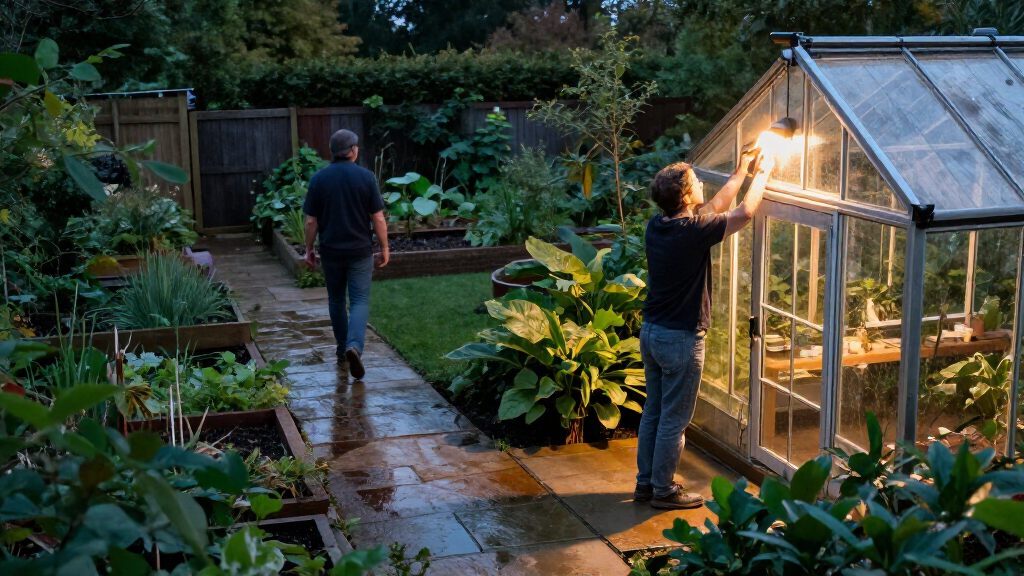

For most gardens, I’d choose the LUTEC 80W 9000-Lumen Outdoor Motion Sensor Security Floodlight as the best overall pick for powerful, wired illumination. If you need solar power and broad coverage, the ShineSeed 3500-Lumen 3-Head Flood Lights stand out; for a simple path-lighting setup, the ELECLINK Solar Pathway Lights are a more targeted choice. The main tradeoff is between dependable high-output lighting from a wired fixture and the easier installation of solar models, which depend on sunlight and battery capacity. Coverage, sensor behavior, and whether you want to illuminate a whole area or just a route matter as much as headline lumen figures. Read on for the full comparison and guidance on choosing the right garden security lights for your layout.

Get garden gear delivered free with Prime
- Fast, free delivery on millions of items
- Prime Video, Amazon Music and more included
- Member-only deals all year
Complete the kit


Key Takeaways
Wired output leads for broad, dependable illumination: the LUTEC’s stated 9000 lumens and the UME’s 4200 lumens make them stronger candidates for larger areas than the solar options.
Solar floodlights vary more by layout than by head count alone: adjustable multi-head models such as ShineSeed, LYWALT, and Daphino can aim light across several zones, but their solar panels need a suitable sun-facing position.
Remote controls and multiple modes add practical flexibility: they help tailor operation, but more settings can mean extra setup and are useful only if you will adjust them.
Path and landscape lights serve a different job from security floods: ELECLINK pathway lights and Linkind or nipify spotlights are better suited to routes or selected features than to lighting a wide yard.
Pack size is not a direct measure of coverage: six compact fixtures can spread light across separate locations, while a two-pack of higher-output floodlights may better suit concentrated coverage; placement and beam direction decide the result.
| UME 44W LED Outdoor Security Floodlight with 2 Adjustable Heads, 4200 Lumens, 5000K |  | Best for Wired, High-Output Coverage | Power: 44 watts; 120 volts | Light output: 4,200 lumens | Color temperature: 5000K | VIEW LATEST PRICE | See Our Full Breakdown |
| ELECLINK Solar Pathway Lights with Motion Sensor (6-Pack) |  | Best for Solar Pathway Guidance | Pack size: 6 lights | Brightness: Up to 400 lumens per light | LEDs: 26 per light | VIEW LATEST PRICE | See Our Full Breakdown |
| Tuffenough Solar Outdoor Motion Sensor Lights, 2500 Lumens, 210 LEDs, 3 Heads, Remote Control, 2-Pack | 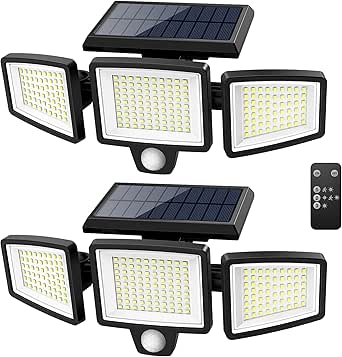 | Best Solar Floodlight for Wide Motion Coverage | Pack size: 2 lights | Maximum brightness: 2,500 lumens | Light source: 210 LEDs | VIEW LATEST PRICE | See Our Full Breakdown |
| HMCITY 120-LED Outdoor Solar Motion Sensor Lights, 6-Pack |  | Best for Multi-Spot Garden Coverage | Pack size: 6 lights | Brightness: 960 lumens | LED count: 120 per light | VIEW LATEST PRICE | See Our Full Breakdown |
| 6-Pack Solar Motion Sensor Outdoor Lights, 3 Modes, IP65 Waterproof |  | Best for Flexible, Budget-Conscious Installation | Pack size: 6 lights | Brightness: Up to 800 lumens | Light source: 149 SMD LEDs | VIEW LATEST PRICE | See Our Full Breakdown |
| LUTEC 80W 9000-Lumen Outdoor Motion Sensor Security Floodlight |  | Best for Maximum Hardwired Coverage | Power: 80 W | Brightness: 9,000 lumens | Color temperature: 5000 K | VIEW LATEST PRICE | See Our Full Breakdown |
| EMANER Motion Sensor Solar Outdoor Floodlights, 2-Pack |  | Best Solar Pick for Flexible Placement | Pack size: 2 lights | Maximum light output: 2,000 lumens | Lighting modes: 3 | VIEW LATEST PRICE | See Our Full Breakdown |
| Daphino 2500-Lumen Solar Motion Sensor Lights, 3-Head, 2-Pack |  | Best for Adjustable Garden Coverage | Pack size: 2 lights | Brightness: 2,500 lumens | LED count: 156 per light | VIEW LATEST PRICE | See Our Full Breakdown |
| LYWALT Solar Outdoor Motion Sensor Flood Light, 3000 Lumens, 188 LEDs, 4 Adjustable Heads |  | Best Solar Floodlight for Broad Directional Coverage | Maximum brightness: 3,000 lumens | LEDs and heads: 188 LEDs; 4 adjustable heads | Motion detection: Up to 40 ft; 180° range | VIEW LATEST PRICE | See Our Full Breakdown |
| TECKNET 416-LED Solar Motion Sensor Outdoor Lights, 2-Pack |  | Best for Wide-Angle Close-Range Lighting | Pack size: 2 lights | LED count: 416 per light | Maximum brightness: 4,200 lumens | VIEW LATEST PRICE | See Our Full Breakdown |
| Ensenior Solar Outdoor Flood Light with Split Panel, Remote Control, White |  | Best for Flexible Installation | Power source: Solar | Battery capacity: 2200 mAh | Light output: 1800 lumens | VIEW LATEST PRICE | See Our Full Breakdown |
| ShineSeed Solar Outdoor Motion Sensor Flood Lights, 3500 Lumens, 168 LEDs, 3 Heads, 300° Coverage, 3 Modes, IP65, 2-Pack |  | Best for Wide Two-Sided Coverage | Pack size: 2 lights | Power source: Solar | Brightness: Up to 3500 lumens per light | VIEW LATEST PRICE | See Our Full Breakdown |
| nipify Solar Outdoor Motion Sensor Spotlights, 4 Pack |  | Best for Flexible Garden Placement | Pack size: 4 | Power source: Solar | Light source: LED | VIEW LATEST PRICE | See Our Full Breakdown |
| Linkind Solar Landscape Spotlights, 2-Pack |  | Best for Set-and-Forget Garden Lighting | Pack size: 2 | Power source: Solar | Brightness: Up to 650 lumens | VIEW LATEST PRICE | See Our Full Breakdown |
| Solar Outdoor Motion Sensor Flood Lights, 2500 Lumens, 286 LEDs, 3 Modes, 3 Adjustable Heads, IP65, 2-Pack |  | Best for Short-Range Entry Coverage | Pack quantity: 2 | Power source: Solar | Brightness: Up to 2500 lumens | VIEW LATEST PRICE | See Our Full Breakdown |
| garden security light | Lighting modes | Color temperature | Pack size | Motion detection |
|---|---|---|---|---|
| UME 44W LED Outdoor Security F | — | 5000K | — | — |
| ELECLINK Solar Pathway Lights | — | 3000K warm white | 6 lights | 180° angle; up to 6.7 feet |
| Tuffenough Solar Outdoor Motio | 3 | 6500K | 2 lights | 270° angle; up to 26 feet |
| HMCITY 120-LED Outdoor Solar M | 3 | 6500K daylight white | 6 lights | — |
| 6-Pack Solar Motion Sensor Out | 3 | 6500K | 6 lights | 120° angle; up to 26 feet |
| LUTEC 80W 9000-Lumen Outdoor M | 4 | 5000 K | — | Up to 69 ft; 180° angle |
| EMANER Motion Sensor Solar Out | 3 | 6500 K | 2 lights | — |
| Daphino 2500-Lumen Solar Motio | — | — | 2 lights | Up to 40 ft; 130° angle |
| LYWALT Solar Outdoor Motion Se | Motion 100%; 10% always-on for 8 hours; 3% always-on with motion-triggered 100% | — | — | Up to 40 ft; 180° range |
| TECKNET 416-LED Solar Motion S | 3 | 5000 K | 2 lights | 13–20 ft; 120° angle |
| Ensenior Solar Outdoor Flood L | 5 | — | — | 180° angle; up to 75 ft |
| ShineSeed Solar Outdoor Motion | 3 | — | 2 lights | 180° angle; up to 60 ft |
| nipify Solar Outdoor Motion Se | 3 | — | 4 | — |
| Linkind Solar Landscape Spotli | — | 6500 K | 2 | — |
| Solar Outdoor Motion Sensor Fl | 3 | 6500 K | — | 120° angle; up to 26 ft |
More Details on Our Top Picks
UME 44W LED Outdoor Security Floodlight with 2 Adjustable Heads, 4200 Lumens, 5000K
For a garden that already has a suitable wired connection, I rank the UME 44W floodlight ahead of the solar wall lights when dependable, broad illumination matters more than motion-triggered convenience. Its 4,200 lumens and two independently adjustable heads let me direct light across separate parts of a yard, such as a gate and a path. The aluminum housing is another practical advantage for a fixed outdoor installation. Unlike the Tuffenough Solar Outdoor Motion Sensor Lights, though, it has no motion sensor, solar power, or remote control: it operates from a wall switch, so it will not turn on automatically when someone approaches. I’d choose it for a regularly used or vulnerable area with existing wiring, and skip it if running cable or leaving a light on manually does not suit the site.
Pros:- Two independently adjustable heads can cover different approaches or parts of a yard.
- 4,200 lumens of 5000K light provides strong, clear illumination.
- Aluminum housing is designed for outdoor exposure and corrosion resistance.
- Includes wall-mounting hardware and instructions.
Cons:- Requires a hardwired connection and operates by wall switch.
- Has no motion sensor, dusk-to-dawn function, or solar power.
Best for: Homeowners with an existing outdoor electrical connection who want bright, manually switched coverage across two garden areas.
Not ideal for: Renters or anyone avoiding electrical work, or buyers who need automatic motion activation or solar operation.
- Power:44 watts; 120 volts
- Light output:4,200 lumens
- Color temperature:5000K
- Light heads:2 independently adjustable LED heads
- Head adjustment:180° vertical and 360° horizontal
- Control:Wall switch
- Mounting:Wall mount; hardwired
- Materials:Aluminum and plastic
- Warranty:2 years
Our verdict“Choose the UME if you have suitable wiring and want strong, steerable light, but pick a solar motion-sensor model for automatic operation.”
ELECLINK Solar Pathway Lights with Motion Sensor (6-Pack)
I give the ELECLINK six-pack a distinct role: it puts solar motion lighting along paths rather than concentrating security coverage on one wall. Each stake-in light produces up to 400 lumens of warm 3000K light, which suits garden routes where comfortable visibility matters as much as a sharp flood of light. Its larger glass solar panel, 1200mAh battery, and three modes offer more flexibility than a basic pathway marker. The tradeoff is reach: motion detection extends only about 6.7 feet, far less than the 26-foot sensing distance listed for the Tuffenough Solar Outdoor Motion Sensor Lights. That makes these better for nearby foot traffic than monitoring a distant gate or broad perimeter. I’d pick them to mark a path without wiring, but not as a substitute for a wide-area security floodlight.
Pros:- Six stake-in lights can distribute illumination along a garden path.
- Up to 400 lumens per light is substantial for pathway lighting.
- Three modes allow a choice between ambient and motion-focused use.
- IP65 rating and a glass solar panel suit outdoor placement.
Cons:- Motion detection reaches only about 6.7 feet.
- A full charge calls for 4–6 hours of direct sunlight.
- Warm pathway illumination is less suited to broad, high-contrast security coverage.
Best for: Garden owners who want several warm, solar-powered lights marking paths, steps, or planting-bed edges without wiring.
Not ideal for: Buyers seeking long-range motion detection or a single powerful light to cover a large entrance or yard.
- Pack size:6 lights
- Brightness:Up to 400 lumens per light
- LEDs:26 per light
- Color temperature:3000K warm white
- Solar panel:5V/200mA glass panel
- Battery:1200mAh rechargeable
- Motion detection:180° angle; up to 6.7 feet
- Charging and runtime:4–6 hours charging; 12–15 hours runtime
Our verdict“Choose ELECLINK for distributed, warm path lighting, not for detecting movement at a distance.”
Tuffenough Solar Outdoor Motion Sensor Lights, 2500 Lumens, 210 LEDs, 3 Heads, Remote Control, 2-Pack
Among these five options, the Tuffenough two-pack is my strongest fit for a broad area that needs motion-triggered coverage without wiring. Its three adjustable heads spread up to 2,500 lumens, while a 270° sensor can detect movement up to 26 feet away. That reach gives it a clear security advantage over ELECLINK’s pathway lights, whose stated detection range is about 6.7 feet. A remote control and three lighting modes also make settings easier to change after mounting. The tradeoff is dependence on direct sunlight; the lights may need two to three days to recharge during cloudy or rainy weather. Installation height can also affect sensor performance, so placement matters more than with a simple pathway light. I’d choose this for a sunny wall facing an approach, but not where reliable charging is unlikely.
Pros:- Three adjustable heads spread light across a wider area than a single-head fixture.
- 270° motion detection reaches up to 26 feet.
- Remote control and three modes offer more adjustment than the simpler solar options.
- Two lights provide coverage at more than one mounting point.
Cons:- Charging performance depends on direct sunlight and can suffer during cloudy weather.
- Sensor results can vary with installation height.
- Solar operation offers less predictable availability than the hardwired UME floodlight.
Best for: Homeowners who want wireless, motion-activated coverage across a driveway, garden entrance, or broad wall and can mount the lights in a sunny spot.
Not ideal for: People with shaded mounting locations or buyers who need consistent lighting through extended cloudy weather.
- Pack size:2 lights
- Maximum brightness:2,500 lumens
- Light source:210 LEDs
- Color temperature:6500K
- Motion detection:270° angle; up to 26 feet
- Lighting modes:3
- Battery:1800mAh rechargeable
- Mounting and recommended height:Wall mount; 6.5–8 feet
- Weather resistance:IP65
Our verdict“Pick Tuffenough for wide, wireless motion coverage where the panels will receive strong sunlight.”
HMCITY 120-LED Outdoor Solar Motion Sensor Lights, 6-Pack
The HMCITY six-pack makes sense when I want several wall-mounted lights around a garden rather than one concentrated beam. With 960 lumens per light and three modes—including dim illumination that brightens when motion is detected—it can provide low-level visibility between activations while adding a stronger response to movement. That operating choice separates it from the 800-lumen six-pack in this roundup, though the other model specifies a 26-foot sensing range and more installation methods. HMCITY instead highlights compact housings and monocrystalline solar panels, useful when mounting space is limited. Its main catch is the mode limitation: constant medium light does not trigger the sensor. Charging also needs direct sunlight and an unobstructed panel. I’d choose these for multiple sunny mounting points, but not for shaded walls or buyers who expect motion activation in every mode.
Pros:- Six lights can cover multiple garden approaches or outdoor walls.
- Three modes include dim light that brightens when motion is detected.
- Compact dimensions suit smaller wall-mounting areas.
- IP65-rated housing is designed for outdoor use.
Cons:- The constant medium-light mode does not activate the motion sensor.
- Charging performance depends on 6–8 hours of direct sunlight.
- ABS construction may be less suited to buyers seeking a metal-bodied fixture.
Best for: Garden owners who want a coordinated set of compact solar wall lights for sunny spots around a patio, garage, or garden perimeter.
Not ideal for: Buyers with shaded mounting locations or anyone who needs the motion sensor to operate in constant medium-light mode.
- Pack size:6 lights
- Brightness:960 lumens
- LED count:120 per light
- Color temperature:6500K daylight white
- Lighting modes:3
- Solar panel:Monocrystalline silicon
- Charging time:6–8 hours in direct sunlight
- Mounting and dimensions:Wall mount; 3.74 × 3.38 inches
- Weather resistance:IP65
Our verdict“Choose HMCITY for compact, multi-point solar coverage when you can place the panels in direct sun.”
6-Pack Solar Motion Sensor Outdoor Lights, 3 Modes, IP65 Waterproof
I’d shortlist this six-pack when installation flexibility matters: each light can be mounted with screws, double-sided tape, or rope, giving it more placement options than HMCITY’s screw-mounted design. The lights provide up to 800 lumens and detect motion across a 120° angle, with a stated range of up to 26 feet. That makes them more useful for spotting movement along an approach than ELECLINK’s short-range pathway sensors, though their cold 6500K light will look harsher than ELECLINK’s warm 3000K output. Three modes include motion-activated options, and the IP65 rating is suited to outdoor exposure. The tradeoff is that solar charging and runtime depend on sunlight, and the mounting alternatives may not suit every surface as securely as screws. I’d choose these for adaptable placement, not for warm ambience or guaranteed operation in shade.
Pros:- Six lights can spread motion coverage across several outdoor locations.
- Up to 26 feet of stated detection range suits approach lighting.
- Three mounting options give flexibility where drilling is inconvenient.
- IP65 rating and a 2-year warranty are specified.
Cons:- Solar charging and runtime depend on sunlight exposure.
- 6500K cold white light may feel harsh in a garden setting.
- The 120° sensor angle is narrower than Tuffenough’s 270° detection angle.
Best for: Gardeners who need several solar motion lights and want options for mounting on surfaces where drilling may be difficult.
Not ideal for: Buyers who prefer warm-toned garden lighting or need dependable operation in shaded locations.
- Pack size:6 lights
- Brightness:Up to 800 lumens
- Light source:149 SMD LEDs
- Color temperature:6500K
- Motion detection:120° angle; up to 26 feet
- Lighting modes:3
- Mounting options:Screws, double-sided tape, or rope
- Warranty:2 years
Our verdict“Choose this set for flexible mounting and multi-point solar coverage, but look elsewhere if warm light or broad sensor angles matter most.”
LUTEC 80W 9000-Lumen Outdoor Motion Sensor Security Floodlight
For a large garden, driveway, or yard where darkness needs to be covered decisively, the LUTEC stands apart with 9,000 lumens and four independently adjustable heads. Its stated coverage of up to 2,370 sq. ft. gives it a broader-duty role than the solar EMANER and Daphino two-packs, which trade raw output for easier placement without wiring. The 69-foot, 180-degree motion sensor can detect approaching movement across a wide area, while four lighting modes let you adapt how the fixture operates.
The tradeoff is installation: this is a 120V hardwired fixture, not a light you can stake into a garden bed or reposition seasonally. Its aluminum, IP65-rated housing is suited to outdoor exposure, but the listed non-removable design makes placement a more permanent choice. I’d choose it when broad, bright coverage matters more than simple installation.
Pros:- Four adjustable heads help direct light across several parts of a yard.
- 9,000-lumen output and stated coverage up to 2,370 sq. ft. suit large areas.
- Motion detection reaches up to 69 feet across a 180-degree angle.
- IP65-rated aluminum housing is designed for outdoor weather exposure.
Cons:- Requires hardwired 120V installation rather than a simple solar or plug-in setup.
- Listed as non-removable, making placement less adaptable after installation.
Best for: Homeowners with a large garden perimeter or driveway who can install a permanent hardwired fixture and want strong, wide-area illumination.
Not ideal for: Renters, solar-first buyers, or anyone who needs a light they can move between garden beds; hardwiring and the non-removable listing limit flexibility.
- Power:80 W
- Brightness:9,000 lumens
- Color temperature:5000 K
- Light heads:4 adjustable heads
- Motion detection:Up to 69 ft; 180° angle
- Coverage area:Up to 2,370 sq. ft.
- Lighting modes:4
- Power and mounting:120 V hardwired; wall mount
- Weather protection:IP65; aluminum housing
Our verdict“Choose the LUTEC for a large garden that needs powerful, permanent coverage and has suitable hardwired installation.”
EMANER Motion Sensor Solar Outdoor Floodlights, 2-Pack
The EMANER two-pack is a practical choice when garden lighting needs to go in places without wiring. Its wall-mount or ground-stake installation makes it more adaptable than the wall-mounted Daphino and LYWALT, while dual adjustable heads help aim light at a path, planting area, or approach. Three modes include motion-triggered brightness and a dim all-night setting, so the lights can provide a low-level marker instead of staying dark until movement occurs.
Each light offers up to 2,000 lumens and a 40-foot motion range, useful for smaller outdoor zones but far below the hardwired LUTEC’s output and detection reach. The replaceable 2200 mAh LiFePO4 battery is a practical maintenance advantage, though operation still depends on solar charging: allow 4–6 hours to charge, and switch the unit on before use. I’d pick it for flexible garden placement, not maximum flood coverage.
Pros:- Wall or ground-stake mounting gives more placement options than wall-only models such as Daphino.
- Three modes include motion-activated brightness and dim all-night lighting.
- Dual heads and the solar panel are adjustable for more targeted placement.
- Replaceable LiFePO4 battery supports battery replacement instead of replacing the whole light.
Cons:- Needs 4–6 hours of charging, with performance dependent on access to sunlight.
- The switch must be turned on before use, adding a setup step.
- Maximum output of 2,000 lumens is modest beside the LYWALT and hardwired LUTEC.
Best for: Gardeners who want two solar lights they can either stake near a walkway or mount on a wall, with no electrical wiring.
Not ideal for: Buyers who need the widest detection reach or dependable illumination in shaded spots; its 40-foot range and solar charging dependence are limiting factors.
- Pack size:2 lights
- Maximum light output:2,000 lumens
- Lighting modes:3
- Motion coverage:Up to 40 ft
- Battery:2200 mAh replaceable LiFePO4
- Charging and runtime:4–6 hours charging; over 20 hours runtime
- Mounting:Wall mount or ground stake
- Color temperature:6500 K
- Weather protection:Waterproof design
Our verdict“Choose EMANER if you want a versatile solar two-pack for paths and smaller garden areas rather than high-output perimeter lighting.”
Daphino 2500-Lumen Solar Motion Sensor Lights, 3-Head, 2-Pack
Daphino’s main advantage is the combination of a three-head layout and two lights in one solar set. The heads can be aimed at different parts of a garden entrance or wall, and the solar panel adjusts separately, which helps when the best light position and best charging position do not line up. Three push-button modes provide options for motion lighting and dimmer nighttime operation without a remote. Compared with the EMANER, Daphino offers a higher stated output at 2,500 lumens, but it gives up EMANER’s ground-stake mounting.
The IP65 rating suits outdoor exposure, and the stated 40-foot motion range is appropriate for nearby approaches. Its 7–8-hour charging time is longer than EMANER’s 4–6 hours, while dim-mode runtime is listed at up to 12 hours. Solar placement matters: shaded mounting can reduce charging, and installation height or position can affect sensor performance. This set fits buyers who can mount it in a sunny spot and want adjustable heads rather than maximum sensor reach.
Pros:- Three adjustable heads help spread light across different parts of a garden approach.
- A separately adjustable solar panel helps balance light direction and sun exposure.
- Three push-button modes avoid reliance on a remote.
- IP65-rated construction is specified for outdoor weather exposure.
Cons:- The 7–8-hour charge time is longer than EMANER’s stated 4–6 hours.
- Solar performance depends on direct sunlight.
- Motion and lighting performance can be affected by mounting height and placement.
Best for: Homeowners mounting solar lights on a sunny garden wall who want three aimable heads and straightforward push-button controls.
Not ideal for: Buyers who need ground-stake installation, shorter charging time, or reliable output in a shaded garden.
- Pack size:2 lights
- Brightness:2,500 lumens
- LED count:156 per light
- Light heads and modes:3 adjustable heads; 3 modes
- Motion detection:Up to 40 ft; 130° angle
- Lighting coverage:Claimed 270°
- Charging and runtime:7–8 hours charging; up to 12 hours in dim mode
- Mounting:Wall mount; recommended height 6.5–8 ft
- Weather protection:IP65
Our verdict“Choose Daphino for a sunny wall-mounted garden location where adjustable three-head coverage matters more than quick charging or ground placement.”
LYWALT Solar Outdoor Motion Sensor Flood Light, 3000 Lumens, 188 LEDs, 4 Adjustable Heads
LYWALT gives solar buyers a more floodlight-like layout than the three-head Daphino: four adjustable heads spread the 3,000-lumen output across a broader area, with a claimed illumination angle of up to 270 degrees. Dual PIR sensors cover movement up to 40 feet within a 180-degree range, a useful arrangement for a garden wall facing more than one approach. Its three modes include full motion-triggered brightness and lower always-on settings, giving it more flexibility than a simple motion-only light.
Compared with the EMANER, LYWALT has more heads and higher stated brightness, but it is wall-mount only and depends on solar exposure. The tempered-glass panel is described as easy to clean and resistant to corrosion, though that does not remove the need for a suitable sunny position. Its 10% always-on mode runs for eight hours; the lower 3% mode pairs with motion-triggered full brightness. This is a stronger fit for fixed, wide garden coverage than portable placement.
Pros:- Four adjustable heads allow directional coverage across a wider area than Daphino’s three-head design.
- Dual PIR sensors detect movement up to 40 feet across a 180-degree range.
- Three modes include low-level illumination paired with motion-triggered full brightness.
- Tempered-glass solar panel is described as easy to clean and corrosion resistant.
Cons:- Solar charging and operation depend on suitable sun exposure.
- The 10% always-on mode is specified for eight hours rather than all night.
- Wall mounting offers less placement flexibility than EMANER’s wall-or-stake option.
Best for: Homeowners with a sunny wall facing a wide garden, patio, or driveway who want multiple adjustable beams and several nighttime modes.
Not ideal for: Renters or gardeners who need a stake-mounted light, and anyone whose proposed mounting location receives little direct sun.
- Maximum brightness:3,000 lumens
- LEDs and heads:188 LEDs; 4 adjustable heads
- Motion detection:Up to 40 ft; 180° range
- Illumination angle:Up to 270°
- Lighting modes:Motion 100%; 10% always-on for 8 hours; 3% always-on with motion-triggered 100%
- Battery:2500 mAh rechargeable
- Solar panel:Tempered glass; conversion rate up to 35%
- Mounting and power:Wall mount; solar and rechargeable battery
- Weather protection:IP65 waterproof
Our verdict“Choose LYWALT for a sunny, fixed garden wall where four adjustable heads and broad solar flood coverage are the priority.”
TECKNET 416-LED Solar Motion Sensor Outdoor Lights, 2-Pack
TECKNET is the close-range option in this group: its three-sided design and 300-degree lighting angle can spread light around a wall-mounted fixture, which suits a garden gate, narrow side yard, or nearby walkway. The two-pack provides coverage at separate points, and three modes allow continuous or motion-activated operation. Its IP66 rating is the strongest stated weather-protection rating among these five products, while the LUTEC is the better fit when the goal is powerful, long-range security coverage.
That distinction matters because TECKNET’s sensor reaches only 13–20 feet across 120 degrees—well short of the 40-foot sensors on EMANER, Daphino, and LYWALT. The listed maximum output is 4,200 lumens, but charging requires 6–8 hours of direct sun and runtime is stated at 10–12 hours. Installation can use screws, adhesive, or rope, though adhesive is not suited to rough or uneven surfaces. I’d choose it for nearby, wide-angle lighting, not early detection across a large garden.
Pros:- Three-sided design spreads light across a claimed 300-degree angle.
- Two lights and three modes support coverage at separate garden locations.
- IP66 weatherproof rating is higher than the IP65 ratings listed for Daphino and LYWALT.
- Offers screw, adhesive, or rope installation options.
Cons:- Motion detection is limited to 13–20 feet and a 120-degree angle, shorter than the other solar floodlights here.
- A full charge requires 6–8 hours of direct sunlight, and shade or cloud can reduce performance.
- Adhesive mounting is not recommended for rough or uneven surfaces.
Best for: Gardeners lighting a nearby gate, walkway, or narrow side yard who value broad fixture-side illumination and a two-light solar set.
Not ideal for: Buyers who need long-range motion detection or who plan to mount on rough surfaces using adhesive.
- Pack size:2 lights
- LED count:416 per light
- Maximum brightness:4,200 lumens
- Lighting angle:300°
- Motion detection:13–20 ft; 120° angle
- Lighting modes:3
- Charging and runtime:6–8 hours direct sunlight; 10–12 hours illumination
- Color temperature:5000 K
- Weather protection and material:IP66; ABS
Our verdict“Choose TECKNET for broad, close-range illumination around a gate or path, but pick a longer-range sensor for a larger garden perimeter.”
Ensenior Solar Outdoor Flood Light with Split Panel, Remote Control, White
The separate solar panel is the Ensenior’s main advantage: I can place the light where its motion coverage is useful and position the panel where it can receive more sun. Three adjustable heads and a 270° beam suit a doorway, side path, or other area that needs broad coverage, while the remote and five modes make it easier to change settings after mounting. Its 75-foot motion range is longer than the ShineSeed two-pack’s listed 60 feet, but the ShineSeed offers a brighter stated output and two lights. The tradeoff is a single-light package with a 2200 mAh battery, so it is less suited to covering multiple sides of a property. Its 6500 K light is also distinctly cool, and charging depends on sunlight.
Pros:- Separate panel gives more freedom to find a sunny charging position
- Three adjustable heads and 270° beam spread light across a broad area
- Motion detection reaches up to 75 feet
- Remote control and five modes allow settings changes without reaching the fixture
Cons:- One light provides less property coverage than the ShineSeed two-pack
- Solar charging depends on available sunlight
- 6500 K cool-white output may feel harsh near living areas
Best for: Homeowners who need to mount a floodlight in a shaded spot while placing its solar panel in a sunnier location
Not ideal for: Buyers who need two lights or prefer warmer-colored illumination
- Power source:Solar
- Battery capacity:2200 mAh
- Light output:1800 lumens
- Motion detection:180° angle; up to 75 ft
- Beam angle:270°
- Lighting modes:5
- Adjustable heads:3
- Water resistance:IP65
Our verdict“Choose the Ensenior if flexible panel placement and long-range motion detection matter more than getting multiple lights in one pack.”
ShineSeed Solar Outdoor Motion Sensor Flood Lights, 3500 Lumens, 168 LEDs, 3 Heads, 300° Coverage, 3 Modes, IP65, 2-Pack
For buyers who want to cover more than one approach, ShineSeed’s two-light pack is a stronger fit than the single Ensenior, and each fixture is rated for up to 3500 lumens. Three adjustable heads spread light across a stated 300° coverage angle, while the motion sensor reaches up to 60 feet. That combination can suit a yard with multiple entry paths, though the Ensenior lists a longer 75-foot detection range and offers a remote with five modes. ShineSeed instead keeps operation simpler, with three modes and wireless wall mounting. The listed 4–6-hour charging time and up-to-18-hour continuous runtime are useful reference points, but actual performance depends on sunlight and use. The cool-white output and need for a suitable wall location may not suit every garden.
Pros:- Two fixtures provide coverage across more than one area
- Up to 3500 lumens per light and three adjustable heads support broad illumination
- 300° coverage angle helps spread light across a wide approach
- Wireless wall mounting avoids the need to run power cables
Cons:- Motion detection is listed at up to 60 feet, shorter than the Ensenior’s 75 feet
- Charging and runtime vary with sunlight and operating conditions
- Wall mounting requires appropriate placement for both coverage and charging
Best for: Homeowners who want two bright, wall-mounted solar floodlights to cover several approaches to a yard
Not ideal for: People who need detection beyond 60 feet, want a remote, or cannot mount lights where their panels receive sun
- Pack size:2 lights
- Power source:Solar
- Brightness:Up to 3500 lumens per light
- LEDs:168 per light
- Coverage angle:300°
- Motion detection:180° angle; up to 60 ft
- Lighting modes:3
- Water resistance:IP65
Our verdict“Pick ShineSeed when two bright fixtures and broad area coverage matter more than a remote or the longest listed detection range.”
nipify Solar Outdoor Motion Sensor Spotlights, 4 Pack
The nipify four-pack is the most adaptable choice here for placing smaller lights around a garden: each spotlight can be pushed into the ground or wall-mounted, so buyers can aim light along beds, paths, or boundaries without wiring. That installation flexibility sets it apart from the ShineSeed floodlights, which are wall-mounted and designed to cover a much broader area from each fixture. Nipify lists 1000 lumens and three modes, including motion-triggered and constant-light settings, but does not provide battery capacity or runtime. That missing information makes it harder to judge how reliably the lights will keep working after cloudy weather or frequent activation. The IP65 rating suits outdoor placement, though these spotlights are better for adding several points of light than for replacing a powerful security floodlight at a main entrance.
Pros:- Four lights allow placement across multiple garden areas
- Ground insertion or wall mounting offers flexible positioning
- Three modes include motion-activated and constant-light options
- IP65 waterproof design is intended for outdoor use
Cons:- 1000-lumen output is less suited to broad security coverage than ShineSeed’s stated 3500 lumens
- Battery capacity and runtime are not specified
- Solar charging depends on receiving enough sunlight
Best for: Garden owners who want several wire-free spotlights to place along paths, planting beds, or boundary edges
Not ideal for: Buyers seeking one high-output floodlight for a driveway or needing published battery and runtime figures
- Pack size:4
- Power source:Solar
- Light source:LED
- LED count:56
- Brightness:1000 lumens
- Lighting modes:3
- Motion sensor:PIR
- Water resistance:IP65
- Installation:Ground insertion or wall mounting
Our verdict“Choose nipify for multiple garden-level spotlights and flexible installation, not for the strongest single-point security lighting.”
Linkind Solar Landscape Spotlights, 2-Pack
Linkind is the less security-focused option in this group, but its dusk-to-dawn operation makes it a straightforward choice for steady garden illumination without relying on motion activation. The two spotlights can be staked into the ground or mounted on a wall, and their adjustable panels help direct the solar charging surface toward available light. Compared with the nipify four-pack, Linkind provides fewer fixtures but publishes more detail about brightness modes: up to 24 hours on low, versus six hours on high. Those runtimes are mode-specific, so the brightest setting will not last as long. At 650 lumens per light, it is also far less powerful than the ShineSeed floodlights and lacks a motion sensor, making it a better fit for landscape accents than for alerting you to movement near an entry.
Pros:- Dusk-to-dawn control switches the lights on and off automatically
- Three brightness settings give a choice between output and runtime
- Can be installed with ground stakes or wall mounts
- IP65, UV-resistant ABS housing is designed for outdoor exposure
Cons:- No motion sensor, unlike the nipify and ShineSeed options
- 650 lumens per light is modest for security floodlighting
- Listed runtime falls to six hours on the high setting
Best for: Gardeners who want automatic dusk-to-dawn landscape lighting with adjustable brightness and flexible mounting
Not ideal for: Buyers who need motion-triggered alerts or bright, wide-area coverage for a driveway or entry
- Pack size:2
- Power source:Solar
- Brightness:Up to 650 lumens
- Color temperature:6500 K
- Beam angle:90°
- Brightness modes:High: 6 hours; medium: 12 hours; low: 24 hours
- Operation:Dusk-to-dawn automatic on/off
- Mounting:Ground stake or wall mount
- Water resistance:IP65
Our verdict“Choose Linkind for automatic, low-maintenance garden lighting, but select a motion-sensing floodlight for security alerts.”
Solar Outdoor Motion Sensor Flood Lights, 2500 Lumens, 286 LEDs, 3 Modes, 3 Adjustable Heads, IP65, 2-Pack
This two-pack pairs three adjustable heads with a listed 270° coverage angle, making it useful for illuminating a porch, gate, or nearby side path without wiring. Its up-to-2500-lumen output is lower than ShineSeed’s stated 3500 lumens, but this model includes 286 LEDs per product listing and a PIR sensor for movement up to 26 feet away. That shorter detection distance makes it better suited to close approaches than to monitoring a long driveway; the Ensenior’s sensor, for comparison, reaches up to 75 feet. Three modes include motion-activated and continuous options, although constant mode disables the sensor. The ability to switch off battery and mode indicators may help keep the fixture less conspicuous, but solar charging still depends on sunlight.
Pros:- Two fixtures with three adjustable heads offer flexible placement and coverage
- Up to 270° coverage helps illuminate more than a narrow point directly ahead
- Battery and mode indicators can be switched off
- IP65-rated housing is designed for outdoor weather
Cons:- Motion detection reaches only up to 26 feet, much less than the Ensenior’s listed 75 feet
- Constant mode disables motion sensing
- Solar charging depends on available sunlight
Best for: Homeowners who want two adjustable solar lights for nearby entrances, gates, or short paths
Not ideal for: Buyers who need long-range motion detection or want the sensor active during continuous lighting
- Pack quantity:2
- Power source:Solar
- Brightness:Up to 2500 lumens
- LED count:286
- Color temperature:6500 K
- Lighting modes:3
- Coverage angle:Up to 270°
- Motion detection:120° angle; up to 26 ft
- Water resistance:IP65
Our verdict“Choose this two-pack for close-range entry lighting, but look to the Ensenior if you need earlier motion detection farther from the fixture.”
How We Picked
I compared the 15 products by how well each fits a real garden security task: lighting a broad approach, covering a doorway or side yard, marking a path, or highlighting a specific feature. I weighed stated brightness and adjustable coverage alongside power source, sensor and mode options, installation flexibility, weather protection where specified, and the upkeep each setup may require. A light’s advertised output matters, but it cannot tell the whole story without considering beam spread, mounting position, and whether its power source suits the site.
The ranking prioritizes useful, dependable coverage and versatility, then weighs convenience and likely fit for narrower needs. That puts the wired LUTEC and UME options ahead for buyers who need strong area lighting, while solar multi-head models rank well when installation without wiring matters more. Pathway and spotlight products have distinct roles rather than being treated as substitutes for floodlights. Product details supplied for this roundup do not establish real-world runtime or detection range, so I do not treat those as proven performance claims.
Factors to Consider When Choosing Best Garden Security Lights
Before choosing a fixture, decide what you need the light to do and where its power will come from. These choices often matter more than a long feature list: the wrong beam direction can leave a blind spot, and a solar panel in shade may not support the use you expect.
Match the light pattern to the area
Start by marking the places you want illuminated: an entrance, a gate, a path, or a wide section of lawn. A floodlight casts broad light for movement and general visibility, while a spotlight directs a narrower beam at a feature or corner. Pathway lights help define a route but usually cannot replace a floodlight at an access point. Multi-head designs can cover more than one direction, though each head still needs to be aimed thoughtfully. A common mistake is buying the widest-looking fixture and mounting it where walls, fences, or plants block its beam. Sketching the area and choosing mounting points first can reveal whether one powerful light or several smaller fixtures will work better.
Choose wired or solar power for the actual site
Wired lights make sense where a suitable power connection is available and you want to avoid relying on daily solar charging. Solar models can simplify installation, but their performance depends on panel exposure, season, shade, and how often the light activates. Check whether the panel is built into the fixture or can be positioned separately; a split panel can help when the best location for the light is not the sunniest one. Do not assume a sunny spot for a few hours means the battery will meet every overnight demand. Trees, walls, and winter daylight can change charging conditions across the year. For a shaded garden, a wired option may be the more predictable choice even if installation takes more effort.
Treat brightness figures as one part of coverage
Lumen claims provide a useful starting point, but they do not show how evenly a garden will be lit. Beam angle, lens design, mounting height, and the direction of adjustable heads all affect what reaches the ground. A very bright beam aimed into a neighbor’s window can be less useful than a lower-output fixture aimed at the entry route. For a large area, consider whether multiple fixtures can reduce dark gaps instead of relying on one high-output unit. Where a product lists head count but not beam spread, avoid assuming that more heads automatically mean a wider or brighter result. Plan for useful coverage rather than the biggest number on the package.
Check sensor behavior and light modes
Motion sensing can save power and make an approach more visible, but placement affects how reliably it responds. A sensor aimed across a path may detect movement differently from one aimed toward a person walking directly at it. Before mounting permanently, think about passing pedestrians, pets, moving branches, and other sources of unwanted activation. Multiple modes can offer a choice between motion-triggered brightness and other operating patterns, but labels do not guarantee a particular runtime or detection distance. If you want a simple set-and-forget fixture, fewer controls may be easier to manage. If you need to adjust the light for different zones or routines, a remote or selectable modes may be worth the added complexity.
Read weather protection and installation details closely
Outdoor placement exposes lights to rain, dust, temperature swings, and sometimes direct sprinkler spray. Look for a stated ingress-protection rating, but also check whether the rating applies to the whole fixture and how the unit must be mounted. A weather-resistant body does not make a poor installation location suitable, particularly where water pools or cables remain exposed. For solar models, panel orientation and secure mounting are part of the installation, not afterthoughts. For wired fixtures, account for the existing connection and whether installation requires electrical work. Paying more for adjustability or a stronger build can be sensible in an exposed, hard-to-reach location, while a sheltered path may not need the same level of specification.
Plan the number and placement of fixtures before buying a pack
Pack count can make a set look like a better fit, but it says little about how much ground each light covers. Several compact lights can work well along a fence or walkway, while fewer higher-output fixtures may suit a concentrated area. Measure spacing and note obstacles before choosing a multi-pack, especially if the lights need separate sunny mounting spots. Also consider future maintenance: replacing or repositioning several units may take more time than maintaining one central fixture. Avoid placing lights so close together that their beams overlap heavily while another part of the garden stays dark. A simple placement plan helps you buy for the layout rather than for the number of pieces in the box.
Frequently Asked Questions
Should I choose a wired floodlight or a solar security light for a shaded garden?
For a consistently shaded location, a wired floodlight is usually the more predictable choice because it does not depend on direct sunlight to recharge. Solar can still work if the panel can be placed separately in a brighter spot, as with a split-panel design, but you need to check the cable reach and mounting options. Think about shade across the day and through the year rather than judging from one sunny afternoon. If panel placement is limited and the light must activate often, solar may not match your needs. Choose solar when the site has useful exposure and simple installation is a priority; choose wired when dependable power matters more.
Are solar pathway lights enough to secure a garden entrance?
Pathway lights can make a route easier to see, but they are not automatically a substitute for a motion-activated floodlight at an entrance. Their lower, distributed placement is useful for marking steps or a walkway, while a floodlight can illuminate a broader approach when movement occurs. For an entrance with dark corners, consider whether the path lights leave faces, gates, or access points poorly lit. Combining route lighting with a separate security fixture may provide better coverage than expecting one type to do both jobs. Check the intended beam pattern and mounting position before treating a pathway set as your main security lighting.
Does a higher lumen rating always mean better garden security lighting?
No; a higher stated lumen output can provide more light, but it does not guarantee that the right areas will be illuminated. Beam direction, mounting height, obstructions, and head adjustment affect usable coverage. Excessively bright light can also create glare or spill into neighboring spaces if it is aimed poorly. For a wide garden, compare coverage and fixture placement as well as output, and consider whether more than one light can fill gaps. Use lumen figures to narrow options, then choose based on the shape of the space and where you want light to fall.
When is a remote control or several lighting modes worth choosing?
A remote or multiple modes can help when you expect to change operation after installation, such as adjusting a light for a different area or routine. They may also be handy if the fixture is mounted where reaching its controls is inconvenient. If you want the light to activate in one straightforward way and rarely change settings, extra controls may add little value. Check what the modes actually do rather than assuming that more modes mean longer runtime or better detection. For solar fixtures, your preferred mode can affect how often the light activates and how much energy it uses.
How should I decide between one powerful fixture and a multi-light pack?
Choose one powerful fixture when the main task is lighting a concentrated area and there is a good mounting point with a clear beam path. A multi-light pack is more useful when you need to spread illumination along a path, fence, or several separate approaches. Several lights can reduce dark gaps, but only if their positions and power sources suit the site. A single fixture may be easier to maintain, while multiple units offer more placement flexibility. Mark the areas you want lit and identify possible mounting spots before choosing by pack size or output claims.
Conclusion
For broad, high-output coverage where wired installation is practical, I’d pick the LUTEC 80W 9000-Lumen floodlight as the best overall option; the UME 44W floodlight is another wired choice for buyers who want adjustable heads and a stated 4200-lumen output. For solar coverage, the ShineSeed 3-head lights are my pick when adjustable, multi-direction illumination matters, while the Tuffenough 2-pack suits buyers who want remote control and three heads. The best value depends on your layout: a multi-pack such as HMCITY or the six-light solar set makes more sense when you need to distribute fixtures across several spots, not when you need one powerful beam. For beginners, I’d start with a straightforward solar set matched to a sunny, accessible mounting location; avoid paying for extra modes you will not use. For paths or landscape accents, choose ELECLINK, Linkind, or nipify rather than expecting a spotlight or pathway fixture to cover a whole yard. My final choice would come down to available sunlight, the area you need lit, and whether you can install a wired fixture.