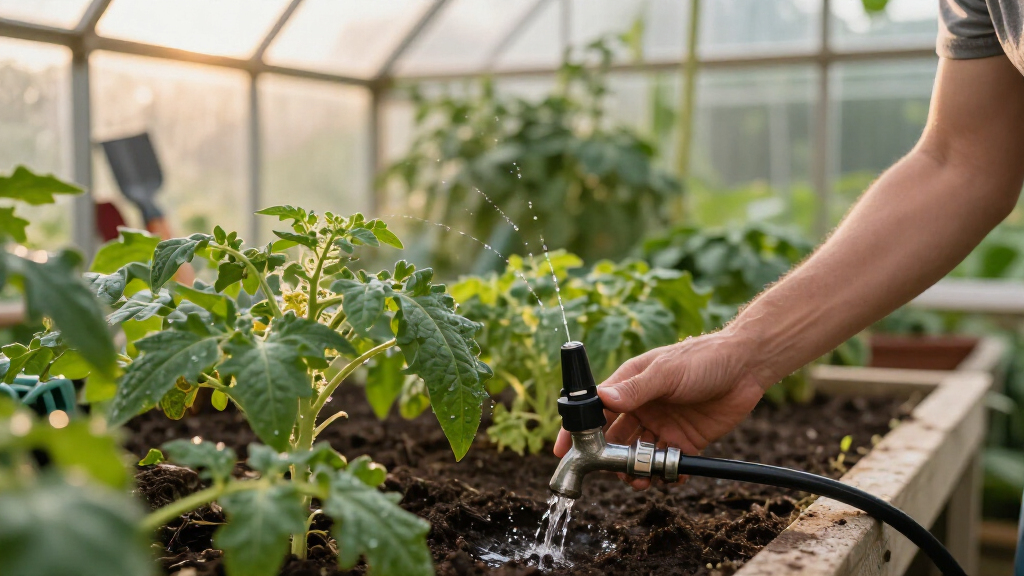

The Sainlogic Automatic Plant Watering System for 15 Plants is my best overall pick for a straightforward indoor setup, while the LetPot Gen-3 Wi-Fi stands out for app-based control and the HEYRSUN Solar System for outdoor use without a nearby outlet. The main choice is between a simple timer, more adjustable watering controls, and the flexibility of solar or Wi-Fi features. Coverage counts can be misleading: pot size, tubing layout, and water source all affect whether a system suits your plants. I compare all 15 options by control, setup, power, and practical fit so you can see which tradeoffs matter for your space. Read on for the full breakdown and recommendations by buyer type.

Get garden gear delivered free — and shop member deals
- Fast, free delivery on millions of items
- Access to Prime Big Deal Days deals on October 6–7
- Prime Video, Amazon Music and more included
Complete the kit


Key Takeaways
- Indoor coverage and control drive the shortlist: Sainlogic is the balanced pick for a group of potted plants, while the RAINPOINT cycle-and-soak model focuses on timed watering patterns for up to 10 plants.
- Wi-Fi adds remote control, not a better fit for every home: LetPot Gen-3 is the standout for app access, but a timer-based system may be simpler when schedules rarely change.
- Solar systems solve a location problem: HEYRSUN and Beday suit spaces where an outlet is inconvenient, while the USB-charged 49 ft system offers another power option for a spread-out arrangement.
- Long tubing runs need careful planning: The 60 ft system offers reach, but layout and water distribution matter as much as the advertised length.
- Two-zone control changes how you group plants: Unistyle can separate watering areas, a useful distinction when one schedule does not suit every pot.
| Sainlogic Automatic Plant Watering System for 15 Plants |  | Best for Soil-Moisture-Based Watering | Plant capacity: 15 plants | Display: 3.07 inches | Tubing length: 33 ft (10 m) | VIEW LATEST PRICE | See Our Full Breakdown |
| Automatic Self-Watering System for 15 Indoor Potted Plants, 2-Pack |  | Best for Two Separate Plant Areas | Quantity: 2 watering systems | Capacity: Up to 15 pots per system | Tubing: 33 feet per system | VIEW LATEST PRICE | See Our Full Breakdown |
| Automatic Plant Watering System for 15 Potted Plants with Programmable Timer and Humidity Mode |  | Best for a Rechargeable Timer Setup | Capacity: Up to 15 potted plants | Hose length: 33 feet | Watering modes: Programmable schedule and humidity mode | VIEW LATEST PRICE | See Our Full Breakdown |
| Automatic Drip Irrigation System for Indoor Plants, 15 Pots |  | Best for Longer Battery Runtime | Capacity: Up to 15 plants | Hose length: 33 feet | Weight: 0.66 kg | VIEW LATEST PRICE | See Our Full Breakdown |
| VIVOSUN Automatic Drip Irrigation Kit with Smart Watering System |  | Best for Grow-Tent Control | Plant capacity: Up to 16 plants | Drip emitters: 16 adjustable emitters | Pump power: 15 W | VIEW LATEST PRICE | See Our Full Breakdown |
| HEYRSUN Solar Automatic Drip Irrigation System with Timer |  | Best for Off-Grid Watering | Power: Solar and USB charging | Battery capacity: 2200 mAh | Timer: Adjustable watering durations and frequencies | VIEW LATEST PRICE | See Our Full Breakdown |
| Unistyle 2-Zone Automatic Plant Watering System for Indoor Plants |  | Best for Mixed Planting Needs | Watering zones: 2 independent zones | Plant capacity: Up to 15 plants with included accessories; up to 30 with additional kits | Watering duration: 5 seconds to 30 minutes | VIEW LATEST PRICE | See Our Full Breakdown |
| RAINPOINT Automatic Plant Watering System with Adjustable Drippers |  | Best for Simple Controls | Watering duration: 15 seconds to 20 minutes | Watering frequency: Every 6 hours to 14 days | Included drippers: 10 adjustable emitters | VIEW LATEST PRICE | See Our Full Breakdown |
| Beday Solar Drip Irrigation System for up to 15 Plants |  | Best Solar Kit for 15 Plants | Plant capacity: Up to 15 potted plants | Timer settings: 490 combinations: 14 frequencies and 35 durations | Watering frequency: Every 1 hour to 7 days | VIEW LATEST PRICE | See Our Full Breakdown |
| 60 ft Drip Irrigation System with Smart Water Timer |  | Best for Outdoor Garden Coverage | Tubing length: 60 ft in title; 120 ft in description | Timer: Programmable with rain delay and child lock | Rain delay: 1–15 days | VIEW LATEST PRICE | See Our Full Breakdown |
| Tipkook Automatic Indoor Plant Watering System with Timer |  | Best for Long Gaps Between Refills | Planter capacity: Up to 15 planters | Watering duration: 1–300 seconds | Scheduling: Every 1–23 hours or 1–30 days | VIEW LATEST PRICE | See Our Full Breakdown |
| 49 ft Solar Drip Irrigation System with USB Charging for 15 Potted Plants |  | Best for Indoor and Outdoor Placement | Plant capacity: Up to 15 potted plants | Tubing length: 15 meters (49 ft) | Emitters: 15 adjustable emitters | VIEW LATEST PRICE | See Our Full Breakdown |
| Moistenland Automatic Indoor Plant Watering System |  | Best for Root-Level Drip Watering | Watering control: Programmable timer with internal clock | Watering method: Drip irrigation to plant root zones | Installation time: About 15 minutes | VIEW LATEST PRICE | See Our Full Breakdown |
| LetPot Gen-3 Wi-Fi Automatic Plant Watering System |  | Best for App-Based Scheduling | Model: Gen-3 | Capacity: 10–20 pots | Control: Wi-Fi and app control | VIEW LATEST PRICE | See Our Full Breakdown |
| RAINPOINT Automatic Indoor Plant Watering System with Large Display, Cycle & Soak Mode, for 10 Plants |  | Best for Visible, Fine-Tuned Scheduling | Plant capacity: 10; expandable to 15 with a separately sold accessory kit | Watering interval: Every 8 hours to every 30 days | Watering duration: 20 seconds to 20 minutes | VIEW LATEST PRICE | See Our Full Breakdown |
More Details on Our Top Picks
Sainlogic Automatic Plant Watering System for 15 Plants
Soil-moisture sensing gives this Sainlogic system a different focus from timer-first kits such as the Automatic Drip Irrigation System for Indoor Plants, 15 Pots. It can water when its sensor detects dry soil or follow a schedule, which may suit a collection whose watering needs shift with conditions. The kit covers up to 15 plants and includes 33 feet of tubing and the connectors needed to build a multi-pot layout. Its IP64-rated protection also makes it a candidate for sheltered outdoor setups. The main compromise is control at the plant level: the emitters are not individually adjustable, so one flow setting may not suit every pot. I’d choose it for sensor-led watering, but skip it if your plants need distinctly different water amounts.
Pros:- Moisture-sensing mode can trigger watering when soil is dry
- Supports up to 15 plants
- Includes 33 feet of tubing and irrigation fittings
- IP64-rated weather protection suits sheltered outdoor use
Cons:- Emitters cannot be adjusted individually
- Needs setup to match the watering needs of the plants
Best for: Plant owners with up to 15 pots who want soil-moisture-triggered watering and can arrange plants with similar watering needs.
Not ideal for: Collectors with plants that need very different water volumes, since the emitters are not individually adjustable.
- Plant capacity:15 plants
- Display:3.07 inches
- Tubing length:33 ft (10 m)
- Watering modes:Scheduled watering and humidity mode
- Power connection:USB Type-C
- Weather protection:IP64
- Emitter adjustment:Emitters are not individually adjustable
- Included components:Tubing, 15 T-connectors, 15 drippers, filter, anti-siphon valve, soil moisture sensor, user manual
Our verdict“Choose the Sainlogic if soil-moisture sensing matters more than individual control over each plant’s drip rate.”
Automatic Self-Watering System for 15 Indoor Potted Plants, 2-Pack
The defining advantage here is two watering systems, each rated for up to 15 pots. That makes this pack more useful for two rooms or plant groups than a single-system kit such as the Automatic Plant Watering System for 15 Potted Plants with Programmable Timer and Humidity Mode. Each unit offers scheduled watering and humidity mode, with 33 feet of tubing per system for separate layouts. The tradeoff is that the product details do not identify a water source or reservoir capacity, so buyers should confirm how they plan to supply water before building a setup around it. Both systems also need programming and installation. I’d favor this pack when separate zones matter; for one compact collection, its second controller and tubing may be unnecessary.
Pros:- Includes two independent watering systems
- Each system supports up to 15 pots
- Scheduled and humidity-based watering modes
- 33 feet of tubing and fittings included per system
Cons:- Requires installation and programming before use
- Water source and reservoir capacity are not specified
- Two systems may be more setup than a single plant area needs
Best for: Households maintaining two separate indoor plant groups, each with up to 15 pots and its own watering setup.
Not ideal for: Owners with one small plant collection who do not need two systems, or anyone needing a clearly specified reservoir arrangement.
- Quantity:2 watering systems
- Capacity:Up to 15 pots per system
- Tubing:33 feet per system
- Watering modes:Programmable schedule and humidity mode
- Power connection:Type-C cables included
- Included components:2 Type-C cables, 30 T-joints, 30 droppers, 2 filters, 2 anti-siphon components, user manual
- Water source:Not specified
- Reservoir capacity:Not specified
Our verdict“Pick this two-pack when you want separately arranged watering systems for two sizable indoor plant groups.”
Automatic Plant Watering System for 15 Potted Plants with Programmable Timer and Humidity Mode
This kit combines a programmable timer with humidity mode in a rechargeable unit, giving indoor plant owners two ways to automate watering without describing a separate app or hub. Its 33 feet of hose and fittings cover up to 15 pots, similar to the Automatic Drip Irrigation System for Indoor Plants, 15 Pots. The available product details, however, are less specific about day-to-day power management: they do not give battery runtime, and they leave reservoir capacity unstated. That makes it harder to judge how well the setup fits a long trip or a large collection. Water amounts also need adjustment to suit plant needs. I’d place it ahead of a basic timer kit for buyers who want humidity mode and USB-C charging, but behind options with clearer operating details.
Pros:- Supports up to 15 potted plants
- Programmable timer supports scheduled watering
- Humidity mode adjusts watering based on the environment
- Includes 33 feet of hose and setup fittings
Cons:- Battery runtime is not specified
- Reservoir capacity is not specified
- Watering amounts may need adjustment for individual plant needs
Best for: Indoor plant owners who want a rechargeable, programmable system with humidity mode for a group of up to 15 pots.
Not ideal for: Travelers who need a known battery runtime or buyers who need confirmed reservoir capacity before choosing a system.
- Capacity:Up to 15 potted plants
- Hose length:33 feet
- Watering modes:Programmable schedule and humidity mode
- Charging:Type-C cable
- Power:Rechargeable battery
- Included components:Watering system, tubing, Type-C cable, 15 T-joints, 15 droppers, filter, anti-siphon components, user manual
- Battery runtime:Not specified
- Reservoir capacity:Not specified
Our verdict“Choose this system if you want rechargeable scheduled and humidity-mode watering and can work around unspecified runtime and reservoir details.”
Automatic Drip Irrigation System for Indoor Plants, 15 Pots
Among the 15-pot systems here, this one gives the clearest battery-life reference: over 30 days when watering for 30 seconds per day. That makes it easier to plan cordless use than with the Automatic Plant Watering System for 15 Potted Plants with Programmable Timer and Humidity Mode, whose runtime is not specified. The rechargeable unit also includes a timer and humidity mode, plus 33 feet of tubing for a DIY layout. Runtime depends on watering settings, though, so heavier schedules will change the interval between charges; the unit also needs a full charge before first use. I’d rank it for buyers who value a stated light-use runtime over sensor detail or app control. Its range and modes are useful, but the battery figure is tied to a specific short daily cycle.
Pros:- Supports up to 15 potted plants
- Over 30 days of battery life at 30 seconds of watering per day
- Offers programmable timer and humidity mode
- Includes 33 feet of tubing and 15 drip stakes
Cons:- Must be fully charged before first use
- Battery life varies with watering settings
- Specified runtime applies only to a 30-second daily watering cycle
Best for: Indoor growers who want a cordless system for up to 15 pots and expect to water on a light daily schedule.
Not ideal for: Owners running frequent or long watering cycles who need a battery-life estimate that applies to heavier use.
- Capacity:Up to 15 plants
- Hose length:33 feet
- Weight:0.66 kg
- Power source:Rechargeable battery
- Charging port:USB-C
- Control:Programmable digital timer and humidity mode
- Battery life:30+ days at 30 seconds of watering per day
- Included components:Watering unit, tubing, 15 T-joints, 15 drip stakes, filter, charging cable
Our verdict“Choose this model if you want cordless scheduled watering and your routine is close to its stated 30-second daily cycle.”
VIVOSUN Automatic Drip Irrigation Kit with Smart Watering System
VIVOSUN is the lineup’s most configurable choice for growers who want to tune water delivery per plant: its 16 adjustable drip emitters give it an advantage over the fixed emitters on the Sainlogic Automatic Plant Watering System for 15 Plants. The pump supports soil, coco coir, perlite, and rockwool, and its Cycle Mode and Recipe Mode target more controlled growing routines than simple scheduled kits. The smart layer has a catch: app control requires a separate VIVOSUN A10 GrowHub, so this is not a self-contained app setup. The described maximum flow rate also does not, by itself, establish how water will distribute across a particular layout. I’d choose it for a grow space where adjustable delivery matters, and skip it for uncomplicated household pots.
Pros:- Waters up to 16 plants
- Adjustable emitters allow plant-by-plant drip tuning
- Supports soil, coco coir, perlite, and rockwool
- Built-in filter and anti-siphon connector help limit clogs and backflow
Cons:- App control requires a separate VIVOSUN A10 GrowHub
- A 15 W pump and listed maximum flow rate may exceed what simple pot layouts need
- No battery runtime or reservoir capacity is specified
Best for: Indoor growers with up to 16 plants in varied media who want adjustable emitters and may already own a compatible GrowHub.
Not ideal for: Casual houseplant owners seeking a self-contained, straightforward kit without a separate hub requirement for app control.
- Plant capacity:Up to 16 plants
- Drip emitters:16 adjustable emitters
- Pump power:15 W
- Maximum flow rate:1000 L/H
- Operating noise:30–40 dB
- Dripper size:4 mm
- App control:Requires VIVOSUN A10 GrowHub
- Growing media compatibility:Soil, coco coir, perlite, rockwool
Our verdict“Pick VIVOSUN for a grow setup where adjustable emitters and media support matter more than a self-contained app experience.”
HEYRSUN Solar Automatic Drip Irrigation System with Timer
The HEYRSUN suits plant owners who want scheduled drip watering without keeping the system plugged in. Its solar and USB charging options give it more flexibility around a sunny patio or a room without a nearby outlet, while adjustable timing lets you set watering duration and frequency. Compared with the Beday Solar Drip Irrigation System, its listed kit details are less specific about plant capacity and included components, so I would favor Beday when planning a larger, clearly mapped setup. The tradeoff here is that solar performance depends on available light, and the claimed month of battery life assumes five minutes of watering per day. It also needs a water source and DIY assembly, so it is not a self-contained reservoir system.
Pros:- Solar and USB charging provide two ways to replenish the battery.
- Adjustable watering durations and frequencies support scheduled care.
- Designed for indoor and outdoor use.
- IPX5 water protection is specified.
Cons:- The claimed battery life depends on a stated five-minute daily watering schedule.
- Requires DIY installation and access to a water source.
- Plant capacity and included kit components are not specified in the supplied product details.
Best for: Plant owners with a nearby water source who want scheduled watering and solar charging for an indoor or outdoor setup.
Not ideal for: People without reliable sunlight or a convenient water source, or those who want a clearly specified multi-plant kit.
- Power:Solar and USB charging
- Battery capacity:2200 mAh
- Timer:Adjustable watering durations and frequencies
- Installation:DIY kit with components and instructions
- Water protection:IPX5
- Claimed battery life:Up to one month at five minutes of watering per day
- Warranty:1 year
Our verdict“Choose HEYRSUN for solar-assisted scheduled watering near a water source, and favor Beday if you need a specified kit for up to 15 plants.”
Unistyle 2-Zone Automatic Plant Watering System for Indoor Plants
Two independent zones are the reason to choose Unistyle: they let you set separate schedules for groups of plants with different watering needs. Its duration range runs from five seconds to 30 minutes, and its frequency options span hourly intervals through every 15 days. Compared with the RAINPOINT Automatic Plant Watering System with Adjustable Drippers, Unistyle offers more explicit schedule range and zone control, while RAINPOINT has simpler two-dial operation. The included emitters and tubing support up to 15 plants; expanding to 30 means buying an additional kit. Water-empty detection cuts off after 10 seconds, helping avoid prolonged pumping when the supply runs dry. The listed product details do not state battery runtime or charging time, which makes long trips harder to plan around.
Pros:- Two independent zones allow separate watering schedules.
- Wide duration and frequency ranges accommodate varied plant needs.
- Water-empty detection triggers an automatic cutoff.
- Included tubing and emitters support up to 15 plants.
Cons:- The included accessories cover 15 plants; expansion to 30 requires an additional kit.
- Battery runtime and charging time are not specified.
- The LED interface and adjustable schedule offer more setup choices than a basic dial system.
Best for: Indoor gardeners with two groups of plants that need different schedules, such as thirsty foliage and slower-watering succulents.
Not ideal for: Buyers who want a simple dial-based setup or need confirmed battery runtime before leaving plants unattended.
- Watering zones:2 independent zones
- Plant capacity:Up to 15 plants with included accessories; up to 30 with additional kits
- Watering duration:5 seconds to 30 minutes
- Watering frequency:Every 1–23 hours or every 1–15 days
- Flow rate:0.15 gal/min
- Water-empty detection:Automatic cutoff after 10 seconds
- Included tubing:32.81 ft, 1/4 inch
- Display:LED
Our verdict“Pick Unistyle when two plant groups need different schedules; choose RAINPOINT for a simpler control setup with fewer included drippers.”
RAINPOINT Automatic Plant Watering System with Adjustable Drippers
RAINPOINT keeps programming approachable with two control dials for watering duration and frequency, plus a manual watering mode for an extra cycle when needed. The schedule spans 15 seconds to 20 minutes and intervals from six hours to 14 days, giving it useful flexibility without the more elaborate zone programming of the Unistyle 2-Zone Automatic Plant Watering System. Individual adjustable emitters help direct flow to each pot, and low-water shutoff protects the pump if the reservoir runs dry. Its 10 included drippers make this a more compact option than kits designed for 15 plants, but gardeners with a larger collection may outgrow the supplied parts. The reservoir is separate, so the pump does not provide a built-in water supply.
Pros:- Two dials make duration and frequency settings easy to adjust.
- Each of the 10 included emitters has adjustable flow.
- Manual watering mode allows an on-demand cycle.
- Low-water shutoff helps protect the pump.
Cons:- The included 10 drippers may not cover larger collections.
- Requires a separate water reservoir.
- IP54 protection is specified, but the supplied details do not state a battery capacity or runtime.
Best for: New indoor plant owners with up to 10 pots who want scheduled drip watering managed through straightforward physical controls.
Not ideal for: Gardeners with more than 10 pots or anyone expecting an included reservoir.
- Watering duration:15 seconds to 20 minutes
- Watering frequency:Every 6 hours to 14 days
- Included drippers:10 adjustable emitters
- Included stakes:10 support stakes
- Hose length:32.81 ft
- Power:Rechargeable battery or USB-C plug-in
- Water protection:IP54
- Dimensions:5.71 x 5.71 x 2.95 inches
Our verdict“Choose RAINPOINT for dial-based watering of a smaller collection, and choose Unistyle if you need two separately scheduled zones.”
Beday Solar Drip Irrigation System for up to 15 Plants
Beday gives solar-powered watering a more fully specified package: the kit is designed for up to 15 plants and includes 50 feet of tubing, 15 watering spikes, a moisture sensor, and both solar and USB charging. Its timer, humidity, and manual modes let you choose between a fixed routine, sensor-led watering, or an on-demand cycle. Compared with the HEYRSUN Solar Automatic Drip Irrigation System, Beday lists its plant capacity and included distribution parts, making it easier to plan coverage before installation. The tradeoff is a more involved DIY setup: tubing must be cut, and the long schedule list means some configuration. Solar charging also depends on available light, with USB charging as the alternative. The supplied details do not explain the moisture sensor’s calibration or threshold settings.
Pros:- Includes components and tubing for up to 15 potted plants.
- Solar and USB charging offer alternative power options.
- Timer, humidity, and manual watering modes provide different control approaches.
- Fifty feet of tubing can reach plants across a wider layout.
Cons:- DIY assembly requires cutting and arranging the tubing.
- USB charging may be needed when sunlight is limited.
- The supplied details do not explain the moisture sensor’s calibration or thresholds.
Best for: Indoor or outdoor gardeners with up to 15 pots who want solar charging, sensor-based watering, and enough tubing for a spread-out layout.
Not ideal for: Buyers who prefer a ready-to-use system with minimal assembly or need detailed information about moisture-sensor settings.
- Plant capacity:Up to 15 potted plants
- Timer settings:490 combinations: 14 frequencies and 35 durations
- Watering frequency:Every 1 hour to 7 days
- Watering duration:10 seconds to 30 minutes
- Flow rate:400 ml/min
- Hose length:50 ft
- Power:Solar and USB charging
- Watering modes:Timer, humidity, and manual
- Item weight:1.01 kg
Our verdict“Choose Beday for a solar and sensor-equipped kit with specified coverage for 15 pots; choose RAINPOINT if simpler dial controls matter more than solar charging.”
60 ft Drip Irrigation System with Smart Water Timer
This kit is the outdoor-focused pick in this group: 360-degree adjustable sprayers, UV-resistant bendable tubing, and brass connectors suit a garden, raised bed, or greenhouse better than the pot-by-pot emitters on the Beday Solar Drip Irrigation System. Its programmable timer adds rain delay from one to 15 days, which can help avoid watering through wet weather, and a child lock reduces accidental setting changes. The headline promises 60 feet of tubing, while the description says 120 feet, so I would confirm the supplied length before planning a layout. The timer also needs batteries that are not included. Unlike the solar-powered Beday and HEYRSUN systems, this kit’s listed details do not specify solar charging or battery backup, so its power setup deserves attention before installation.
Pros:- Rotating sprayers allow adjustable coverage across outdoor areas.
- Programmable rain delay can pause watering after wet weather.
- Brass connectors are specified for the fittings.
- UV-resistant, bendable tubing is suited to outdoor routing.
Cons:- Tubing length is inconsistent between the title and description: 60 ft versus 120 ft.
- Timer batteries are not included.
- The listed product details do not specify solar charging or battery backup.
Best for: Gardeners watering outdoor beds, greenhouses, or mixed container areas who need adjustable sprayers and a rain-delay timer.
Not ideal for: Buyers who need a confirmed tubing length before laying out a garden, or who want solar charging and batteries included.
- Tubing length:60 ft in title; 120 ft in description
- Timer:Programmable with rain delay and child lock
- Rain delay:1–15 days
- Sprayers:360° adjustable with adjustable flow
- Connectors:Solid brass
- Tubing:UV-resistant and bendable
- Batteries:Not included
Our verdict“Choose this kit for adjustable outdoor sprayer coverage and rain delay, after confirming the tubing length and arranging batteries for the timer.”
Tipkook Automatic Indoor Plant Watering System with Timer
For a collection spread across as many as 15 planters, the Tipkook pairs a rechargeable battery with schedules set by hours or days, so it can run without a nearby outlet. Its stated 30-plus-day battery life in energy-saving mode suits planned absences, though actual runtime depends on use. Compared with the Moistenland Automatic Indoor Plant Watering System, Tipkook specifies both its battery capacity and watering duration, giving buyers more concrete setup parameters. Manual watering can be triggered without replacing the preset schedule, which is handy when a plant needs an extra drink. The tradeoff is a hands-on DIY install: tubing and emitters need placement, and the anti-siphon valve must sit above the water source. I’d choose it for flexible, battery-powered coverage, but skip it if you want a simple, hose-free setup.
Pros:- Supports up to 15 planters with schedules by hours or days
- Rechargeable 2,600 mAh battery is rated for over 30 days in energy-saving mode
- Manual watering can run without changing the preset schedule
- Includes tubing, emitters, connectors, and a filter for DIY installation
Cons:- Requires routing tubing and placing emitters across the plants
- The anti-siphon valve must be installed above the water source
- Battery runtime is specified for energy-saving mode, so other use may shorten it
Best for: Plant owners with up to 15 indoor planters who need battery-powered scheduled watering while away from an outlet
Not ideal for: Buyers who want a quick setup without routing tubing or positioning an anti-siphon valve
- Planter capacity:Up to 15 planters
- Watering duration:1–300 seconds
- Scheduling:Every 1–23 hours or 1–30 days
- Battery:2,600 mAh rechargeable; 30+ days in energy-saving mode
- Water flow:1,200 ml/min
- Tubing:33 ft; 4 mm ID × 6 mm OD
- Dimensions:8.54 × 5.12 × 3.82 in
- Weight:600 g
Our verdict“Choose Tipkook if you want a rechargeable timer system for a spread of indoor pots and can manage a careful tubing setup.”
49 ft Solar Drip Irrigation System with USB Charging for 15 Potted Plants
This kit’s clearest distinction is its stated indoor and outdoor use, paired with an IP44 rating and 49 feet of tubing. That reach can help connect a row of pots or plants spread across a patio, while 15 adjustable emitters let you tune delivery at each plant. Compared with the Tipkook Automatic Indoor Plant Watering System with Timer, the solar kit is positioned for outdoor placement and offers longer tubing, but the supplied details give less information about its controls and power endurance. Solar and USB charging are listed without a battery runtime or charging specifications, so I would not rely on it for a long unattended stretch without confirming its power behavior. DIY assembly is part of the deal, too. This suits buyers who want broad placement options; those needing well-documented scheduling should compare it with RAINPOINT’s LCD timer kit.
Pros:- Designed for indoor and outdoor use with an IP44 rating
- 49 ft of tubing offers reach across a wider plant layout
- Adjustable emitters allow watering to be tailored by pot
- Includes tees, emitters, a filter, and a ground stake
Cons:- No battery runtime or USB charging details are provided
- Requires DIY assembly of tubing and emitters
- The supplied information does not specify scheduling controls
Best for: Gardeners with pots split between an indoor area and a patio who want solar and USB charging options
Not ideal for: Buyers who need a clearly specified battery runtime or detailed timer and schedule controls
- Plant capacity:Up to 15 potted plants
- Tubing length:15 meters (49 ft)
- Emitters:15 adjustable emitters
- Connectors:15 tees
- Charging:Solar with USB charging
- Water resistance:IP44
- Other included parts:Filter and ground stake
- Certifications:CE and RoHS
Our verdict“Pick this solar kit for flexible indoor and outdoor placement, provided you can work with limited details about charging and scheduling.”
Moistenland Automatic Indoor Plant Watering System
Moistenland focuses on getting water to the root zone through adjustable drip lines and emitters, rather than relying on a broad pour over the pot. That approach can help tailor delivery to different plants and reduce runoff, while its programmable timer handles routine schedules. The listing says installation takes about 15 minutes, a simpler starting point than the more extensive 33-foot, 15-planter setup described for the Tipkook. However, Moistenland’s central limitation is siphoning: the pump is not anti-siphon, so water can keep flowing after the timer stops if the source and first dripper are positioned poorly. The product calls out an arrangement to prevent that, but it asks the owner to get the height right. I’d favor this for a modest indoor collection where direct drip delivery matters; for more explicit timing ranges and battery details, Tipkook provides clearer specifications.
Pros:- Programmable timer with an internal clock
- Drip lines deliver water directly to plant root zones
- Adjustable lines and emitters can suit different plant placements
- Installation is stated to take about 15 minutes
Cons:- Pump is not anti-siphon, so water may continue flowing after the timer stops
- Requires careful reservoir and first-dripper positioning
- The supplied specifications do not state planter capacity or watering duration
Best for: Indoor plant owners who want adjustable root-zone drip delivery and are comfortable placing the reservoir carefully
Not ideal for: People who cannot keep the water source below the pots or position the first dripper above it
- Watering control:Programmable timer with internal clock
- Watering method:Drip irrigation to plant root zones
- Installation time:About 15 minutes
- Water savings claim:Up to 70% compared with traditional watering, as stated in product text
- Siphon prevention:Keep source below pots or first dripper above the source
- Emitter setup:Adjustable drip lines and emitters
Our verdict“Choose Moistenland for adjustable root-level watering if you can carefully control the reservoir height to prevent siphoning.”
LetPot Gen-3 Wi-Fi Automatic Plant Watering System
LetPot makes sense for plant owners who want to adjust watering remotely: its Wi-Fi app supports up to five scheduled tasks and low-water alerts. Those alerts can help catch a dwindling supply before an absence turns into missed watering. It supports 10–20 pots with adjustable drippers and carries an IP66 rating for indoor or outdoor use. Compared with the RAINPOINT Automatic Indoor Plant Watering System with Large Display, LetPot offers remote control and alerts, while RAINPOINT puts the next watering time on a local LCD and includes an anti-siphon valve. That makes the choice partly about how you prefer to check in—and whether siphon protection is a priority. LetPot requires app setup and Wi-Fi for remote control, and its listed power source is water pressure-driven. I’d pick it for connected oversight, but not for buyers seeking a straightforward offline timer.
Pros:- App control supports remote watering adjustments
- Schedules up to five watering tasks
- Low-water alerts can flag a supply problem
- IP66 rating and adjustable drippers support indoor or outdoor placement
Cons:- Remote control requires app setup and Wi-Fi
- The hose may be easier to fit after its ends are softened in warm water
- Listed power source is water pressure-driven, which may not fit every reservoir setup
Best for: Connected-home users who want remote schedule changes and low-water alerts for 10–20 pots
Not ideal for: Buyers who prefer a local display and timer operation without app setup or Wi-Fi
- Model:Gen-3
- Capacity:10–20 pots
- Control:Wi-Fi and app control
- Scheduled tasks:Up to 5
- Adjustable drippers:10
- Hose length:10 meters
- Water resistance:IP66
- Dimensions and weight:3.94 × 2.36 × 1.97 in; 0.86 kg
Our verdict“Choose LetPot if remote app control and low-water alerts matter more to you than a local display or offline operation.”
RAINPOINT Automatic Indoor Plant Watering System with Large Display, Cycle & Soak Mode, for 10 Plants
RAINPOINT gives indoor growers useful schedule feedback right on the unit: its large LCD shows the next watering time, while Cycle & Soak can split delivery into stages for pots prone to runoff. The timer covers intervals from every eight hours to every 30 days and watering durations from 20 seconds to 20 minutes, offering more specified control than the Moistenland listing. It serves 10 plants out of the box; expanding to 15 requires a separately sold accessory kit. That makes it a clearer fit for a defined indoor collection than the Tipkook, which includes capacity for 15 planters and battery-powered operation. RAINPOINT’s schedule is retained when power returns, and manual watering is available. Its tradeoff is limited stated scope: it is specified for indoor use, and the extra capacity adds a separate purchase. I’d choose it when a visible schedule and soak mode matter most.
Pros:- Large LCD shows interval settings and the next scheduled watering
- Cycle & Soak mode can help reduce runoff and uneven watering
- Schedule is retained when power is restored
- Includes emitters and tubing for 10 plants, plus manual watering and delay options
Cons:- Expansion from 10 to 15 plants requires a separately sold accessory kit
- Outdoor suitability is not stated
- The supplied details do not specify battery backup or app control
Best for: Indoor growers with up to 10 pots who want to check the next watering time and tailor delivery with Cycle & Soak
Not ideal for: People who need a system specified for outdoor use or want 15-pot capacity included in the kit
- Plant capacity:10; expandable to 15 with a separately sold accessory kit
- Watering interval:Every 8 hours to every 30 days
- Watering duration:20 seconds to 20 minutes
- Modes:Continuous, Cycle & Soak, manual, and delay watering
- Delay options:24, 48, or 72 hours
- Display:Large LCD shows interval settings and next watering time
- Included emitters:10 drip emitters
- Included protection:Anti-siphon valve and filter
Our verdict“Choose RAINPOINT for an indoor collection when visible timing and Cycle & Soak matter more than included capacity beyond 10 plants.”
How We Picked
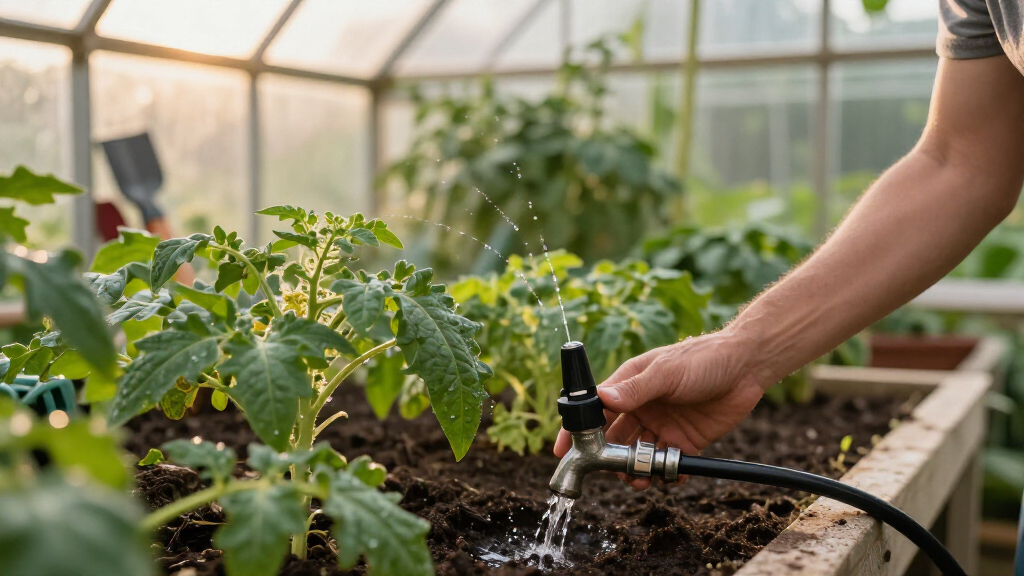
I compared these systems on the factors that change day-to-day usefulness: the number of plants and zones they can serve, how watering schedules are set, whether flow or humidity controls are offered, power options, and the reach of the tubing. I also considered setup and upkeep, since a system that is difficult to arrange or check can be a poor fit even when its feature list looks strong. Product names and listed features provide a basis for comparison, but they do not establish real-world watering accuracy across every plant, pot, or layout.
The ranking favors broad usefulness for common indoor plant groups first, then gives higher placement to options with a clear advantage for a particular need, such as remote access, two zones, solar power, or longer reach. A larger stated plant count alone does not determine placement: control flexibility and likely fit matter too. Specialized picks rank lower for readers who do not need their particular power source or layout, while simpler timer-based kits can make more sense when extra controls would add complexity without helping the buyer.
Factors to Consider When Choosing Automatic Plant Watering Systems
Before choosing a system, I would start with the space and watering routine it needs to support. A plant count or feature list cannot show whether the kit will suit your pots, water source, and power access. These broader checks can help prevent a system that looks capable on paper from becoming awkward to install or maintain.
Match the system to your watering zones
Group plants by how often they need water, rather than by how close they sit together. A single timer is easier to set up when the plants have similar needs, but it can overwater some pots if others need a longer schedule. Two-zone systems can separate groups, though each zone still needs a sensible arrangement of drippers. Before buying, list which plants share a routine and which need their own schedule. Avoid assuming that a stated capacity means every plant can receive independently tailored watering. If your collection has widely different needs, fewer plants per zone may be more useful than maximum advertised coverage.
Plan around the water source and tubing route
Decide where the reservoir or water supply will sit and trace a possible tubing path to every pot. Long runs can make routing easier across a patio or shelf, but tubing length does not by itself guarantee even delivery. Tight bends, height differences, and crowded connections can complicate a layout. Keep the controller and connections accessible so you can inspect them without moving every plant. Measure the route with slack for repositioning, rather than treating the advertised length as usable straight-line distance. A compact layout may work better with a shorter kit and fewer connections.
Choose controls that fit how often your routine changes
A basic programmable timer suits a stable routine and keeps setup relatively direct. Humidity modes, cycle-and-soak settings, adjustable drippers, and app controls can help when conditions or watering needs vary, but they also add settings to configure. Ask whether you will actually change schedules remotely or adjust watering based on conditions. A Wi-Fi model is most useful when remote changes solve a real problem, such as travel or shifting weather. If you prefer a simple weekly schedule, added controls may not justify the extra setup. Check how the system behaves after a power interruption or a schedule change before relying on it during an absence.
Treat plant count as a starting point, not a guarantee
Capacity figures describe a system’s intended scale, not the amount of water each plant will need. A small herb pot and a large thirsty planter can count as one plant each while requiring very different delivery. Potting mix, room temperature, sunlight, and plant growth all affect watering needs. Start with fewer connected pots if you are unsure, then expand after observing how the setup fits your routine. Check whether the kit includes enough drippers and connectors for the arrangement you have in mind. This approach helps avoid buying a high-capacity kit that still needs extra parts or substantial adjustment.
Pick power for the actual location
Indoor systems near an outlet can use a conventional power setup, while solar options can be more practical where cables are inconvenient. Solar performance depends on whether the panel receives suitable light, so a shaded balcony may not suit it as well as an open patio. USB charging offers a different way to power a system, but it still requires access to charging and a plan for recharging. Think through seasonal changes and where the panel or controller will sit before selecting a power source. Also consider how easy it is to check the device’s charge state. The best power option is the one that stays manageable in your actual location.
Account for maintenance and failure checks
Automatic watering reduces routine hand-watering, but it does not remove the need to inspect the setup. Drippers can shift or clog, tubing can come loose, and a reservoir can run low. Choose a design that lets you check connections and refill or clean parts without dismantling the arrangement. Before a trip, run the system while you are home and check the soil and water level over several scheduled cycles. Leave some margin in the reservoir rather than estimating its duration from the number of plants alone. A system that is easy to inspect is a better choice for extended absences than one you cannot readily monitor.
Frequently Asked Questions
Can one automatic watering schedule work for plants with different needs?
It can work when the plants have similar pot sizes, light, and watering preferences, but one schedule may leave some too wet and others too dry. Group plants by their care needs before routing the tubing. Adjustable drippers can help vary delivery, though they do not replace separate timing when plants need water on different days. A two-zone design gives more control over groups with distinct routines. For a mixed collection, test the schedule while you are home and adjust based on soil moisture before relying on it for a trip.
Is a Wi-Fi watering system worth choosing over a timer?
Wi-Fi is useful when you expect to change schedules remotely or want app access while away. It may be less valuable if your plants follow a consistent routine and you can set the timer before leaving. Remote control does not remove the need to check water supply, tubing, and drippers. Consider whether the connection and app setup fit your home and comfort level. If you rarely change watering plans, a simpler timer can cover the main job with fewer settings to manage.
Will a solar watering system work on a shaded balcony?
That depends on how much suitable light reaches the solar panel and the system’s power requirements. A balcony shaded for most of the day may not provide the same charging conditions as an open patio. Check where the panel can be placed and whether the cable can reach the controller without awkward routing. USB charging can be an alternative when sunlight is unreliable, though it means planning for recharging. Whichever power source you choose, confirm charge status and run the system before leaving it unattended.
How do I know whether a system can reach every pot?
Measure the route from the water source to the farthest pot, including turns and the path around furniture or shelves. Compare that route with the kit’s tubing length and leave extra slack for repositioning. Check the number of drippers and connectors as well as the total tubing, since both affect the finished layout. A long advertised run may offer flexibility without guaranteeing equal watering at every point. Once installed, check each pot after several cycles and adjust the layout or delivery where needed.
What should I do before relying on an automatic system during a trip?
Set it up and run it through several scheduled cycles before your departure. Check that every connection stays in place, the water source has enough capacity, and the soil in each pot is receiving a suitable amount. Make adjustments while you can still observe the results at home. Do not assume the system’s plant capacity tells you how long a reservoir will last, since pot size and plant needs vary. If possible, arrange for someone to check the setup during a longer absence, especially in a warm or bright location.
Conclusion
For the broadest fit among these options, I recommend the Sainlogic system as best overall for a typical group of indoor pots. The best value in practical features is the RAINPOINT adjustable-dripper model for buyers who want to tune delivery without needing app access; compare its controls with the simpler timer kits before deciding. For a more connected setup, the LetPot Gen-3 is my best premium pick, while a straightforward timer-based kit is my best choice for beginners who want fewer settings. Choose Unistyle for separate watering zones, HEYRSUN or Beday when solar power suits the location, and the 60 ft system when tubing reach is the main constraint. Match the control style and power source to your space, then test the setup before depending on it away from home.
Fall Picks
fall essentials
As an affiliate, we earn on qualifying purchases.