
For successful window box planting, choose well-draining soil rich in organic matter to support healthy roots. Water your plants regularly, keeping soil consistently moist but not waterlogged, especially during hot weather. Use support like small trellises or stakes for trailing or taller plants to keep them upright and looking their best. Proper soil, watering, and support are key to vibrant, thriving container gardens—continue exploring to discover expert tips and tricks to make your window boxes flourish.
Key Takeaways
- Use lightweight, well-draining soil mixes formulated for container planting to prevent waterlogging.
- Water regularly to keep the soil consistently moist, avoiding both drought stress and overwatering.
- Ensure proper drainage with holes in the window box to prevent water accumulation and root rot.
- Support trailing plants with stakes or trellises to promote healthy growth and maintain aesthetics.
- Fertilize every 2-4 weeks with a balanced, water-soluble fertilizer to sustain plant vitality.

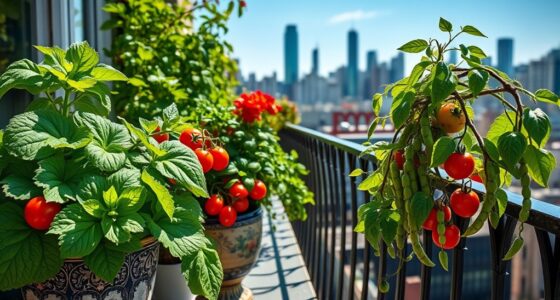
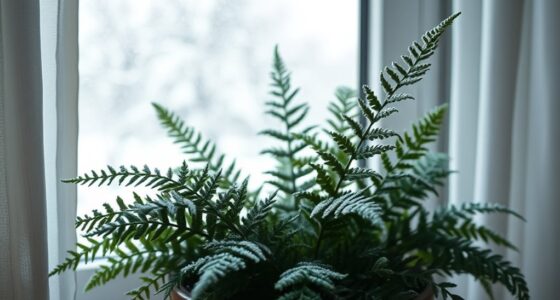
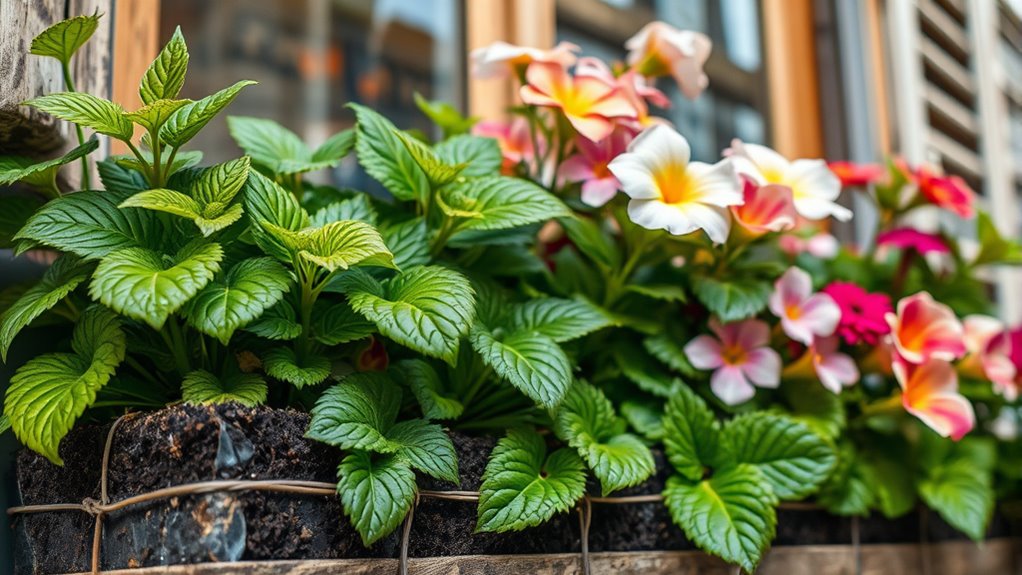
Have you ever wondered how to transform a plain window ledge into a vibrant focal point? It all starts with thoughtful plant selection. When choosing plants for your window box, consider their sunlight needs, growth habits, and how they’ll complement each other. Bright, sun-loving flowers like petunias or geraniums add pops of color, while trailing plants like ivy or sweet potato vine soften the edges and create a lush, overflowing look. For shaded spots, opt for impatiens or ferns that thrive in lower light. Mixing different textures and heights keeps your window box interesting and dynamic.
Once you’ve picked the right plants, it’s essential to understand fertilizer types to keep them thriving. Different plants have varying nutrient requirements, so selecting the right fertilizer can make a big difference. For flowering plants, a balanced, water-soluble fertilizer with equal parts nitrogen, phosphorus, and potassium (like 10-10-10) works well during active growth. For continuous bloom, a fertilizer high in phosphorus encourages flower production. Slow-release fertilizers are also a smart choice because they supply nutrients gradually, reducing the risk of overfeeding and making maintenance easier. Organic options, such as compost or fish emulsion, provide nutrients naturally and boost overall plant health. Remember, too much fertilizer can burn roots or cause excessive foliage at the expense of flowers, so always follow the application instructions carefully.
Your choice of fertilizer type influences how often you’ll need to feed your plants. Typically, flowering plants benefit from a feeding every two to four weeks during the growing season. Water-soluble fertilizers are quick-acting, so you’ll see results faster, but they require more frequent application. Slow-release fertilizers need less frequent feeding, usually once every few months, which is convenient if you’re busy. Organic fertilizers, while gentle, may take longer to show effects but improve soil health over time.
Proper plant selection combined with the right fertilizer types ensures your window box remains healthy and vibrant throughout the growing season. Don’t forget to check your plants regularly for signs of nutrient deficiencies, like yellowing leaves or poor flowering, and adjust your fertilizing schedule accordingly. With a little planning and the right products, you’ll create a stunning, lively display that enhances your home’s curb appeal. Remember, a well-chosen mix of plants and tailored fertilization not only beautifies your window ledge but also makes caring for your mini garden a rewarding experience.

Miracle-Gro Moisture Control Potting Mix – Plant Soil For Container Plants, Protects against Over- and Under-Watering, 8 qt. (2-Pack)
FEEDS UP TO 6 MONTHS: Miracle-Gro Moisture Control Potting Soil Mix feeds plants for up to 6 months…
As an affiliate, we earn on qualifying purchases.
As an affiliate, we earn on qualifying purchases.
Frequently Asked Questions
What Are the Best Plants for Shaded Window Boxes?
For shaded window boxes, you should choose shade-loving plants that thrive in low light. Beginners will find ferns, hostas, and impatiens easy to care for and perfect for shaded spots. These beginner-friendly varieties add lush greenery and colorful blooms without requiring much sunlight. Make sure to water them regularly and provide some support if needed, so your shaded window box stays vibrant and healthy all season long.
How Do I Prevent Pests in My Window Box?
To prevent pests in your window box, start with pest-resistant plants and incorporate natural pest control methods. Regularly inspect your plants for signs of pests, and remove any affected foliage promptly. Encourage beneficial insects like ladybugs and lacewings that naturally control pests. Keep your window box clean and avoid overwatering, which can attract pests. Using neem oil or insecticidal soap also provides an eco-friendly way to keep pests at bay.
Can I Use Regular Garden Soil in Window Boxes?
Think of your window box as a tiny garden oasis. You can use regular garden soil, but it’s like giving your plants a rocky road instead of a smooth trail. To help them thrive, mix in soil amendments for nutrients and drainage. Follow a consistent watering schedule to keep roots happy. This way, your plants flourish like a lush, vibrant mural in your window, brightening every day.
How Often Should I Fertilize My Window Box Plants?
You should fertilize your window box plants every 1-2 weeks during the growing season. Stick to a regular fertilizer schedule to make sure they receive consistent nutrients and prevent nutrient deficiencies. Use a balanced, water-soluble fertilizer and follow the label instructions for best results. Consistent fertilization promotes healthy growth, vibrant blooms, and prevents deficiencies that can weaken your plants over time.
What Is the Ideal Window Box Size for Different Plants?
Your window box size can feel like a tiny universe for your plants! For flowering annuals or herbs, choose a container at least 6-8 inches deep and wide enough for proper plant spacing. Vegetables or larger plants need even more room—think 12 inches deep. Remember, adequate container depth provides roots room to grow, while proper plant spacing prevents overcrowding and keeps your plants thriving.

ZOUTOG Trellis for Climbing Plants Indoor 4 Pack 30 Inch,Rustproof Metal Garden Trellis for Potted Plants,Sturdy Houseplant Support Indoor Outdoor for Ivy Pothos Monstera Hoya Flower Vine (Black Moon)
Plant Trellis for Climbing Plants Value Set:4 Pack of uniquely designed plant trellis 30 inch for talller climber,25%…
As an affiliate, we earn on qualifying purchases.
As an affiliate, we earn on qualifying purchases.
Conclusion
With the right soil, consistent watering, and sturdy support, your window box can transform any space into a vibrant oasis. Think of it as tending a delicate garden in a tiny pot—each element working together to create beauty. Keep nurturing your plants with care and attention, and you’ll soon enjoy a lush, colorful display that brightens your day just like sunshine breaking through cloudy skies. Your window box is your personal touch of nature—simple, rewarding, and endlessly charming.

Gardenwise 20-20-20 Water-Soluble Fertilizer – Powder for Liquid Plant Food for Indoor & Outdoor Plants, Orchids, Vegetables, Lawns, Flowers – 20 20 20 Fertilizer (8 oz)
🌱 Strong Nutrition for Indoor/Outdoor Vegetation: Balanced at 20% nitrogen, 20% phosphorus and 20% potassium, Gardenwise’s water soluble…
As an affiliate, we earn on qualifying purchases.
As an affiliate, we earn on qualifying purchases.

Alaska Fish Fertilizer OMRI Listed 5-1-1, 115 oz
For Organic Gardening: Certified by OMRI for organic use; Trusted by gardeners who value natural growing practices
As an affiliate, we earn on qualifying purchases.
As an affiliate, we earn on qualifying purchases.