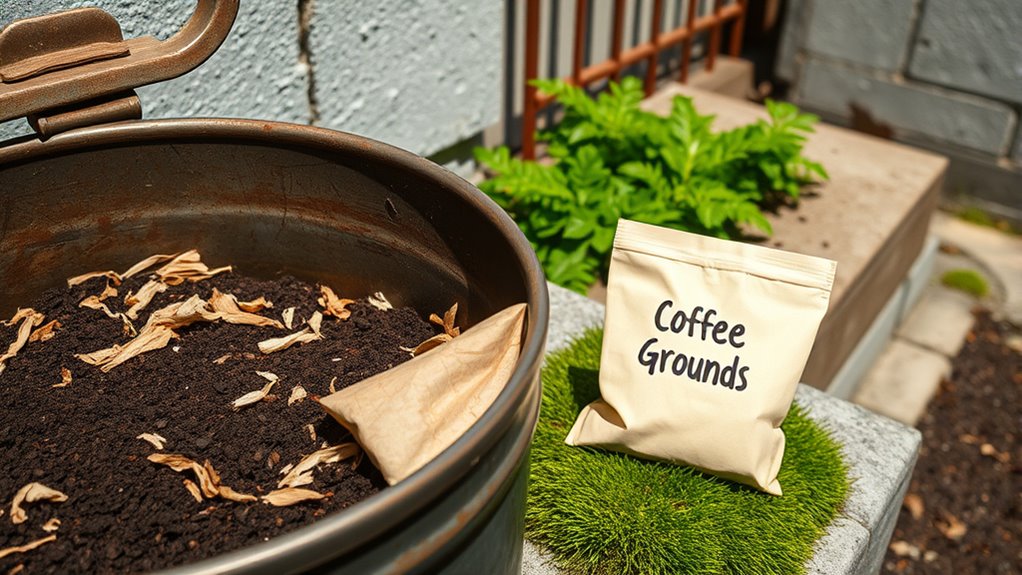

Recycling coffee grounds in city composting helps reduce waste and enrich your soil. You can collect coffee grounds along with kitchen scraps and add them to small compost bins, even on balconies or rooftops. Coffee grounds provide nitrogen that speeds up the composting process and improve plant growth. By incorporating this everyday waste into your compost, you’re supporting sustainable city living and reducing landfill contributions. Keep exploring to discover more simple ways to turn waste into nature’s gift.
Key Takeaways
- Coffee grounds are a nitrogen-rich green material that enhances compost quality and speeds up decomposition.
- Urban composting systems, like small bins and countertop containers, efficiently recycle coffee waste in city settings.
- Recycling coffee grounds reduces landfill waste and methane emissions, supporting city sustainability efforts.
- Incorporating coffee grounds into compost enriches soil, benefiting urban gardening and plant growth.
- Practical tips include collecting coffee scraps in small containers and using compost for balcony plants or indoor gardens.

Recycling compost and coffee grounds is a simple way to reduce waste and enrich your garden. If you live in the city, urban composting offers a practical solution to manage organic waste without needing a yard or large outdoor space. It allows you to turn kitchen scraps, yard waste, and coffee grounds into valuable compost that boosts soil health and plant growth. Plus, practicing coffee waste management helps divert these grounds from the trash, decreasing landfill contributions and methane emissions. Together, these efforts support a more sustainable city lifestyle and give you a way to contribute positively to your environment.
Urban composting reduces waste, enriches soil, and supports sustainable city living.
Urban composting is easier than you might think. You can set up a small compost bin on your balcony, rooftop, or even inside your apartment if space is limited. Many city dwellers use countertop compost containers with charcoal filters to contain odors and make composting convenient. When it comes to coffee waste management, coffee grounds are a nutrient-rich addition to your compost. They’re high in nitrogen, which is essential for plant growth, and they help aerate the compost pile, improving airflow and decomposition. Adding coffee grounds regularly can accelerate the composting process, turning scraps into usable soil much faster. Additionally, understanding the proper balance of green and brown materials is key to successful composting in small urban settings.
One of the key benefits of urban composting is that it minimizes your waste footprint. Instead of sending coffee grounds and food scraps to a landfill, you’re transforming them into something useful. Coffee waste management becomes a simple, everyday habit when you keep a small container in your kitchen. Collect used coffee grounds, egg shells, vegetable peelings, and other scraps, then toss them into your compost bin. Over time, these materials break down into rich humus that can be used to fertilize your houseplants or balcony garden. This process not only reduces waste but also supplies your plants with natural nutrients, making your urban gardening efforts more sustainable and cost-effective.
In addition, managing coffee waste responsibly reduces the environmental impact of your daily routines. Coffee grounds are often discarded in the trash, but reusing them in your compost is a proactive way to close the loop. It supports city initiatives aimed at reducing organic waste and promotes healthier urban ecosystems. As you get more engaged with urban composting, you’ll find that it’s a straightforward, rewarding way to turn everyday waste into a resource. It’s a small step that makes a big difference—less trash, richer soil, and a greener city. Whether you’re growing herbs on a balcony or maintaining container plants, incorporating coffee grounds into your compost is a practical, eco-friendly choice that benefits both your garden and the environment.
Frequently Asked Questions
Can Coffee Grounds Be Used as a Natural Pest Repellent?
You might wonder if coffee grounds can serve as natural pest control. While some believe coffee grounds efficacy helps repel pests like slugs and ants, scientific evidence remains limited. You can try sprinkling used coffee grounds around plants to deter pests naturally. Keep in mind, it’s not a guaranteed method, but it’s an eco-friendly way to support your pest management efforts without chemicals.
How Long Does Composting Take in Urban Environments?
You’re wondering about the urban compost timeline and city composting duration. Typically, composting in urban environments takes about 3 to 6 months, depending on factors like temperature, moisture, and the type of materials you use. You can speed up the process by turning the pile regularly and maintaining proper moisture levels. Keep in mind, a well-managed city composting system might produce finished compost faster than unmanaged piles.
Are There Specific Coffee Grounds Suitable for Composting?
Curious if certain coffee grounds are better for composting? You should select grounds from coffee bean varieties like Arabica or Robusta, which break down smoothly. Before composting, prepare your grounds by mixing them with yard waste or browns, avoiding overly oily or processed grounds. Proper ground preparation methods help balance your compost’s acidity and nitrogen levels, making your urban composting process more efficient and eco-friendly.
What Are the Best Ways to Store Coffee Grounds for Recycling?
To store coffee grounds for recycling, you should use airtight coffee storage containers to keep them fresh and prevent odors. Place these containers in a cool, dry spot away from direct sunlight. When it’s time to compost, transfer the grounds to your compost bin, making sure it’s placed in a well-ventilated area. Proper coffee storage containers and thoughtful compost bin placement help you recycle coffee grounds effectively and odor-free.
Can Compost and Coffee Grounds Be Safely Disposed of in Apartment Buildings?
Think of apartment composting as turning your small space into a garden paradise. You can safely dispose of compost and coffee grounds in your apartment if you use designated compost bins or coordinate with building management. Just make certain the coffee grounds don’t attract pests and follow proper storage. With a little effort, you turn waste into a resource, making your apartment a greener, more sustainable home.
Conclusion
By embracing compost and coffee grounds, you gently nurture your city’s health and beauty. Think of it as giving your environment a friendly hug—turning waste into something valuable. With small efforts, you help create a greener, more vibrant community. So, next time you toss those coffee grounds, know you’re softly contributing to a cleaner, happier city. It’s a simple act that makes a big difference, one cozy step at a time.