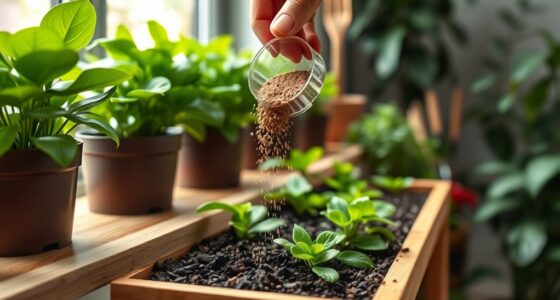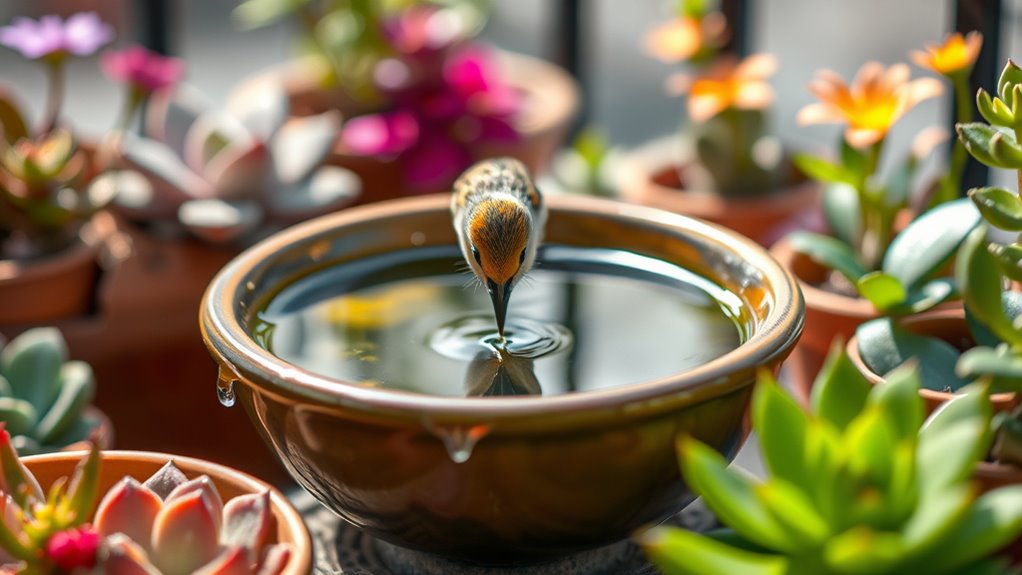

Adding water to your tiny balcony creates a small pond that attracts local wildlife like birds and butterflies. Use a waterproof container or shallow basin placed in a shaded or protected spot, surrounded by plants for shelter and filtration. Floating aquatic plants help keep the water clean and provide habitat. This simple setup boosts your balcony’s charm and supports urban biodiversity. Want to know more ways to create your mini wildlife oasis? Keep exploring!
Key Takeaways
- Use shallow, waterproof containers to create small, accessible water sources for birds and insects.
- Position the pond in shaded or semi-shaded areas to prevent rapid evaporation and keep the water cool.
- Add floating aquatic plants like water hyacinths to provide shelter and natural filtration.
- Incorporate surrounding greenery and perches to attract and support wildlife visits.
- Regularly clean and refill the pond to maintain healthy water quality for local wildlife.
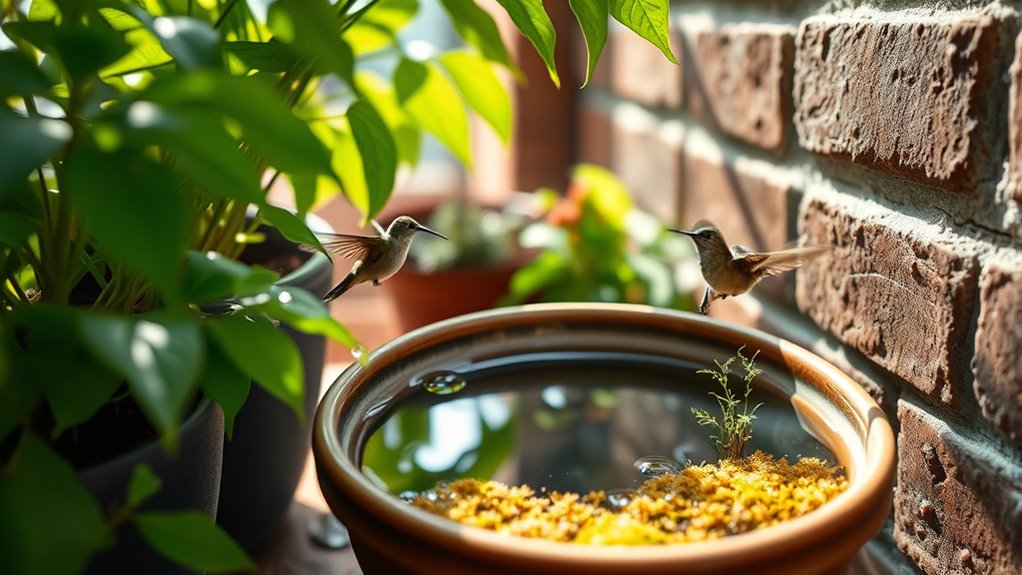
Have you ever considered transforming your small balcony into a tranquil oasis with a tiny pond? Creating a water feature can markedly enhance your space, making it not just visually appealing but also welcoming to local wildlife. When you add a pond, you turn your balcony into a miniature habitat, inviting birds, butterflies, and other beneficial creatures. This is a simple yet effective way to incorporate urban gardening elements while elevating your balcony decor.
A tiny pond offers more than just aesthetic charm; it introduces a calming soundscape of flowing water that can help reduce city noise and stress. To get started, you don’t need a large budget or extensive tools—just some creativity and a few essential materials. Choose a container that fits your space, such as a shallow basin, a large ceramic bowl, or a custom-built pond liner. The key is to select a container that’s durable and waterproof, capable of holding water without leaking or cracking under the sun. Position your pond in a spot where it gets some sunlight but is protected from harsh afternoon heat, which can evaporate water quickly.
Incorporating water into your balcony decor creates a focal point that complements your urban gardening efforts. You can surround the pond with small potted plants, succulents, or trailing vines to add greenery and soften the edges. These plants not only enhance the visual appeal but also provide natural filtration, helping to keep the water clean and clear. To attract wildlife, add some floating aquatic plants like duckweed or water hyacinths, which provide shelter for tiny aquatic creatures and help maintain the pond’s ecosystem.
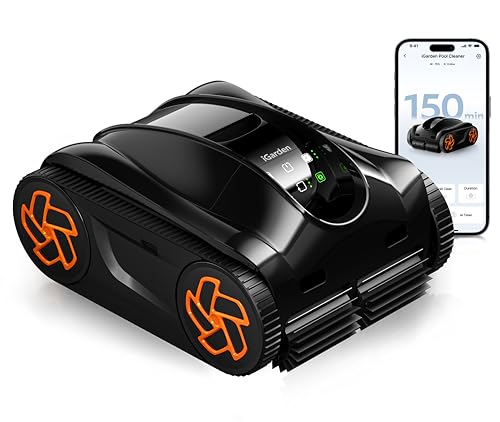
iGarden Robotic Pool Cleaner K Series, Cordless Pool Vacuum Robot for Inground & Above Ground Pools, Smart Navigation, Touchscreen, Self-Parking, Cleans Floor, Wall & Waterline, 150 Min
Robust Cleaning Capability: Engineered with a turbine-grade impeller, an optimized flow system, and 3 brushless motors, the cordless...
As an affiliate, we earn on qualifying purchases.
Frequently Asked Questions
Can Small Balcony Ponds Support Aquatic Plants?
Yes, small balcony ponds can support aquatic plants if you follow proper aquatic plant care and pond maintenance tips. Choose plants suited for shallow water, like mosses or small marginal species, and guarantee they get enough sunlight. Regularly clean your pond, check water levels, and remove debris to prevent stagnation. With attentive care, your tiny pond will thrive and create a lush, inviting habitat for wildlife.
How Often Should I Clean My Balcony Pond?
Think of your balcony pond as a living mirror that needs regular care. You should clean it every 4 to 6 weeks, especially if algae or debris start to cloud the water. Use your filtration system to keep the water clear and healthy, and perform pond maintenance to remove sludge and fallen leaves. This keeps your tiny aquatic world sparkling and thriving, inviting wildlife to visit and stay lively.
What Safety Measures Protect Pets Around Pond Water?
To protect your pets around pond water, you should prioritize pet safety by installing secure pond barriers that prevent access. Keep an eye on your pets and supervise them when near the pond. Use non-toxic, pet-safe pond treatments, and avoid leaving any tempting water toys or plants that could be harmful. Regularly check barriers for stability, ensuring your pets stay safe while enjoying your balcony pond.
Are There Any Legal Restrictions for Balcony Ponds?
Think of your balcony pond as a small island needing rules to stay safe. Local regulations often restrict pond size, placement, or water features to prevent hazards and protect wildlife. You should check with your city or building codes before setting up your pond, as safety concerns like potential water leaks or structural issues may lead to restrictions. Staying informed helps you create a beautiful, compliant space without legal issues.
How Can I Prevent Mosquito Breeding in My Pond?
To prevent mosquito breeding in your pond, regularly treat the water with mosquito larva prevention products, like mosquito dunks or bits, which are safe for wildlife. You should also change the water frequently, ideally every few days, to disrupt larva development. Additionally, guarantee your pond has some movement or aeration, as stagnant water encourages mosquito breeding. Proper pond water treatment keeps your tiny balcony pond safe and wildlife-friendly.

(2026 Upgrade) WYBOT C1 Cordless Robotic Pool Vacuum for Inground Pools, Above Ground Pool Cleaner 4-in-1 Wall & Waterline Cleaning Up to 1,614sq.ft, 150mins Smart Navigation, App Support
Powerful Suction with Dual Brushes: Built with an upgraded independent water pump motor delivering up to 3,038 GPH...
As an affiliate, we earn on qualifying purchases.
Conclusion
By adding a tiny balcony pond, you create a essential oasis for wildlife, much like a single drop of water can spark a ripple effect. I once watched a small bird splash happily in a homemade pond, reminding me that even the tiniest effort can support a thriving ecosystem. Your balcony may be small, but its impact is mighty. Just a little water can turn your space into a haven, encouraging nature to flourish right outside your door.

(2026 New) AIPER Scuba V3 AI Vision Cordless Robotic Pool Cleaner, 10x Faster Pool Cleaning with AI Patrol, 24/7 Auto Cleaning, Smart Waterline Parking & Multi-Layer Filtration
10x Faster Pool Cleaning with AI Patrol System: Single front-facing AI camera detects over 20 debris types and...
As an affiliate, we earn on qualifying purchases.

(2026 Upgraded) WYBOT C2 Cordless Robotic Pool Cleaner, Dual Filtration, Wall Climbing & Waterline Cleaning, App Scheduling, Smart Navigation, Pool Vacuum for Inground/Above Ground Pools-2152 Sq.ft
Dual Filtration System Captures Fine Debris: Featuring dual-layer filtration (180μm + 10μm), the pool cleaner robot efficiently traps...
As an affiliate, we earn on qualifying purchases.