To create a DIY self-watering container, start with a water reservoir and use a wick made of porous material like cotton or nylon to transfer moisture. Place one end of the wick into the water and bury the other end in your planting medium, making sure it extends into the soil. Proper placement and secure setup guarantee efficient capillary action, supplying consistent moisture. Keep exploring to learn how to optimize your system for healthy, thriving plants.
Key Takeaways
- Use water-resistant, non-porous containers like plastic or glazed ceramic for effective wicking.
- Insert a wick that extends from the water reservoir into the soil to facilitate capillary moisture transfer.
- Ensure the wick is snug and reaches deep into the reservoir to maintain consistent water flow.
- Proper wick placement and depth prevent overwatering and ensure plants receive steady moisture.
- Regularly fill the reservoir and check wick positioning to maintain effective self-watering performance.
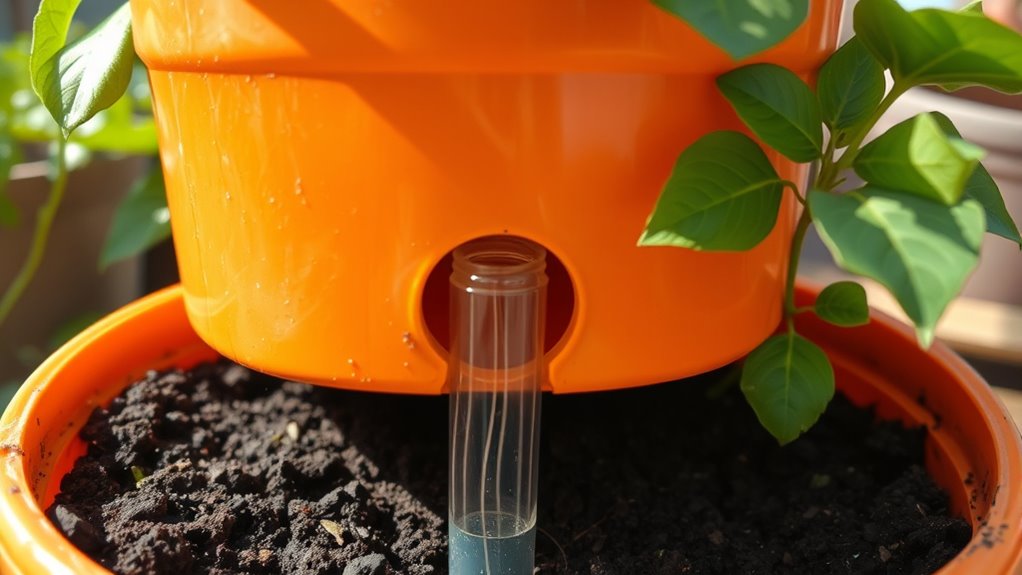
Creating your own self-watering containers is an easy and cost-effective way to keep your plants healthy and thriving. The key to successful DIY self-watering containers lies in understanding the wicking basics, which rely heavily on a reliable watering system and suitable container materials. When setting up your watering system, you want it to deliver water gradually and consistently, preventing overwatering and drought stress. Wicking works by drawing moisture from a reservoir up into the soil through capillary action, so choosing the right container materials is essential for maximum performance.
Start by selecting containers made from materials that promote wicking and are durable enough to withstand regular watering. Plastic, ceramic, or glazed pots are excellent choices because they tend to be less porous, which helps maintain moisture levels. Avoid porous materials like terracotta or unglazed clay, as they tend to wick moisture away more quickly, making it harder to maintain a steady water supply. If you prefer these materials for aesthetic reasons, consider adding a plastic liner or using a wick made from absorbent materials like cotton or nylon to facilitate moisture transfer.
Choose durable, less porous containers like plastic or glazed pots for optimal wicking and moisture retention.
The watering system in a DIY self-watering container typically involves a water reservoir, a wick, and the planting medium. You’ll want to create or repurpose a container with a separate lower section for water storage, ensuring it’s large enough to supply your plant for several days. Insert a wick into the water, ensuring one end reaches the reservoir and the other extends into the soil. When watering, fill the reservoir, and the wick will draw moisture upward into the soil as needed. This setup allows your plants to access water on demand, reducing the need for frequent manual watering.
The key is to position the wick properly so that it makes good contact with both the water in the reservoir and the soil. You can cut a length of wick material to fit snugly between these two zones. Secure the wick at the edge of the reservoir and let the other end settle into the soil, making sure it’s buried a few inches deep for effective moisture transfer. When your plants dry out, the water naturally moves upward through the wick, keeping the soil consistently moist without oversaturating it.
Additionally, understanding automation in business can inspire innovative ways to design self-watering systems that minimize manual intervention and optimize resource use.

GroBucket Self Watering Planter Insert w/LifeTested Technology, Water Reservoir & Level Indicator – Turn Any 5-Gal Bucket into a DIY, Portable Automatic Container Indoor-Outdoor Garden, 3-Pack
Turn Any 5-Gallon Bucket into a Self-Watering Planter: GroBucket is a planter insert designed for standard 5-gallon buckets,…
As an affiliate, we earn on qualifying purchases.
As an affiliate, we earn on qualifying purchases.
Frequently Asked Questions
What Are the Best Plants for Self-Watering Containers?
You should choose plants that thrive in consistent moisture for your self-watering containers. Consider herbs like basil, mint, and parsley, which adapt well to container design that retains water. Additionally, leafy greens like lettuce and spinach perform well in these setups. Select plant types with moderate water needs, and make certain your container is designed with proper wicking and drainage to prevent overwatering and promote healthy growth.
How Often Should I Refill the Water Reservoir?
You should refill your self-watering container’s reservoir when it drops about a quarter full, which typically means every 3 to 7 days, depending on your watering schedule and reservoir capacity. Keep an eye on the water level regularly, especially during hot weather or when plants are thriving. By monitoring the reservoir, you make certain your plants stay consistently hydrated without overwatering or underwatering.
Can I Use Recycled Materials for DIY Containers?
Did you know that up to 75% of household waste can be recycled? You can definitely use recycled materials for DIY containers, but consider recycling ideas that guarantee material durability. Look for sturdy plastics, old buckets, or salvaged wood that can withstand moisture and outdoor conditions. Reusing items not only helps the environment but also creates unique, cost-effective self-watering containers that last longer and work better.
How Do I Prevent Root Rot in Wick Systems?
To prevent root rot in wick systems, guarantee proper soil aeration by using well-draining soil and avoid overwatering. Regularly monitor the water level to prevent it from staying too high, which can cause soggy roots. Remove any excess moisture and check for signs of rot. Good airflow and balanced watering help keep roots healthy, reducing the risk of root rot in your self-watering container.
Are Self-Watering Containers Suitable for Outdoor Use?
Yes, self-watering containers are great for outdoor use, especially if you want consistent watering. You can visualize your plants thriving without daily attention, regardless of weather changes. Just consider your container materials—durable plastics or glazed ceramics resist weather damage, while porous materials might need extra protection. Adjust your watering schedules based on outdoor conditions, ensuring your plants stay healthy and hydrated throughout the seasons.

HYNZ 6-Inch Self-Watering Plant Pot with Visual Reservoir and Drainage Hole, Set of 5, Plastic Flower Pots, Planting Pot for Indoor Outdoor Plants (Frosted Mixed Color)
Indoor plants are beneficial to mental health and our well-being, not to mention a great way to enhance…
As an affiliate, we earn on qualifying purchases.
As an affiliate, we earn on qualifying purchases.
Conclusion
Now that you’ve uncovered the gentle art of wicking, you’re ready to let your plants flourish with less fuss. These self-watering containers quietly work behind the scenes, giving your greenery a steady, tender embrace. With a little patience and care, you’ll nurture a lush, thriving garden that seems to almost take care of itself. Embrace this subtle harmony, and watch your plants reward you with vibrant life—your secret garden just got a little easier to grow.

WSMKSZ 4 inch Self Watering Pots for Indoor Outdoor Plants, 6 Pack Plastic Flower Planters with Drainage Holes and Removable Saucers, Plant Pots with Wicking Rope, Modern Decor, Green Brown
【Self-Watering Design】These 4 inch self watering pots for indoor plants are designed with a wick rope that draws…
As an affiliate, we earn on qualifying purchases.
As an affiliate, we earn on qualifying purchases.

GARTECHO 15” Self-Watering Plant Saucer, Capillary Action Theory Auto-Irrigation System, 4-Pack Bases with pH Test Tank & Water Gauge, Heavy Duty for Use in Indoor Grow Tents/Outdoor Gardens
Material: The water-storage basin, support column, and drain plate are made of a polypropylene (PP) compound that is…
As an affiliate, we earn on qualifying purchases.
As an affiliate, we earn on qualifying purchases.