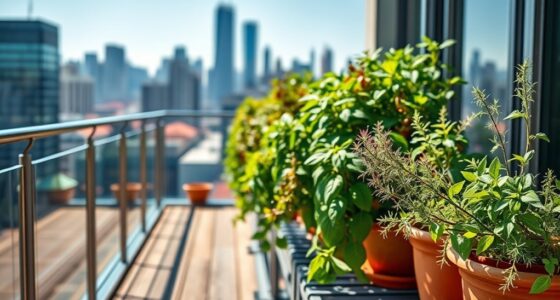
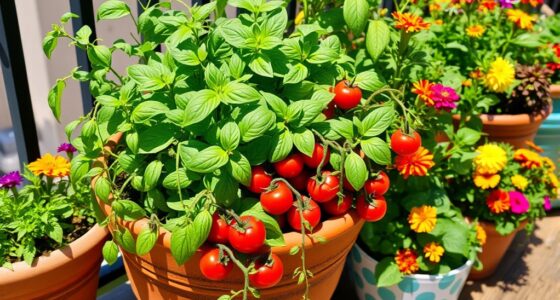
In your urban home, choosing pet-safe plants like spider plants, Boston ferns, and succulents such as haworthia or echeveria helps maintain your pets healthy while adding greenery. Keep toxic plants like lilies and pothos out of reach, and place safe plants on high shelves or hanging baskets to prevent accidental ingestion. Being aware of plant toxicity levels guarantees a safer environment. Keep exploring to discover more tips for creating a pet-friendly green space that’s both beautiful and secure.
Key Takeaways
- Choose non-toxic plants like spider plants, Boston ferns, and succulents to ensure pet safety in urban homes.
- Avoid common toxic plants such as lilies, pothos, and peace lilies to prevent accidental poisoning.
- Place plants out of pet reach using high shelves or hanging baskets to reduce ingestion risks.
- Educate yourself on plant toxicity levels to respond quickly if pets nibble on foliage.
- Incorporate pet-friendly greenery to create attractive, safe indoor spaces that minimize health hazards.

Are you worried about keeping your home beautiful and safe for your pets? It’s a common concern for urban dwellers who love decorating with plants but also want to protect their furry friends. The good news is, you can create stunning, pet-friendly arrangements that won’t put your pets at risk. The key is understanding plant toxicity and choosing plants that are safe for animals. When you select pet-safe plants, you eliminate the worry of accidental poisoning if your curious cat or energetic dog decides to nibble on a leaf or two.
Many common houseplants are toxic to pets, so it’s important to be vigilant. Plants like lilies, pothos, and peace lilies can cause serious health issues if ingested. By contrast, there are plenty of non-toxic options that are safe for pets, allowing you to enjoy lush greenery without risking their health. Popular pet-friendly arrangements often include plants such as spider plants, Boston ferns, and certain succulents like haworthia or echeveria. These plants add charm and greenery to your space while being safe if your pets decide to chew or play with them.
When creating your plant arrangements, consider placement, keeping toxic plants out of reach of pets. Even pet-friendly plants can cause mild stomach upset if eaten in large quantities, so it’s a good idea to put them on shelves, high tables, or in hanging baskets. This way, your pets can enjoy the visual appeal without the chance of ingestion. Additionally, opting for pet-safe plants means you can encourage your pets to interact with the greenery, which can be enriching for them and reduce boredom-related behaviors like chewing on furniture or shoes.
It’s also helpful to educate yourself about plant toxicity levels. Some plants are only mildly toxic, causing discomfort rather than serious health problems, while others require immediate veterinary attention. Being informed ensures you can act quickly if your pet shows signs of ingestion. Furthermore, choosing plants that are non-toxic can help you avoid plant toxicity concerns, ensuring a safer environment for your pets. When you invest in pet-friendly arrangements, you’re making a responsible choice that prioritizes your pet’s well-being without sacrificing style. Plus, many pet-safe plants are easy to care for, making them ideal for busy city living.
Frequently Asked Questions
How Often Should I Water Pet-Safe Indoor Plants?
You should water your pet-safe indoor plants once a week, but always check the soil moisture first. Stick your finger about an inch into the soil; if it feels dry, it’s time to water. Maintain a consistent watering schedule, but remember that factors like humidity and pot size can affect how often you need to water. Adjust accordingly to keep the soil moist but not waterlogged.
Are There Any Toxic Plants That Look Similar to Safe Ones?
Ironically, some toxic plants mimic the safe ones you adore, making plant identification tricky. You should always double-check plant labels and consult reputable sources to avoid accidental poisoning. Toxicity awareness is vital, especially when similar-looking plants could pose risks to your pets. By being vigilant and familiar with common safe and toxic plants, you protect your furry friends from harm, even when appearances deceive.
Can Pet-Safe Plants Help Improve Indoor Air Quality?
Pet-safe plants can definitely help improve indoor air quality by promoting air purification and reducing allergens in your home. When you include these plants, you actively filter out toxins and dust, creating a healthier environment for you and your pets. Plus, they add a touch of nature, which can boost your mood. Incorporating pet-safe plants is a simple way to enhance air quality while keeping your furry friends safe.
What Are the Best Light Conditions for These Plants?
While your pet-safe plants thrive in bright, indirect light, they also adapt to lower light conditions, offering flexibility in your home. Focus on providing the right light requirements by placing them near east or west-facing windows, avoiding direct sunlight that can scorch leaves. For shaded areas, choose plants with lower light needs, and make certain you rotate your plants regularly to maintain healthy growth. Proper plant placement maximizes their benefits and keeps your space lively.
How Do I Prevent My Pets From Digging up or Damaging the Plants?
To prevent your pets from digging up or damaging your plants, use effective pet deterrent strategies like placing plants on high shelves or hanging baskets, out of their reach. Incorporate plant placement tips such as using plant cages or barriers, and provide alternative distractions like toys or scratching posts. Consistently supervise and train your pets, rewarding good behavior, so they learn to respect your plants and keep your indoor garden safe.
Conclusion
Bringing pet-safe plants into your urban home is like planting a little piece of nature’s paradise that everyone can enjoy. With a little care, these greenery friends will thrive alongside your furry companions, creating a safe and vibrant sanctuary. Think of your home as a lush oasis, where beauty and safety grow hand in hand. So go ahead, fill your space with these pet-friendly plants and watch your home blossom into a cozy, worry-free haven.