Transform your porch into a fresh, sustainable kitchen by growing herbs and vegetables in containers. Use bright, indirect sunlight and well-draining soil to keep your plants healthy year-round. Regular watering, harvesting, and composting kitchen scraps create a continuous cycle of growth and renewal. This eco-friendly approach minimizes waste, ensures flavorful herbs at your fingertips, and makes small spaces productive. Keep exploring for more tips on creating your own edible container garden from porch to plate.
Key Takeaways
- Select suitable edible herbs and vegetables that thrive in container gardening, such as herbs, cherry tomatoes, or peppers.
- Use attractive, well-draining containers with quality soil to promote healthy growth and easy harvesting.
- Position containers in bright, indirect light near windows or under grow lights for optimal plant development.
- Implement sustainable practices like composting kitchen scraps to enrich soil naturally and reduce waste.
- Harvest regularly to encourage continuous growth, creating a seamless “from porch to plate” edible garden.
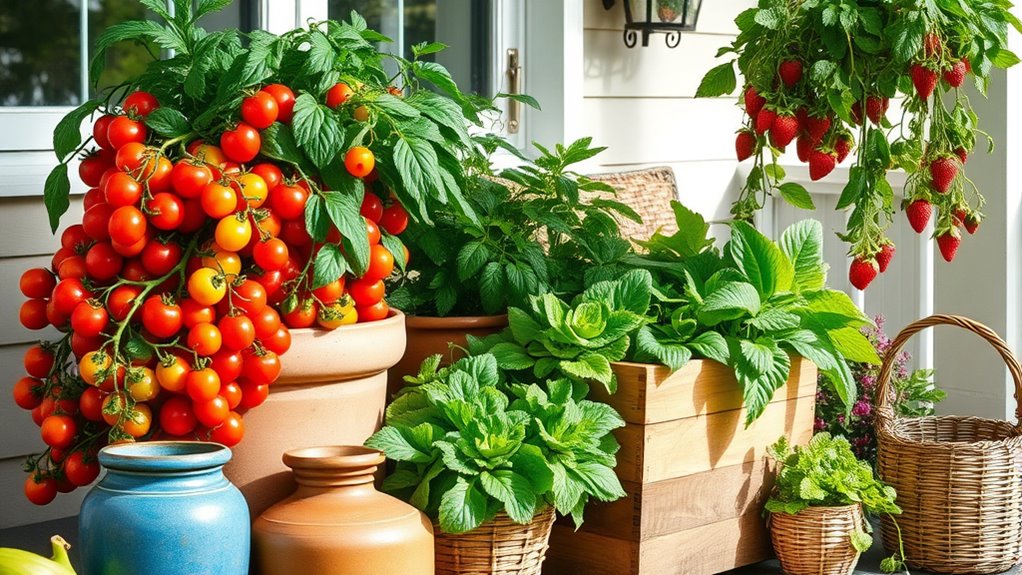
Have you ever considered growing your own food right on your balcony or patio? If so, indoor herb gardening is a fantastic way to start. Not only does it bring fresh flavors directly to your kitchen, but it also allows you to enjoy the process of cultivating herbs year-round, regardless of the weather outside. You can choose a variety of herbs like basil, mint, parsley, or cilantro, and place them in small, attractive containers that fit your space. These herbs thrive in bright, indirect sunlight, so position them near a window or under grow lights if needed.
Getting started with indoor herb gardening is straightforward. Use well-draining pots filled with quality potting soil, and water your herbs consistently—keeping the soil moist but not soaked. As your plants grow, you’ll notice how quickly they expand and how much more flavorful they become when harvested fresh. Plus, having herbs handy encourages you to cook more at home, reducing reliance on store-bought options and cutting down on packaging waste. It’s a simple yet impactful way to make your cooking more sustainable and flavorful.
Beyond just herbs, you can incorporate sustainable composting into your container gardening routine. Composting transforms everyday kitchen scraps—like vegetable peelings and coffee grounds—into nutrient-rich compost that nourishes your plants naturally. When you set up a small compost bin in your balcony or patio, you close the loop on waste, turning trash into treasure. This eco-friendly practice reduces your household waste and decreases the need for chemical fertilizers, making your gardening more sustainable. As your compost matures, mix it into your container soil to boost plant health and growth. You’ll notice your herbs and vegetables become more vigorous and flavorful, all while minimizing your environmental footprint.
In addition, choosing the right container type can significantly influence plant health and growth, making your balcony garden more successful. Combining indoor herb gardening with sustainable composting makes your balcony a mini eco-system. It’s a cycle of growth and renewal that benefits both your plants and the planet. Plus, it’s rewarding to see your efforts translate into fresh herbs and vegetables that you’ve nurtured from seed to plate. With a little planning and commitment, you can turn even the smallest balcony into a productive edible garden. You’ll enjoy the fresh taste of homegrown produce, reduce waste, and contribute to a more sustainable lifestyle—all from your own outdoor or indoor space. Growing your own food in containers isn’t just convenient; it’s empowering and eco-friendly, bringing fresh flavors and sustainability right to your porch or patio.
Top picks for "porch plate edible"
Open Amazon search results for this keyword.
As an affiliate, we earn on qualifying purchases.
Frequently Asked Questions
Which Containers Are Safest for Edible Plants?
When choosing plant container materials for edible plant safety, you should prioritize food-grade options like ceramic, stainless steel, or food-safe plastics. Avoid containers with old paint or coatings containing lead or harmful chemicals. Always guarantee your containers have proper drainage and are labeled non-toxic. By selecting safe, non-reactive materials, you protect your plants and ensure your harvest remains healthy and safe to eat.
How Often Should I Water Container-Grown Edibles?
Imagine your container garden as a thirsty traveler, craving hydration after each hot day. You should water your container-grown edibles when the top inch of soil feels dry, usually once a day or every couple of days. While drought-tolerant plants need less frequent watering, others require consistent moisture. Keep an eye on your plants’ leaves and soil, adjusting watering frequency to keep them healthy and thriving.
Can Edible Container Gardening Be Done Year-Round Indoors?
Yes, you can do edible container gardening indoors year-round. You’ll need to provide adequate seasonal lighting, like grow lights, to mimic natural sunlight. Regular indoor pest control helps keep pests at bay, ensuring healthy plants. Maintain consistent watering and proper airflow. With these steps, you can enjoy fresh herbs and vegetables indoors regardless of the season, making your indoor garden both productive and enjoyable.
What Are Common Pests in Container Edible Gardens?
You might be surprised to find pests like aphids, spider mites, and whiteflies sneaking into your container garden, especially when you least expect it. To prevent these pests, practice pest prevention by regularly inspecting plants and encouraging natural deterrents like neem oil or companion planting. Staying vigilant helps keep your edible container garden healthy and thriving, ensuring you enjoy fresh, homegrown produce all season long.
How Do I Prevent Soil From Draining Out of Containers?
To prevent soil from draining out of containers, focus on effective drainage management and soil retention. Use containers with drainage holes but add a layer of gravel or broken pottery at the bottom to slow soil loss. Mix your soil with organic matter to improve its structure and water-holding capacity. Regularly check and adjust drainage to ensure excess water escapes without losing too much soil, maintaining a healthy environment for your plants.
Conclusion
Just like a chef crafting a masterpiece, you hold the power to turn your porch into a bountiful garden. With a little effort, every container becomes a treasure chest overflowing with fresh flavors, transforming your space into a vibrant tableau of life and nourishment. Remember, the journey from porch to plate is as natural as a painter’s brushstroke—simple, beautiful, and entirely in your hands. Now, go on and cultivate your edible oasis!