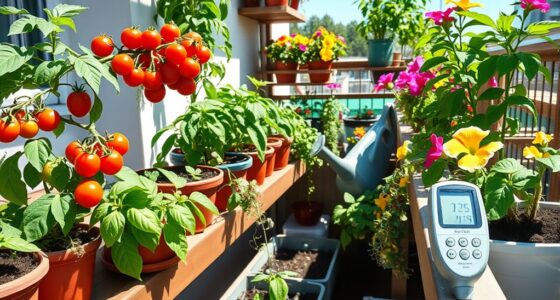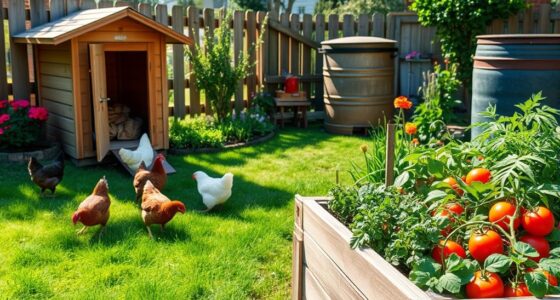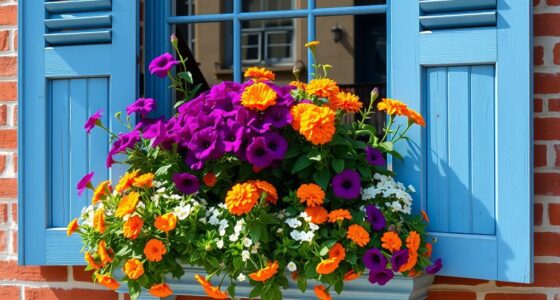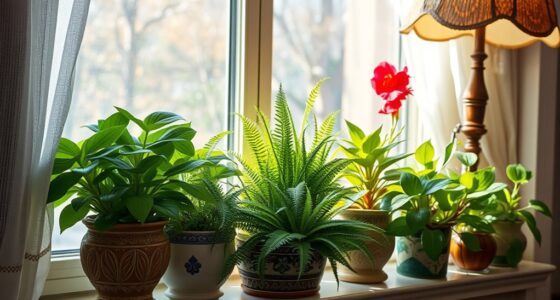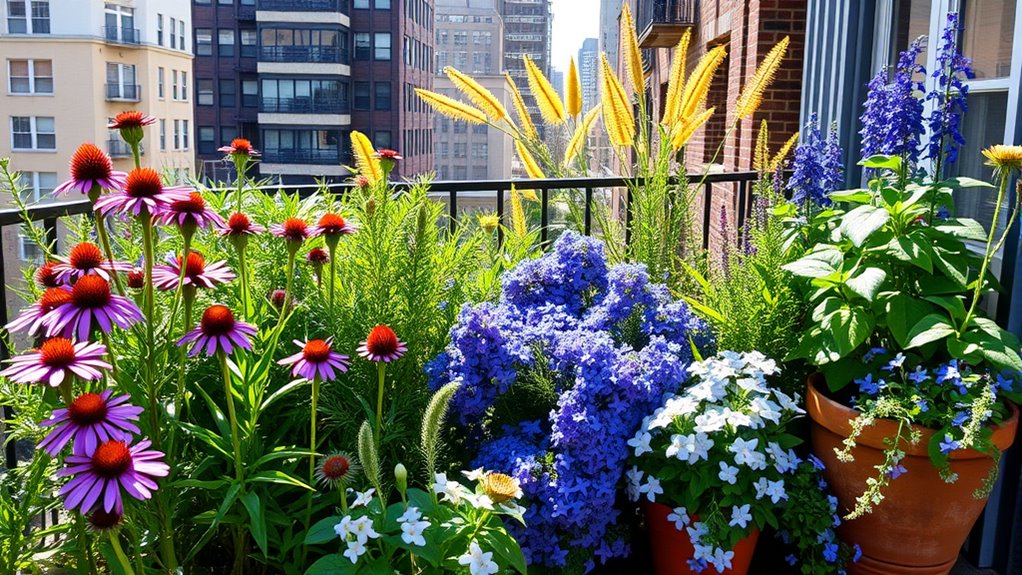
Native plants that thrive in the city include species like purple coneflowers, black-eyed Susan, cup plants, and switchgrass. These plants are adapted to local soil and climate conditions, so they need less water and maintenance. They attract pollinators and help improve soil health, making them perfect choices for urban gardens and landscapes. If you want to discover more about selecting the right native plants for your space, keep exploring above.
Key Takeaways
- Native grasses like Little Bluestem and Switchgrass thrive in urban soils with minimal maintenance.
- Wildflowers such as Black-eyed Susan and Coneflower adapt well to city environments and attract pollinators.
- Shrubs like Serviceberry and Buttonbush are resilient native options for urban landscaping.
- Groundcovers such as Creeping Thyme and Purple Heart tolerate compacted soils and drought conditions.
- Native sedums and succulents are well-suited for rooftop gardens and container planting in cities.
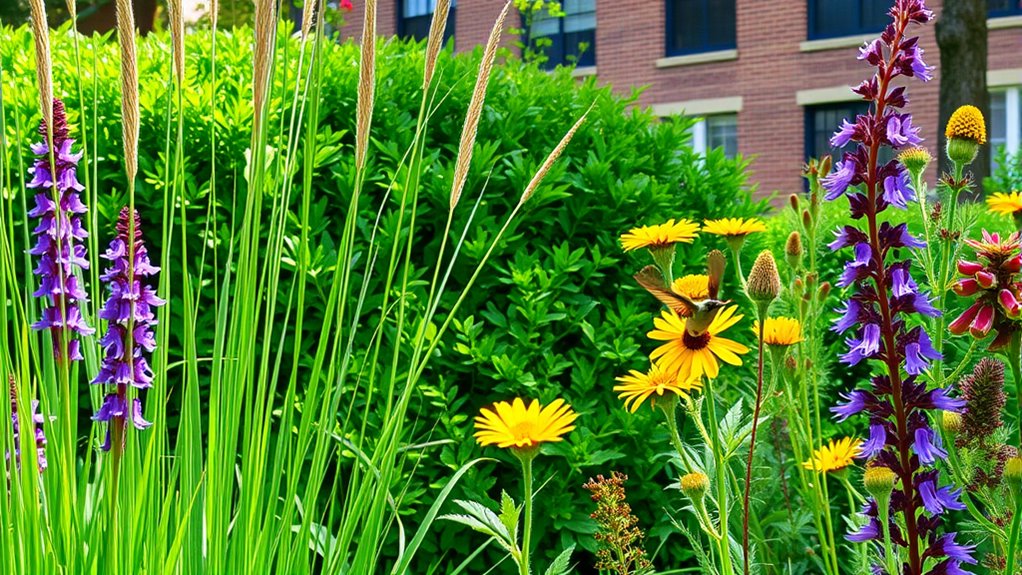
Cities may seem like unlikely places for native plants to thrive, but they actually offer unique opportunities for their growth and preservation. Urban environments are often overlooked as habitats for native flora, yet they can be essential for supporting biodiversity. Native plants adapted to local conditions tend to require less water, fertilizer, and maintenance, making them ideal choices for city landscapes. They also play a fundamental role in attracting urban pollinators—bees, butterflies, and other insects—that are indispensable for healthy ecosystems. These pollinators rely on native plants for nectar and pollen, which sustains their populations amid the challenges of city living. By planting native species, you help create pockets of habitat that encourage urban pollinators to thrive, supporting the broader ecological web.
Urban native plants support biodiversity, attract pollinators, and thrive with less water and maintenance.
Soil health is another key aspect to consider when planting native plants in the city. Urban soils are often compacted, contaminated, or depleted of nutrients, which can hinder plant growth. However, you can improve soil health through simple practices like adding organic matter, mulching, or avoiding chemical pesticides and fertilizers. Healthy soil provides native plants with the necessary nutrients and water retention, ensuring their roots establish firmly and grow robustly. Native plants, having evolved with the local soil conditions, are more resilient and better suited to withstand urban stressors. When you prioritize soil health, you’re not only supporting the plants themselves but also fostering a more sustainable and resilient urban ecosystem. Additionally, using native plants can help improve soil quality over time by encouraging natural soil regeneration.
Incorporating native plants into city landscapes also benefits you directly. They require less watering and fewer chemical inputs, saving you time and money. Plus, native plants often attract urban pollinators, which can help with the pollination of nearby gardens and green spaces. This creates a cycle of benefit: healthier pollinator populations mean more vibrant flowers and healthier ecosystems overall. When you choose native plants, you’re contributing to the ecological integrity of your city. You’re helping to maintain local biodiversity, support pollinator populations, and improve soil health—all essential components of a thriving urban environment.
Ultimately, planting native species in the city isn’t just about aesthetics; it’s about creating a sustainable habitat amidst the concrete. Your efforts can transform overlooked corners into vibrant, pollinator-friendly spaces that bolster soil health and support native wildlife. Each native plant you introduce becomes part of a larger movement to make urban areas more resilient, biodiverse, and ecologically balanced. So, embrace the opportunity to cultivate native plants in your city and witness firsthand how they enhance both the environment and your quality of life.

Intermatic PE733P 7-Day Electronic Wi-Fi Pool Timer – 3-Circuit, 120–277V Auto-Voltage, Type 3R Outdoor Plastic Enclosure - 30A Load Capacity for Pumps, Lights, and Spa Equipment
BUILT FOR EXTREME OUTDOOR ENVIRONMENTS – Engineered to perform in temperatures ranging from -40°F to 158°F with a...
As an affiliate, we earn on qualifying purchases.
Frequently Asked Questions
How Do Native Plants Benefit Urban Ecosystems?
Native plants benefit urban ecosystems by attracting pollinators, which support local biodiversity and help plants reproduce. They also improve soil health by stabilizing soil, reducing erosion, and enriching nutrients naturally. You’ll notice that native plants require less water and fewer chemicals, making your city environment more sustainable. By planting native species, you actively contribute to healthier, more resilient urban ecosystems that support wildlife and enhance your community’s natural beauty.
Can Native Plants Help Reduce Urban Heat Islands?
Yes, native plants can drastically cut urban heat islands, transforming your city into a cooler paradise. Their lush foliage provides unbeatable urban cooling and heat mitigation, making streets and parks invigoratingly comfortable. By planting more native species, you’ll create a heat-resistant oasis that fights rising temperatures, saving energy and improving air quality. It’s like giving your city a giant air conditioner — naturally, sustainably, and beautifully.
What Are Common Challenges When Planting Natives in Cities?
You’ll face challenges like poor soil drainage, which can hinder native plant growth. Pollution tolerance varies among species, so choosing plants that withstand urban pollutants is vital. You might also struggle with limited space, invasive species, and soil compaction. To succeed, select natives suited to your area’s conditions, improve soil quality, and monitor pollution levels. With care, these plants can thrive and bring beauty and environmental benefits to your cityscape.
Are Native Plants Suitable for Container Gardening?
Yes, native plants are suitable for container gardening. You should choose containers with proper drainage and size them according to the plant’s growth needs. Pay attention to soil requirements; native plants often thrive in well-draining, organic-rich soil. Regular watering and fertilizing help guarantee healthy growth. With the right container choices and attention to soil needs, you can enjoy thriving native plants right on your balcony or patio.
How Do Native Plants Support Local Wildlife in Urban Areas?
You might think native plants don’t make much difference, but they actually support local wildlife by attracting pollinators like bees and butterflies. They also help control soil erosion, keeping urban areas healthier. Native plants provide essential food and habitat, fostering a thriving ecosystem right in your city. By planting them, you support biodiversity, promote pollinator attraction, and stabilize soil, making your urban environment more resilient and vibrant.

Pentair EC-520545 EasyTouch 8 Function Control Pool and Spa Combo with IC40 Salt Cell - Limited Warranty
Eight-function pool and spa automation system with salt chlorine generator (SCG) integration
As an affiliate, we earn on qualifying purchases.
Conclusion
By choosing native plants for your city space, you’re planting seeds of hope and resilience amidst concrete jungles. These plants are your city’s silent heroes, thriving where others struggle, and turning grey landscapes into vibrant havens. When you embrace native species, you’re not just beautifying your surroundings—you’re nurturing a thriving ecosystem that supports local wildlife. Together, you and these plants can transform your city into a lush, living tapestry, proof that nature’s resilience knows no bounds.

Pentair EC-523317 IntelliConnect Pool Control and Monitoring System - Limited Warranty
Genuine O.E.M. Product
As an affiliate, we earn on qualifying purchases.

Pentair IntelliCenter Lite Pool/Spa Power Center with 2 CVA24 Valve Actuators
Convenient Control: IntelliCenter Lite Pool/Spa Power Center allows easy management of pool/spa equipment and accessories.
As an affiliate, we earn on qualifying purchases.