
Creating your urban orchard is entirely possible with the right fruit trees and space-efficient methods. Choose varieties suited for small yards or balconies, and regularly prune to shape and promote healthy growth. Monitor your trees for pests and diseases, applying organic treatments as needed. Proper timing and consistent care will boost your yield and keep your trees thriving in the city environment. If you continue exploring, you’ll discover more tips to help your urban orchard flourish.
Key Takeaways
- Select compact, space-efficient fruit tree varieties suitable for small urban spaces like balconies and rooftops.
- Implement regular pruning in late winter or early spring to shape trees, improve airflow, and boost fruit production.
- Monitor trees frequently for early signs of pests and diseases, enabling timely organic interventions.
- Use proper tools and techniques to remove dead or crossing branches, enhancing tree health and sunlight access.
- Consistent care and maintenance transform limited urban areas into lush, productive fruit-growing spaces.
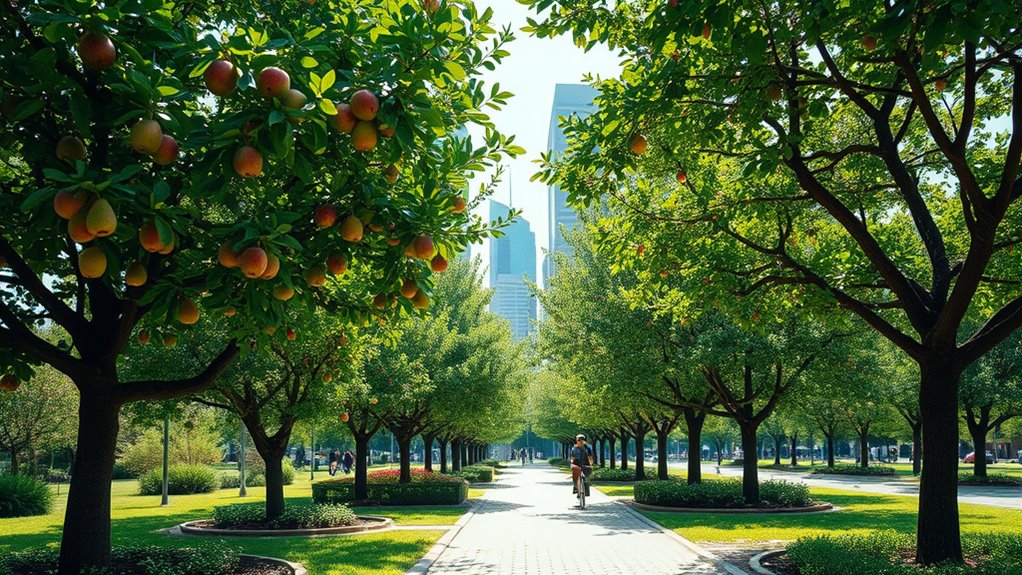
Urban living often means limited space, but that doesn’t have to mean giving up fresh fruit. With the right approach, you can grow fruit trees in small yards, balconies, or even rooftop gardens. The key is choosing the right varieties and maintaining them properly. When you’re working with limited space, disease management becomes especially important. Fruit trees in urban environments are more vulnerable to pests and diseases because of the close proximity of buildings and other plants. Regular monitoring is essential—look for signs of trouble like discolored leaves, unusual spots, or wilting branches. When you spot issues early, you can take targeted action, such as removing affected branches or applying organic treatments, to keep your trees healthy.
Pruning techniques are equally crucial in managing the health and productivity of your urban orchard. Proper pruning not only shapes your trees but also helps prevent disease by improving airflow and reducing humidity around the branches. You want to prune with intention—removing dead or crossing branches to open up the canopy allows sunlight to reach all parts of the tree, which discourages fungal growth and pests. It also helps your tree produce more fruit because energy is directed towards healthy, productive growth. When pruning, use clean, sharp tools to make precise cuts and reduce the risk of disease spread. Remember, pruning is a continuous process; it’s best to do it in late winter or early spring before the tree begins to grow actively.
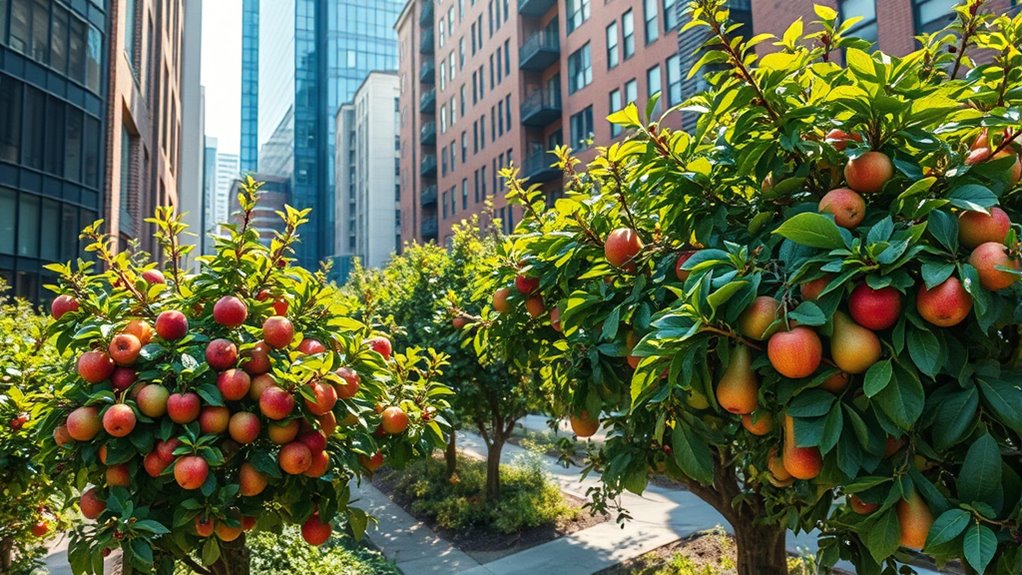
In an urban setting, space-efficient pruning and disease management are your best tools to ensure your fruit trees thrive. You don’t need acres of land to grow apples, cherries, or plums—you just need to be vigilant and knowledgeable about how to care for them. Regular pruning keeps the trees manageable and less prone to disease, while diligent disease management through monitoring and treatment keeps pests at bay. The more attentive you are, the more productive your fruit trees will be, providing fresh, homegrown fruit right at your doorstep. With patience and consistent effort, your urban orchard can become a lush, fruitful oasis amid the cityscape.

Grow Your Own Mini Fruit Garden: Planting and Tending Small Fruit Trees and Berries in Gardens and Containers
As an affiliate, we earn on qualifying purchases.
As an affiliate, we earn on qualifying purchases.
Frequently Asked Questions
What Are the Best Fruit Trees for Small Balcony Gardens?
When choosing fruit trees for your small balcony garden, opt for container varieties and dwarf cultivars. These are ideal because they stay manageable in limited spaces and can thrive in pots. You should consider cherry, lemon, or fig trees, which are popular and adaptable. Make sure to select healthy, well-sized plants and provide proper sunlight, watering, and fertilization to enjoy fresh fruit right at your fingertips.
How Do I Prevent Pests on Urban Fruit Trees?
To prevent pests on your urban fruit trees, start by choosing pest-resistant varieties suited for city environments. Keep your trees healthy with proper watering and fertilizing, as strong trees resist pests better. Use natural pest control methods like introducing beneficial insects or spraying neem oil. Regularly inspect your trees for early signs of pests, and promptly remove any affected leaves or fruits to stop infestations from spreading.
What Is the Ideal Soil Type for City-Grown Fruit Trees?
You might find that the ideal soil for city-grown fruit trees is well-draining loamy soil, which balances nutrients and moisture. To optimize growth, consider soil amendments like compost to enrich fertility and guarantee proper planting depth for stability and root development. A soil that nurtures roots gently yet firmly supports healthy growth, giving your urban orchard the best chance to thrive amid concrete landscapes.
How Much Sunlight Do Urban Fruit Trees Need?
You need to guarantee your urban fruit trees get enough sunlight, ideally at least 6 hours of direct sunlight daily. Both sunlight duration and intensity matter; trees thrive with consistent exposure to strong, direct sunlight. If your space has limited sunlight, consider choosing shade-tolerant varieties or planting near reflective surfaces to maximize sunlight exposure, helping your trees produce healthy fruit throughout the growing season.
Can Fruit Trees Thrive in Polluted City Environments?
Think of fruit trees as city dwellers—some handle noise and pollution better than others. While pollution tolerance varies among species, many can adapt with proper care. You’ll need to boost urban soil nutrition through compost and amendments to help trees withstand pollutants. Even in a polluted city, with the right species and care, your fruit trees can thrive and produce sweet rewards, despite the hustle and bustle around them.

Toddmomy 20-Pack Fruit Tree Pollinator Tool, Manual Handheld Pollination Brush for Tomatoes & Peppers, Soft Wand for Indoor Greenhouse Garden
BOOST CROP YIELD: Our 20-pack manual pollinator tools are engineered for precise pollen transfer, significantly increasing fruit set…
As an affiliate, we earn on qualifying purchases.
As an affiliate, we earn on qualifying purchases.
Conclusion
So, embrace the opportunity to grow, to harvest, and to enjoy. Plant fruit trees for beauty, for bounty, for your well-being. Cultivate patience, nurture care, and reap rewards that nourish your body and inspire your soul. Transform your city space into a thriving orchard, a sanctuary of sweetness, a symbol of sustainability. Because when you plant, you not only grow fruit, but you also grow hope, connection, and a greener future for all.

Bonide Captain Jack's Fruit Tree Spray, 32 oz Concentrate, Insect & Disease Control Spray for Organic Gardening
Control diseases and insects in your garden with Captain Jack’s Fruit Tree Spray Concentrate! Use on a variety…
As an affiliate, we earn on qualifying purchases.
As an affiliate, we earn on qualifying purchases.

Garden Grafting Tool Kits, ZALALOVA 2 in 1 Pruning Tools Including Grafting Knife Replacement Blades Grafting Tapes Rubber Bands and Labels for Plant Branch Vine Fruit Tree Cutting
PROFESSIONAL GARDENING GRAFTING TOOLS: Including 2 in 1 grafting pruning tools, 3 replaceable blades, a grafting knife, a…
As an affiliate, we earn on qualifying purchases.
As an affiliate, we earn on qualifying purchases.