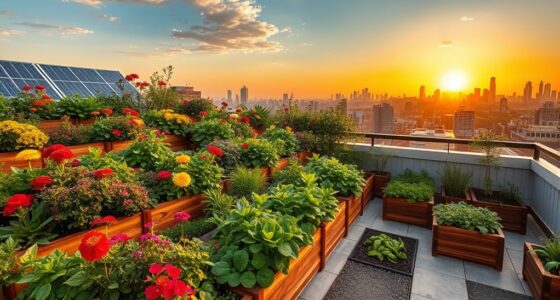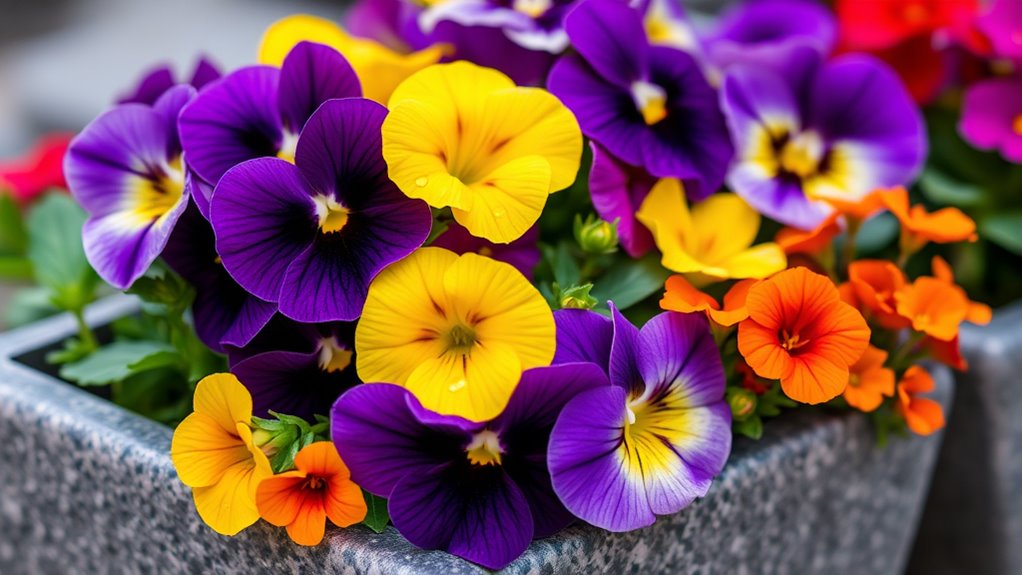
Growing edible flowers in containers is a great way to add color, flavor, and versatility to your garden. Popular options include nasturtiums, pansies, calendulas, and violas, which are easy to grow and offer unique tastes and vibrant hues. Make certain to choose varieties suited to your climate, provide well-draining soil, and guarantee proper sunlight and watering. With some simple tips, you’ll enjoy beautiful blooms and delicious additions—there’s more to discover to keep your garden thriving.
Key Takeaways
- Choose popular edible flowers like pansies, nasturtiums, calendulas, and violas suitable for container gardening.
- Ensure containers have proper drainage and are placed where flowers receive at least six hours of sunlight daily.
- Use well-draining, organic potting mix and maintain consistent moisture for healthy, blooming plants.
- Deadhead spent blooms regularly and fertilize sparingly to promote continuous flowering.
- Monitor for pests and environmental stresses, providing shade or indoor space during extreme weather conditions.
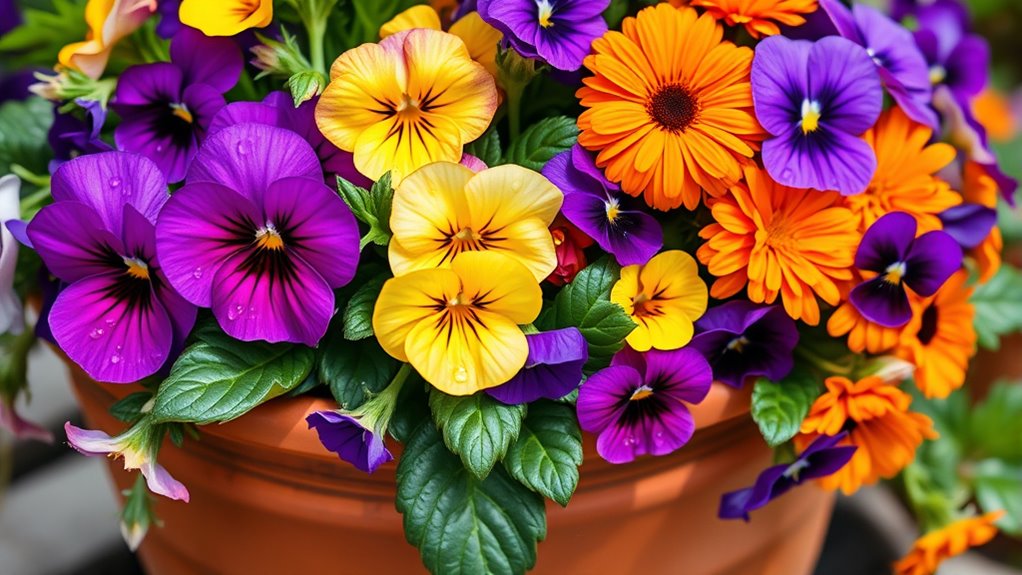
Edible flowers add vibrant colors and delicate flavors to your dishes, transforming ordinary meals into visually stunning and memorable creations. If you want to incorporate these beautiful blooms into your container garden, understanding flower varieties and planting tips is vital. Container gardening offers a flexible way to grow edible flowers, even if you have limited space or poor soil conditions. Choosing the right flower varieties is your first step. You’ll find options like pansies, nasturtiums, calendulas, and viola, all popular for their edible qualities and ease of cultivation in containers. Each variety offers unique colors, shapes, and flavors that can enhance salads, garnishes, or desserts. For instance, nasturtiums have peppery leaves and vibrant flowers perfect for adding a spicy kick, while calendulas bring bright orange hues and a slightly bitter, tangy taste. When selecting flower varieties, consider your climate, growing season, and container size, as some plants require more sun or space than others. Understanding plant growth habits can help you choose the best varieties for your specific environment.
Planting tips are just as vital as choosing the right flowers. Most edible flowers thrive in well-draining soil, so use a quality potting mix that retains moisture but doesn’t become waterlogged. You should also verify your containers have drainage holes to prevent root rot. Position your containers in a location that receives at least six hours of direct sunlight daily, as sunlight is key to healthy flowering and flavor development. Water regularly, keeping the soil evenly moist but not soggy, especially during hot weather, to encourage continuous blooms. Many edible flowers prefer cooler temperatures, so in warmer climates, you might need to provide some afternoon shade or bring containers indoors during extreme heat. Fertilize sparingly with a balanced, organic fertilizer to promote healthy growth and abundant flowering. Proper watering and fertilizing are essential for ensuring your edible flowers flourish and produce vibrant, flavorful blooms.
Planting tips also include proper spacing—don’t overcrowd your containers, as good air circulation reduces disease risk and allows each flower to flourish. Deadheading spent blooms encourages more flowering, so keep your plants tidy and remove dead or faded flowers regularly. Mulching around the base of your plants can help retain moisture and suppress weeds. Lastly, be mindful of any pesticides or chemicals used on nearby plants, as you want your edible flowers to be safe for consumption. With the right flower varieties and proper planting tips, your container garden will burst with colorful, edible blooms that elevate your culinary creations while adding natural beauty to your space.
Top picks for "edible flower container"
Open Amazon search results for this keyword.
As an affiliate, we earn on qualifying purchases.
Frequently Asked Questions
Are Edible Flowers Safe for Pets in Containers?
Edible flowers for containers aren’t always safe for pets. You should always check whether a flower is toxic vs. safe before allowing your pets near it. Some flowers, like pansies and marigolds, are pet-friendly, but others, such as lilies or daffodils, can be toxic. To guarantee pet safety, research each flower’s toxicity and keep potentially harmful ones out of your pets’ reach. When in doubt, consult your vet.
How Often Should I Water Edible Flowers in Containers?
Imagine you have a container of pansies, and you notice they’re wilting on a hot day. You should water edible flowers in containers when the top inch of soil feels dry, usually every 1-2 days. Proper watering frequency depends on container drainage; guarantee it drains well to prevent overwatering. Check regularly, especially during hot weather, to keep your edible flowers healthy and vibrant.
Can Edible Flowers Be Grown Indoors in Containers?
Yes, you can grow edible flowers indoors in containers through indoor cultivation and container gardening. Choose a sunny spot or use grow lights to guarantee they get enough light. Use well-draining soil and water regularly, keeping the soil moist but not soggy. With proper care, your edible flowers will thrive indoors, adding beauty and flavor to your meals while enhancing your indoor garden.
What Pests Commonly Affect Edible Flowers in Containers?
You’ll often face pests like aphids, spider mites, and thrips on edible flowers in containers. To prevent these pests, practice pest prevention by maintaining healthy plants and removing debris. Use natural remedies like neem oil or insecticidal soap to control infestations without harming your flowers. Regularly inspect your plants, and act quickly to keep pests at bay, ensuring your edible flowers stay healthy and safe to eat.
How Do I Prevent Edible Flowers From Bolting in Containers?
To prevent edible flowers from bolting in containers, guarantee proper shade gardening to reduce stress from heat, which triggers flowering. Regularly water your plants and keep soil well-drained, using good soil preparation with organic matter to promote steady growth. Also, deadhead flowers promptly to encourage continuous blooming. These steps help maintain a cooler environment and healthy soil, reducing the tendency of your edible flowers to bolt prematurely.
Conclusion
Adding edible flowers to your containers transforms your space into a vibrant, edible paradise. With each bloom, you craft a garden so stunning, it rivals the most breathtaking floral wonderlands on Earth. These colorful blossoms not only brighten your surroundings but also delight your senses with every bite. So go ahead—embrace the beauty and flavors of edible flowers, and watch your container garden become a dazzling oasis that’s impossible to ignore. Your garden’s true magic is just a blossom away!