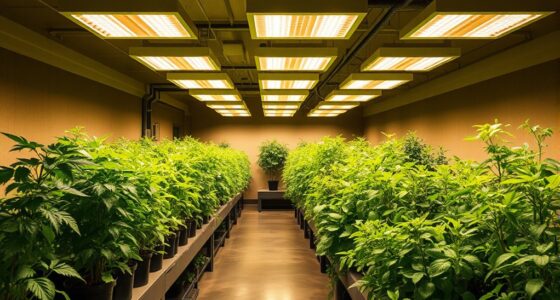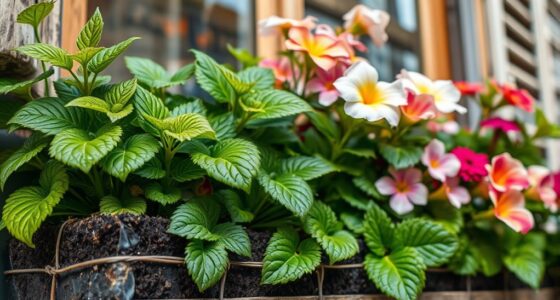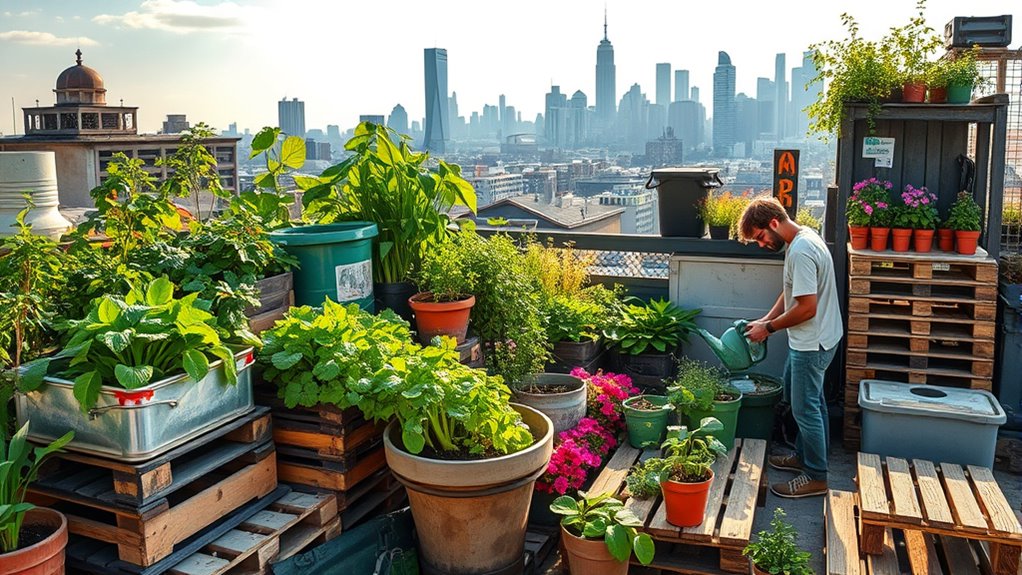

To save money on city gardening, start by composting kitchen scraps and repurposing household items as plant containers. Use affordable seedlings or grow plants from seeds, and propagate herbs from cuttings for extra savings. Maximize small spaces with vertical or movable containers and choose low-cost, easy-to-maintain plants. Reusing materials and gradually building your garden helps keep costs down while creating a lush, sustainable oasis—stay with us to discover more budget-friendly tips.
Key Takeaways
- Reuse household containers like cans and boxes for inexpensive, customized plant pots.
- Propagate herbs from cuttings and start plants from seeds to cut costs.
- Compost kitchen scraps in small bins to enrich soil naturally and reduce waste.
- Purchase seedlings from local markets and avoid expensive nursery plants.
- Combine vertical stacking and movable containers to maximize limited space efficiently.
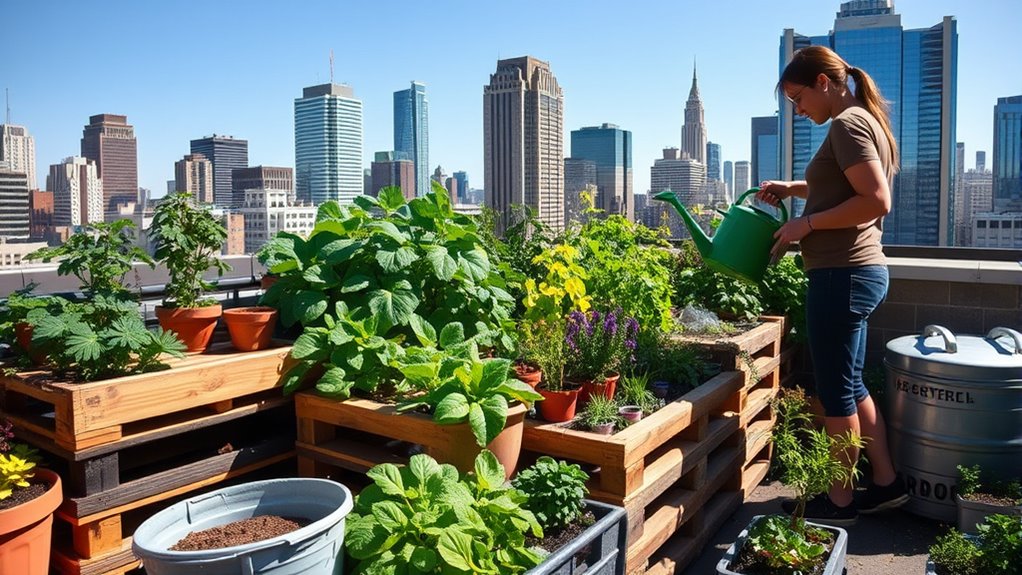
Living in the city doesn’t mean you have to spend a fortune to enjoy gardening. You can turn small spaces into lush green sanctuaries without breaking the bank. One of the most effective ways to save money is through urban composting. Instead of tossing scraps in the trash, start composting kitchen waste like vegetable peels, coffee grounds, and eggshells. Not only does this reduce waste, but it also provides rich, natural soil for your plants. You don’t need a big backyard for composting—many city dwellers successfully set up small compost bins on balconies or in corner spaces. Just make sure to keep the bin aerated and avoid adding meat or dairy, which can attract pests. Over time, your compost will improve your soil’s health, helping your plants thrive without the need for expensive fertilizers. Incorporating composting into your routine can also foster a deeper connection with your garden and promote sustainability. Container planting is another budget-friendly gardening hack that’s perfect for city living. Instead of investing in large garden beds, select affordable containers like repurposed buckets, old pots, or even cardboard boxes lined with plastic. These containers are versatile and ideal for growing everything from herbs to small vegetables. You can find inexpensive or even free containers by scavenging around your home or local freecycle groups. Just ensure your containers have drainage holes to prevent waterlogging, which can harm your plants. Container planting allows you to maximize your limited space and move plants around as needed, whether on a balcony, windowsill, or rooftop. Plus, buying plants or seedlings from local farmers’ markets or discount stores can save you money compared to purchasing full-grown plants from nurseries. To stretch your gardening budget further, consider propagating plants from cuttings or seeds. Many herbs like basil, mint, and parsley easily root in water or soil, giving you more plants for less money. Seeds are also affordable; start your garden from packets of seeds instead of mature plants, and you’ll get more yield for your investment. Combining urban composting with container planting and plant propagation creates a sustainable, cost-effective gardening system that thrives even in tight spaces. It’s all about making smart choices—reusing materials, starting small, and gradually expanding your garden as your budget allows. With a little effort and creativity, you can enjoy a vibrant, productive garden that brightens your city life without draining your wallet.

AQUASTRONG Inverter Swimming Pool Heat Pump,Pool Heater for Above Ground and Inground Pool Heating and Cooling Pool Heater, Smart WiFi Control Pools Up to, 9000 Gallons
Extend Your Swim Season: The pool heat pump features a dual-mode heating and cooling system that maintains optimal...
As an affiliate, we earn on qualifying purchases.
Frequently Asked Questions
What Are the Best Plants for Small Urban Gardens?
You’re wondering about the best plants for small urban gardens, like rooftop gardens and balcony vegetables. Opt for compact, easy-to-grow options such as herbs, lettuce, cherry tomatoes, and peppers. These plants thrive in limited space and sunlight. Use vertical planters and hanging baskets to maximize space. By choosing these, you’ll create a lush, productive garden that fits your city living style without breaking the bank.
How Can I Prevent Pests Without Chemical Pesticides?
Imagine your garden overrun with pests attacking your plants like an army! To stop this chaos, use natural pest control methods instead of chemicals. You can attract beneficial insects, like ladybugs, to feast on pests, or try companion planting—pairing plants that repel pests naturally. These tricks create a pest-free paradise, keeping your urban garden healthy and thriving without harmful pesticides.
What Tools Are Essential for Beginner City Gardeners?
When starting as a city gardener, you’ll need essential tools like a trowel, pruning shears, and watering can. These help you plant, maintain, and care for your plants efficiently. Consider investing in a compost bin for garden composting, which enriches your soil naturally. Also, look into urban gardening grants; they can provide funding or tools to support your gardening journey, making it easier and more affordable to grow your urban oasis.
How Do I Water Efficiently in a Limited Space?
Imagine your garden as a thirsty soul yearning for care; you can satisfy it wisely. Set a consistent watering schedule to avoid over- or under-watering, much like tending a delicate flame. Use water conservation techniques like drip irrigation or self-watering pots to deliver moisture efficiently. This mindful approach ensures your plants thrive without waste, turning small spaces into lush, sustainable havens where every drop counts.
Can Container Gardening Work in Harsh Urban Environments?
Yes, container gardening can thrive even in harsh urban environments. You can maximize your space by incorporating rooftop gardening, which offers better sunlight and airflow. To boost plant health, consider urban composting to enrich your soil naturally. With proper planning, you’ll enjoy lush, productive containers despite city challenges, making your urban environment a vibrant, green oasis.
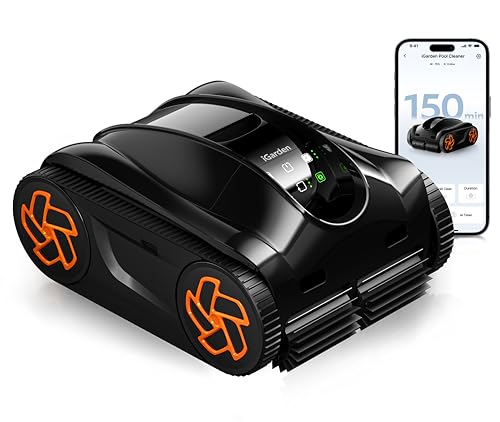
iGarden Robotic Pool Cleaner K Series, Cordless Pool Vacuum Robot for Inground & Above Ground Pools, Smart Navigation, Touchscreen, Self-Parking, Cleans Floor, Wall & Waterline, 150 Min
Robust Cleaning Capability: Engineered with a turbine-grade impeller, an optimized flow system, and 3 brushless motors, the cordless...
As an affiliate, we earn on qualifying purchases.
Conclusion
Gardening on a budget might seem challenging at first, but with a little creativity, it’s totally doable. You don’t need fancy tools or expensive plants—reusing containers and starting from seeds can save you tons. Plus, you’ll enjoy fresh produce and a greener space without breaking the bank. So, don’t let cost hold you back. Get your hands dirty, embrace DIY solutions, and watch your city garden thrive—affordable, rewarding, and fun!

iGarden Robotic Pool Cleaner K Series, Cordless Pool Vacuum Robot for Inground & Above Ground Pools, Smart Navigation, Touchscreen, Self-Parking, Cleans Floor, Wall & Waterline, 220 Min
Robust Cleaning Capability: Engineered with a turbine-grade impeller, an optimized flow system, and 3 brushless motors, the cordless...
As an affiliate, we earn on qualifying purchases.

(2025 Upgrade) Beatbot AquaSense 2 Cordless Robotic Pool Vacuum Cleaner, Smart Surface Parking, Double-Pass Waterline Scrubbing, Cleans Floor, Walls and Waterline
【Effortless Retrieval with Auto Surface Parking & One-Click App Parking】No heavy lifting! AquaSense 2 pool vacuum automatically parks...
As an affiliate, we earn on qualifying purchases.