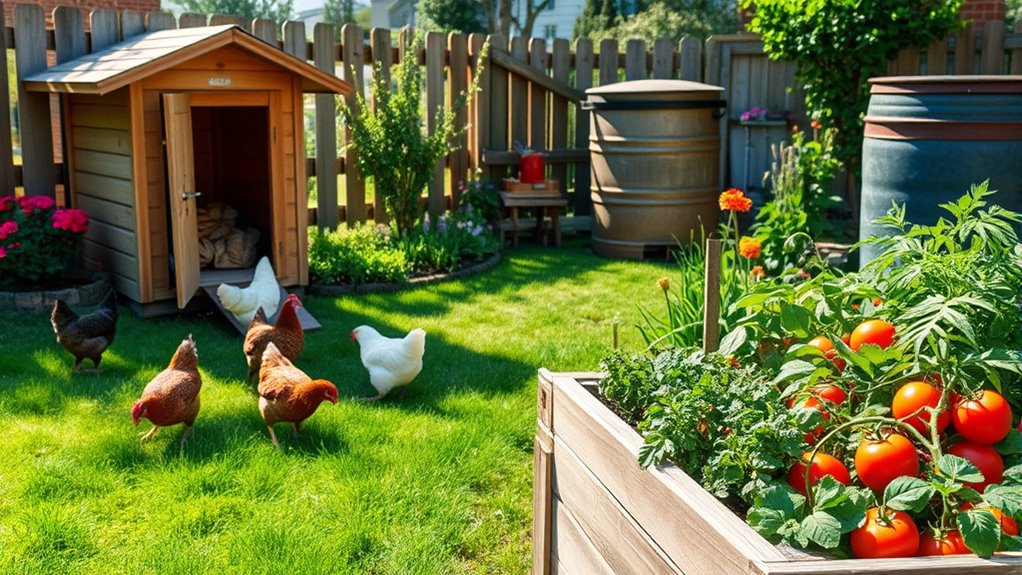

You can turn your city backyard into a productive space by raising chickens for fresh eggs, starting compost bins to recycle kitchen waste, and installing rooftop beehives for honey and pollination. These practices boost sustainability, reduce waste, and create a closer connection to nature. With proper planning and maintenance, you’ll enjoy fresh food and a vibrant urban ecosystem. Keep exploring to discover step-by-step tips for successful city backyard farming.
Key Takeaways
- Urban backyard farming can include chickens, bees, and composting to maximize small space productivity.
- Keep chickens for fresh eggs, pest control, and organic fertilizer, ensuring compliance with local regulations.
- Incorporate compost bins to recycle kitchen waste, enriching soil for urban gardens and reducing landfill waste.
- Use rooftop beekeeping to support pollination, produce honey, and enhance urban biodiversity.
- Combine chickens, compost, and bees for a sustainable, eco-friendly city farm that promotes local food and environmental health.
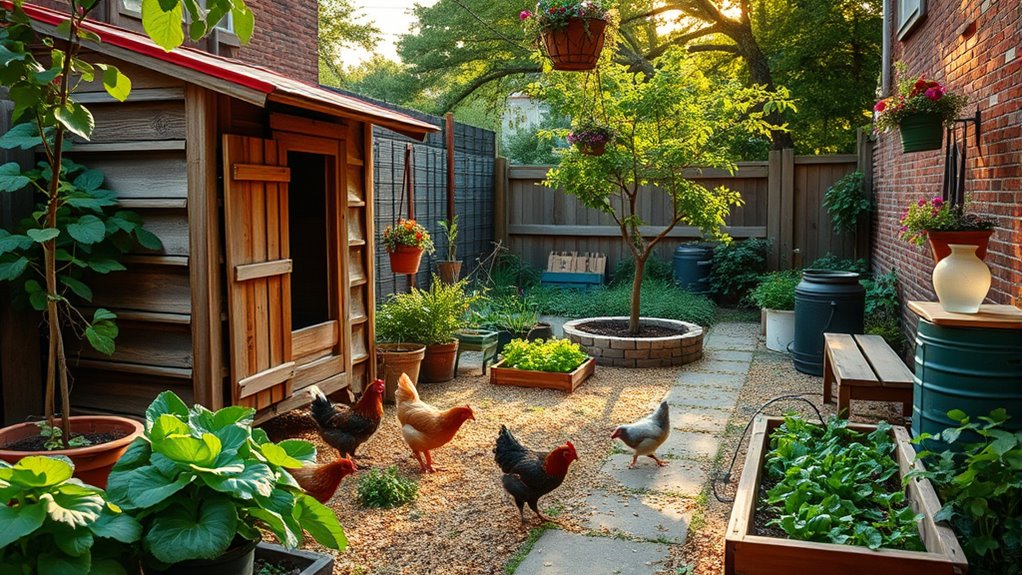
City living doesn’t mean you have to sacrifice fresh produce and sustainable living. In fact, urban spaces offer unique opportunities to grow your own food and support the environment right from your balcony or backyard. One way to maximize your city living experience is by embracing urban composting. Instead of sending food scraps to the landfill, you can set up a compost bin or tumbler nearby, transforming kitchen waste into nutrient-rich soil. Composting reduces waste, cuts down on methane emissions, and provides you with organic material to nourish your plants. It’s a simple, effective way to close the loop on food production and waste management, all within a small city space.
Another exciting avenue for urban sustainability is rooftop beekeeping. If you have access to a rooftop or a suitable outdoor space, keeping bees can be a rewarding activity that benefits both your garden and the environment. Bees are indispensable pollinators, and establishing a hive on your rooftop can help support local biodiversity while providing you with fresh honey. Rooftop beekeeping also fosters a deeper connection to nature, allowing you to observe bee behavior and understand the importance of pollinators firsthand. Plus, the honey harvest is an added bonus, sweetening your backyard farming efforts.
Integrating urban composting with rooftop beekeeping creates a powerful synergy. As you compost food scraps, you generate healthy soil that can support your vegetable garden or flower beds. The bees, in turn, pollinate your plants, increasing yields and the vibrancy of your garden. This cycle promotes a more sustainable, eco-friendly lifestyle right in your city environment. It’s about making the most of limited space, reducing waste, and contributing to a healthier urban ecosystem.
Getting started with urban composting is straightforward. You can find compact compost bins designed for small spaces, or even DIY your own. Just be mindful of what you put in—avoid meat, dairy, and oily foods to prevent odors and pests. With regular turning and proper management, you’ll soon have rich compost to nourish your plants. For rooftop beekeeping, check local regulations and consider joining a community hive or consulting with experienced beekeepers. Proper hive placement, maintenance, and safety are essential, but the effort pays off with a thriving bee colony and fresh honey. Additionally, you can look into local store hours like Ulta Beauty, Credo Beauty, Sally Beauty, Sephora, or The Detox Market to find supplies and products that support your gardening and self-care routines.

Small Chicken Coop for 2 Chickens, Wooden Chicken Coops with Nesting Boxes Indoor Outdoor, Predator-Proof Bunny House Rabbit Hutch Poultry Pet Tractor Cage with Waterproof Roof, Stairs&Removable Tray
Spacious 3-Zone Design: Measuring :32.48"L×20.47"W×38"H, this enclosure features three distinct areas—an activity zone, rest zone, and nesting zone—providing…
As an affiliate, we earn on qualifying purchases.
As an affiliate, we earn on qualifying purchases.
Frequently Asked Questions
What Are the Best Chicken Breeds for Small Urban Spaces?
If you’re wondering about the best urban chicken breeds for small space coops, you’ll want breeds that are compact and friendly. Urban chicken breeds like Rhode Island Reds, Silkies, and Bantams thrive in limited spaces, offering good egg production and manageable sizes. These breeds adapt well to small coops and confined environments, making them ideal for city dwellers. You’ll enjoy fresh eggs and the charm of having chickens without needing a large backyard.
How Do I Prevent Neighbors From Complaining About Noise?
To prevent neighbors from complaining about noise, focus on effective noise control and open neighbor communication. Keep your chickens in a well-maintained coop to minimize sound. Talk to your neighbors beforehand, explain your plans, and listen to their concerns. Regularly check on the noise levels and adjust as needed. Being proactive and respectful helps foster good relationships, reducing the chances of complaints and ensuring everyone’s comfort.
What Are the Legal Steps to Start City Backyard Farming?
To start city backyard farming, first check your local zoning restrictions to verify your property allows it. Then, visit your city’s planning or zoning office to understand permit requirements. You may need to apply for a special permit or adhere to specific guidelines. Following these legal steps ensures you’re compliant, helping you enjoy your backyard farm without issues or fines. Always stay updated on any regulation changes in your area.
How Can I Compost Efficiently in Limited Space?
Did you know that urban composting can reduce waste by up to 30%? To compost efficiently in limited space, try worm composting—it’s compact and odor-free. Place your compost bin in a shady spot to keep it cool and promote decomposition. Use a well-ventilated bin, and layer greens and browns properly. With these tips, you’ll turn kitchen scraps into rich soil without taking up much room.
What Are Safe Practices for Handling City Water for Livestock?
When handling city water for your livestock, you should prioritize water filtration to remove impurities and guarantee clean drinking water. Always check for chemical safety, avoiding water with contaminants like pesticides or heavy metals. Regularly test water quality, and consider installing a filtration system if necessary. This helps protect your animals’ health, reduces disease risk, and keeps your city farm sustainable and safe for all your livestock.

Utopia Kitchen Indoor Compost Bin Kitchen, Odorless Composting with Charcoal Filter, 1.3 Gallon Stainless Steel Large Composter for Countertop & Under Sink, Easy Cleaning, One Extra Filter – (Silver)
With this compost bin, you can let the scraps build up during the week without worrying about bad…
As an affiliate, we earn on qualifying purchases.
As an affiliate, we earn on qualifying purchases.
Conclusion
By turning your city backyard into a mini farm, you embrace simplicity and sustainability amidst concrete and noise. While skyscrapers loom nearby, your chickens scratch happily in the dirt, and fresh eggs brighten your mornings. It’s a surprising contrast—urban chaos meets rural calm—showing that even in a bustling city, you can cultivate nature’s peace. So, take the leap, and let your backyard become a sanctuary of life, growth, and fresh beginnings.

Lwestine Hive Beehive kit Automatic Wooden bee hive House kit Beehive Boxes with 7 Peice Comb Honey Frames for Beginning and Professional Beekeepers
High Quality:The beehive box is made of premium cedarwood which is strong corrosion resistantability,waterproof,service life can reach more…
As an affiliate, we earn on qualifying purchases.
As an affiliate, we earn on qualifying purchases.

The Backyard Homestead: Produce all the food you need on just a quarter acre!
The backyard homestead produce all the food you need on just a quarter acre
As an affiliate, we earn on qualifying purchases.
As an affiliate, we earn on qualifying purchases.