Using balcony trellises to train cucumbers and beans helps you make the most of small outdoor spaces by guiding these plants upward, saving ground area. Choose sturdy containers with drainage, secure trellises to balcony walls or containers, and use soft ties to gently train vines. Position your trellis where plants get enough sunlight, and regularly check stability. Want tips on selecting materials and maintaining your plants? Keep exploring to get the full scoop.
Key Takeaways
- Select sturdy, appropriately sized trellises to support the upward growth of cucumbers and beans on your balcony.
- Use soft ties or clips to gently train vines along the trellis, avoiding damage to stems.
- Position trellises where plants receive ample sunlight and are protected from strong winds.
- Ensure containers are stable, well-drained, and placed for easy access to watering and maintenance.
- Regularly prune and adjust plant growth to maximize space, airflow, and productivity.

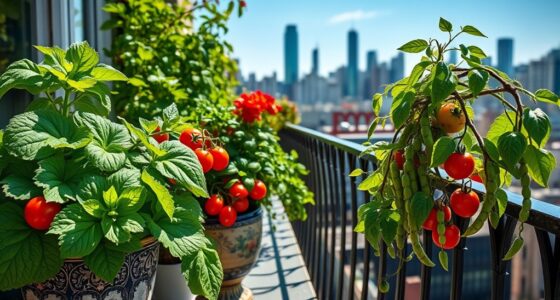
Are you looking to maximize your balcony’s potential? If so, incorporating balcony trellises can transform your small outdoor space into a lush, productive garden. Trellises are an excellent tool for vertical gardening, allowing you to grow climbing plants like cucumbers and beans upward rather than outward. This not only saves space but also creates a beautiful, green focal point on your balcony. When planning your setup, focus on container design to ensure your plants thrive. Choose sturdy, appropriately sized containers with drainage holes, and consider using lightweight materials that won’t strain your balcony’s structure. Position your trellises in containers that are easy to access for watering and maintenance, and ensure they’re anchored securely to withstand wind and plant weight.
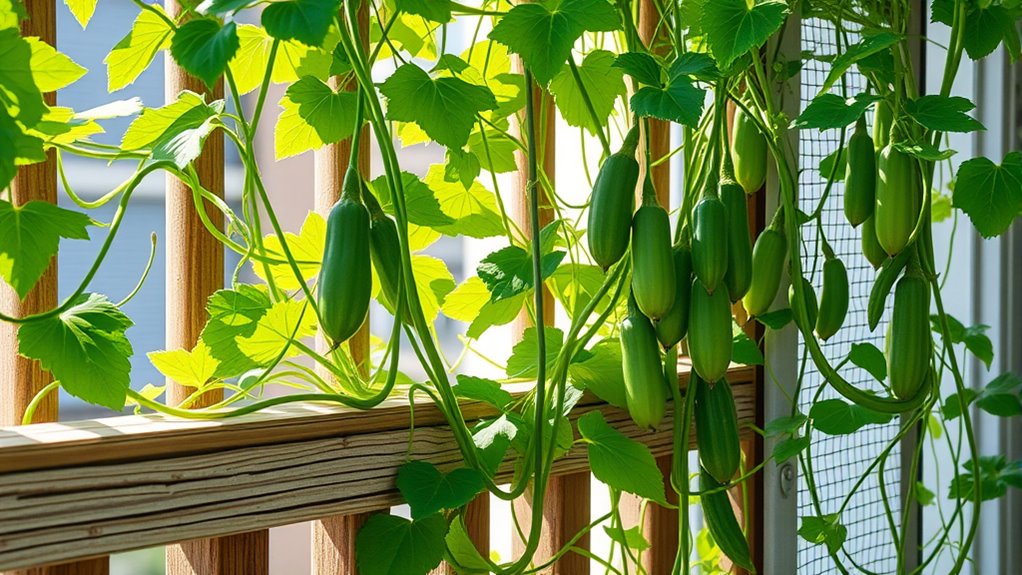
Vertical gardening with trellises is especially effective for climbing vegetables like cucumbers and beans. As these plants grow, they naturally seek support, and a well-constructed trellis guides their upward journey. This method promotes healthier plants by improving air circulation and reducing disease risk, while also making harvesting easier since your crops are at eye level. When selecting your trellis design, opt for sturdy materials like wood, metal, or durable plastic, and think about the height and width needed for your plant varieties. Installing your trellis directly in the container or attaching it securely to the balcony wall ensures stability as your plants grow taller. Regularly check that the structure remains firm, especially after heavy rain or wind.
Training your plants to climb the trellis is straightforward. Use soft ties or plant clips to gently guide the vines upward, being careful not to damage the stems. As your plants develop, prune and train the growth to keep the vine productive and manageable. This approach encourages vigorous growth and maximizes space, turning your balcony into a mini vegetable garden. By integrating vertical gardening techniques, you make the most of limited space and create an inviting, productive outdoor area. Remember to position your trellises where they will receive adequate sunlight, and consider wind protection if your balcony is exposed. With proper container design and a strategic approach to trellis placement, you’ll enjoy fresh cucumbers and beans all season long, right outside your apartment door.
Frequently Asked Questions
What Are the Best Materials for Balcony Trellises?
You should choose materials like metal, bamboo, or sturdy plastic for your balcony trellises. Metal offers excellent material durability and a sleek look, enhancing your garden aesthetics. Bamboo is lightweight, eco-friendly, and adds a natural touch, while plastic is affordable and resistant to weather. Pick a material that balances durability and style, ensuring your trellis supports your cucumbers and beans effectively while complementing your balcony’s overall appearance.
How Do I Prevent Pests on Climbing Plants?
To prevent pests on your climbing plants, you should implement effective pest prevention strategies like encouraging natural predators and maintaining plant health. Use organic pest control methods such as neem oil or insecticidal soap to target pests without chemicals. Regularly inspect your plants for signs of trouble, and remove affected leaves. Keeping your plants healthy and introducing beneficial insects can markedly reduce pest problems and keep your balcony garden thriving.
Can Trellises Support Heavy Fruit-Bearing Plants?
Yes, trellises can support heavy fruit-bearing plants if they have a strong weight capacity and are properly installed. You should choose a sturdy, well-anchored trellis designed for heavy loads. Guarantee it provides adequate plant support by reinforcing the structure with strong materials like metal or treated wood. Regularly check for any signs of strain or damage, and prune your plants to reduce weight, keeping your plants healthy and supported.
How Often Should I Water Balcony-Grown Cucumbers and Beans?
You should water your balcony-grown cucumbers and beans whenever the moisture level drops to about 50-60%. Check your watering schedule by feeling the soil; it should be damp but not soggy. During hot or windy days, water more frequently, possibly daily, to keep the soil consistently moist. Adjust your watering schedule based on weather conditions to guarantee healthy, thriving plants.
Are There Weight Restrictions for Balcony Trellises?
Yes, there are weight restrictions for balcony trellises. You need to take into account the structural support and weight capacity of your balcony to ensure safety. Always check the trellis’s maximum weight limit and avoid overloading it with heavy plants or multiple vines. Use lightweight materials when possible and distribute the weight evenly. If you’re unsure, consult a professional to prevent damage or accidents.
Conclusion
With balcony trellises, you’ll watch your cucumbers and beans climb, twist, and flourish. You’ll see growth stretch skyward, vibrant leaves shimmer in the sunlight, and fruits hang like jewels, bursting with life. You’ll enjoy the beauty of nature’s dance, the thrill of harvest, and the satisfaction of nurturing your plants. With every vine you train, you create a lush, green sanctuary—an oasis of growth, a haven of abundance, and a proof to your green thumb.