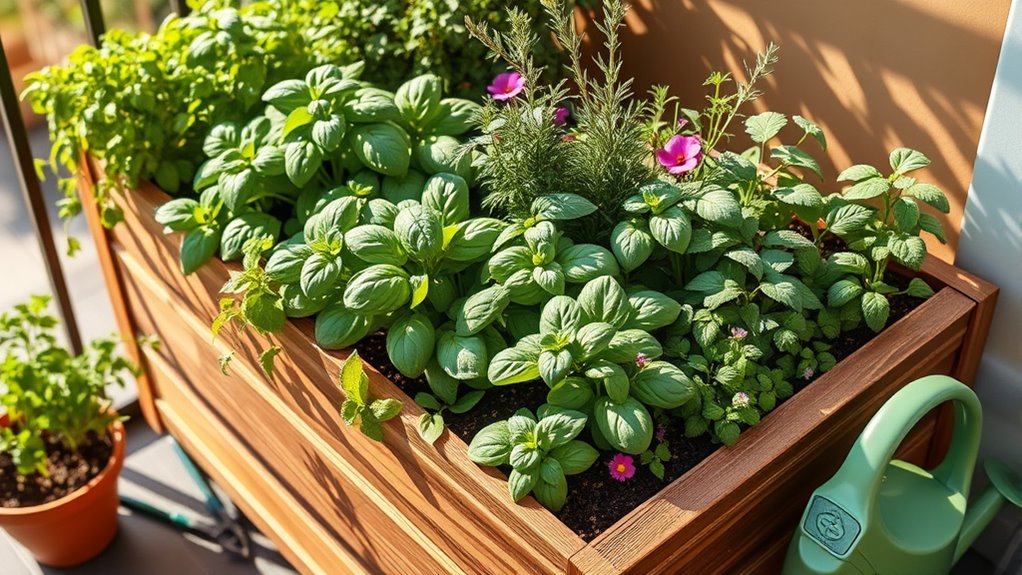
Create a balcony herb garden by choosing a single box with divided sections for herbs like basil, mint, chives, and thyme. Use quality, well-draining soil and guarantee your containers get at least 4-6 hours of sunlight daily. Pair herbs for companion planting, such as basil with tomatoes and chives with carrots, to enhance growth and pest control. Regular watering, harvesting, and pest management help keep your herbal oasis thriving—continue to explore tips for a lush, productive space.
Key Takeaways
- Select a variety of compact, sun-loving herbs like basil, thyme, chives, and mint, considering their growth habits and spacing needs.
- Use drainage-enabled containers and quality potting soil to promote healthy root development in limited balcony space.
- Pair herbs strategically, such as basil with tomatoes and chives with carrots, to enhance growth and repel pests.
- Position herbs to receive at least 4-6 hours of direct sunlight daily and rotate containers for even growth.
- Incorporate pest-repellent plants like marigolds and practice regular maintenance for a healthy, thriving balcony herb garden.
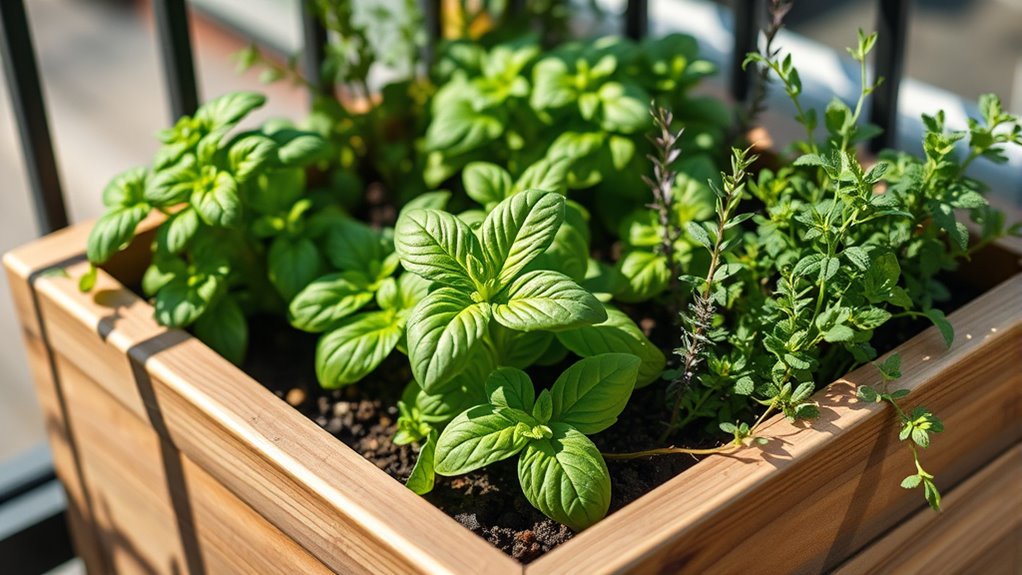
Have you ever wondered how a dedicated culinary herb garden can elevate your cooking? Creating a small, well-planned garden on your balcony transforms your kitchen into a fresh, flavorful oasis. When designing your herb space, consider companion planting and pest management strategies to guarantee healthy, thriving plants. Companion planting involves pairing herbs that benefit each other, either by enhancing growth or deterring pests. For example, basil and tomatoes grow well together, with basil helping to repel pests like aphids and mosquitoes, while also improving the flavor of tomatoes. Similarly, chives can be planted near carrots to deter carrot flies, and mint can be positioned away from other herbs to prevent it from becoming invasive. By thoughtfully choosing your plant pairings, you’re not only optimizing space but also reducing the need for chemical pest controls, making your balcony garden more eco-friendly.
Effective pest management begins with understanding which herbs naturally repel or attract pests. Incorporate herbs like rosemary, thyme, and marigolds into your garden, as they act as natural pest deterrents. Marigolds, in particular, are excellent for deterring nematodes and other soil-borne pests, protecting your roots from damage. Regularly inspecting your herbs for signs of pests allows you to catch problems early and take action before they spread. Using organic methods such as neem oil or insecticidal soap can help manage pests without harming beneficial insects. Additionally, maintaining good air circulation and avoiding overwatering can prevent fungal diseases and mold, common issues in confined balcony spaces. Remember, a healthy plant is less susceptible to pests and diseases, so give your herbs proper sunlight, water, and nutrients. Incorporating integrated pest management techniques can further enhance your garden’s resilience by combining cultural, biological, and physical controls for a sustainable approach.
To maximize your balcony herb garden’s success, choose containers with good drainage and use quality potting soil tailored for herbs. Position your herbs where they’ll receive adequate sunlight—most culinary herbs thrive with at least 4-6 hours of direct sunlight daily. Rotate your herbs periodically to promote even growth and prevent pests from settling in. Incorporate companion planting principles by grouping herbs with complementary needs and pest-repelling qualities. This integrated approach reduces pests naturally and promotes healthier plants, making your balcony garden easier to manage. With attention to these details, your herbs will flourish, providing you with fresh, aromatic ingredients right outside your door. Over time, you’ll enjoy the satisfaction of harvesting vibrant herbs that elevate your cooking while maintaining a balanced, pest-resistant garden ecosystem.

HOME GROWN Herb Garden Planter Indoor Kit – Unique Christmas Gift for Adults, Men, & Women – Grow 4 Heirloom Herb Seeds on Kitchen Window – Beginner DIY Craft & Hobby Gardening Gift for Plant Lovers
All-in-One Herb Starter Kit – Get everything you need to grow fresh herbs at home. This complete herb…
As an affiliate, we earn on qualifying purchases.
As an affiliate, we earn on qualifying purchases.
Frequently Asked Questions
How Often Should I Water My Balcony Herb Garden?
You should water your balcony herb garden when the soil moisture feels dry to the touch, typically every 1-2 days. Stick your finger about an inch into the soil; if it feels dry, it’s time to water. Maintain a consistent watering schedule, but avoid overwatering. Regularly check soil moisture to prevent root rot, and guarantee your herbs stay healthy and thriving in their container.
What Are the Best Herbs for Beginners?
Imagine a lush, fragrant oasis on your balcony—start with easy herb selection like basil, mint, parsley, chives, and oregano. These herbs thrive with minimal fuss, making them perfect for beginners. Keep your tips simple: water regularly, guarantee good drainage, and place them in bright sunlight. These hardy herbs will reward your efforts with fresh flavors, building your confidence and turning your balcony into a vibrant, aromatic escape.
How Do I Prevent Pests in My Small Garden?
You can prevent pests by choosing pest-resistant herbs like basil and thyme, which naturally deter many insects. Keep your garden healthy by maintaining good airflow and avoiding overwatering. Use organic pest control methods, such as neem oil or insecticidal soap, to target pests without chemicals. Regularly inspect your herbs, remove any affected leaves, and encourage beneficial insects like ladybugs to help keep pest populations in check.
Can I Grow Herbs Indoors Year-Round?
Absolutely, you can grow herbs indoors year-round, turning your space into a lush oasis. Think of indoor lighting solutions like grow lights to mimic sunlight, ensuring your herbs thrive through every season. With proper care, you’ll enjoy fresh herbs anytime. Remember herb harvesting tips—pinch regularly and avoid overwatering—to keep your plants healthy. With dedication, your indoor garden becomes a fragrant, green sanctuary you can enjoy all year.
What Fertilizers Are Suitable for Container Herbs?
You should use organic fertilizers for your container herbs, as they provide essential nutrients without harming your plants. Look for soil amendments like compost or fish emulsion, which improve soil health and deliver natural nourishment. Apply these fertilizers regularly, following package instructions, to keep your herbs thriving. Organic options are gentle, eco-friendly, and perfect for maintaining a healthy, productive balcony herb garden year-round.
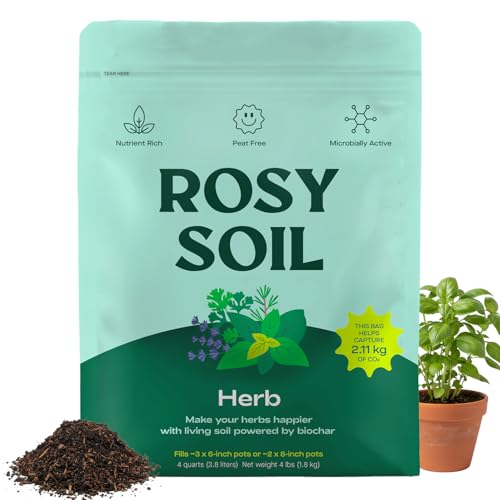
Rosy Soil Herb Mix – Organic Potting Mix for Herbs – Enriched with Biochar, Worm Castings for Root Development, Nutrient Uptake, and Strong Flavor – Fast Draining, Peat Free, Less Prone to Gnats – 4qt
Thriving Growth Formula: The Rosy Soil Herb Mix enhances the well-being of your herbs like basil, thyme, mint,…
As an affiliate, we earn on qualifying purchases.
As an affiliate, we earn on qualifying purchases.
Conclusion
With this balcony herb garden plan, you’ll have a lush, fragrant oasis right outside your door, transforming even the tiniest space into a culinary paradise. Picture your balcony bursting with vibrant greens and aromatic herbs, turning every meal into a gourmet experience. It’s like having a personal chef’s pantry at your fingertips, ready to elevate your cooking instantly. So, start planting today and watch your balcony bloom into the most flavorful, beautiful herb haven you’ve ever imagined!

Torfican 5 Set Window Herb Planter Box Rectangular,8.5×3.5 Inch White Plastic Planters with Multiple Drainage Holes and Trays,Indoor Succulent Cactus Mint Flower Pot for Windowsill,Garden Balcony
Drain Holes Design — Window planter box design with many small drain holes,prevent excessive watering, maintain soil drainage…
As an affiliate, we earn on qualifying purchases.
As an affiliate, we earn on qualifying purchases.

10 Herb Garden Planter Indoor Kit, 44pcs Complete Kitchen Herb Starter Set Including Burlap Pots, Markers, Soil Discs, Gardening Tools, Unique Easter/Birthday/Christmas Gift Ideas for Women, Mom
COMPLETE INDOOR HERB GARDEN KIT: This ROOTCRAFT herb growing kit includes everything you need to start your herb…
As an affiliate, we earn on qualifying purchases.
As an affiliate, we earn on qualifying purchases.