As a smart pool owner, a variable-speed pump helps you save energy and reduce costs by adjusting motor speeds based on your pool’s needs. It connects easily with automation systems and allows remote control, giving you convenience and efficiency. These pumps provide better water circulation, improving water quality and temperature stability. If you want to maximize savings and smart tech benefits, understanding how these pumps work and how to choose the right one is essential.

Get garden gear delivered free with Prime
- Fast, free delivery on millions of items
- Prime Video, Amazon Music and more included
- Member-only deals all year
Key Takeaways
- Enable remote monitoring and control for convenient, energy-efficient pool management through smart technology integration.
- Adjust speeds automatically to optimize energy savings and water circulation based on pool usage needs.
- Extend equipment lifespan by reducing wear and tear with reduced operational strain at lower speeds.
- Improve water quality and temperature consistency through enhanced circulation and filtration.
- Support eco-friendly features like solar power and automation, aligning with sustainable pool ownership goals.
As an affiliate, we earn on qualifying purchases.
Are You Paying Too Much for Pool Energy Costs?

Are your pool energy costs higher than they should be? If so, it might be time to examine your pool maintenance routines and water chemistry. Inefficient pumps often cause your system to work harder, increasing energy use and costs. Maintaining proper water chemistry guarantees your pool equipment runs smoothly, preventing strain on your pump. Regularly testing and balancing pH, alkalinity, and sanitizer levels helps avoid unnecessary wear and tear. Poor water chemistry can lead to cloudy water, algae growth, and equipment damage, all of which boost energy consumption. Understanding your pool’s hydraulics can also help identify flow issues that reduce efficiency. Proper pump operation and system design are crucial for optimizing energy savings and ensuring effective circulation. Additionally, investing in variable-speed pumps allows for more precise control of flow rates and energy savings. Modern smart pool technology can further enhance system efficiency by providing real-time monitoring and adjustments. By staying on top of pool maintenance and keeping water chemistry in check, you can optimize your pool’s efficiency, reduce energy costs, and extend the lifespan of your equipment. Considering energy-efficient equipment is also an important step toward long-term savings and sustainability.
Why Switch to a Variable-Speed Pool Pump?
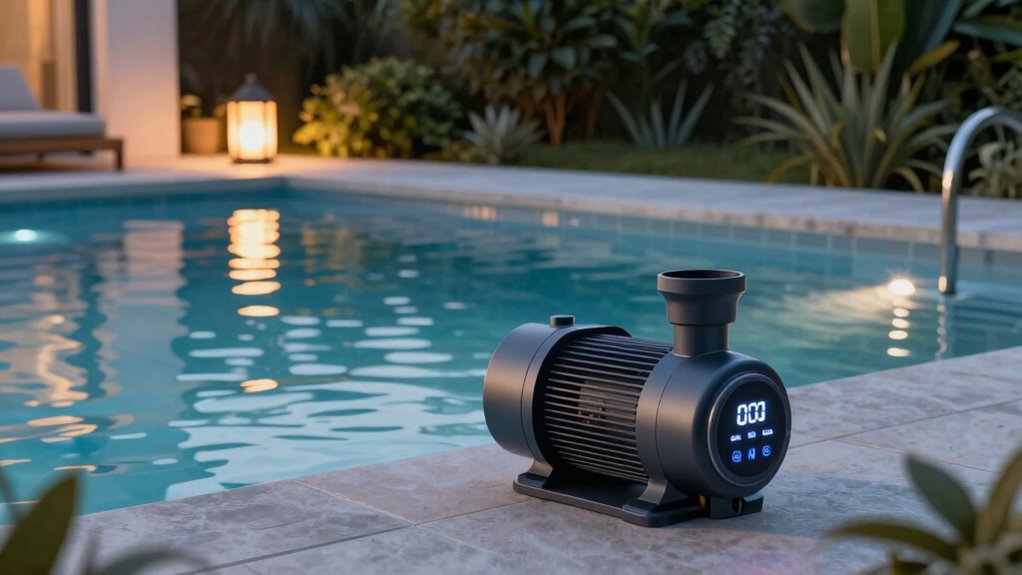
Switching to a variable-speed pool pump can markedly boost your energy efficiency and lower your electricity bills. By adjusting the pump’s speed to what’s needed, you save money and reduce wear on the equipment. Over time, these savings make upgrading a smart, cost-effective choice. Additionally, customizing the pump’s operation allows for better system planning and optimized performance. Incorporating storage solutions for pool equipment can further enhance organization and maintenance. Understanding the role of advanced automation can help pool owners optimize the pump’s operation even further. Recognizing the scientific skepticism surrounding certain claims can guide you toward making more informed decisions about your pool system. Considering solar-powered options for pool equipment can also contribute to eco-friendly and energy-efficient pool management.
Energy Efficiency Benefits
Choosing a variable-speed pool pump can considerably improve your pool’s energy efficiency because it adjusts its speed to match your filtration needs, rather than running at a constant, high speed constantly. This adaptability means you use less energy during off-peak times and optimize water circulation, reducing waste. With pool automation, you can program the pump to operate at lower speeds when full power isn’t necessary, saving energy and extending equipment life. Additionally, integrating smart home technology can further enhance your pool’s efficiency by allowing remote control and automated scheduling. This integration also enables you to monitor and adjust pump performance in real-time for optimal operation. Proper placement of components like rapid shutdown systems is crucial for safety and compliance, especially in environments that require quick power disconnection during maintenance or emergencies. Here are some key benefits:
- Lower energy consumption due to optimized operation
- Reduced electricity bills over time
- Better water circulation at variable speeds
- Enhanced control over pump operation and scheduling
Cost Savings Potential
By reducing energy consumption through variable-speed pumps, you can see significant savings on your long-term operating costs. These pumps adapt their speed to match your pool’s needs, lowering electricity bills and minimizing wear on equipment. Over time, this leads to less frequent pool maintenance and more stable water chemistry, reducing chemical costs. Additionally, understanding battery inverter generators can help you plan for energy-efficient upgrades around your pool area. Incorporating eco-friendly natural pools can further optimize your backyard investment by blending sustainability with leisure. Recognizing the importance of pool equipment efficiency can further enhance your savings and pool performance. The table below highlights potential savings based on usage:
How Do Variable-Speed Pumps Save You Money and Energy?
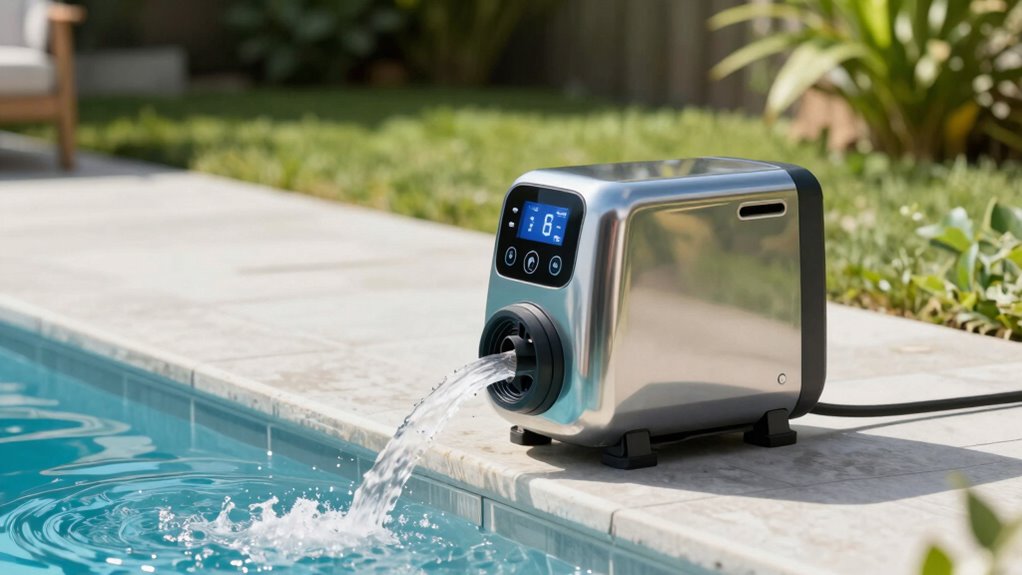
Ever wondered how variable-speed pumps can cut your pool maintenance costs? These pumps use advanced pump technology to adjust motor speeds based on your pool’s needs, saving energy and money. Here’s how they do it:
Variable-speed pumps adjust motor speeds to save energy and reduce maintenance costs.
- They run at lower speeds during regular filtration, reducing energy consumption. Hydrating ingredients can help keep pool equipment running efficiently by preventing buildup and corrosion.
- Precise energy monitoring helps optimize operation times and ensures efficient use of commercial cleaning fixtures/equipment, which in turn contributes to overall energy savings. Implementing proper maintenance practices can further enhance the efficiency of your pool system.
- Variable speeds mean less wear and tear, lowering maintenance costs.
- They adapt quickly to different pool tasks, avoiding unnecessary power use.
- Additionally, strategies for energy efficiency can enhance overall savings and pool performance. Implementing long-term financial planning can further maximize your investment in energy-efficient equipment.
How to Choose the Best Variable-Speed Pool Pump for Your Needs?
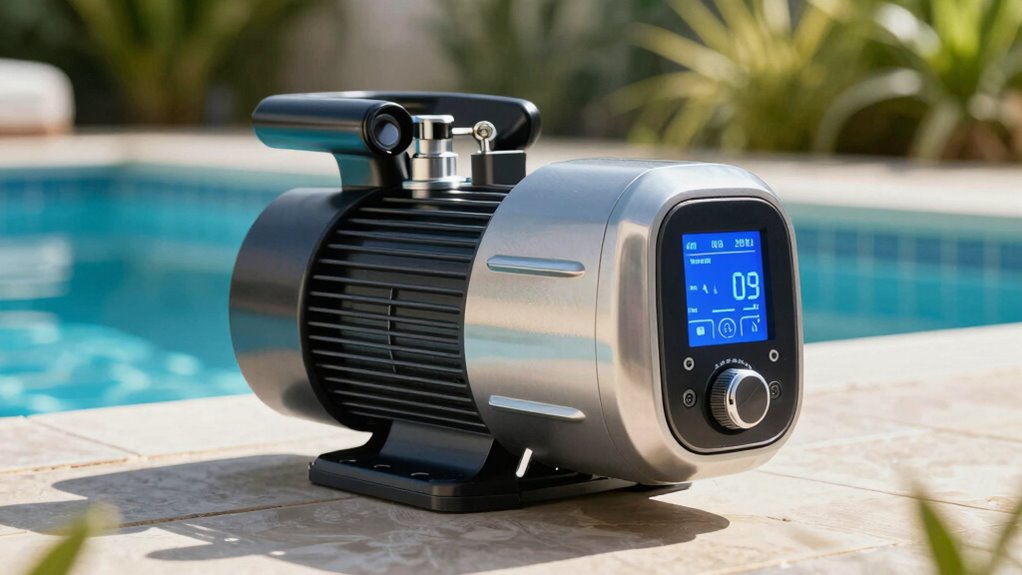
When selecting a variable-speed pool pump, consider its energy efficiency benefits and how they can lower your operating costs. You should also check if it’s compatible with your existing pool system and look for features that suit your specific needs. Making the right choice guarantees you get maximum performance and savings over time. Additionally, exploring options that support customizable sound and lighting can enhance your overall pool experience.
Energy Efficiency Benefits
Choosing the right variable-speed pool pump can substantially boost your pool’s energy efficiency, helping you save money on electricity bills while reducing your environmental impact. These pumps promote energy conservation by adjusting speed based on your pool’s needs, rather than running at full power constantly. They also help maintain ideal water temperature, reducing heating costs. To maximize efficiency, consider:
- Pump horsepower—match it to your pool size for optimal flow.
- Variable-speed settings—ensure smooth adjustments for energy savings.
- Inverter technology—improves efficiency during variable operation.
- Noise levels—quieter models often indicate better energy management.
Selecting the right pump fosters energy conservation and keeps your water temperature consistent, ultimately lowering your operational costs and environmental footprint.
Compatibility and Features
Selecting the right variable-speed pool pump involves evaluating both its compatibility with your existing system and the features that meet your specific needs. Pump compatibility is essential; verify the pump matches your pool’s plumbing size, voltage, and control system. A feature comparison helps you identify key functionalities, like adjustable speeds, timers, and smart connectivity. Look for models that integrate with your smart home setup for seamless control. Consider energy-saving features, noise levels, and ease of maintenance. The right pump should optimize performance without overcomplicating your setup. By comparing features and confirming compatibility, you guarantee the pump you choose enhances efficiency, durability, and convenience, making your smart pool more enjoyable and cost-effective in the long run.
Common Myths About Variable-Speed Pool Pumps?
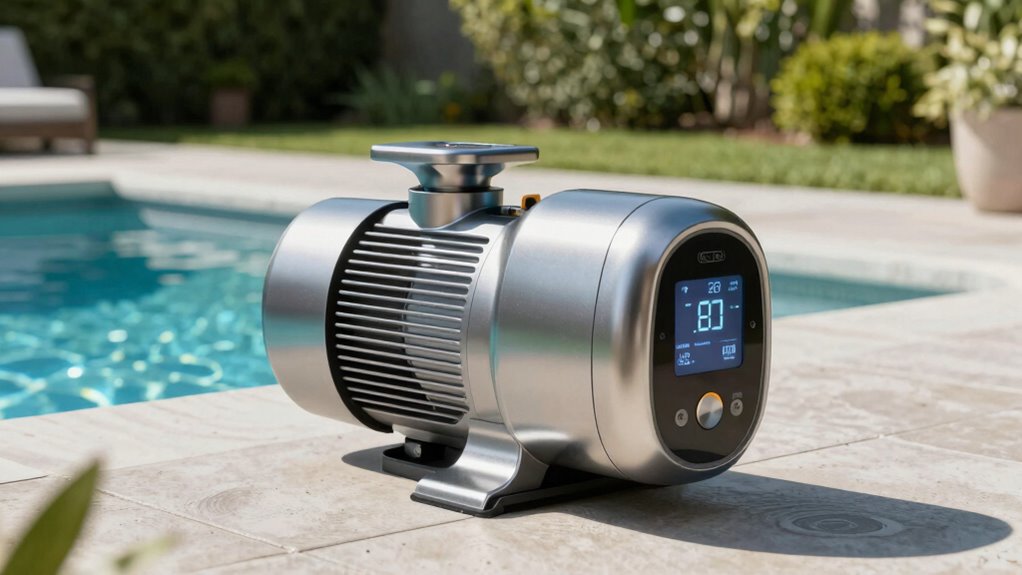
Are there lingering misconceptions about variable-speed pool pumps? Many pool owners still believe in certain pool pump myths and efficiency misconceptions that can hold you back from making smarter choices.
Here are four common myths:
- Variable-speed pumps are too expensive upfront.
- They don’t save energy or lower bills.
- They’re complicated to install and operate.
- They don’t work well with existing pool systems.
These myths often lead people to overlook the real benefits. In reality, variable-speed pumps are more efficient, cost-effective over time, and user-friendly. Knowing the truth helps you make an informed decision, ensuring your pool runs smoothly and efficiently while saving you money in the long run. Don’t let myths cloud your judgment!
What Are the Long-Term Savings of Upgrading Your Pool Pump?
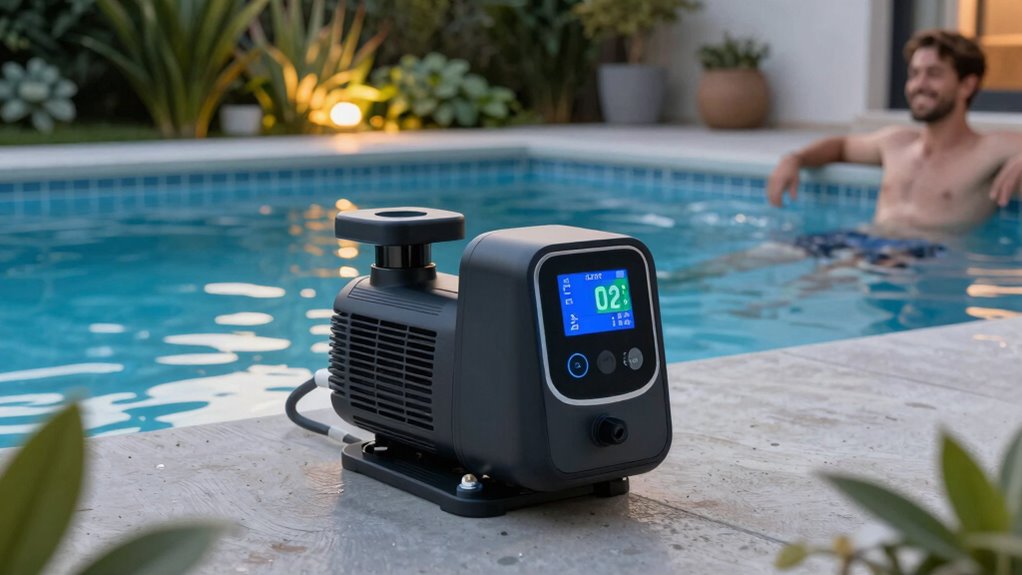
Upgrading to a variable-speed pool pump can lead to significant long-term savings that outweigh the initial investment. You’ll notice lower energy costs because these pumps adjust their speed for ideal water circulation, reducing unnecessary power consumption. Better water circulation also means less frequent pool maintenance, keeping your pool cleaner and reducing chemical costs. Over time, the savings accumulate, making the upgrade cost-effective.
| Savings Aspect | Benefits |
|---|---|
| Energy Costs | Reduced bills due to efficient operation |
| Pool Maintenance | Less frequent cleaning and chemical use |
| Pump Longevity | Enhanced durability and fewer replacements |
| Water Circulation Efficiency | Improved water quality with consistent flow |
Tips for Installing and Maintaining Your Variable-Speed Pool Pump
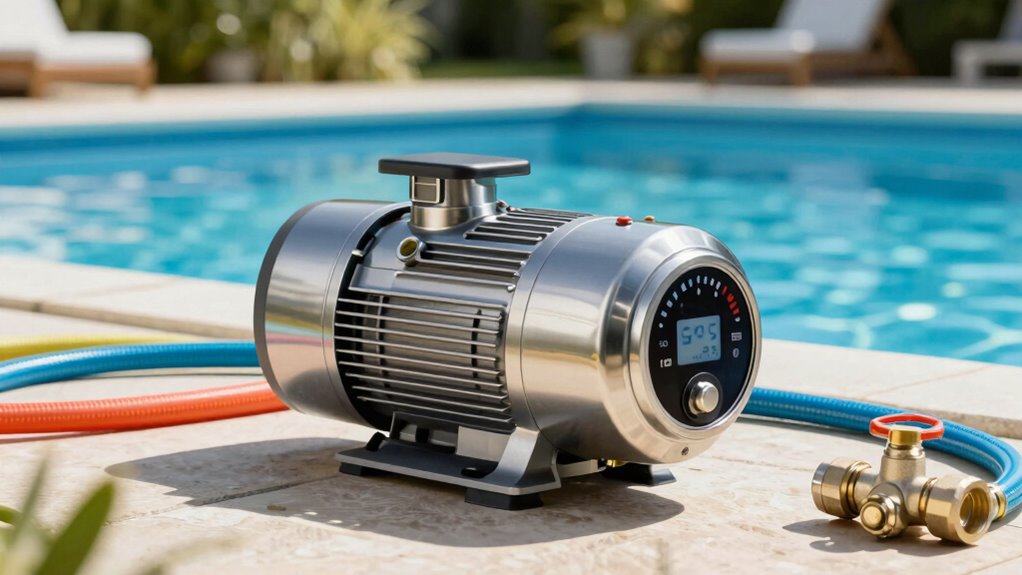
Installing and maintaining your variable-speed pool pump correctly is essential to guarantee it operates efficiently and lasts longer. Proper pump maintenance and installation tips ensure peak performance and energy savings. To get started:
Proper installation and maintenance extend your variable-speed pool pump’s lifespan and boost efficiency.
- Check your pump’s placement—install it on a level surface, close to the pool, and ensure proper drainage.
- Connect all plumbing securely, avoiding leaks that can impact efficiency.
- Follow manufacturer instructions carefully during installation to prevent issues.
- Regularly inspect and clean the pump’s filter and strainer basket to maintain smooth operation.
Frequently Asked Questions
Can Variable-Speed Pumps Improve Water Quality in My Pool?
Yes, variable-speed pumps can improve your pool’s water quality. They enhance pool maintenance by providing consistent circulation, which helps distribute chemicals evenly and prevents algae buildup. Their energy efficiency means you can run the pump at ideal speeds, reducing wear and tear while maintaining cleaner water. By adjusting the flow rate, you get better filtration and clearer water, making your pool safer and more enjoyable to swim in.
Are There Specific Brands Known for Reliable Variable-Speed Pool Pumps?
Think of reliable brands as the sturdy oak trees in a forest—you can count on them. Brands like Pentair, Hayward, and Jandy have built strong reputations for dependable variable-speed pool pumps. Customer reviews consistently praise their durability and efficiency, making them a safe choice. When selecting a pump, prioritize these brands to guarantee your investment pays off with long-lasting performance and smooth operation.
How Do I Program My Variable-Speed Pump for Optimal Performance?
To program your variable-speed pump for peak performance, start by setting a schedule that matches your pool usage to maximize energy savings. Use the pump’s control panel to adjust speeds for different tasks, like filtering or cleaning. Follow installation tips to guarantee proper setup, which helps the pump operate efficiently. Regularly monitor and tweak the settings as needed, so you conserve energy and keep your pool in perfect condition.
What Warranties or Support Are Typically Available With These Pumps?
You’ll typically find warranty options like limited warranties covering parts and labor, often lasting 1-3 years, depending on the brand. Customer support is usually available through the manufacturer’s helpline or online chat, offering troubleshooting, part replacements, and technical assistance. It’s crucial to review warranty details before purchasing, so you know what’s covered. Reliable support guarantees your variable-speed pump stays efficient and problem-free, giving you peace of mind and smooth pool operation.
Do Variable-Speed Pumps Operate Quietly Compared to Single-Speed Models?
Yes, variable-speed pumps operate more quietly than single-speed models. Their pump noise and operation sound are markedly reduced because they run at lower speeds for most of the time, minimizing noise levels. You’ll notice less vibration and disturbance around your pool area. This quieter operation not only makes your swimming environment more peaceful but also enhances your overall pool experience, especially during nighttime or early morning use.
Conclusion
Think of your pool pump as the heart of your backyard oasis. A variable-speed pump is like a steady, adaptable heartbeat that keeps your pool vibrant without overexertion. By choosing the right pump, you’re not just saving energy—you’re nurturing your pool’s health and your wallet’s well-being. Embrace this upgrade, and watch your pool breathe easier, shimmer brighter, and save you money—making every swim and every dollar count.
Fall Picks
fall essentials
As an affiliate, we earn on qualifying purchases.