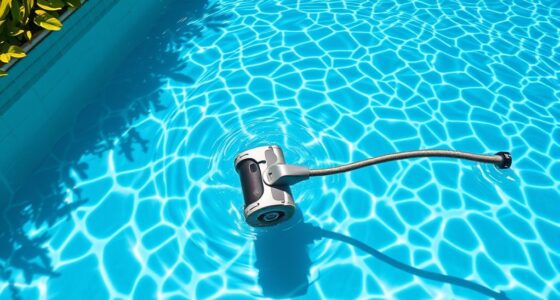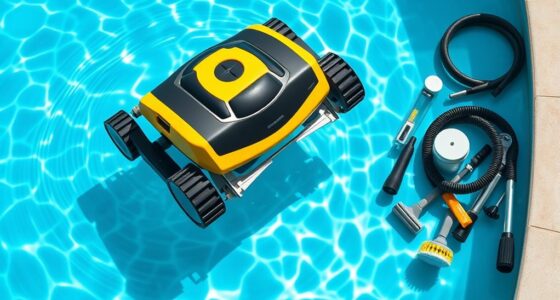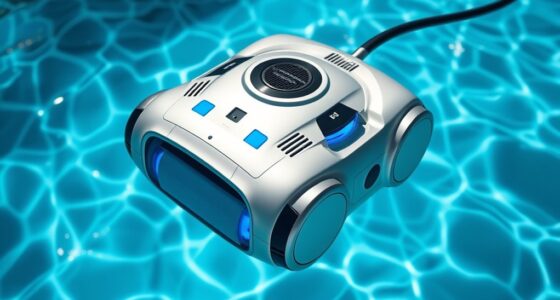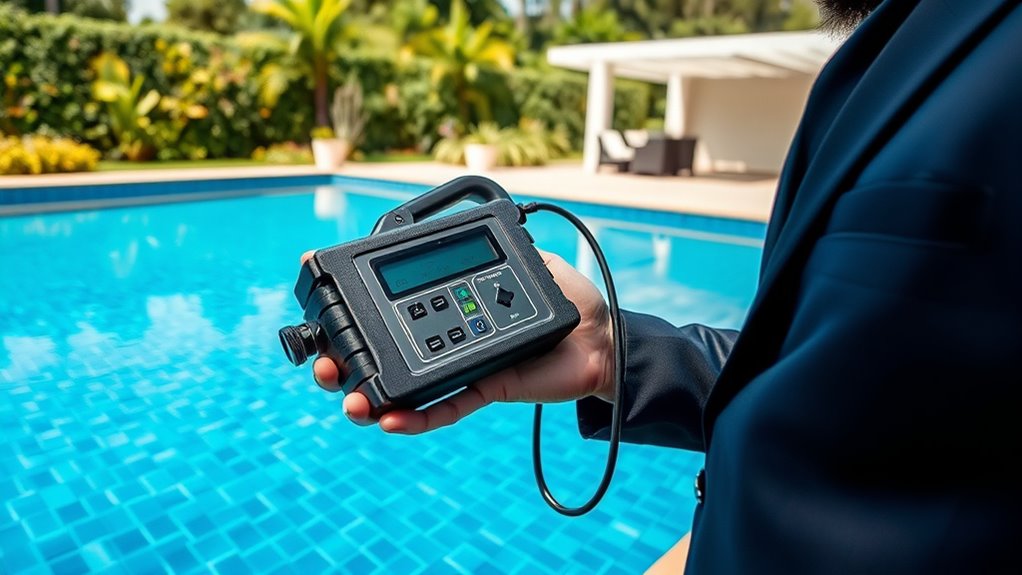

Advanced leak detection for pools uses precise sensors, real-time monitoring, and calibration to quickly spot leaks and find their location. Modern systems offer remote alerts and digital updates, making detection more accurate and reliable. While high-precision sensors can cost more initially, they save money by preventing water loss and reducing unnecessary repairs over time. If you want to discover how these technologies can protect your pool, keep exploring the options available.
Key Takeaways
- Advanced leak detection technologies include electronic sensors, pressure testing, and acoustic methods for precise pool leak identification.
- High-precision sensors enhance leak detection accuracy, reducing false alarms and enabling early leak pinpointing.
- Modern systems feature digital readouts, real-time monitoring, and remote alerts for convenient leak detection management.
- Proper calibration of sensors ensures long-term reliability and maintains detection accuracy over time.
- Cost-benefit analysis of leak detection tech balances sensor accuracy with budget, optimizing pool maintenance and water conservation.

Detecting leaks in your pool can save you money and prevent costly damage, but pinpointing the source isn’t always straightforward. Modern leak detection tech offers various tools, but understanding their sensor accuracy is vital to making an informed choice. Sensor accuracy determines how precisely these devices can identify and locate leaks. High-precision sensors can detect even tiny drops in water levels or subtle changes in pressure, giving you confidence that the problem is identified correctly. On the other hand, less accurate sensors might produce false alarms or miss minor leaks altogether, leading to unnecessary repairs or overlooked issues. When selecting leak detection systems, you need to weigh sensor accuracy against cost, because more advanced sensors tend to come with higher price tags. Conducting a thorough cost analysis helps you decide whether investing in a high-end system makes sense for your pool’s size and potential leak severity.
A precise leak detection system with excellent sensor accuracy might have a higher upfront cost but can save you money in the long run by reducing the number of false alarms and pinpointing leaks quickly. This efficiency means you won’t waste time and money on unnecessary repairs or digging up your yard for guesswork. Conversely, cheaper systems with lower sensor accuracy might seem appealing initially, but they could lead to more extensive damage if leaks go unnoticed or are misdiagnosed. It’s vital to consider the potential costs of water loss, increased utility bills, and structural damage when performing your cost analysis. Sometimes, paying more initially for a reliable, accurate sensor system pays off by preventing larger expenses down the line.
Moreover, technological advancements have made leak detection more accessible and user-friendly. Many modern systems now integrate sensors with digital readouts, mobile alerts, and remote monitoring, giving you real-time updates on your pool’s status. These innovations often enhance sensor accuracy, making leak detection quicker and more reliable. When performing your cost analysis, include these features’ added value, such as peace of mind and convenience, alongside the actual costs. Remember, investing in a system with better sensor accuracy can also mean fewer false alarms and unnecessary repairs, saving you both time and money. Additionally, understanding the role of sensor calibration in maintaining detection accuracy can help you select a system that remains reliable over time. Ultimately, choosing the right leak detection tech involves balancing sensor accuracy with your budget, ensuring you get a dependable solution that minimizes your pool’s water loss and potential damage without breaking the bank.
iGarden Robotic Pool Cleaner K Series, 150 Min Runtime Cordless Pool Vacuum Robot for Inground & Above Ground Pools, Smart Navigation, Touchscreen, Self-Parking, Cleans Floor, Wall & Waterline
Robust Cleaning Capability: Engineered with a turbine-grade impeller, an optimized flow system, and 3 brushless motors, the cordless...
As an affiliate, we earn on qualifying purchases.
Frequently Asked Questions
How Often Should I Test My Pool for Leaks?
You should test your pool for leaks at least once every season, especially before and after heavy use or harsh weather. Regular pool maintenance helps catch small leaks early, preventing costly repairs later. Keep an eye on water levels and look for unexplained drops. By testing regularly, you’re actively practicing leak prevention, ensuring your pool stays in top condition and avoiding unnecessary water loss or damage.
Can DIY Leak Detection Methods Damage My Pool?
While DIY leak detection methods might seem harmless, they can sometimes be a bit too enthusiastic, risking damage to your pool during routine pool maintenance. Using improper leak repair techniques or excessive pressure can cause cracks or other issues. To keep your pool in top shape, stick to gentle methods and consult professionals if you’re unsure. Proper leak detection and repair protect your investment and ensure your pool stays pristine and safe.
What Are the Signs of Hidden Pool Leaks?
You can spot hidden pool leaks if your water level drops consistently despite proper pool maintenance. Look for unexplained decreases in water, wet spots around the pool, or increased water bills—these signs point to a potential leak. Detecting leaks early helps conserve water and saves money, emphasizing the importance of water conservation. Regularly inspecting your pool and monitoring water levels can help you catch leaks before they cause costly damage.
How Long Does Professional Leak Detection Typically Take?
Oh, the thrill of waiting for a professional to find your elusive leak! Usually, it takes anywhere from a couple of hours to a full day, depending on the pool lining and water chemistry. They’ll meticulously inspect your pool, testing for subtle signs of leaks, all while you anxiously wonder if your water bill will skyrocket. Patience is key, but rest assured, they’ll track down that sneaky leak faster than you can say “drip, drip, drip.”
Are There Eco-Friendly Leak Detection Options Available?
Yes, eco-friendly leak detection options are available. You can choose equipment that uses eco-friendly technology or biodegradable solutions to minimize environmental impact. These options often rely on environmentally safe dyes, non-toxic gases, or low-impact sensors that don’t harm your surroundings. By opting for green leak detection methods, you guarantee effective results while protecting the environment, making it a responsible choice for maintaining your pool and the planet.

(2026 Upgrade) WYBOT C1 Cordless Robotic Pool Vacuum for Inground Pools, Above Ground Pool Cleaner 4-in-1 Wall & Waterline Cleaning Up to 1,614sq.ft, 150mins Smart Navigation, App Support
Powerful Suction with Dual Brushes: Built with an upgraded independent water pump motor delivering up to 3,038 GPH...
As an affiliate, we earn on qualifying purchases.
Conclusion
By now, you see how leak detection tech for pools can save you time, money, and stress. Using the right tools means catching issues early and avoiding bigger problems down the road. Remember, a stitch in time saves nine — staying proactive keeps your pool in top shape. With these technologies, you’re better equipped to tackle leaks head-on and enjoy your pool without worry. Don’t wait for trouble to knock on your door; act now and stay ahead.

(2026 New) AIPER Scuba V3 AI Vision Cordless Robotic Pool Cleaner, 10x Faster Pool Cleaning with AI Patrol, 24/7 Auto Cleaning, Smart Waterline Parking & Multi-Layer Filtration
10x Faster Pool Cleaning with AI Patrol System: Single front-facing AI camera detects over 20 debris types and...
As an affiliate, we earn on qualifying purchases.

(2026 Upgraded) WYBOT C2 Cordless Robotic Pool Cleaner, Dual Filtration, Wall Climbing & Waterline Cleaning, App Scheduling, Smart Navigation, Pool Vacuum for Inground/Above Ground Pools-2152 Sq.ft
Dual Filtration System Captures Fine Debris: Featuring dual-layer filtration (180μm + 10μm), the pool cleaner robot efficiently traps...
As an affiliate, we earn on qualifying purchases.