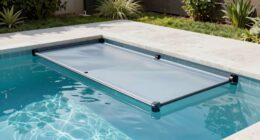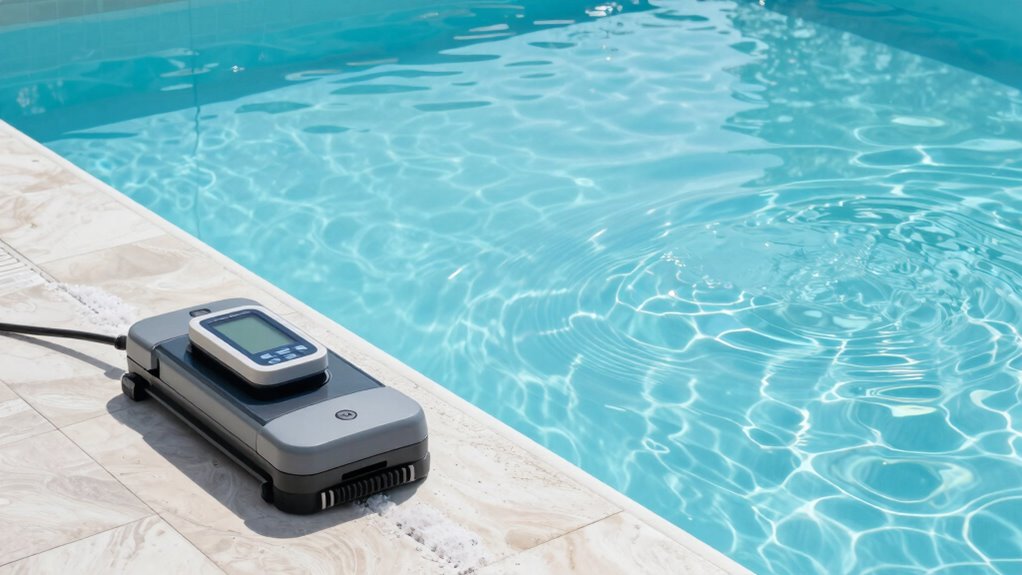
Switching to a salt water pool system shifts your maintenance from manually adding chlorine to focusing on water chemistry and equipment care. You’ll need to regularly test your salt, pH, and alkalinity levels to keep the system balanced. Filtration and cleaning remain important, but you’ll spend less time handling harsh chemicals. Monitoring for corrosion and scale buildup becomes a priority. To keep your system running smoothly, staying vigilant with water chemistry and maintenance steps is essential—wondering what else you should know?
Key Takeaways
- Reduces the need for manual chlorine addition due to automated chlorine generation.
- Requires regular water testing for pH, salt, and alkalinity adjustments.
- Emphasizes filter cleaning and system maintenance over chemical handling.
- Needs periodic salt level checks to ensure system efficiency and prevent corrosion.
- Shifts focus from chemical supplementation to monitoring water chemistry and equipment upkeep.
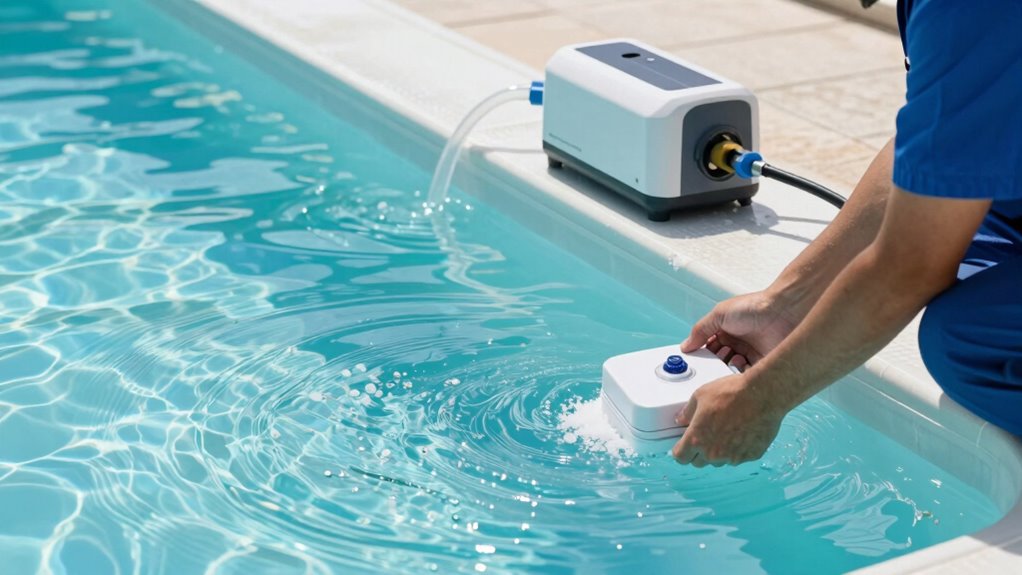
Are salt water pool systems worth the effort? If you’re considering switching from traditional chlorine pools, you’ll find that these systems greatly change your maintenance routine. Unlike standard pools that rely heavily on adding pool chlorine manually or through floaters, salt water systems generate chlorine automatically. This means you no longer need to handle chlorine tablets or liquid chemicals frequently. Instead, you maintain the salt levels in the water, and the system takes care of producing the necessary amount of chlorine through an electrolysis process. This can simplify your routine and reduce the amount of chemicals you handle regularly.
Salt water pools automatically generate chlorine, reducing manual chemical handling and simplifying maintenance routines.
However, you still need to stay on top of water filtration. Proper filtration keeps your pool water clear and free from debris or algae, and salt water pools are no exception. You’ll want to regularly check and clean your water filtration system, ensuring filters are free of dirt and buildup. While salt water pools tend to be gentler on your skin and eyes because they produce fewer harsh chloramines, neglecting filtration can still lead to cloudy water or algae growth. Consistent water testing is essential to monitor salt and pH levels, as imbalance can compromise water quality and the effectiveness of your water filtration system. Additionally, understanding the role of water chemistry is crucial for maintaining optimal pool conditions. Properly managing chemical balance can help prevent issues like corrosion and scale buildup, extending the life of your equipment.
Another key change in maintenance routines involves managing salt levels. Unlike traditional pools, where the focus is mainly on chlorine levels, salt water pools require you to regularly test salt concentrations. If the salt drops below ideal levels, your system won’t produce enough chlorine, risking bacterial growth and water quality issues. Conversely, too much salt can lead to corrosion of pool equipment or surfaces. Balancing salt levels requires periodic additions of salt and testing, but once dialed in, it often results in a more stable and consistent chlorination process. Additionally, understanding pool water chemistry is crucial for keeping your system functioning optimally. Properly maintaining salt levels is essential to prevent damage to your pool’s equipment and ensure the longevity of your system.
You’ll also find that your chemical routine shifts slightly. Since these systems generate chlorine continuously, you might need to reduce the frequency of adding external chlorine sources. Still, you’ll want to keep a close eye on pH levels and alkalinity, as these influence how well your water filtration system works. Adjustments in pH are common, and maintaining it within the recommended range helps prevent scale buildup and corrosion. Regular testing of water parameters, including calcium hardness, can help prevent scale buildup and ensure the longevity of your pool equipment. Overall, you’ll spend less time manually chlorinating your pool but need to be vigilant with water testing and salt management to ensure everything runs smoothly.

Salt-Water Pool Test Strips Kit: 125 Counts 8-in-1 for Salt Water Pool Testing Kit, Salt Pool Test Strips for Hot Tub Spa Testing Salt Chlorine pH and More
Salt Pool Test Strips: Meet the most comprehensive test strips for saltwater system. Combine sodium chlorine(salt) and regular…
As an affiliate, we earn on qualifying purchases.
As an affiliate, we earn on qualifying purchases.
Frequently Asked Questions
Do Salt Water Pools Require Different Cleaning Tools?
Yes, salt water pools need different cleaning tools to maintain ideal pool chemistry and equipment durability. You should use soft-bristled brushes and non-abrasive skimmers to prevent corrosion caused by salt. Regularly check and clean salt cell plates and filters, as salt buildup can affect equipment performance. Using the right tools helps keep your pool clean and extends the lifespan of your equipment, ensuring a safe, enjoyable swimming experience.
How Often Should Salt Levels Be Checked?
You should check your salt levels weekly to guarantee proper chemical balance and water circulation. Maintaining the correct salt concentration helps keep the chlorinator working efficiently and prevents corrosion. Regular testing with a salt test strip or meter allows you to make adjustments if needed. Proper water circulation also helps distribute salts evenly, keeping the water clear and balanced. Consistent checks ensure your salt water pool stays fresh and inviting.
Are Salt Water Pools More Prone to Algae Growth?
Salt water pools aren’t necessarily more prone to algae growth; instead, they can be like a lush garden if you don’t stay vigilant. To keep algae at bay, focus on algae prevention and consistent chemical balancing. Regularly check and adjust your chlorine levels, pH, and stabilizers. When you prioritize these tasks, your pool remains clear and inviting, turning your swimming spot into a sparkling oasis rather than a murky pond.
Can Salt Water Systems Cause Corrosion to Pool Equipment?
Yes, salt water systems can cause corrosion to pool equipment if pool chemistry isn’t properly balanced. The salt can accelerate the deterioration of metal components, reducing equipment longevity. To prevent this, you should monitor and maintain correct pH, alkalinity, and salt levels regularly. Proper maintenance helps protect your equipment from corrosion, ensuring it lasts longer and performs effectively, reducing costly repairs and replacements over time.
What Is the Lifespan of a Typical Salt Chlorinator?
A salt chlorinator’s lifespan typically ranges from 3 to 7 years, but “you get what you pay for.” You’ll need to monitor pool chemistry regularly to prevent corrosion and keep equipment durable. Proper maintenance extends its life, so clean the cell and check salt levels often. By staying proactive, you guarantee your system remains efficient, saving money and effort in the long run while enjoying healthier, balanced water.
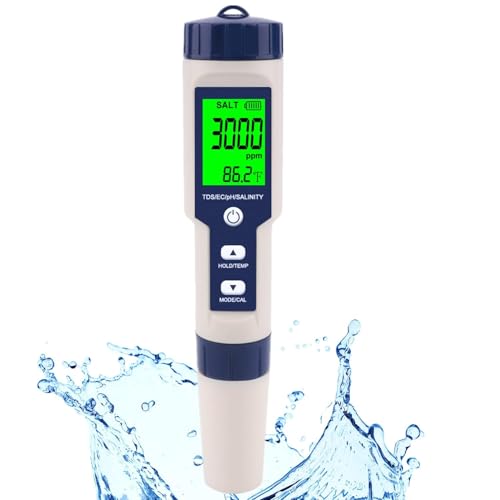
Pool Salt Tester & PH Meter, Hofun Digital Salinity Meter and PH Tester for Aquarium and Pool Saltwater Water, 5 in 1 Salinity PH Temp EC and TDS Meter, Aquarium Swimming Pool Hot Tub, High Accuracy
Wide Usage PH Meter : Hofun ph meter is an essential tool to improve your life quality. This…
As an affiliate, we earn on qualifying purchases.
As an affiliate, we earn on qualifying purchases.
Conclusion
As you embrace the shift to a salt water pool, remember it’s like tending a well-kept garden—less about constant effort and more about mindful nurturing. With fewer chemicals to juggle, your routine becomes simpler, freeing you to enjoy the serenity of clear, invigorating water. Just as a gentle stream flows effortlessly, your maintenance can become a smooth, calming part of your routine, transforming your pool into a tranquil oasis that beckons you to unwind and relax.

Hayward Automatic Chlorine Feeder, 9lbs, in-Line (incl Mounting Base) (Open Line) CL200EF
X-Ring seal provides long life and easy cover removal
As an affiliate, we earn on qualifying purchases.
As an affiliate, we earn on qualifying purchases.
pool filter cleaning tools
As an affiliate, we earn on qualifying purchases.
As an affiliate, we earn on qualifying purchases.