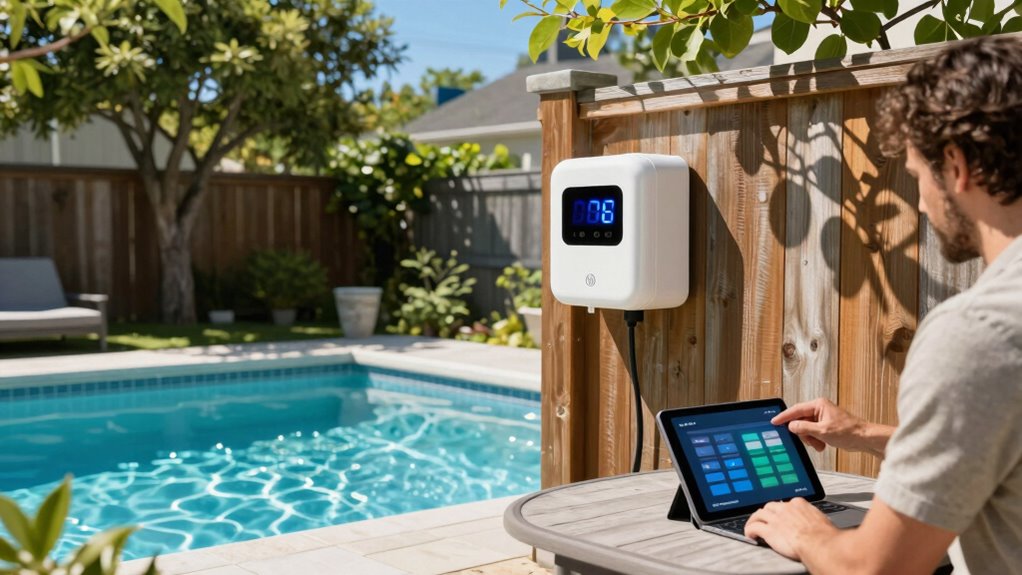

To reduce your pool’s energy use through smarter scheduling, run your equipment during off-peak hours like early morning or late evening, and avoid operating right after chemical treatments. Adjust filtration and pump cycles to 8-12 hours daily, and consider lowering pump speeds if possible. Automate these schedules with timers and smart systems to maximize efficiency. Keep monitoring and fine-tuning your setup to maintain savings—there’s much more you can do to optimize your pool’s operation.
Key Takeaways
- Schedule pool pumps during off-peak hours, like early mornings or late evenings, to lower energy costs.
- Limit filtration to 8-12 hours daily and reduce pump speed for energy-efficient operation.
- Automate equipment to run during cooler times and avoid immediate operation after chemical treatments.
- Use smart timers and automation systems to optimize circulation and chemical balancing efficiently.
- Regularly monitor energy use and adjust schedules seasonally for sustained long-term savings.

BN-LINK Outdoor 24-Hour Mechanical Timer Outlet, 2 Grounded Outlets
- Mechanical 48-Pin Control: Sets 30-minute intervals without buttons
- Waterproof Outdoor Design: Rainproof casing for outdoor use
- Dual Grounded Outlets: Controls two devices simultaneously
As an affiliate, we earn on qualifying purchases.
As an affiliate, we earn on qualifying purchases.
How Smarter Scheduling Can Cut Pool Energy Costs
Have you considered that adjusting your pool’s schedule can markedly lower energy bills? Proper timing reduces the need for constant pool maintenance and minimizes energy consumption. By running your pool pump during off-peak hours, you leverage energy conservation and avoid peak rate charges. Setting your equipment to operate only when necessary ensures your pool stays clean without wasting power. Using timers or programmable controllers makes it easy to automate these adjustments, and understanding pool terminology can help you optimize your setup more effectively. This smarter scheduling not only cuts costs but also extends the lifespan of your equipment by preventing unnecessary wear. Incorporating calibration techniques can further optimize your pool’s performance and savings. Additionally, considering natural filtration systems can complement your scheduling efforts by reducing reliance on energy-intensive equipment, leading to even greater savings. Small changes in your pool’s schedule can lead to significant savings over time, especially when you consider template compatibility to ensure your scheduling devices work seamlessly with your existing system. You’ll save money and reduce your environmental impact while keeping your pool in top shape.
Identify the Best Times to Run Your Pool Equipment
Choosing the right times to run your pool equipment can maximize energy savings while keeping your pool clean. Typically, running your pump during off-peak hours, like early morning or late evening, reduces energy costs and lessens strain on your system. To optimize pool maintenance, avoid running equipment when water chemistry is most vulnerable—such as right after adding chemicals—since it can affect filtration efficiency. Monitoring water chemistry ensures your pool stays balanced and minimizes the need for excessive filtration cycles. By scheduling equipment operation during cooler parts of the day, you also prevent unnecessary heat loss and evaporation. This strategic timing helps you save energy, maintain water quality, and keep your pool in top condition without frittering away resources. Additionally, understanding energy-efficient scheduling can lead to even greater savings over time, especially when combined with other cost-saving tips for pool upkeep. Implementing smart scheduling based on your local climate and usage patterns can further enhance these benefits. Being aware of system efficiency can help you identify the most effective times for operation, ensuring optimal performance and energy conservation. A good understanding of peak energy hours can guide you in adjusting your schedule for maximum savings.
Adjust Filtration and Pump Cycles for Maximum Efficiency
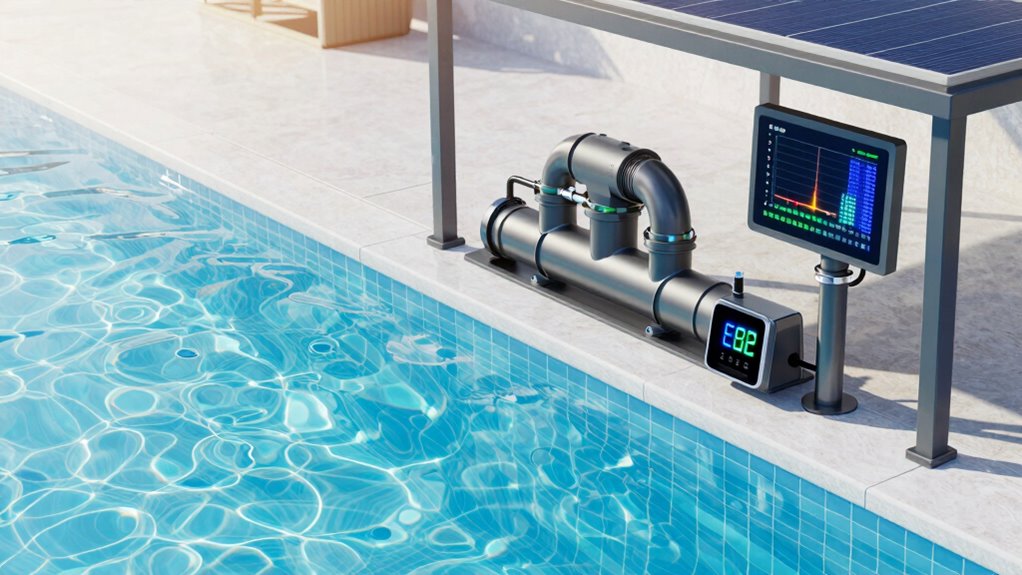
To maximize energy efficiency, you should carefully adjust your pool’s filtration and pump cycles based on your pool’s specific needs. Proper water circulation is key to maintaining a consistent chemical balance, which prevents algae growth and extends equipment life. Run the pump during off-peak hours when energy costs are lower, and avoid overfiltration—most pools only need 8 to 12 hours of circulation daily. Consider reducing the pump speed if your system allows, as slower cycles still promote water movement without wasting energy. Regularly check and adjust your filtration schedule based on weather, usage, and water clarity. Understanding pool hydraulics can help you optimize flow and filtration for better efficiency. Incorporating filter sizing and flow rate adjustments can further enhance system performance and reduce unnecessary energy consumption. Implementing smart automation features, like energy-efficient timers, can further enhance your scheduling precision. By fine-tuning these cycles, you’ll optimize chemical balance, improve water quality, and save on energy costs.
Use Automation and Timers to Optimize Pool Operation
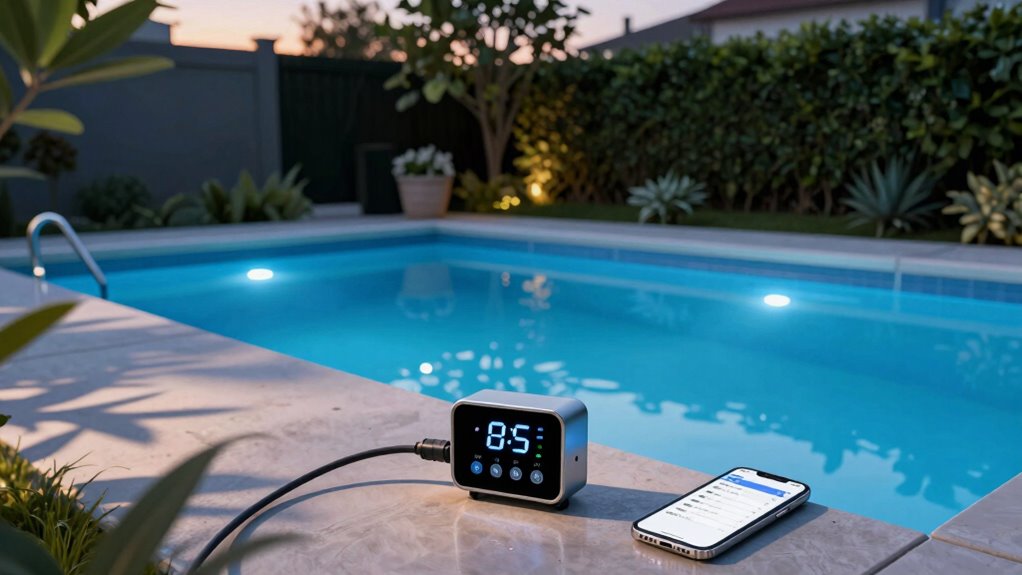
Using automation and timers can considerably reduce your pool’s energy consumption by guaranteeing equipment runs only when needed. By scheduling pump operation during off-peak hours or when the pool is in use, you prevent unnecessary energy waste. Automated systems can also help maintain proper chemical balancing by adjusting circulation cycles, which improves water quality and reduces chemical use. Incorporating timers ensures safety protocols are followed, such as shutting down equipment when the pool isn’t in use or during maintenance. This reduces risks and prolongs equipment life. With smart automation, you stay in control, optimizing energy efficiency without sacrificing safety or water quality. Properly programmed timers and automation systems are key tools for lowering energy costs while keeping your pool safe and well-maintained. Additionally, integrating smart pool automation allows for more precise control and further energy savings through customizable settings. Implementing safe electrical practices in your automation setup is essential to prevent hazards and ensure reliable operation. Regular maintenance and monitoring of your automation system can also help identify potential issues early, maintaining optimal performance and safety. Incorporating power quality monitoring can further enhance system reliability and efficiency, especially when paired with battery inverter generators that ensure consistent power supply during outages or peak demand times.
Monitor and Fine-Tune Your Schedule for Long-Term Savings
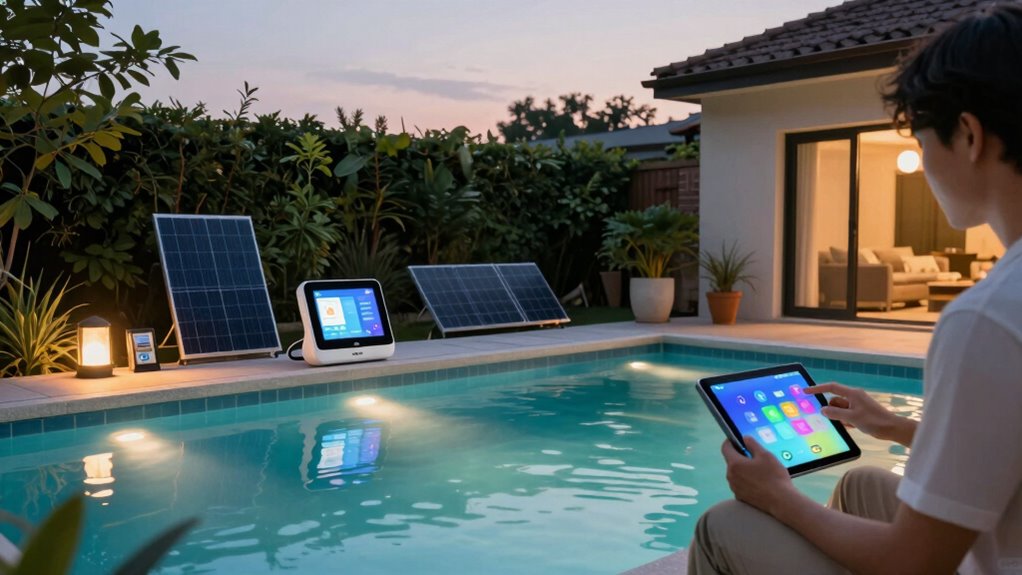
Regularly monitoring your pool’s operation and energy usage allows you to identify inefficiencies and adapt your schedule accordingly. Track your energy consumption and pool performance to spot patterns or issues. This helps you implement energy efficient upgrades, such as better insulation or variable-speed pumps, that reduce long-term costs. Additionally, scheduling seasonal maintenance ensures your equipment runs efficiently year-round. To optimize your efforts, consider these steps:
- Review your energy bills and pool operation logs monthly.
- Adjust your schedule based on seasonal changes, reducing pump hours during off-peak times.
- Invest in energy efficient upgrades and perform seasonal maintenance to keep equipment in top shape.
- Use weatherproof tool storage to protect your equipment from environmental damage, ensuring it operates reliably over time.
Fine-tuning your schedule helps you save energy, extend equipment lifespan, and maximize your pool’s efficiency over time.
Frequently Asked Questions
Can Seasonal Changes Affect Optimal Pool Scheduling?
Yes, seasonal changes can impact your pool scheduling. In cooler months, using a pool cover helps retain heat and reduces energy needed for heating. During sunnier seasons, solar heating becomes more effective, so scheduling your heating times to maximize sun exposure saves energy. Adjusting these schedules based on seasonal variations helps you optimize energy use, keeping your pool comfortable while lowering your energy bills.
How Does Weather Impact Pool Energy Use?
Think of your pool as a garden that thrives with the right weather. Sunny days boost solar heating, keeping your pool warmer naturally, so you can cut back on energy. Wind influence can cool the water, requiring more energy to maintain temperature. When the weather shifts—more clouds or wind—you should adjust your pool’s schedule, perhaps running the heater less or more, to save energy and keep your pool inviting.
Are There Specific Energy-Efficient Pool Equipment Brands?
Yes, there are specific energy-efficient pool equipment brands. You should look for brands that offer energy-saving pumps, which reduce power consumption, and eco-friendly heaters that operate efficiently with less energy. By choosing these brands, you’ll lower your energy bills and reduce environmental impact. Always check for certifications like ENERGY STAR, ensuring the equipment meets high efficiency standards, making your pool setup more sustainable and cost-effective over time.
What Safety Considerations Should Be Integrated Into Scheduling?
Think of your pool like a trusted guardian, prioritizing safety. When scheduling, always incorporate pool safety and scheduling precautions—avoid running equipment during peak hours or late at night, and guarantee alarms and covers are in place. Regularly check safety devices and keep children and pets away during operation. Prioritizing pool safety in your schedule not only protects loved ones but also promotes responsible energy use, creating a safer, smarter pool environment.
How Long Should I Run My Pool Filter Daily?
You should run your pool filter for about 8-12 hours daily, depending on usage and climate. Using a pool cover helps retain heat and reduces debris, meaning you may need less filtration time. If you have solar heating, running the filter during sunny hours maximizes efficiency, maintaining water quality while saving energy. Adjust your schedule based on water clarity and weather conditions for best performance and energy savings.
Conclusion
Imagine your pool gleaming under the sun, shimmering with efficiency. By mastering smarter scheduling, you cut energy costs while keeping your pool pristine. It’s like choreographing a dance—timing your equipment perfectly, conserving power, and enjoying a sparkling oasis without waste. With a little planning, you turn idle hours into savings and your backyard into a haven of both beauty and efficiency. Immerse yourself in smarter choices, and watch your energy bills dip while your pool stays flawless.