
ORP and pH controllers automatically monitor water quality by measuring oxidation-reduction potential and acidity or alkalinity levels. They then automatically adjust chemical dosing—adding disinfectants or pH adjusters—to keep water safe and stable. This process guarantees ideal sanitation, prevents corrosion, and reduces manual effort. By constantly adjusting based on real-time data, these controllers help maintain effective and efficient water management systems. Keep exploring to discover how they can benefit your specific application.
Key Takeaways
- ORP controllers measure water’s oxidation-reduction potential to assess sanitation levels and trigger chemical dosing accordingly.
- pH controllers monitor acidity or alkalinity, automatically adding acids or alkalis to maintain desired pH levels.
- Both systems analyze real-time water data to perform precise chemical adjustments, ensuring water quality stability.
- They reduce manual intervention, optimize chemical usage, and prevent issues like corrosion or biological growth.
- These controllers enhance system reliability, extend equipment lifespan, and improve water safety through automated regulation.

ORP (Oxidation-Reduction Potential) and pH controllers are vital tools for maintaining ideal water quality in various aquatic systems. These devices help you monitor and adjust key parameters that influence the health of your water environment, whether you’re managing a swimming pool, aquarium, or industrial water process. Proper control of water quality ensures system efficiency, reduces chemical usage, and prevents problems like corrosion, algae growth, or bacterial contamination.
When you use ORP controllers, you’re fundamentally measuring the water’s ability to oxidize or reduce substances within it. This measurement indicates how clean or sanitized the water is, especially in systems that rely on oxidation for disinfection, such as chlorinated pools or wastewater treatment plants. By continuously monitoring ORP levels, the controller can automatically trigger chemical dosing—usually chlorine or other oxidizers—to maintain a consistent oxidation state. This automation helps you avoid under- or over-dosing, which can lead to ineffective disinfection or unnecessary chemical consumption.
Similarly, pH controllers focus on maintaining the acidity or alkalinity of your water at ideal levels. pH levels influence chemical reactions, water stability, and the effectiveness of disinfectants. If pH drifts outside the desired range, it can cause scaling, corrosion, or biological growth. By implementing a pH controller, you set a target pH value, and the system automatically adds acids or alkalis as needed. This constant adjustment ensures your water remains balanced, which is crucial for overall water quality and system longevity.
Both ORP and pH controllers rely on feedback systems that analyze real-time data and perform precise chemical dosing. This automation reduces manual intervention, saves you time, and increases the accuracy of chemical application. You get consistent water conditions, avoiding fluctuations that could harm your system or compromise water safety. Using these controllers also helps refine chemical consumption; you use only what’s necessary, lowering operational costs and minimizing environmental impact.
In practice, integrating ORP and pH controllers into your water management routine means you’ll have a more stable and reliable system. You’ll respond quickly to changes, prevent issues before they escalate, and maintain water quality at the highest standards. Whether you’re running a pool, a large-scale industrial process, or an aquatic habitat, these controllers provide precise control over chemical dosing, ensuring your water remains safe, clear, and healthy. Proper use of ORP and pH controllers not only improves water quality but also enhances overall system efficiency and reduces maintenance needs, making your water management more effective and sustainable. Additionally, understanding the importance of headphones connections can ensure seamless audio experiences across various devices, which is essential for troubleshooting or optimizing your setup.

DANOPLUS Smart pH ORP Controller with Remote App Monitoring & Dosing in Water, 3 in 1 pH/ORP/Temp Meter Replaceable Probes for Hydroponics, Aquariums & Pool
【SMART WiFi CONNECTION】This water quality Controller is able to connect to your mobile phone via Tuya app in…
As an affiliate, we earn on qualifying purchases.
As an affiliate, we earn on qualifying purchases.
Frequently Asked Questions
Can ORP and Ph Controllers Be Used Together?
Yes, you can use ORP and pH controllers together. Just make certain you follow proper calibration procedures for both sensors regularly to maintain accuracy. Keep in mind that sensor lifespan varies, so monitor them closely and replace as needed. Using both controllers simultaneously helps optimize water quality, but consistent calibration and maintenance are essential to prevent errors and extend sensor life, ensuring reliable performance of your system.
What Maintenance Do ORP and Ph Controllers Require?
You need to regularly calibrate your ORP and pH controllers, typically every 1 to 3 months, to guarantee accurate readings. Keep an eye on sensor performance and replace sensors when you notice sluggish response or inconsistent results. Proper maintenance also includes cleaning sensors with appropriate solutions and checking connections. By staying on top of calibration frequency and sensor replacement, you’ll keep your controllers functioning smoothly and reliably.
Are ORP and Ph Controllers Suitable for All Water Types?
You should consider water quality and controller compatibility before using ORP and pH controllers. They’re suitable for many water types, but certain conditions like high levels of contaminants or extreme pH values might affect their performance. Always check if the controller is compatible with your specific water quality. If you have concerns, consult the manufacturer or a water treatment specialist to ensure ideal operation and accurate readings.
How Accurate Are ORP and Ph Controllers Over Time?
You’ll find that ORP and pH controllers maintain accuracy quite well over time if you perform regular calibration, ideally weekly or as recommended. Keep in mind that sensor lifespan varies, usually lasting 1-2 years with proper care. By calibrating frequently and replacing sensors when they become less responsive, you ensure your controllers provide reliable readings, helping you maintain peak water quality consistently.
What Are Common Troubleshooting Steps for These Controllers?
You should start troubleshooting your controllers by checking sensor calibration; inaccurate readings often stem from uncalibrated sensors. Next, inspect for electrical issues like loose wiring or faulty connections, which can disrupt operation. Make certain the sensors are clean and free of debris, and replace them if they’re damaged. Regularly verify calibration and tighten electrical connections to maintain peak controller performance and prevent false readings or malfunctions.
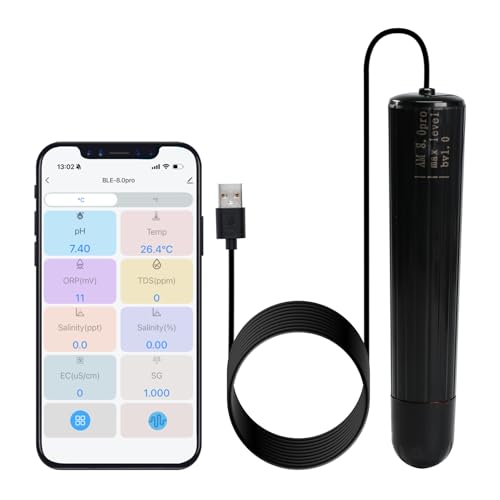
Smart Water Quality Monitor, 7-in-1 pH | Temperature | TDS | EC | Salinity | S.G & ORP WiFi Water Quality Tester Probe, EC pH Monitor for Hydroponics, Aquarium, 24/7 Real-Time Monitoring
7-in-1 Real-Time Water Parameter MonitoringTrack 7 key metrics simultaneously—pH, Temperature, TDS, EC, Salinity, Specific Gravity (S.G), and ORP—to…
As an affiliate, we earn on qualifying purchases.
As an affiliate, we earn on qualifying purchases.
Conclusion
Understanding ORP and pH controllers is like having a finely tuned orchestra at your fingertips. They keep your water chemistry perfectly balanced, ensuring smooth operation and healthy conditions. When you grasp how they work together, you’ll see they’re the steady heartbeat of your system. With these controllers, you’re not just managing water; you’re guiding a symphony of chemical harmony, making your system perform flawlessly like a well-conducted orchestra.

Smart pH ORP Controller Aquarium pH Monitor Wi-Fi for pH/ORP/Temp Measurements in Water w/Calibration, 3 in 1 Nutrient System Dual-Plug Fit with CO2 Bottle & O3 Generator for Hydroponics Plants
Real-time Wi-Fi Monitor : LANDTEK pH and ORP Contorller can measure pH, ORP (oxidation-reduction potential) and temperature with…
As an affiliate, we earn on qualifying purchases.
As an affiliate, we earn on qualifying purchases.

Aqara Water Leak Sensor 3 Pack, Zigbee Wireless Water Leak Detector for Alarm System and Smart Home Automation, Requires AQARA HUB, App Notifications, for Kitchen, Bathroom, Basement, Works with IFTTT
[Notes] An Aqara Hub is required and sold separately. Not compatible with hubs from other brands. Requires a…
As an affiliate, we earn on qualifying purchases.
As an affiliate, we earn on qualifying purchases.