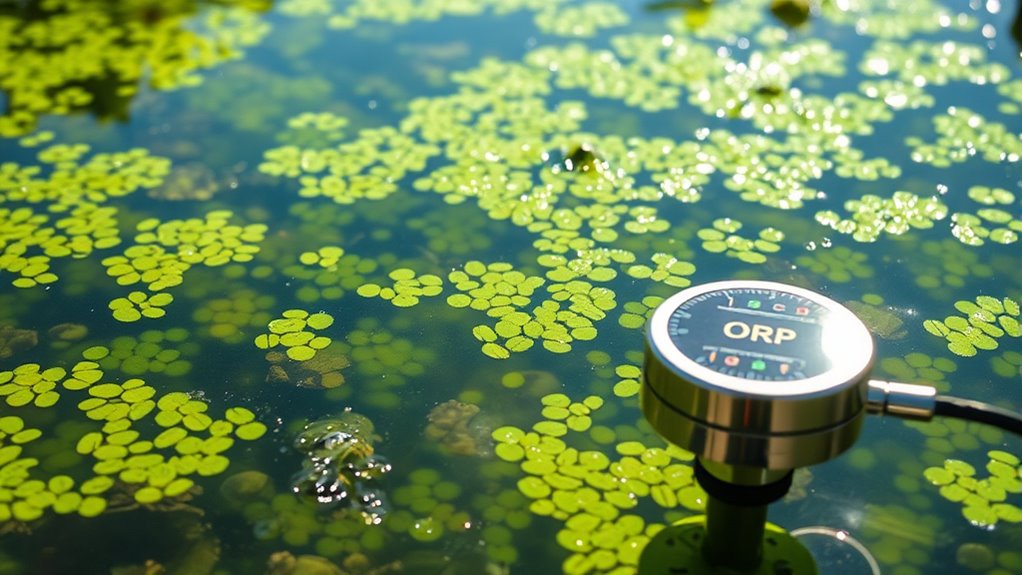
Monitoring water quality with turbidity and ORP allows you to catch algae blooms early before they become visible or harmful. When turbidity levels rise, it signals that algae cells are multiplying or dying, releasing organic matter. A drop in ORP indicates increased biological activity and shifting chemistry. Combining these metrics gives you a clear picture of early algae growth, helping you take proactive steps. Keep exploring to discover how these tools can protect your water resources effectively.
Key Takeaways
- Combining turbidity and ORP measurements offers a comprehensive early warning system for algae blooms.
- Rising turbidity indicates initial algae cell growth, while decreasing ORP reflects increased biological activity.
- Continuous sensor monitoring enables real-time detection of water quality changes related to algae proliferation.
- Early detection through these metrics allows timely interventions to prevent harmful algal blooms and toxin production.
- Integrating AI enhances data analysis, improving accuracy and speed of algae bloom prediction and response.
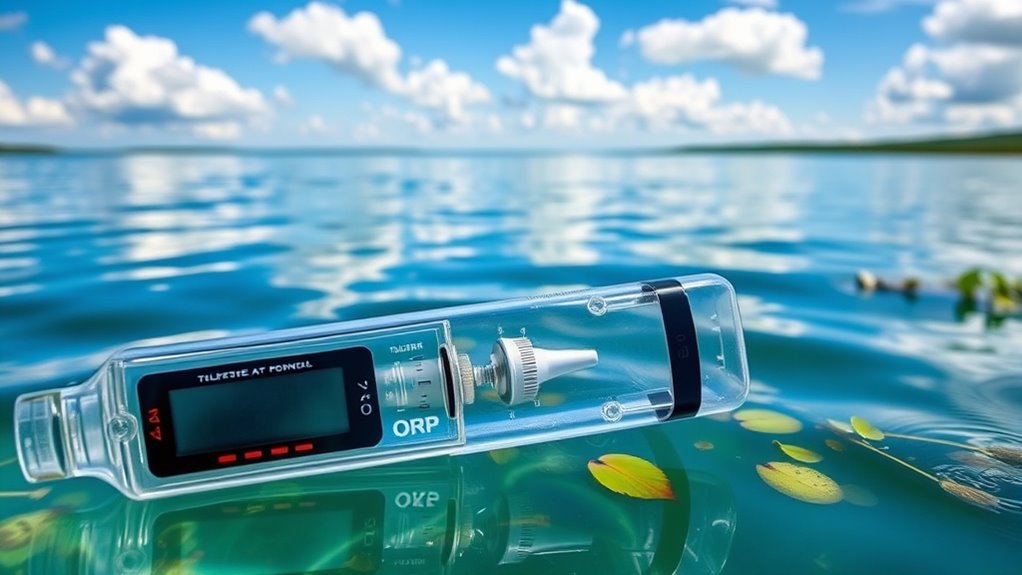
Early algae detection is essential for preventing harmful blooms that can damage ecosystems, threaten public health, and impact local economies. When algae growth accelerates in water bodies, it often signals deteriorating water quality, which can lead to serious environmental and health issues. Recognizing the early signs of algae proliferation allows you to take proactive measures before the situation worsens. By monitoring key indicators like turbidity and oxidation-reduction potential (ORP), you gain real-time insights into water conditions, making it easier to identify the initial stages of algae growth.
Early algae detection helps prevent harmful blooms and protects water quality through real-time monitoring.
Turbidity measures how cloudy the water is, which often increases as algae cells multiply and die, releasing organic matter into the water. Elevated turbidity levels can serve as an early warning sign that algae are starting to bloom, especially when coupled with changes in other water quality parameters. High turbidity doesn’t just obscure visibility; it also affects aquatic life by reducing light penetration, which hampers photosynthesis. This shifts the balance of the ecosystem, potentially leading to more severe algae blooms and further water quality decline. By regularly checking turbidity levels, you can catch these changes early enough to intervene before algae growth reaches harmful levels.
ORP, or oxidation-reduction potential, is another indispensable metric for early algae detection. It measures the water’s ability to either gain or lose electrons during chemical reactions. When algae begin to grow rapidly, they often alter the redox conditions within the water. A sudden drop in ORP can indicate increasing biological activity associated with algae blooms, as algae and bacteria interact with the water’s chemistry. Monitoring ORP provides a dynamic view of the water’s health and can alert you to shifts in water quality that precede visible signs of algae proliferation. Together with turbidity, ORP gives a holistic picture of the early changes taking place, enabling timely responses.
Implementing sensors that continuously monitor turbidity and ORP allows you to detect subtle shifts in water quality before algae blooms become problematic. This proactive approach helps prevent the formation of harmful algal blooms, which can produce toxins harmful to humans, pets, and wildlife. Early detection also opens the door for targeted interventions, such as adjusting nutrient levels or aerating water, to hinder algae growth. Fundamentally, by paying close attention to these water quality indicators, you empower yourself to maintain healthier water bodies and protect the ecosystems and communities that depend on them. Additionally, integrating AI technology can enhance the accuracy and speed of detecting these early warning signs, facilitating even more effective prevention strategies.

Gravity: Analog Turbidity Sensor for Arduino / ESP32 / STM32 / Raspberry Pi (ADC Required) | Water Quality Monitor | <500ms Response Time & 0-4000NTU Range
Easy to Use: This Turbidity Sensor is compatible with Arduino, ESP32, STM32, and Raspberry Pi (ADC Required).
As an affiliate, we earn on qualifying purchases.
As an affiliate, we earn on qualifying purchases.
Frequently Asked Questions
How Do Turbidity and ORP Levels Correlate With Specific Algae Species?
You’ll find that certain algae species cause noticeable changes in turbidity and ORP levels, making sensors useful for early detection. For example, bloom-forming algae often increase turbidity, while some species alter ORP values due to metabolic activity. To guarantee accurate readings, you need proper sensor calibration regularly. By monitoring these levels, you can identify specific algae species early and take action before blooms become problematic.
Can These Sensors Be Used in Saltwater Environments Effectively?
Yes, these sensors can be used effectively in saltwater environments, but you need to perform proper sensor calibration regularly. Saltwater’s high salinity and environmental factors like temperature and pollution can affect readings. By calibrating sensors specifically for saltwater conditions and accounting for environmental influences, you guarantee accurate algae detection. Regular maintenance and calibration help you get reliable data, making these sensors a valuable tool in saltwater monitoring.
What Is the Maintenance Required for Continuous Algae Monitoring?
You need to perform regular sensor calibration to guarantee accurate algae monitoring. Schedule routine inspections to check for fouling, drift, or damage that could affect readings. Clean your sensors as needed, especially if you notice inconsistent data, and replace components when necessary. Keeping up with calibration and inspections helps maintain reliable, continuous algae detection, saving you time and preventing false alarms in your monitoring system.
How Quickly Can Early Detection Prevent Algae Bloom Outbreaks?
Early detection can markedly prevent algae bloom outbreaks by alerting you within hours of rapid algae growth. Monitoring water quality through turbidity and ORP allows you to respond quickly, implementing control measures before blooms fully develop. The faster you act on these early signals, the more effectively you can manage algae growth, protect your water resources, and maintain healthy aquatic ecosystems. Prompt detection is key to preventing extensive water quality issues.
Are There Any False Positives Associated With Turbidity and ORP Measurements?
Did you know false positives can occur in over 20% of turbidity and ORP measurements? You should regularly calibrate your sensors to reduce errors. Interference factors like sediment, organic matter, or chemical contaminants can cause inaccurate readings, leading to false alarms. Proper sensor calibration and accounting for interference factors help *guarantee* your algae detection system is reliable, minimizing unnecessary alerts and improving early warning accuracy.

Hydrogen Water Tester, ORP Meter, TDS pH Meter for Drinking Water, YINMIK 6 in 1 pH TDS H2 EC ORP Temp Water Quality Meter, Digital pH PPM EC Monitor
[Digital pH TDS Tester for Drinking Water]: TDS Meter and pH tester for home drinking water, digital pH…
As an affiliate, we earn on qualifying purchases.
As an affiliate, we earn on qualifying purchases.
Conclusion
Think of your water body as a delicate garden, where early algae detection acts like a vigilant gardener. By monitoring turbidity and ORP levels, you catch trouble before it takes over. Acting promptly is like pulling weeds early—preventing a wild overgrowth. Stay attentive to these signals, and you’ll keep your aquatic garden healthy and vibrant. Remember, the smallest signs today can prevent a jungle tomorrow. Stay alert, and safeguard your water’s beauty.

2025 All-New 4 in 1 Tds Meter Digital Water Tester – Accurate and Reliable TDS EC & Temp(°C,°F) Meter – 0-9999ppm – Professional Testing for Drinking Water, RO/DI System, Aquariums etc
Reliable Brand: MEXYBE was founded with a simple yet important mission: to provide everyone with a accurate and…
As an affiliate, we earn on qualifying purchases.
As an affiliate, we earn on qualifying purchases.

API FRESHWATER MASTER TEST KIT 800-Test Freshwater Aquarium Water Master Test Kit, White, Single, Multi-colored
Contains one (1) API FRESHWATER MASTER TEST KIT 800-Test Freshwater Aquarium Water Master Test Kit, including 7 bottles…
As an affiliate, we earn on qualifying purchases.
As an affiliate, we earn on qualifying purchases.