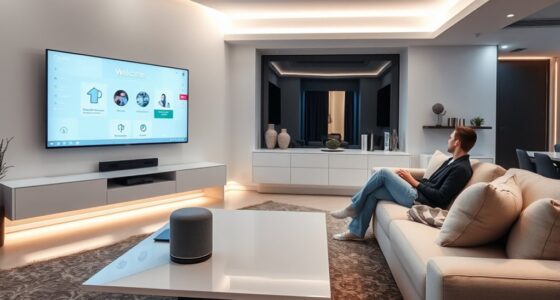
To start your smart home journey as a beginner, focus on basic systems like voice control and security. These offer immediate convenience and peace of mind, and are easy to set up with popular platforms like Alexa or Google Assistant. Begin with simple devices such as smart locks or cameras, then expand gradually to lighting and thermostats. Keep exploring to discover how small steps can build a smarter, safer home tailored to your needs.
Key Takeaways
- Begin with core devices like smart speakers for voice control to simplify automation.
- Focus on installing basic security systems such as cameras and smart locks for safety.
- Choose compatible platforms (Alexa, Google Assistant, Siri) to ensure seamless device integration.
- Start small by automating essential functions like lighting or thermostat control.
- Gradually expand your setup with additional devices as you gain confidence and experience.
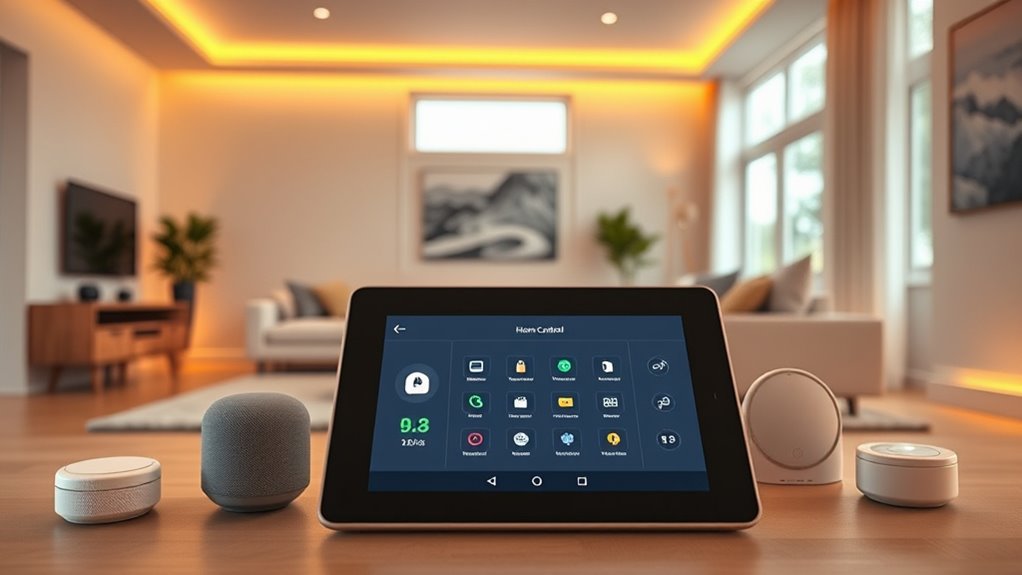
Have you ever wondered how smart technology can transform your living space? If you’re just starting out, the idea of turning your home into a connected, intelligent environment might seem overwhelming. But the good news is, you don’t have to do everything at once. A simple, effective way to dip your toes into smart home living is by focusing on core elements like voice control and security systems. These features not only boost convenience but also enhance your home’s safety.
Voice control is a game-changer. It allows you to operate various devices using just your voice, making everyday tasks more seamless. Imagine asking your smart speaker to turn on the lights, adjust the thermostat, or play your favorite music without lifting a finger. Setting up voice control is straightforward and compatible with many popular platforms like Amazon Alexa, Google Assistant, or Apple’s Siri. Once connected, you can command your smart devices with simple voice commands, saving you time and effort. This hands-free approach is particularly useful when your hands are full or you’re multitasking around the house. Plus, voice control can be expanded over time, letting you add more devices as you get comfortable with your smart home setup. Incorporating smart technology gradually can help you feel more confident and in control of your connected home environment.
Security systems are another essential starting point. They’re the backbone of a smart home, giving you peace of mind whether you’re home or away. Modern security systems go beyond traditional alarms; they often include cameras, motion sensors, door and window sensors, and smart locks. When integrated properly, these components provide real-time alerts on your smartphone if anything unusual happens. You can view live feeds from cameras, receive notifications about suspicious activity, and even control locks remotely. Installing a security system is relatively simple, especially with DIY options that come with user-friendly apps. Many systems can be integrated with voice assistants, so you can check your security status or lock doors using voice commands. This combination of voice control and security creates a smarter, safer home environment.
Starting with these two elements—voice control and security systems—sets a solid foundation for your smart home journey. They’re accessible for beginners, affordable, and provide immediate benefits. Once you’re comfortable with these, you can expand by adding smart lighting, thermostats, or entertainment devices. Remember, the goal is to create a space that’s more convenient, secure, and tailored to your lifestyle. By taking small, manageable steps, you’ll discover how smart technology can truly enhance your everyday living experience.

Amazon Echo Dot Max (newest model), Alexa speaker with room-filling sound and nearly 3x bass, Great for living rooms and medium-sized spaces, Designed for Alexa+, Graphite
Meet Echo Dot Max: A brand new device in our lineup that takes Echo Dot audio to the…
As an affiliate, we earn on qualifying purchases.
As an affiliate, we earn on qualifying purchases.
Frequently Asked Questions
How Do I Ensure My Smart Devices Are Secure From Hacking?
To keep your smart devices secure from hacking, you should focus on strong encryption protocols and access controls. Always update your device firmware to patch vulnerabilities, and use unique, complex passwords for each device. Enable two-factor authentication when available, and limit device access to trusted networks. Regularly review your device settings and connected accounts to verify only authorized users have control, reducing the risk of unauthorized access.
Can I Control My Smart Home Remotely Without Internet?
Imagine controlling your smart home like a remote-controlled car—you can drive it without Wi-Fi if it’s designed for offline control. While most smart devices rely on internet for remote access, some hubs and systems offer offline control through local network. This lets you manage your devices remotely or on-site without internet, giving you peace of mind if the internet drops. Just confirm your devices support offline or local network access beforehand.
What Is the Cost Range for a Basic Smart Home Setup?
When you’re figuring out the cost range for a basic smart home setup, consider your budget planning and device compatibility. A simple starter kit can cost anywhere from $100 to $500, depending on the devices you choose, like smart bulbs, plugs, or thermostats. Keep in mind that adding more devices or upgrading features can increase the overall cost, so plan accordingly to guarantee everything works seamlessly together.
Are Smart Home Devices Compatible Across Different Brands?
You might wonder if smart home devices from different brands can work together. Generally, brand compatibility varies, but many devices now support common standards like Zigbee, Z-Wave, or Wi-Fi, promoting device interoperability. To guarantee smooth integration, check product specifications and choose devices that support the same protocols. This way, you can create a cohesive smart home system without worrying about compatibility issues across different brands.
How Do I Troubleshoot Common Connectivity Issues?
Imagine your smart thermostat won’t connect. First, check for wireless interference from other devices. Move your router or smart device closer to improve signal strength. If issues persist, perform a device reset to refresh its connection. Sometimes, simply restarting your router can resolve connectivity problems. By troubleshooting with these steps, you guarantee your smart home devices stay responsive and reliable, making your smart home experience smooth and enjoyable.

TP-Link Tapo 1080P Indoor Security Camera for Baby Monitor, Dog Camera w/Motion Detection, 2-Way Audio Siren, Night Vision, Cloud & SD Card Storage, Works w/Alexa & Google Home (Tapo C100)
【Motion Detection & Instant Notification】Get instant push notifications when motion, person or baby crying is detected, there is…
As an affiliate, we earn on qualifying purchases.
As an affiliate, we earn on qualifying purchases.
Conclusion
Now that you’re equipped with the basics, diving into smart home tech feels less like rocket science and more like assembling a spaceship. Start small, prioritize your needs, and don’t be afraid to experiment—think of it as your own modern-day alchemy. Remember, even the most seasoned techie started somewhere, just like a pioneer with a trusty iPhone in hand. Embrace the journey and turn your home into a clever, connected haven you’ll love.

Evanshow Smart Door Lock with Knob, Keyless Entry Door Locks with Handle, Fingerprint Door Knob for Bedroom/Front Door/Apartment,Generate Passcode Remotely
Smart Door Lock: Enjoy keyless entry door lock convenience via tuya app; fingerprint, keypad passcode,nfc card mechanical key;…
As an affiliate, we earn on qualifying purchases.
As an affiliate, we earn on qualifying purchases.

Smart Home Starter Kit | Includes Echo Hub, Amazon Smart Plug and 4 Amazon Basics Smart Bulbs, Designed for Alexa+
Getting started with smart home has never been easier – An all-in-one kit with a quick guided setup…
As an affiliate, we earn on qualifying purchases.
As an affiliate, we earn on qualifying purchases.