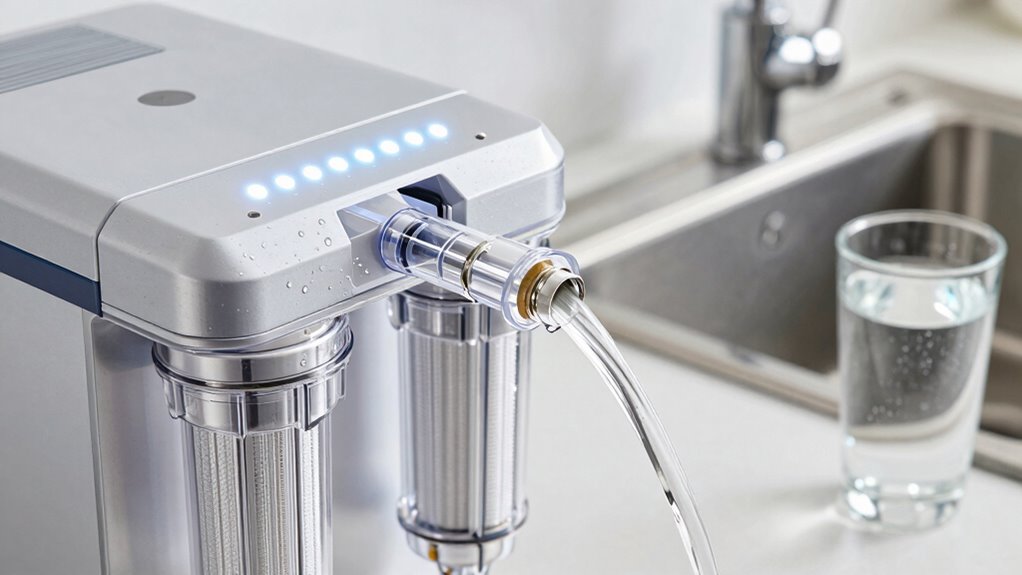

Reverse osmosis systems support cleaner drinking water by using a semi-permeable membrane to effectively remove contaminants like heavy metals, bacteria, viruses, pesticides, and dissolved salts. They employ multiple filtration stages, including pre-filters, the membrane itself, and post-filters, to guarantee impurities are minimized and the water tastes better. Modern units are efficient, reduce water waste, and need minimal maintenance, making them a reliable choice. To discover how these advanced systems can benefit your health, keep exploring the details.

Get garden gear delivered free with Prime
- Fast, free delivery on millions of items
- Prime Video, Amazon Music and more included
- Member-only deals all year
Key Takeaways
- Uses a semi-permeable membrane to effectively remove a wide range of contaminants, ensuring cleaner water.
- Incorporates multi-stage filtration to eliminate sediment, chemicals, and dissolved salts for enhanced purity.
- Effectively removes harmful substances like bacteria, viruses, heavy metals, and pesticides from drinking water.
- Improves water taste and odor through post-filters, making water more appealing and safe to drink.
- Reduces reliance on bottled water, promoting healthier hydration and less plastic waste.
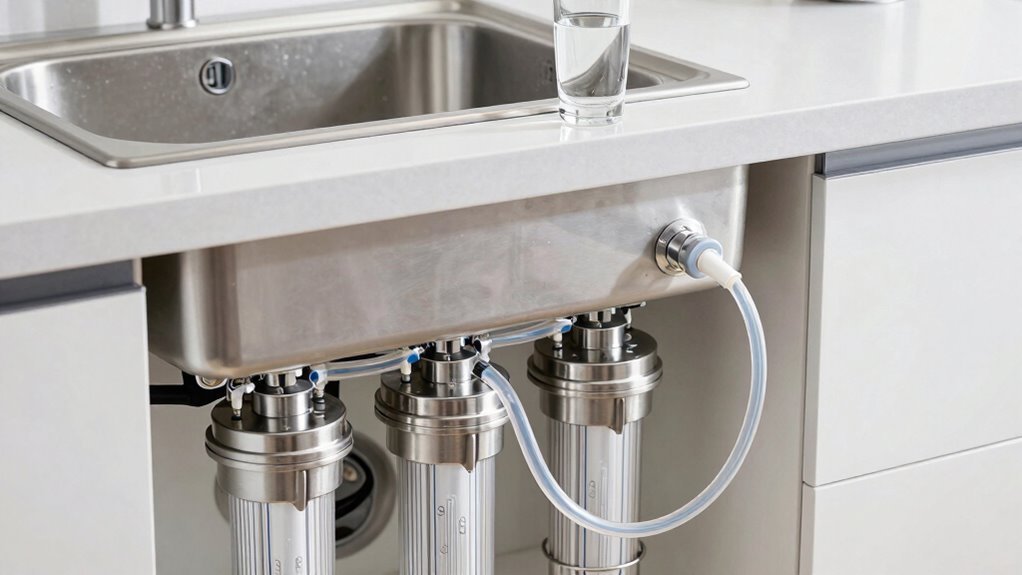
Have you ever wondered how to get truly clean and safe drinking water at home? If so, you’re not alone. Many people are turning to reverse osmosis systems because they offer an effective way to enhance water purification. These systems use advanced filtration technology to remove contaminants, ensuring that your drinking water is not only clear but safe for your health.
At the heart of a reverse osmosis system is its ability to push water through a semi-permeable membrane. This process forces water molecules through tiny pores, trapping impurities such as heavy metals, bacteria, viruses, pesticides, and dissolved salts. Unlike basic filtration methods, reverse osmosis provides a higher level of water purification because it targets a broad range of pollutants. This makes it especially valuable if your tap water contains traces of chemicals or contaminants that standard filters can’t eliminate.
Filtration technology in reverse osmosis systems is highly precise. The multi-stage process usually includes pre-filters that remove sediment and chlorine, a membrane that filters out dissolved solids, and post-filters that improve taste and odor. As water passes through each stage, pollutants are progressively removed, resulting in pure, fresh-tasting water. This layered approach ensures that even the tiniest impurities are captured, giving you peace of mind with every glass. Additionally, advancements in filtration technology have further increased the efficiency and effectiveness of these systems. Recognizing the importance of water purification processes can help consumers understand the value of investing in such systems.
Using a reverse osmosis system is straightforward, and it integrates seamlessly into most homes. Once installed, it continuously produces clean water, reducing the need for bottled water and minimizing plastic waste. Many systems are designed with efficiency in mind, conserving water during the filtration process through recovery features. Plus, the water purification technology involved is continually evolving, making modern systems more reliable and cost-effective. Furthermore, the ease of maintenance means you can keep your system operating at peak performance with minimal effort.
Having a reverse osmosis system also means you’re investing in your health and safety. With water purification at its core, it effectively removes harmful substances that might be present in municipal water supplies or well water. Whether you’re concerned about chemicals, bacteria, or other pollutants, this technology provides a reliable solution. It’s a smart choice for families, individuals with specific health concerns, or anyone wanting to ensure the highest quality drinking water.
In short, reverse osmosis systems support cleaner drinking water by employing sophisticated filtration technology that targets a wide array of contaminants. They provide peace of mind, convenience, and better-tasting water—all vital for your everyday health. Once you understand how these systems work, you’ll realize that investing in one is a practical step toward safer, purer hydration at home. Recognizing the water purification process involved can help you make more informed choices about your water quality.
reverse osmosis water filter system
As an affiliate, we earn on qualifying purchases.
As an affiliate, we earn on qualifying purchases.
Frequently Asked Questions
How Often Should I Replace the Reverse Osmosis Membrane?
You should replace the reverse osmosis membrane every 2 to 3 years, depending on your water quality and usage. The membrane lifespan varies with the replacement schedule, which depends on factors like water contamination and system maintenance. Regularly check your system’s performance, such as water flow and taste, to determine if a replacement is needed sooner. Staying on top of your membrane’s condition guarantees your water remains clean and safe.
Can Reverse Osmosis Remove All Types of Contaminants?
Absolutely, reverse osmosis (RO) systems can remove many types of contaminants, but they can’t eliminate every single one. Their filter efficacy varies, tackling a diverse range of impurities like bacteria, heavy metals, and chemicals. However, some contaminants—like certain volatile organic compounds or dissolved gases—may slip through. To guarantee the purest water, consider supplemental filtration options alongside your RO system, especially if you worry about specific pollutants.
Is Maintenance Required for Reverse Osmosis Systems?
Yes, maintenance is necessary for reverse osmosis systems to guarantee ideal water quality and system durability. Regularly replacing filters and checking for leaks helps prevent buildup of contaminants and extends the system’s lifespan. By staying on top of maintenance, you ensure your system continues to produce clean, safe drinking water and functions efficiently over time, avoiding costly repairs or replacements down the line.
How Much Water Is Wasted During the Filtration Process?
Think of your reverse osmosis system as a diligent worker, sometimes spilling a little to get the job done. Typically, it wastes about 3 to 4 gallons of water to produce a gallon of purified water. Focusing on water efficiency helps reduce waste and promotes waste reduction. Modern systems are designed to minimize this waste, making your water purification process more eco-friendly and conserving precious resources.
Are Reverse Osmosis Systems Suitable for All Water Sources?
Reverse osmosis systems aren’t suitable for all water sources because water quality and system compatibility vary. You need to take into account the specific contaminants and mineral levels in your water. Some sources, like seawater or highly contaminated water, may require additional treatment or specialized systems. Before installing, test your water to ensure the reverse osmosis system can effectively handle your water quality and that it’s compatible with your source.
Conclusion
With a reverse osmosis system, you can enjoy cleaner, safer drinking water right at home. It removes harmful contaminants and improves taste, so why settle for anything less? Isn’t your health worth the investment in a reliable filtration system? By choosing reverse osmosis, you’re taking control of your water quality. Isn’t it time you upgraded to better, more invigorating water every day? Cheers to a healthier, more revitalizing hydration experience!
Fall yard work Picks
leaf blowers
As an affiliate, we earn on qualifying purchases.