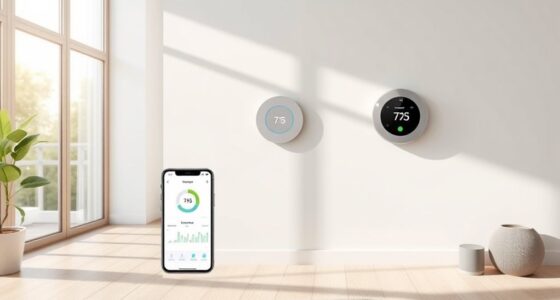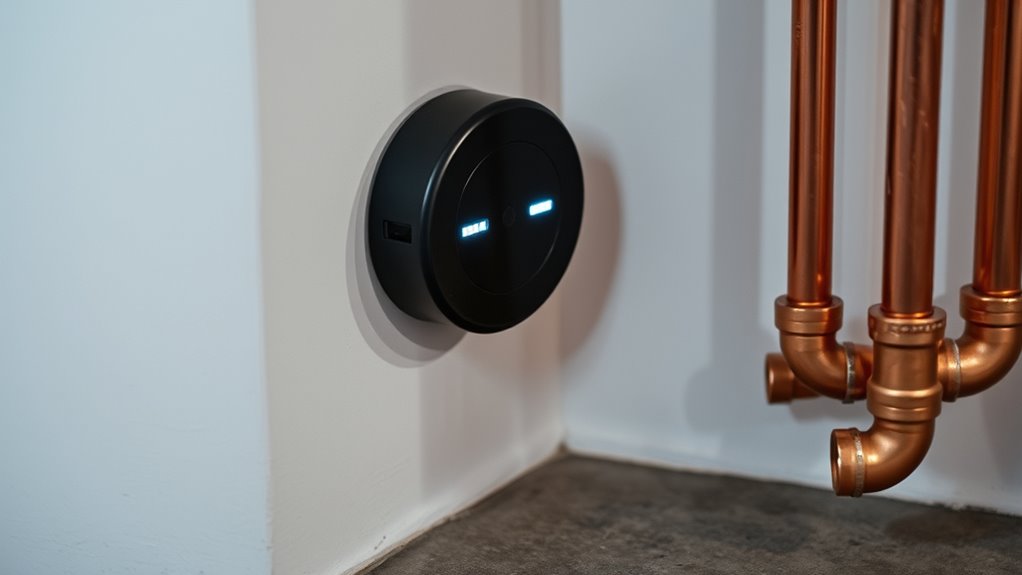
Place leak detectors near joints, valves, and areas with pressure or flow changes, as these spots are most vulnerable. Install them beneath appliances prone to leaks and at bends or fittings in your system. Focus on zones where stress or wear might occur, and analyze your layout to identify leak-prone areas. Proper placement ensures quick detection, saving you time and money—if you stay tuned, you’ll discover even more tips for ideal sensor positioning.
Key Takeaways
- Position sensors near joints, connections, valves, and areas with pressure or flow changes.
- Focus on vulnerable zones like beneath appliances prone to leaks or system stress points.
- Use ultrasonic detectors for pressurized gas/liquid leaks and infrared sensors for temperature-based leak detection.
- Combine multiple detection methods to improve accuracy and reduce false alarms.
- Regularly calibrate and monitor sensors, adjusting placement based on system or environmental changes.
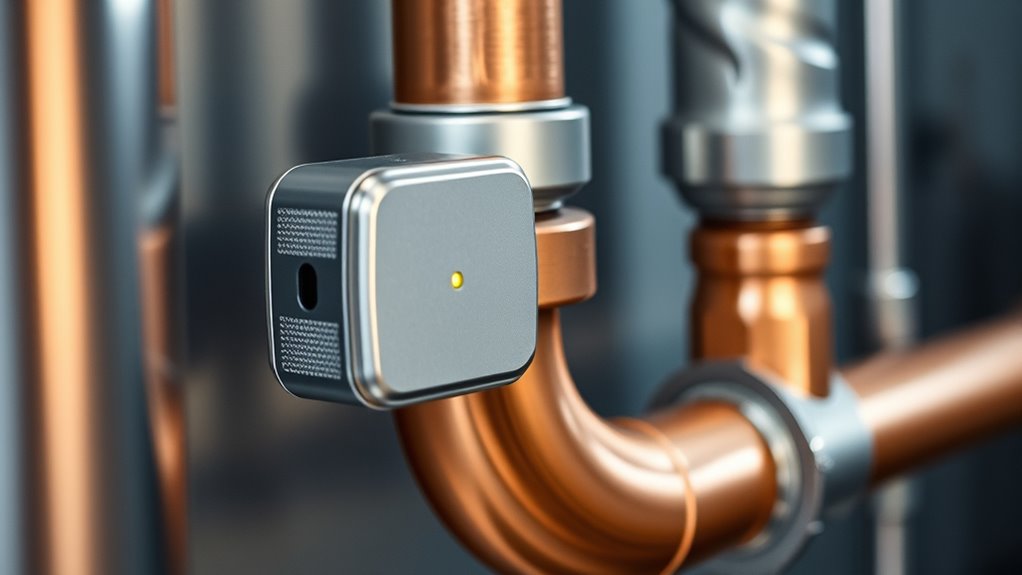
Leak detectors are indispensable tools for identifying and locating leaks in various systems, preventing costly damage and ensuring safety. When it comes to effective leak detection, one of the most critical factors is sensor placement. Proper placement ensures that the detector can accurately sense leaks and trigger alarms promptly. You should position sensors in areas most vulnerable to leaks, such as joints, connections, valves, and any points where pressure or flow changes occur. For example, in plumbing systems, placing sensors near pipe joints or beneath appliances can catch leaks early. In industrial setups, sensors are often installed along pipelines, especially at bends, fittings, or areas with known stress points. The key is to understand the system’s layout and identify zones where leaks are most likely to develop, so your sensors can be strategically located for maximum coverage. Additionally, understanding the system’s layout and potential stress points can help optimize sensor placement for early leak detection. Detection methods also play a fundamental role in the success of leak detection systems. Different methods, such as ultrasonic, infrared, or chemical sensors, are suitable for various applications. Ultrasonic detectors listen for the high-frequency sounds produced by escaping gases or liquids, making them ideal for pressurized systems. Infrared sensors detect temperature changes caused by leaks, especially in refrigerant or hot water systems. Chemical sensors, on the other hand, identify specific gases or liquids, providing precise leak pinpointing in chemical plants or fuel systems. When choosing a detection method, consider the type of system you’re monitoring, the nature of the fluid or gas, and the environment where the sensors will operate. For instance, ultrasonic sensors work well in noisy industrial environments, while infrared sensors are better suited for quick visual inspections.
It’s important to understand that detection methods aren’t mutually exclusive. Combining different techniques can improve accuracy and reduce false alarms. For example, pairing ultrasonic sensors with infrared detection provides a more comprehensive view of potential leaks, especially in complex systems. Additionally, regular calibration and testing of your sensors ensure they function correctly and maintain sensitivity over time. Remember, sensor placement isn’t just about initial installation; ongoing monitoring and adjustments might be necessary as your system evolves or as environmental conditions change. Properly positioned sensors that utilize suitable detection methods will give you reliable, early leak detection, helping you prevent damage and maintain safety standards. In essence, understanding both where to place your sensors and which detection methods to employ is crucial for an effective leak detection strategy.
Frequently Asked Questions
How Often Should Leak Detectors Be Calibrated for Optimal Accuracy?
You should calibrate your leak detectors at least once a year to guarantee maximum accuracy. Regular calibration frequency helps maintain accuracy, catching any drift or sensor degradation early. If you use your detectors in harsh environments or for critical applications, consider calibrating more often, like every six months. Consistent calibration is key to accuracy maintenance, so stay proactive with scheduled checks to ensure your detectors function reliably when needed.
Can Leak Detectors Detect All Types of Gases?
You should know that leak detectors are specialized for detecting specific gases, so they don’t identify all types of gases. For effective gas detection, verify proper detector placement in areas where leaks are most likely to occur. Using the right detector for each gas type and placing it correctly helps you quickly identify leaks, improving safety and preventing damage. Remember, regular calibration also keeps your detectors working accurately for the gases they’re designed to detect.
What Are the Signs Indicating a Leak Detector Needs Replacement?
You should consider replacing your leak detector when it starts giving false alarms, shows decreased sensitivity, or the sensor maintenance becomes difficult. Also, keep an eye on the detector lifespan; most sensors have a limited operational period, usually around two to three years. Regularly testing and calibrating your detector helps identify when it’s time for a replacement, ensuring reliable leak detection and safety.
Are Portable Leak Detectors Suitable for Industrial Use?
Yes, portable leak detectors are suitable for industrial applications because they utilize advanced portable technology, making them easy to transport and operate in various settings. You can quickly identify leaks on-site, ensuring minimal downtime and efficient maintenance. Their flexibility allows you to inspect hard-to-reach areas, making them ideal for diverse industrial environments. Using portable leak detectors helps you maintain safety standards and optimize your leak detection processes effectively.
How Do Environmental Factors Affect Leak Detector Performance?
Think of your leak detector like a sensitive antenna; environmental factors can really mess with its signals. Humidity interference can cause false alarms, while temperature sensitivity affects accuracy, making it harder to pinpoint leaks. For example, on a hot, humid day, you might get a reading that’s off just enough to mislead you. To guarantee reliable results, keep your detector in stable conditions, away from extreme humidity and temperature fluctuations.
Conclusion
Think of leak detectors as vigilant guardians patrolling your home’s hidden corridors. Place them wisely, like sentinels watching over secret doors, to catch trouble before it spreads. When positioned correctly, they dance in harmony, alerting you to tiny whispers of leaks, much like a symphony’s subtle cues. Trust your instinct, and let these silent guardians be your first line of defense—keeping your home safe, sound, and leak-free, like a well-guarded fortress.