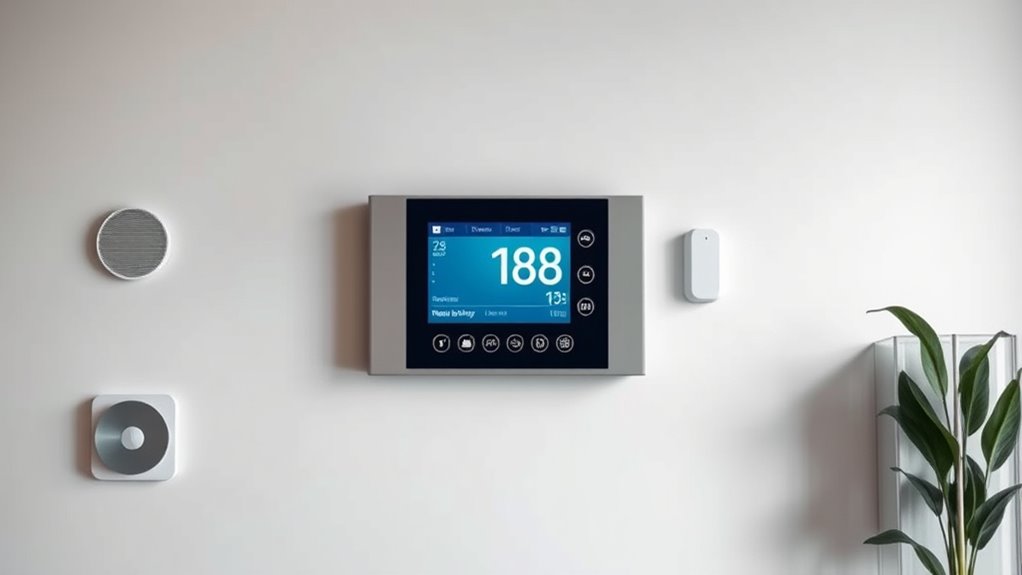
Indoor air quality monitors and automation systems help you keep your indoor environment healthy and comfortable by detecting pollutants like CO2, VOCs, and dust in real time. They automatically adjust ventilation or airflow based on sensor data, improving air quality without manual effort. This smart setup not only promotes better health and comfort but also saves energy. Keep exploring to discover how integrating these systems can transform your indoor space into a safer, more efficient haven.
Key Takeaways
- Indoor air quality monitors detect pollutants like CO2, VOCs, and dust, providing real-time data for optimal environment management.
- Smart ventilation systems automatically adjust airflow based on sensor readings, ensuring healthy indoor air quality.
- Integration of sensors with automation platforms enables remote monitoring, control, and energy-efficient ventilation.
- Proper sensor placement and data analysis are critical for accurate readings and effective air quality regulation.
- Continuous automation enhances indoor comfort, health, and energy savings by responding proactively to air quality fluctuations.
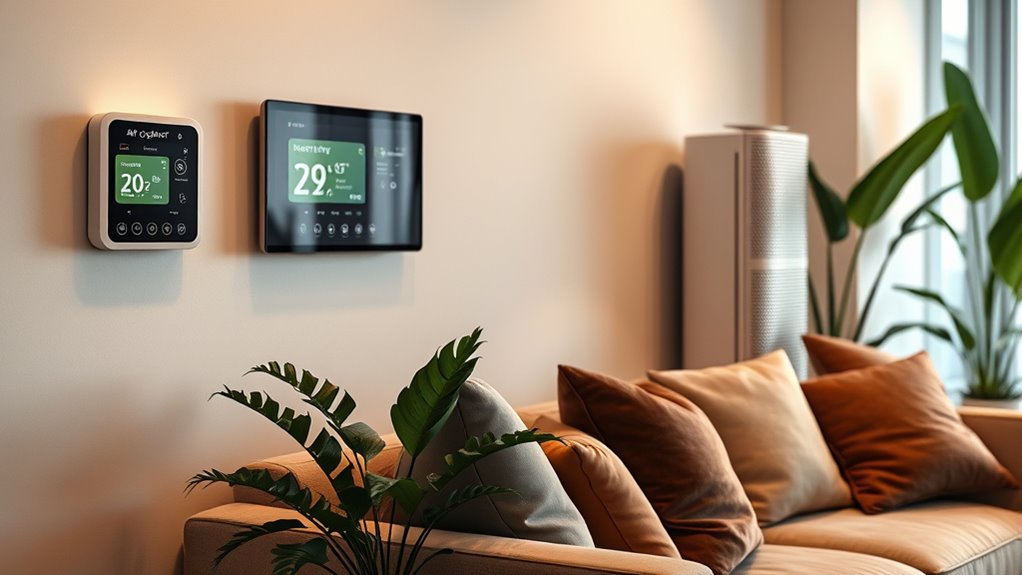
Maintaining good indoor air quality is essential for your health and comfort, especially as more people spend time indoors. Poor air quality can lead to headaches, allergies, respiratory issues, and long-term health problems. To combat this, many modern homes and offices are turning to air quality sensors and smart ventilation systems. These technologies work together to monitor your environment constantly and adjust airflow automatically, ensuring a healthy, comfortable space without you needing to lift a finger.
Good indoor air quality boosts health and comfort with smart sensors and automated ventilation.
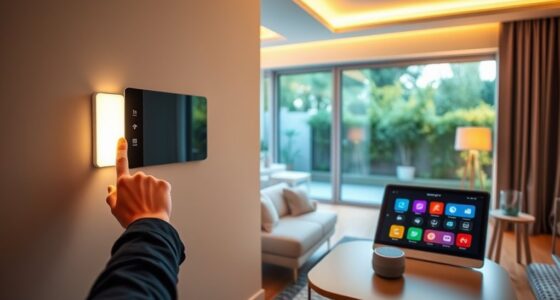
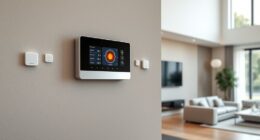
Air quality sensors are the backbone of any effective indoor air management system. These compact devices detect pollutants like carbon dioxide, volatile organic compounds (VOCs), dust, and humidity levels in real-time. When sensors notice that air quality drops below a healthy threshold, they send signals to your ventilation system to respond accordingly. This immediate feedback loop means your indoor environment stays fresh and safe at all times. Unlike traditional ventilation, which runs on timers or manual controls, smart air quality sensors provide precise, data-driven insights, making your space more responsive and energy-efficient.
Smart ventilation takes this concept a step further by automating how fresh air enters and circulates within your space. Instead of relying on manual window opening or static mechanical systems, smart ventilation systems adjust airflow based on sensor readings. For example, if CO2 levels rise after a gathering or during busy work hours, the system increases ventilation to expel stale air and bring in fresh outdoor air. Conversely, if pollutant levels are low and the outdoor air quality is poor, the system can reduce airflow or switch to filtering modes, conserving energy while maintaining air quality.
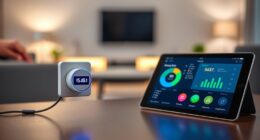
Integrating air quality sensors with smart ventilation creates a seamless, automated environment. You don’t have to worry about manually adjusting vents or fans. Instead, your system continuously evaluates indoor conditions and makes real-time decisions to optimize comfort and health. This automation not only improves air quality but also reduces energy waste, as ventilation runs only when necessary. Plus, many systems are compatible with home automation platforms, allowing you to monitor and control your indoor air quality remotely via smartphone apps. Additionally, selecting best restaurants or exploring vibrant cities can be more enjoyable when your indoor environment remains clean and fresh.
Frequently Asked Questions
How Accurate Are Consumer-Grade Air Quality Monitors?
Consumer-grade air quality monitors vary in accuracy, but many provide reliable data if they have proper sensor calibration. You should regularly calibrate your device to maintain data accuracy, as sensors can drift over time. While they might not be as precise as professional equipment, these monitors give a good general sense of air quality, helping you make informed decisions about ventilation and air purification.
Can Air Quality Monitors Detect Carbon Monoxide?
Think of your air quality monitor as a vigilant guardian, much like a lighthouse guiding ships safely. Yes, many consumer-grade monitors can detect carbon monoxide through CO detection features, but their device sensitivity varies. While some are reliable for basic alerts, others may miss subtle leaks. Always check if your monitor is equipped with CO detection and meets safety standards, ensuring you’re promptly warned before CO levels become dangerous.
Do These Devices Require Professional Installation?
No, indoor air quality monitors typically don’t require professional setup; many models offer DIY installation that’s straightforward. You can usually place them yourself, following simple instructions for maximum placement. However, some advanced systems with integrations or specific wiring might need professional setup to guarantee everything functions correctly. Check the product details to see if professional installation is recommended, but most users find DIY installation quick and easy.
Are There Any Health Risks Associated With Smart Air Monitors?
There are minimal health risks associated with smart air monitors, as they are generally safe to use. However, you should consider potential health implications if the device malfunctions or provides inaccurate readings, leading you to make poor decisions about air quality. To guarantee safety, choose reliable devices with proven device reliability, and follow manufacturer instructions. Regular maintenance and updates help minimize any risks, keeping your environment safe and healthy.
How Often Should Air Quality Data Be Calibrated?
You should calibrate your air quality monitor every 1 to 3 months to ensure proper calibration frequency. Regular calibration helps maintain data accuracy, so you get reliable readings. If you notice inconsistent or unexpected measurements, consider calibrating more often. Always follow the manufacturer’s instructions for calibration, and keep track of calibration dates to maintain precise and trustworthy air quality data. This way, you’ll stay informed and keep your environment healthy.
Conclusion
Think of your indoor air quality monitor as a vigilant guardian, always watching over your home’s air. I once had a friend who ignored her monitor’s alerts, only to realize too late that poor air quality caused her allergy flare-ups. Just like a smoke detector keeps you safe from unseen dangers, automations respond instantly to improve your air—making your home a healthier, more comfortable sanctuary. Don’t overlook this small device with a big impact.