
To soundproof thin walls, start by adding insulation like mineral wool or foam panels inside the wall cavities to absorb noise. Seal gaps around doors with weatherstripping and install door sweeps to block sound leaks. Enhance your effort with heavy curtains or soundproof panels for extra mass. Sealing all cracks and gaps makes a big difference too. If you want to learn more effective tricks, keep going to discover simple solutions that make your space quieter.
Key Takeaways
- Add insulation like mineral wool or foam panels inside wall cavities to absorb sound vibrations.
- Install door seals and weatherstripping to block sound leaks around door frames.
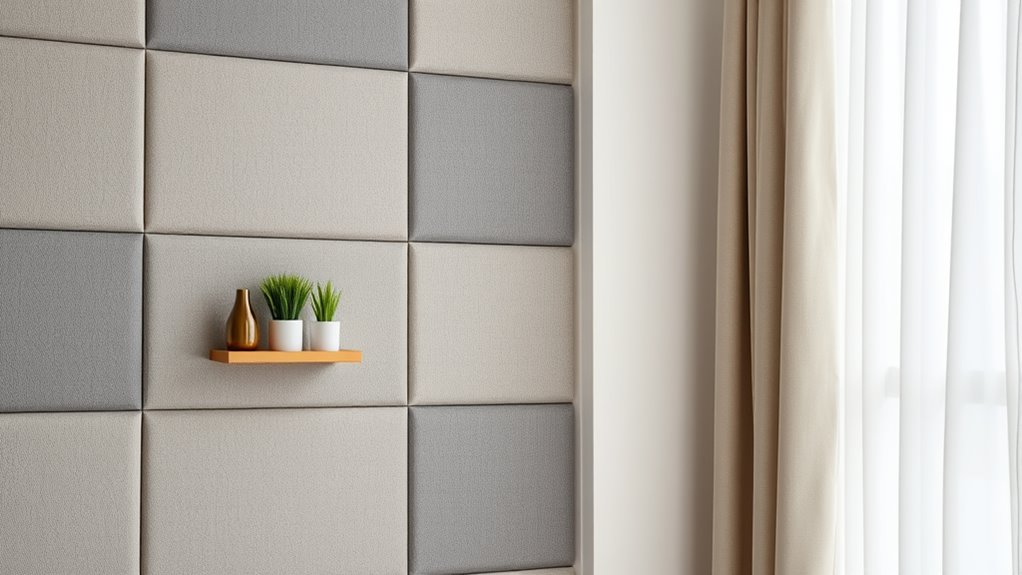
- Use soundproof panels or heavy curtains to increase mass and reduce noise transmission.
- Seal all gaps and cracks around walls and doors with acoustic caulk for a tighter sound barrier.
- Apply multiple layers of drywall or soundproofing mats to walls for enhanced noise reduction.
If you have thin walls, noise can easily become a constant distraction. Whether it’s your neighbor’s music, street sounds, or household chatter, these noises can disrupt your focus and rest. Fortunately, there are practical ways to improve your space’s soundproofing, starting with essential upgrades like wall insulation and door seals. These are straightforward solutions that can make a noticeable difference without requiring a complete overhaul of your home.
Wall insulation plays an essential role in reducing sound transmission through your walls. If your walls lack sufficient insulation or have gaps, sound waves travel freely from one room to another. Adding or upgrading insulation materials, such as mineral wool or foam panels, can substantially dampen noise. You don’t need to tear down entire walls—many DIY-friendly insulation kits are available, allowing you to fill existing cavities or add extra layers of soundproof foam. Proper insulation acts as a barrier, absorbing sound vibrations and preventing them from passing through. It’s especially effective if you combine it with other soundproofing measures.
Adding or upgrading wall insulation helps dampen noise and enhances your space’s quietness.
Another vital area often overlooked is the door seals. Doors are common weak spots for sound leaks, especially if they don’t fit tightly within their frames. Installing high-quality door seals or weatherstripping can drastically reduce noise seepage. These seals create a tight barrier that blocks sound from escaping or entering a room, making your space much quieter. You simply peel and stick the seals around the edges of your door frame, ensuring a snug fit. For added effectiveness, consider installing door sweeps at the bottom of your door to seal gaps between the door and the floor. Together, door seals and sweeps form an all-encompassing barrier, preventing noise from sneaking through even the tiniest gaps.
In addition to these measures, consider adding mass to your walls with soundproof panels or heavy curtains, but don’t underestimate the power of sealing gaps and insulating properly. Choosing the right materials for your soundproofing approach can greatly enhance effectiveness and durability. Combining wall insulation with effective door seals creates a layered defense against noise. You’ll notice an immediate improvement in your environment’s tranquility, making it easier to concentrate, relax, and sleep. These solutions are cost-effective and relatively simple to implement, meaning you don’t need to spend a fortune or undertake major renovations. By focusing on these areas, you take control of your space’s acoustics and turn your home into a quieter, more peaceful refuge.
Frequently Asked Questions
Can I Soundproof Just One Wall Effectively?
Yes, you can soundproof just one wall effectively. Focus on wall decoupling techniques to reduce vibrations, and add acoustic panels to absorb sound. Installing resilient channels or staggered stud walls creates space, minimizing sound transmission. Complement these with thick curtains or rugs nearby. By targeting this specific wall with decoupling and acoustic panels, you improve soundproofing without needing to treat the entire room.
Are There Temporary Soundproofing Options for Thin Walls?
Yes, you can use temporary solutions and DIY methods to soundproof thin walls. For quick relief, hang heavy blankets or quilts, which absorb sound effectively. You can also apply removable foam panels or use adhesive putty to attach acoustic decals. These options are affordable, easy to install, and remove without damage. Keep in mind, while they help reduce noise temporarily, they won’t completely block sound like permanent solutions.
How Much Does Professional Soundproofing Cost?
Think of soundproofing as investing in a quiet sanctuary; the cost reflects your desired peace. Professional soundproofing typically ranges from $1,000 to $10,000, depending on the project’s scope. Conducting a thorough cost analysis helps you align options with your budget considerations. You can customize solutions for your space, balancing quality and affordability, ensuring you create a peaceful environment without overspending.
Will Adding Furniture Improve Sound Insulation?
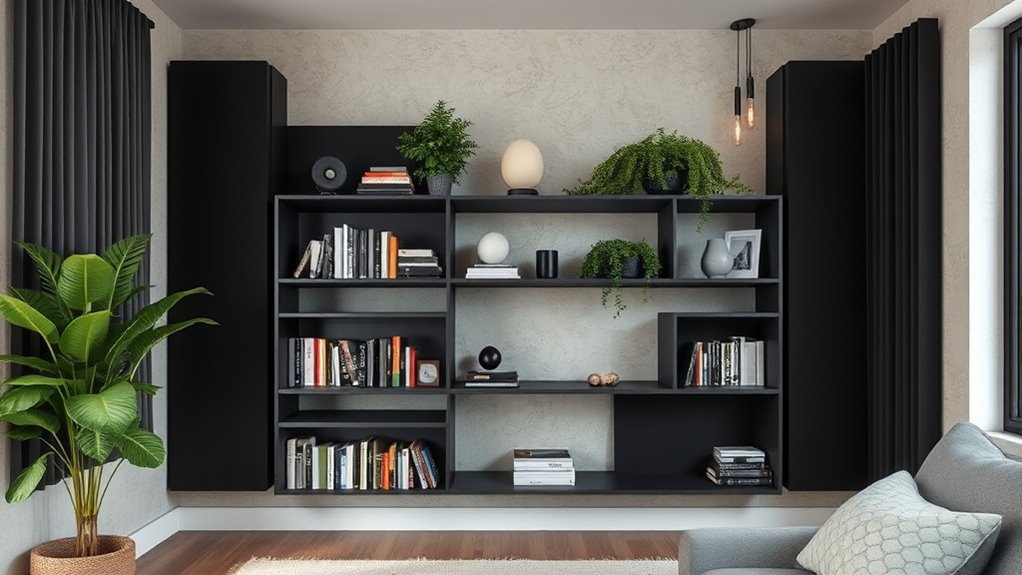
Adding furniture can improve sound insulation by absorbing and diffusing sound waves. Strategically placing furniture like bookshelves, sofas, and large rugs near thin walls helps reduce noise transfer. Incorporate acoustic panels into your room design for even better results, as they specifically target sound absorption. While furniture alone isn’t a complete solution, combining furniture placement with acoustic panels considerably enhances your room’s soundproofing, making it quieter and more comfortable.
Do Soundproofing Materials Affect Indoor Air Quality?
Think of soundproofing materials as filters in a busy stream—they can impact your indoor air quality. Some materials emit volatile organic compounds (VOCs), which may reduce air freshness. To counteract this, add indoor plants that naturally purify the air, and guarantee your ventilation systems stay efficient. Properly selected soundproofing materials won’t harm your air quality if you choose eco-friendly options, keeping your space both quiet and healthy.
Conclusion
Now that you’ve learned these soundproofing tricks, remember, even the thinnest walls can become your fortress. Like a knight’s shield protecting a castle, your efforts create a barrier against noise. With patience and the right techniques, you turn your space into a peaceful sanctuary. Don’t forget, every small step adds up—just as a single brushstroke completes a masterpiece. Keep at it, and soon your walls will stand strong against unwelcome sounds, restoring your peace.