
To soundproof thin walls, combine installing acoustic panels to absorb internal noise and applying door seals to block gaps that let in external sounds. Acoustic panels reduce echo and muffling noise inside your space, while door seals prevent sound leaks around doors. Using both methods together is cost-effective and easy to do without major renovations. Keep exploring these simple tricks, and you’ll discover even more ways to create a quieter, more private environment.
Key Takeaways
- Install acoustic panels on walls to absorb sound and reduce echo within the room.
- Use door seals to block gaps and prevent external noise from entering through doors.
- Combine acoustic panels and door seals for enhanced soundproofing of thin walls.
- Strategically place soundproofing materials in high-noise areas for maximum effectiveness.
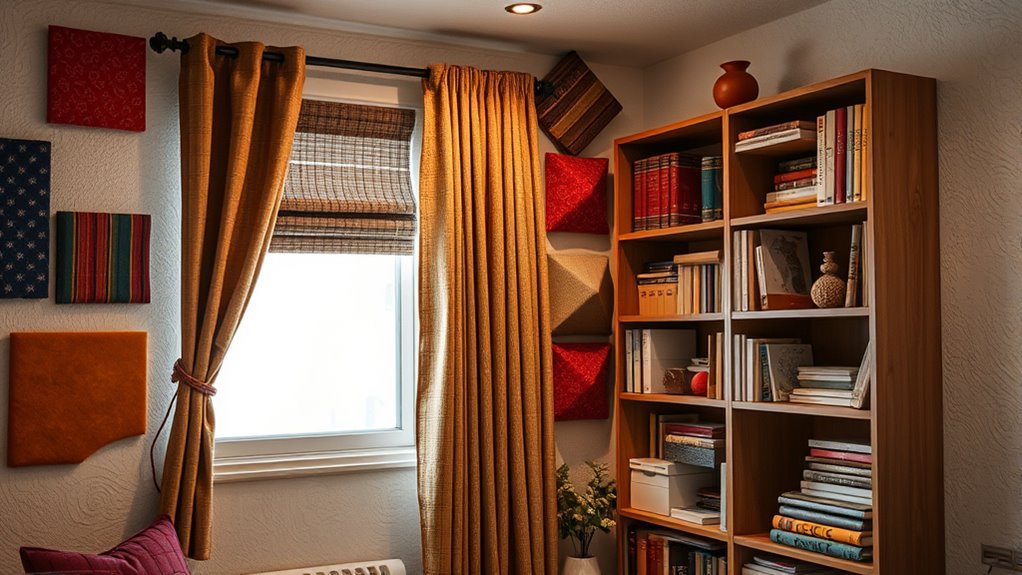
- Add soft furnishings like rugs and curtains to further dampen sound transmission.
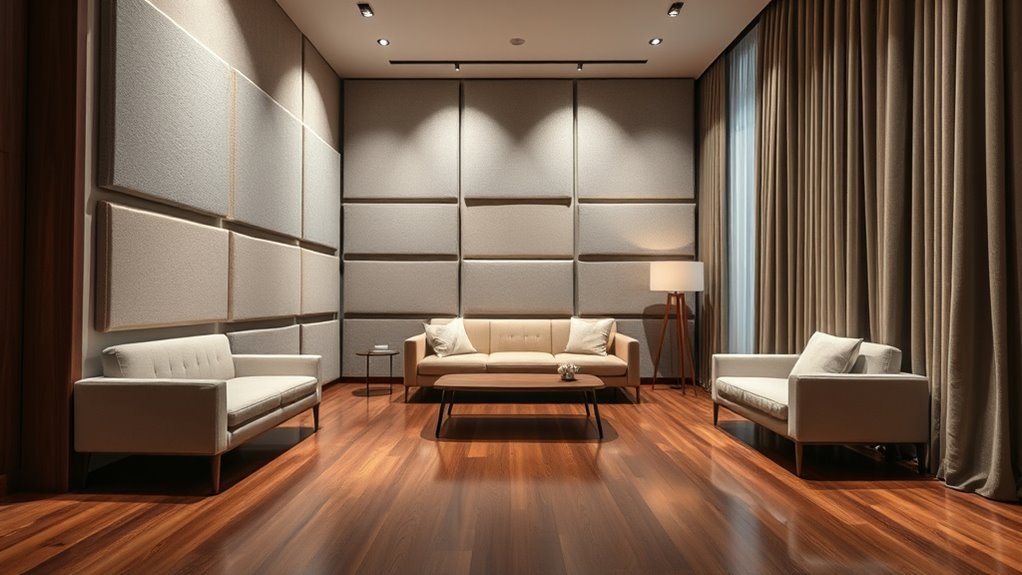
If your walls are thin and noise easily travels through, you don’t have to accept constant disturbances. There are effective ways to block sound and create a quieter environment without extensive renovations. One of the simplest and most practical solutions is installing acoustic panels. These panels are designed to absorb sound waves, reducing echo and muffling noise from neighboring rooms or outside. You can mount them on your walls, especially in areas where noise is most prominent, such as bedrooms, home offices, or living rooms. Acoustic panels come in various sizes, styles, and materials, so you can choose options that match your decor while providing the acoustic benefits you need. Their porous surface traps sound energy, preventing it from bouncing around and transmitting through thin walls. When combined with strategic placement, acoustic panels can significantly improve your space’s sound quality and privacy.
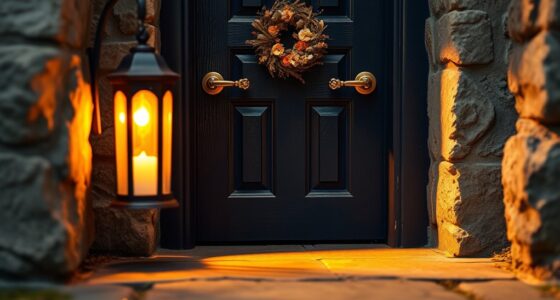
In addition to acoustic panels, addressing gaps around your doors is crucial. Door seals are an inexpensive and effective way to prevent sound leaks. Many homes have tiny cracks or spaces around doors that allow noise to seep through. Installing door seals creates a tight barrier, blocking sound from entering or escaping a room. These seals are usually made of rubber, foam, or weatherstripping, and are easy to apply along the door frame. When properly installed, they eliminate the gaps that act as sound channels, making your space much quieter. Not only do door seals help with noise reduction, but they also improve insulation and energy efficiency. You’ll notice a marked difference in how much sound gets through, especially if your neighbors are noisy or if street sounds intrude into your home. Adding soundproofing materials can further enhance the effectiveness of your noise reduction efforts.
Together, acoustic panels and door seals form a powerful pair for soundproofing thin walls. Acoustic panels tackle the problem from within the room by absorbing sound waves, while door seals block external noise from sneaking in through gaps. This combination is especially effective if you’re renting or can’t undertake major renovations. You don’t need to tear down walls or invest in costly insulation; small upgrades can make a big difference. Remember, the key is strategic placement—focus on areas where sound is most prominent and where gaps are visible. These simple adjustments will help you reclaim peace and quiet in your home, making your space more comfortable and private without the hassle of extensive remodeling.

Focusound 52 Pack Acoustic Foam Panels 1" x 12" x 12" Sound Proof Foam Panles Soundproofing Noise Cancelling Wedge Panels for Home Office Recoding Studio with 300PCS Double-Side Adhesive
Soundproofing – Acoustic foam panels triangular grooves structure for better noise absorption, helps to reduce and absorb unwanted…
As an affiliate, we earn on qualifying purchases.
As an affiliate, we earn on qualifying purchases.
Frequently Asked Questions
Can I Soundproof Walls Without Professional Help?
Yes, you can soundproof walls without professional help. Start by adding wall decoupling, like resilient channels or rubber strips, to reduce vibrations. Seal gaps and cracks with acoustic caulking to block sound leaks. Consider hanging heavy curtains or installing thick rugs to absorb noise. These DIY methods improve soundproofing, making your space quieter without needing professional installation.
How Effective Are DIY Soundproofing Methods?
DIY soundproofing methods can be quite effective if you use acoustic panels and window plugs correctly. Acoustic panels absorb sound waves, reducing noise transmission through your walls, while window plugs block outside noise from entering through windows. Although DIY solutions might not completely eliminate all sounds, they markedly improve your space’s acoustics. With proper installation and quality materials, you’ll notice a substantial difference in noise levels, making your environment more peaceful.
Will Adding Furniture Reduce Noise Transmission?
Think of your room as a sound sponge—adding furniture like plush sofas and bookshelves can soak up noise. You’ll want to focus on furniture placement, positioning large pieces against thin walls to act as barriers. Incorporate decor strategies like rugs and curtains to further reduce sound transmission. These additions don’t eliminate noise completely but considerably dampen echoes, making your space much quieter and more comfortable.
Are There Temporary Soundproofing Options?
Yes, there are temporary soundproofing options you can try. You can use temporary fixes like soundproofing tapes to seal gaps and cracks in your walls, which help reduce noise transmission. Additionally, hanging thick blankets or moving furniture against the wall can absorb sound. These solutions are quick and inexpensive, providing immediate relief while you consider more permanent improvements.
How Much Does Professional Soundproofing Cost?
Professional soundproofing costs vary, but you can expect to spend between $1,000 and $4,000, depending on your space and materials. Think of soundproofing materials like acoustic panels, drywall, and insulation as the core of your investment. Installation costs include labor, which can add to the overall price. To get the best value, compare quotes from specialists and consider the quality of materials used for effective, long-lasting soundproofing.

Black Rubber Weather Stripping Door Seal Strip, D Shape Door Weather Seal Strip, Self-Adhesive Soundproofing Frame Insulation Tape for Doors Frame/Window Seal,Blocks Cold Drafts Noise
【THICKENED SILICONE MATERIAL – COMPLETELY BARRIERING AIR AND NOISE】:The weather stripping is made of thickened TPE material with…
As an affiliate, we earn on qualifying purchases.
As an affiliate, we earn on qualifying purchases.
Conclusion
Now, with these soundproofing tricks, your thin walls become a fortress of tranquility. Imagine peaceful mornings in a bustling city or quiet nights beside noisy neighbors—both possible with your new strategies. While your walls remain delicate, your space gains a thick shield of silence. So, don’t let thin walls define your environment. Instead, transform them into barriers of calm, proving that even the flimsiest walls can hold back the loudest chaos.
Focusound 52 Pack Acoustic Foam Panels 1" x 12" x 12" Sound Proof Foam Panles Soundproofing Noise Cancelling Wedge Panels for Home Office Recoding Studio with 300PCS Double-Side Adhesive
Soundproofing – Acoustic foam panels triangular grooves structure for better noise absorption, helps to reduce and absorb unwanted…
As an affiliate, we earn on qualifying purchases.
As an affiliate, we earn on qualifying purchases.

Weather Stripping Door Seal Strip – Soundproof Q-Shaped Foam for Exterior Door Frame, Large Gap Seal, Noise Cancelling, Easy to Install (Black, 26FT)
No light penetration: Our door seals are made of high-density foam core material, which effectively blocks light from…
As an affiliate, we earn on qualifying purchases.
As an affiliate, we earn on qualifying purchases.