
To layer lighting effectively in small rooms, combine ambient, task, and accent lights to create a balanced, versatile environment. Pick space-saving fixtures like recessed, wall sconces, or portable lamps that suit your room’s size and style. Adjust color temperature and add dimmers to control brightness and mood. Focus on avoiding clutter by placing lights thoughtfully and using reflective surfaces or mirrors to expand the space. Explore more tips to make your small room feel brighter and larger.

Get garden gear delivered free with Prime
- Fast, free delivery on millions of items
- Prime Video, Amazon Music and more included
- Member-only deals all year
Key Takeaways
- Combine ambient, task, and accent lighting to create depth and visual interest without clutter.
- Use layered controls like dimmers and adjustable fixtures to set the right mood and brightness.
- Prioritize space-saving fixtures such as recessed, wall sconces, or portable lamps for small rooms.
- Maximize natural light with reflective surfaces, light wall colors, and strategic window treatments.
- Highlight architectural features or focal points to enhance space perception and add dimension.
recessed LED ceiling lights for small rooms
As an affiliate, we earn on qualifying purchases.
As an affiliate, we earn on qualifying purchases.
How Layered Lighting Transforms Small Rooms
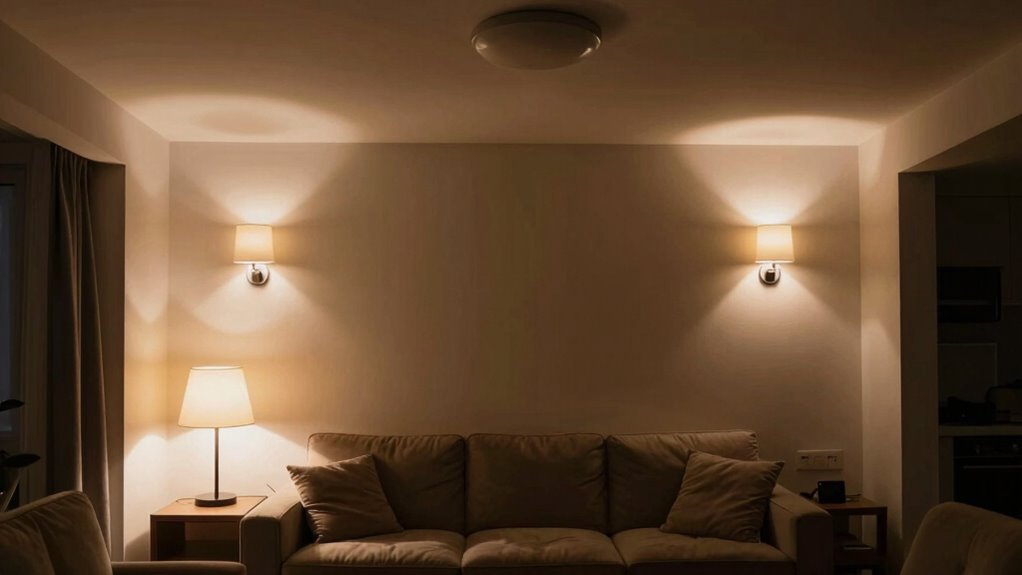
Layered lighting can dramatically transform small rooms by adding depth, warmth, and functionality. By adjusting the color temperature, you can create a cozy or energetic atmosphere that suits your needs. Warm light (lower Kelvin) makes spaces feel inviting, while cooler light (higher Kelvin) adds brightness and alertness. Light diffusion also plays a key role—diffused light spreads evenly, reducing harsh shadows and making the room feel more open. Combining different layers, like ambient, task, and accent lighting, enhances the room’s visual interest and practicality. When you thoughtfully select fixtures with the right color temperature and diffuse light effectively, your small space becomes more dynamic and comfortable, ultimately maximizing its potential without feeling cluttered or cramped. Additionally, understanding the importance of contrast ratio in lighting helps in choosing the right fixtures to achieve balanced shadows and highlights, further enriching the room’s ambiance. Proper lighting layering techniques ensure each layer complements the others, creating a cohesive and well-lit environment. Paying attention to light placement is crucial for achieving a balanced and harmonious effect that enhances the room’s functionality and aesthetic appeal. Incorporating diffused lighting methods can also soften the overall illumination, making the space feel more inviting and less stark.
Assess How Much Natural Light Your Small Room Gets
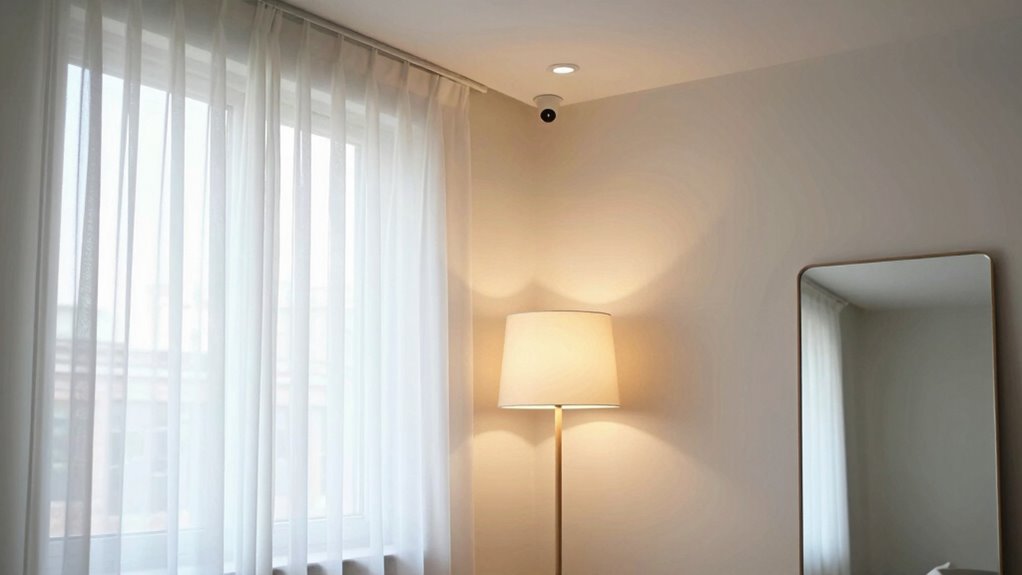
How much natural light your small room receives can profoundly influence your lighting strategy. To assess this, consider these factors:
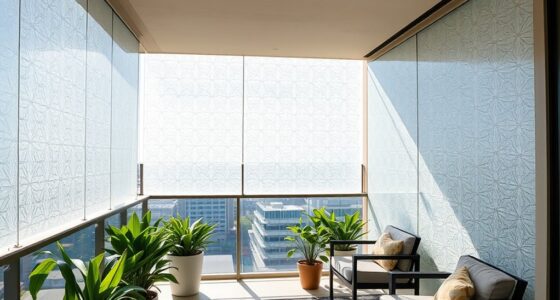
Natural light impacts your room’s brightness; assess wall color, window size, timing, and treatments for the best lighting plan.
- Wall color – Lighter walls reflect more light, making the space seem brighter regardless of natural light.
- Window size and placement – Larger or strategically placed windows let in more sunlight.
- Time of day – Note how light changes throughout the day to determine peak brightness hours.
- Window treatments – Blinds, curtains, or shades can filter or block light, affecting overall brightness.
- Reflective surfaces – Incorporating reflective surfaces like mirrors or glossy finishes can amplify natural light in the room.
- Room orientation – The direction your room faces can impact the amount of natural light it gets throughout the day, influencing your overall lighting plan. Understanding natural light patterns can help you optimize your room’s lighting effectively.
What Are the Three Key Types of Lighting?
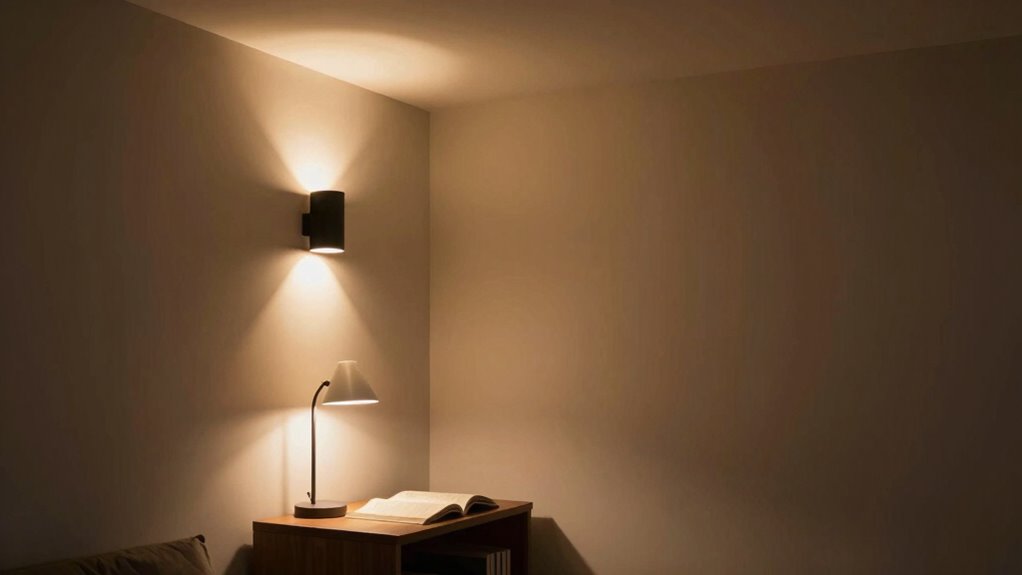
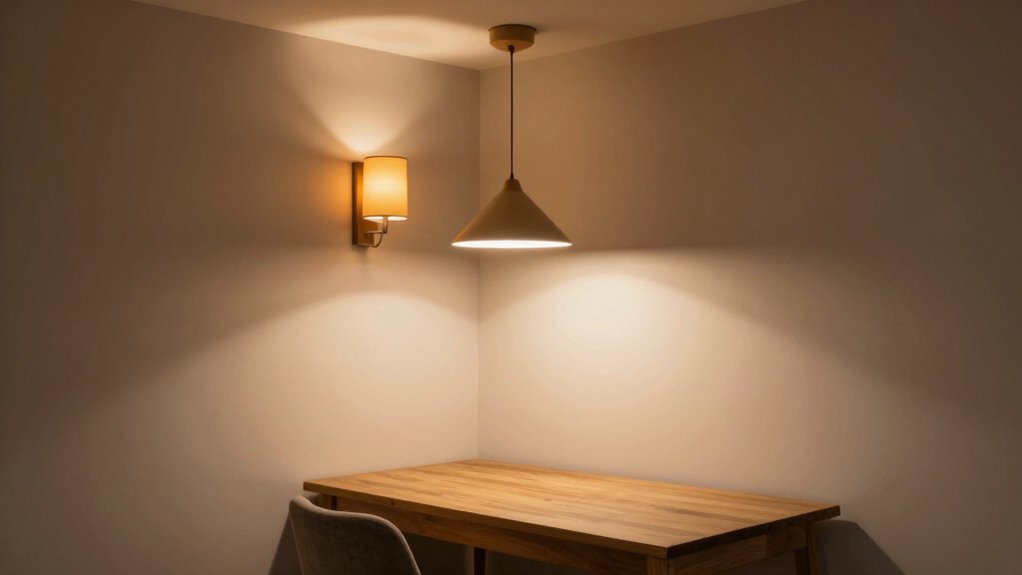
Understanding the different types of lighting helps you create a balanced and functional space, especially in small rooms where every inch counts. The three key types are ambient, task, and accent lighting. Ambient lighting provides overall illumination, setting the room’s mood with soft, even light. Task lighting is more focused and is placed where you need clarity, like near desks or reading areas. Accent lighting highlights specific features, such as artwork or architectural details. When choosing fixtures, consider lighting color to set the right tone and fixture placement to maximize space. Proper layering guarantees your room feels inviting without being cluttered. Incorporating lighting security solutions such as motion sensors or smart controls can also enhance safety and convenience in your small space. Additionally, selecting appropriate lighting fixtures helps optimize light distribution and minimize visual clutter. Being mindful of indoor air quality and humidity can also contribute to a healthier and more comfortable environment, supporting the overall effectiveness of your lighting setup. Ensuring proper ventilation can further improve comfort and help maintain the longevity of your lighting fixtures.
How to Combine Ambient, Task, and Accent Lighting
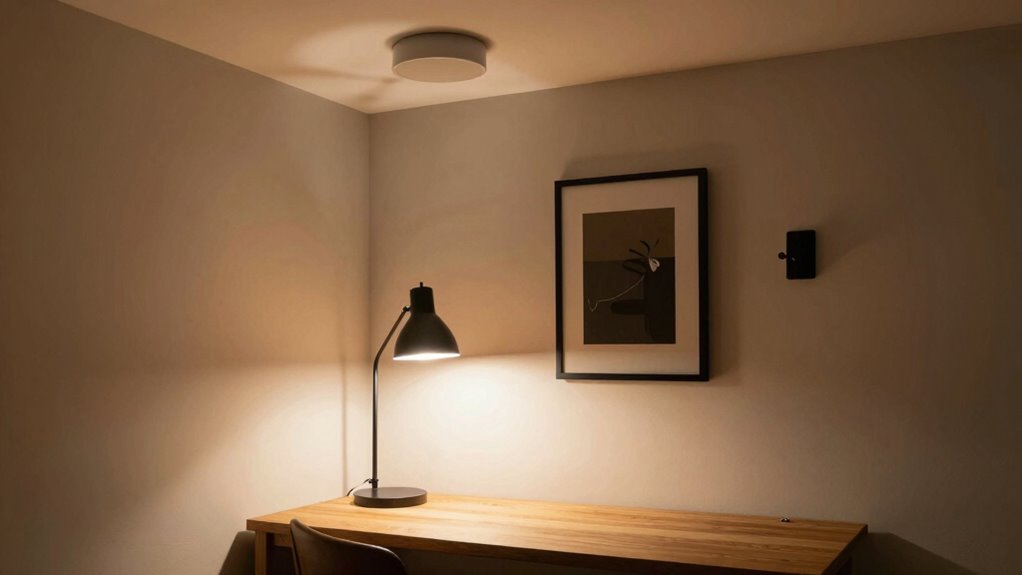
To create a balanced and inviting small room, you need to mix ambient, task, and accent lighting carefully. This combination helps you control light levels and makes focal points stand out. By thoughtfully layering these types, you’ll achieve a functional and visually appealing space. Understanding how different lighting affects the hive health of your room can also help you optimize your setup for both comfort and efficiency. Proper layering can also reduce eye strain and improve overall lighting quality, making your environment more comfortable and adaptable. Incorporating lighting monitoring tools can further enhance your ability to maintain the ideal light balance throughout the day. Additionally, selecting appropriate power distribution solutions ensures your lighting setup remains safe and reliable. Being aware of lighting zones within your space allows you to customize each area’s illumination to suit specific needs.
Balancing Light Levels
Balancing light levels in a small room requires a strategic mix of ambient, task, and accent lighting. First, choose light sources with compatible color temperatures to create a cohesive atmosphere. Second, incorporate dimming controls to adjust brightness based on activity and mood. Third, layer your lighting by assigning specific functions: ambient for general light, task for activities like reading, and accent to highlight decor. A well-designed layering scheme also considers lighting placement to ensure even distribution and avoid dark spots. Additionally, understanding the importance of lighting fixtures in a commercial kitchen setup can inform your choices for durability and style. Incorporating lighting control systems can further enhance the flexibility and efficiency of your lighting design. Proper bulb selection—matching the right type and brightness for each layer—ensures optimal performance and energy efficiency. Ultimately, balancing these elements enhances both functionality and aesthetic appeal.
Highlighting Focal Points
Highlighting focal points in a small room involves carefully combining ambient, task, and accent lighting to draw attention to key features. Use lighting to create contrast, emphasizing areas with bold color or unique textures. Proper furniture placement also guides the eye toward these focal points, such as placing a reading chair near a statement artwork or architectural detail. Incorporate accent lighting, like spotlights or picture lights, to illuminate these features without overwhelming the space. Balance the light levels so the focal point stands out, but the room still feels cohesive. By thoughtfully layering different types of light, you enhance the room’s visual interest and guarantee your key features command attention without cluttering the limited space.
Choosing the Best Fixtures for Small Spaces
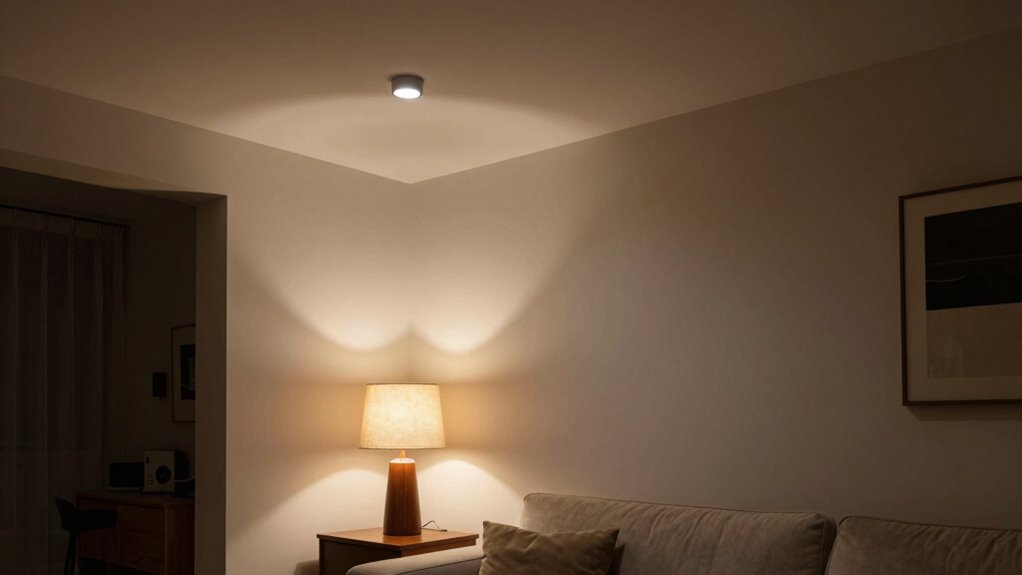
When selecting fixtures for small rooms, space-saving styles like wall-mounted lights or compact pendants are essential. You’ll want versatile options that can serve multiple purposes, such as adjustable sconces or multi-directional lamps. Choosing the right fixtures helps maximize your room’s functionality while keeping the space uncluttered. Incorporating creative lighting solutions can also enhance the ambiance without overwhelming the limited space. Considering specialized fixtures designed for small rooms can further optimize lighting efficiency and style. Additionally, understanding the history of citizen movements related to urban development can inspire innovative and community-focused lighting designs.
Space-Saving Fixture Styles
In small rooms, choosing the right light fixtures can make a significant difference in both functionality and style. Space-saving fixture styles focus on maximizing utility without cluttering your space. Opt for minimalist fixtures with clean lines and simple designs to keep the room feeling open. Compact designs are ideal for tight corners or above furniture, saving space while providing ample lighting. Consider these options:
- Recessed lighting for a streamlined look
- Wall-mounted sconces to free up surface space
- Clip-on or portable lamps for flexibility
- Pendant fixtures with slender profiles
These fixtures blend form and function seamlessly, ensuring your small room remains bright and stylish without feeling crowded. Prioritizing space-efficient styles helps you achieve layered lighting without sacrificing space or design.
Versatile Lighting Options
Choosing the right fixtures is key to creating versatile lighting in small rooms that adapt to different needs and moods. Opt for fixtures with smart controls, allowing you to easily adjust brightness, colors, and timing for various activities. This flexibility helps you switch from bright task lighting to softer ambient light effortlessly. Incorporate fixtures that support adjustable color schemes, so you can change the ambiance by selecting warm or cool tones to match your mood or decor. Recessed or wall-mounted fixtures with dimming capabilities add to the versatility without cluttering limited space. By selecting fixtures with smart controls and adaptable color options, you create a dynamic environment that suits your changing needs while maximizing the room’s potential.
How to Balance Brightness Without Cluttering

Balancing brightness in a small room requires a strategic approach to prevent cluttered or overwhelming spaces. Use dimming techniques to adjust light levels easily, creating a softer ambiance when needed. Select lighting with adjustable color temperature; warmer tones make spaces cozy, while cooler tones add brightness without clutter. To achieve balance:
- Combine task and ambient lighting for functional layering.
- Use dimmers to control intensity without adding fixtures.
- Opt for fixtures with warm color temperatures for subtlety.
- Avoid excessive lighting by limiting high-wattage bulbs.
This approach guarantees a well-lit yet uncluttered space, allowing you to enjoy brightness without overwhelming the room’s proportions. Proper control over light levels and color temperature keeps your small room feeling open and inviting.
Creative Lighting Ideas to Make Small Rooms Feel Larger
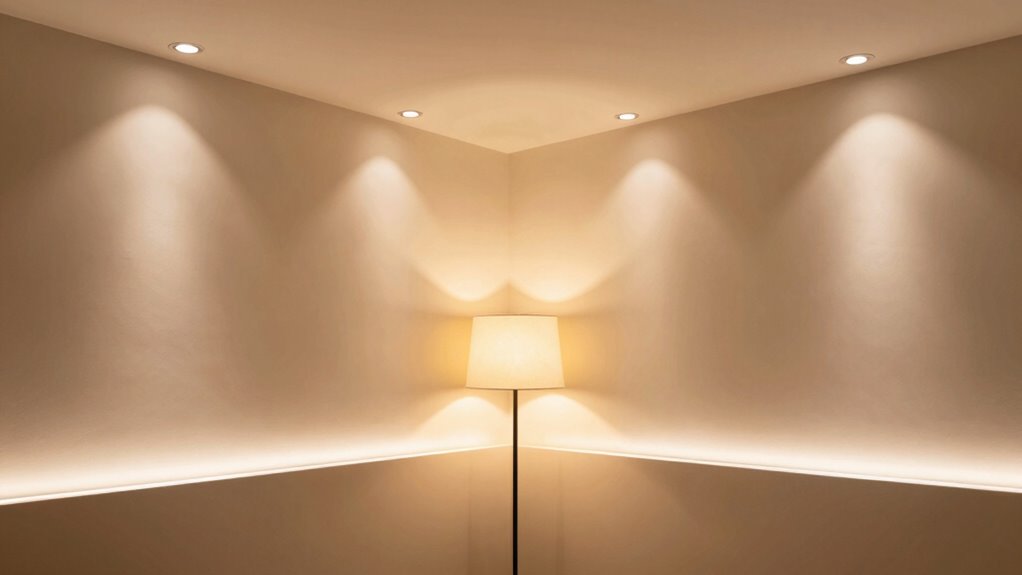
Creative lighting can transform a small room into a more expansive and inviting space by strategically using illumination to enhance depth and dimension. Adjusting color temperature plays a key role—warm tones create cozy corners, while cooler tones open up the space. Incorporate dimming options to control brightness levels, allowing you to shift from intimate to airy atmospheres instantly. Use layered lighting with wall sconces, pendant lights, and floor lamps to add visual interest and avoid clutter. Highlight architectural features or mirrors to reflect light and create an illusion of space. By thoughtfully combining these elements, you can make your small room feel larger, more open, and visually appealing without sacrificing comfort or style.
Troubleshooting Common Small Room Lighting Problems
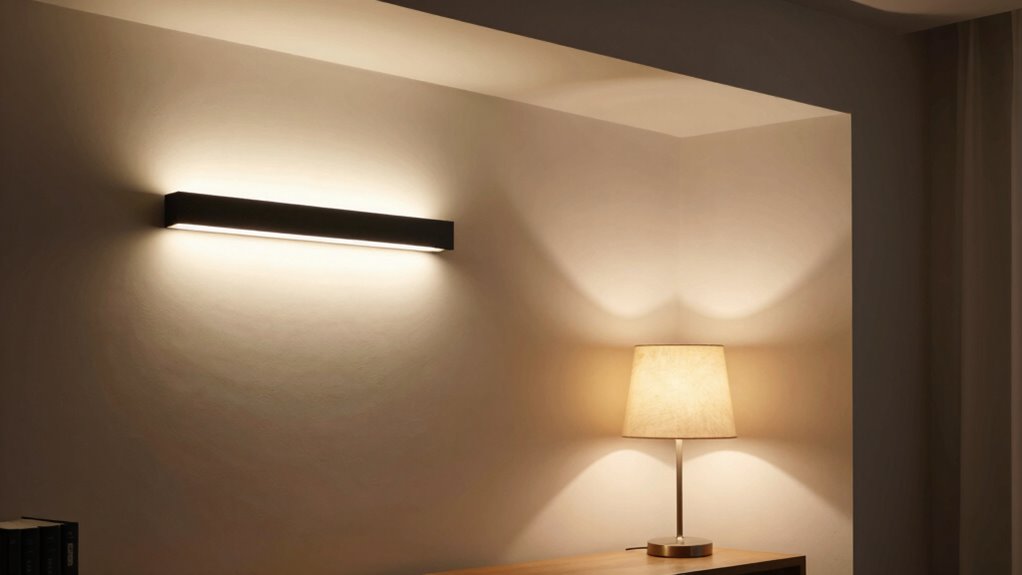
Small rooms often pose unique lighting challenges, such as uneven illumination or insufficient brightness that can make the space feel cramped or dull. To troubleshoot, start by adjusting the color temperature; warmer tones create coziness, while cooler tones brighten the space. Next, check bulb lifespan—old bulbs may flicker or dim, so replacing them guarantees consistent light. Here are some tips:
- Layer your lighting to avoid dark corners and shadows.
- Use dimmers for better control over brightness levels.
- Replace old bulbs with new ones of the right color temperature.
- Inspect fixtures for uneven light distribution or damage.
Addressing these issues keeps your small room well-lit, inviting, and functional.
Frequently Asked Questions
How Can I Control Multiple Light Sources Effectively?
You can control multiple light sources effectively by using dimmers or smart lighting systems, which let you adjust brightness levels easily. Incorporate ambient glow for a cozy atmosphere and task illumination for specific activities like reading or working. Group lights into zones, so you can turn on or off different areas as needed. This approach helps you create the perfect ambiance while saving energy and enhancing functionality.
What Color Temperatures Work Best in Small Rooms?
Think of your small room as a canvas; choosing the right color temperature is like selecting the perfect paint shades. Warm white (around 2700K-3000K) creates cozy, inviting spaces, ideal for relaxation and mood enhancement. Cooler temperatures (4000K-5000K) energize and brighten, perfect for tasks. Aim for harmony by matching your lighting temperature to your room’s purpose, fostering a balanced ambiance that feels harmonious and comfortable.
How Do I Prevent Glare From Layered Lighting?
To prevent glare from layered lighting, you should use diffuse fixtures that soften the light, reducing harsh shadows and glare. Position fixtures carefully, avoiding direct lines of sight into bulbs or reflective surfaces. Incorporate dimmers to control brightness levels, and consider wall-mounted or recessed lighting to minimize direct glare. These strategies promote glare reduction, creating a comfortable, evenly lit space without the discomfort of overly bright or harsh lighting.
Can Smart Lighting Enhance Small Room Ambiance?
Smart lighting can definitely enhance your small room’s ambiance by providing customizable options for ambient glow and mood lighting. You can easily adjust brightness and color temperature to create a cozy or lively atmosphere, depending on your mood or activity. With smart controls, you don’t need to manually change bulbs or fixtures, making it simple to set the perfect lighting scene for relaxing, entertaining, or working in your space.
What Are Budget-Friendly Lighting Solutions for Small Spaces?
Imagine your small space filled with warm, inviting glow—budget-friendly lighting solutions make this possible. You can use decorative fixtures like string lights or DIY lamps to add charm without breaking the bank. Incorporate ambient lighting, such as inexpensive LED bulbs or clip-on lamps, to soften shadows and create cozy atmospheres. These simple, cost-effective choices transform your room into a welcoming haven while keeping your wallet happy.
Conclusion
By layering your lighting thoughtfully, you can transform even the smallest rooms into bright, inviting spaces. Natural light sets the foundation, while ambient, task, and accent lighting work together to create balance and depth. When you choose the right fixtures and avoid clutter, your room feels larger and more functional. Remember, good lighting isn’t just about brightness — it’s about creating a harmonious environment that welcomes you home.
Halloween Picks
halloween
As an affiliate, we earn on qualifying purchases.