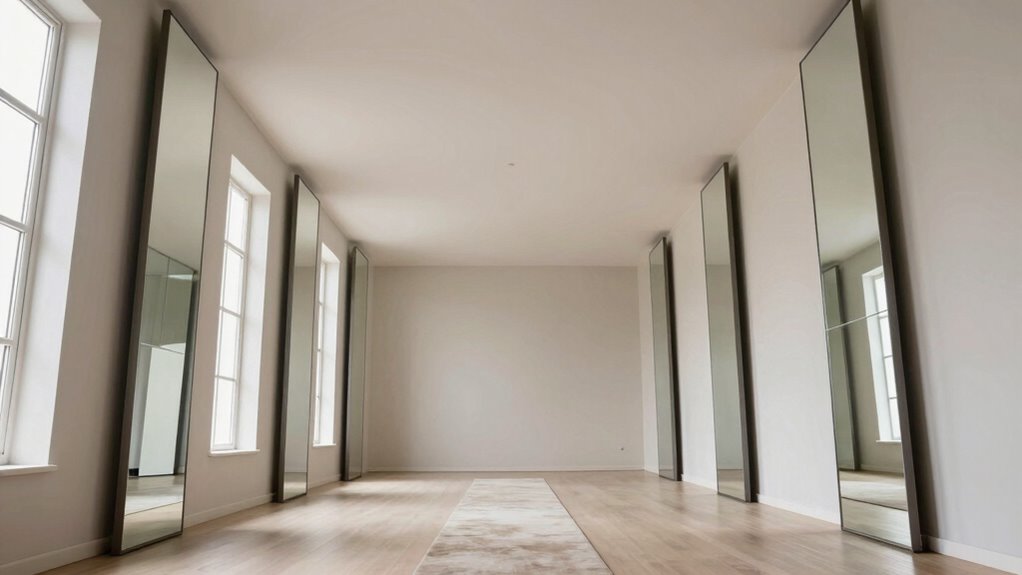

To make low-ceiling rooms feel taller, use light, bright colors on walls and ceilings to reflect more light. Incorporate vertical stripes and tall artwork or mirrors to draw the eye upward. Choose lighting fixtures that direct light upward, like sconces or uplights. Opt for tall, narrow furniture and vertical storage to emphasize height. Applying subtle ceiling textures or lighter ceiling colors also helps expand the space. Keep exploring for more ideas to maximize your room’s perceived height.
Key Takeaways
- Use light, monochromatic colors on walls and ceilings to reflect more light and create an airy feel.
- Incorporate vertical stripes, patterns, or elongated artwork to draw the eye upward.
- Install vertical lighting fixtures or upward-facing lights to enhance perceived ceiling height.
- Choose tall, narrow furniture and vertical storage solutions to emphasize vertical lines.
- Keep ceilings light-colored or paint them a lighter shade than walls to visually lift the space.
tall vertical mirrors for small rooms
As an affiliate, we earn on qualifying purchases.
As an affiliate, we earn on qualifying purchases.
Why Low Ceilings Make Rooms Feel Smaller
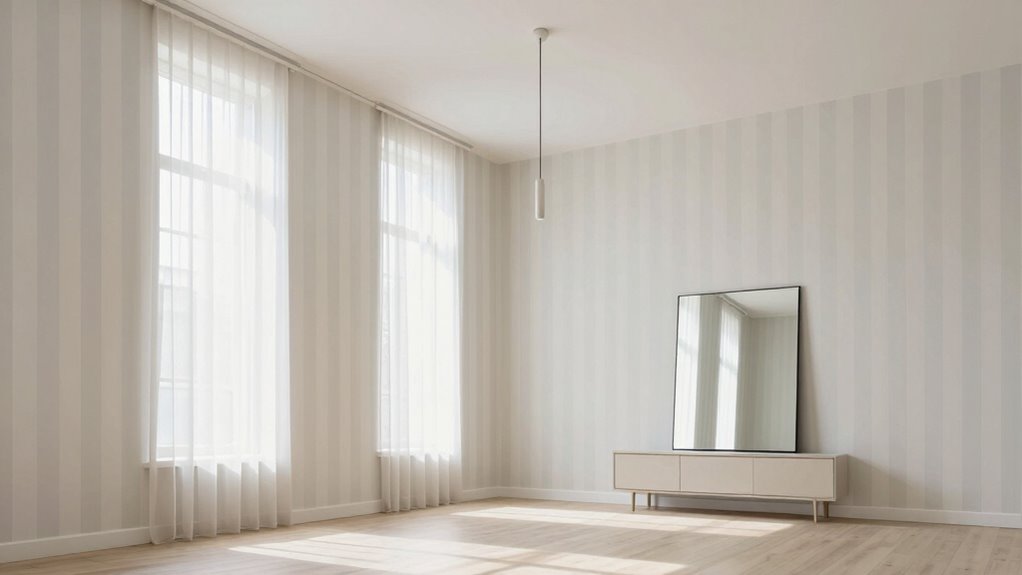
Low ceilings tend to make rooms feel cramped because they shorten the visual vertical space, creating a sense of confinement. When the ceiling height is limited, your room’s proportions become skewed, making the space seem smaller than it actually is. Low ceilings disrupt the natural balance between floor and ceiling, causing the room to feel compressed. The lack of height reduces the perception of openness, which affects how spacious the room feels overall. To combat this, you need to think about how room proportions are affected by ceiling height and find ways to visually extend the vertical dimension. Incorporating visual perception techniques can significantly enhance the sense of height and space within the room, especially those that leverage spatial illusions to trick the eye into perceiving greater height. Understanding how perception influences spatial experience can help you choose the most effective visual strategies. Additionally, using color contrast can help draw the eye upward and emphasize vertical lines, further enhancing the illusion of height. Applying lighting strategies, such as upward-facing lights or wall washing, can also create the perception of increased height and openness.
Choose Light and Bright Colors to Make Ceilings Feel Higher
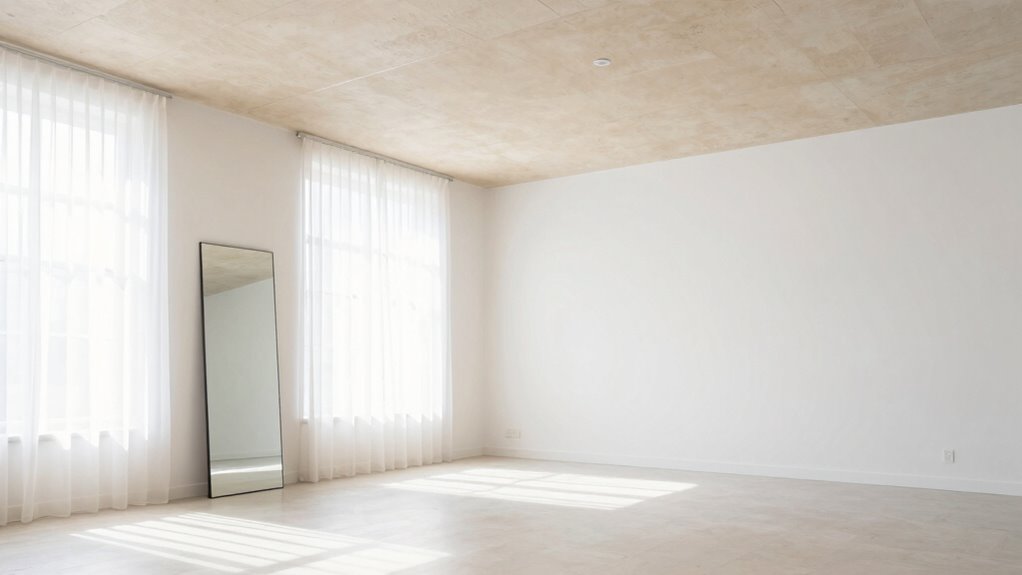
Using light and bright colors on your walls and ceilings is one of the simplest ways to make a room feel taller. Light shades, like whites, pastels, and soft neutrals, reflect more natural light, creating an airy, open atmosphere. Keep the ceiling color the same as or slightly lighter than the walls to eliminate stark color contrast that can emphasize low ceilings. Avoid dark or bold hues that make the ceiling seem lower. Additionally, choosing ceiling fans with sleek, light-colored blades helps maintain a seamless, upward visual flow. This subtle color coordination minimizes visual breaks, drawing attention upward and enhancing height perception. Overall, a cohesive, light color scheme is a quick and effective way to create the illusion of more space.
Use Vertical Stripes and Patterns to Add Visual Height
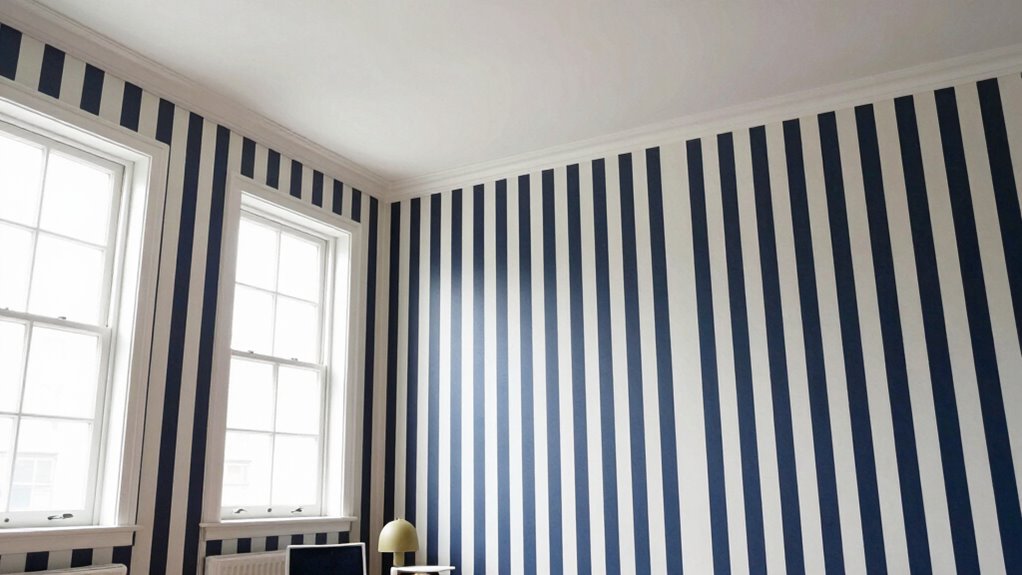
Vertical stripes can create the illusion of taller ceilings, making your space feel more open. Choosing patterns that emphasize height enhances this effect and draws the eye upward. By selecting the right stripes and patterns, you can easily add visual height to a low-ceiling room. Incorporating awareness of battery inverter generator capacity can help in designing spaces that are both functional and visually appealing.
Vertical Stripes Create Illusion
When you incorporate vertical stripes and patterns into your room, you can effectively create the illusion of height. Vertical stripes draw the eye upward, making your ceilings feel taller. To maximize this effect, use bold color contrast in your stripes, which enhances the vertical line and adds depth. Avoid horizontal patterns, as they tend to shorten the space and make ceilings seem lower. Instead, choose wallpapers or painted stripes that run from floor to ceiling to emphasize height. You can also play with varying stripe widths—narrower lines tend to elongate the room more. Keep the lines straight and continuous to maintain the illusion. Overall, vertical stripes are a simple yet powerful way to visually lift your low ceilings and add spaciousness.
Pattern Choices Enhance Height
Choosing the right patterns can considerably boost the sense of height in a room. Vertical stripes are a classic choice, creating a visual lift by drawing the eye upward. To add depth, consider pattern contrast; mixing bold stripes with subtle patterns enhances the perception of height. Fabric textures also play a role—smooth, sleek fabrics reflect light and make ceilings seem higher, while textured patterns add visual interest without overwhelming the space. Here are some tips:
- Use vertical stripes in wallpaper or upholstery to create a continuous upward flow.
- Incorporate contrasting patterns, like geometric designs paired with solid colors, for added dimension.
- Select fabrics with different textures to add visual complexity without cluttering the space.
These pattern choices work together to make your room feel taller and more open.
Add Lighting That Draws the Eye Upward
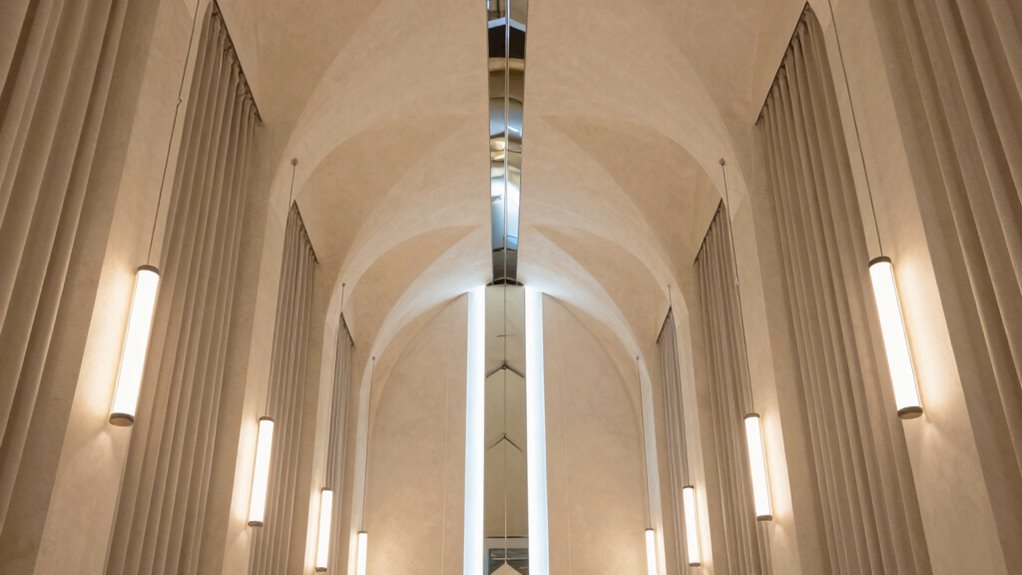
Using vertical lighting fixtures naturally guides your eyes upward, making the ceiling feel higher. Incorporate upward light effects, like wall sconces or uplights, to create a sense of spaciousness. These lighting choices draw attention vertically and enhance the room’s overall height perception. Additionally, selecting fixtures that complement your kitchen gear can further emphasize the space’s openness. Implementing strategic lighting can also positively influence other aspects of your space, such as visual perception and overall ambiance. To maximize the effect, consider the lighting design principles that focus on balance and contrast, which can further enhance the perception of height and space. Incorporating different lighting types can add depth and dimension, making the room appear larger and more inviting. Understanding hive health and the importance of drone bees can inspire innovative ways to think about structure and support, much like designing a room with visual height.
Use Vertical Lighting Fixtures
Vertical lighting fixtures are a simple yet effective way to make a low-ceiling room feel taller. They draw the eye upward, emphasizing height. Consider installing pendant lights that hang close to the ceiling but extend downward, creating a visual line that elongates the space. Ceiling fans with slim, vertical profiles can also add height without cluttering the room. To maximize effect:
- Choose pendant lights with long cords that hang near the ceiling but extend downward.
- Use vertical fixtures that emphasize height, like slim sconces or tower-style lamps.
- Avoid bulky ceiling-mounted fixtures that draw attention to the ceiling line rather than elongating the height.
- Incorporating indoor air quality considerations, such as good ventilation, can help maintain a comfortable environment in rooms with enhanced lighting features. Additionally, choosing energy-efficient lighting can reduce energy consumption, making your space both stylish and eco-friendly.
These fixtures help direct focus upward, making your space feel more open and airy. Additionally, selecting lighting with appropriate wattage ensures the room remains well-lit without overpowering the ceiling height. Incorporating lighting placement strategies can further enhance the sense of vertical space and openness in your room.
Incorporate Upward Light Effects
To make a low ceiling feel higher, incorporate lighting that directs the eye upward. Using upward illumination creates an ambient glow that draws attention to the ceiling’s height. Wall sconces placed strategically can cast light upward, emphasizing vertical space without overwhelming the room. Consider installing hidden LED strips along crown moldings or behind architectural features to produce a soft, upward glow. This subtle lighting effect guides the eye upward naturally, making the ceiling appear taller. Avoid harsh downlights that focus solely on the floor or furniture. Instead, use gentle, indirect lighting to enhance the room’s vertical dimensions. By adding upward illumination, you create a sense of openness and height, making your low-ceiling room feel more spacious and inviting.
Pick Furniture and Decor That Enhance Vertical Space
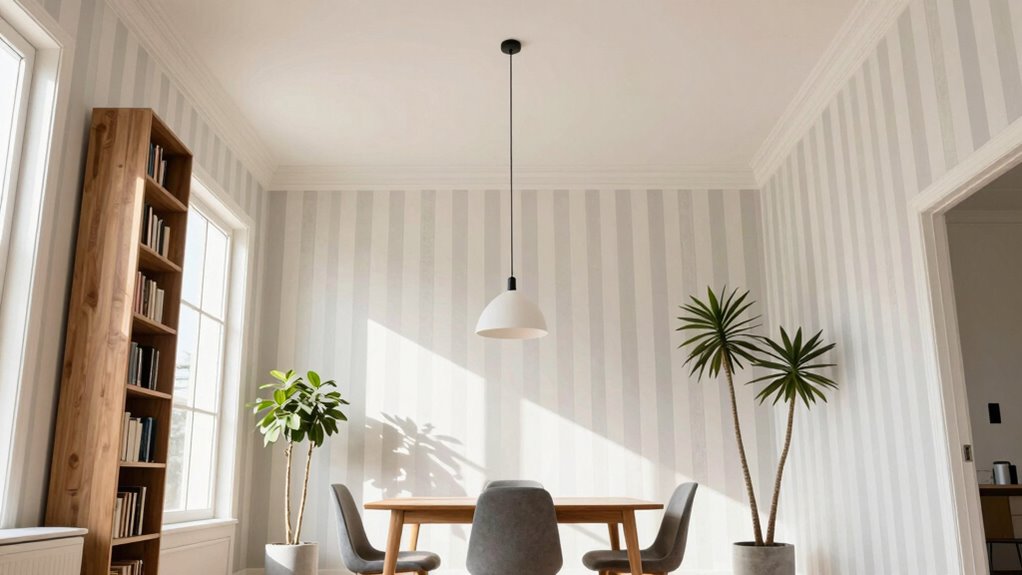
Choosing the right furniture and decor can make a significant difference in making a low-ceiling room feel taller. Focus on furniture placement to draw the eye upward, emphasizing vertical lines. Select tall, slim pieces like narrow bookcases or floor lamps to elongate the space. When choosing decorative accessories, opt for vertical art or elongated mirrors that reflect upward movement. Here are three tips:
- Position furniture away from walls to create an open, airy feel.
- Use tall, narrow shelving units or cabinets to enhance height.
- Incorporate vertical wall decor, such as elongated artwork or vertical stripes, to guide the eye upward. Additionally, understanding design principles can help you choose the most effective elements for creating a sense of height.
These strategies help make your room feel more spacious and less confined, maximizing the visual height of your low-ceiling space.
Use Vertical Storage to Keep Clutter Out of Sight
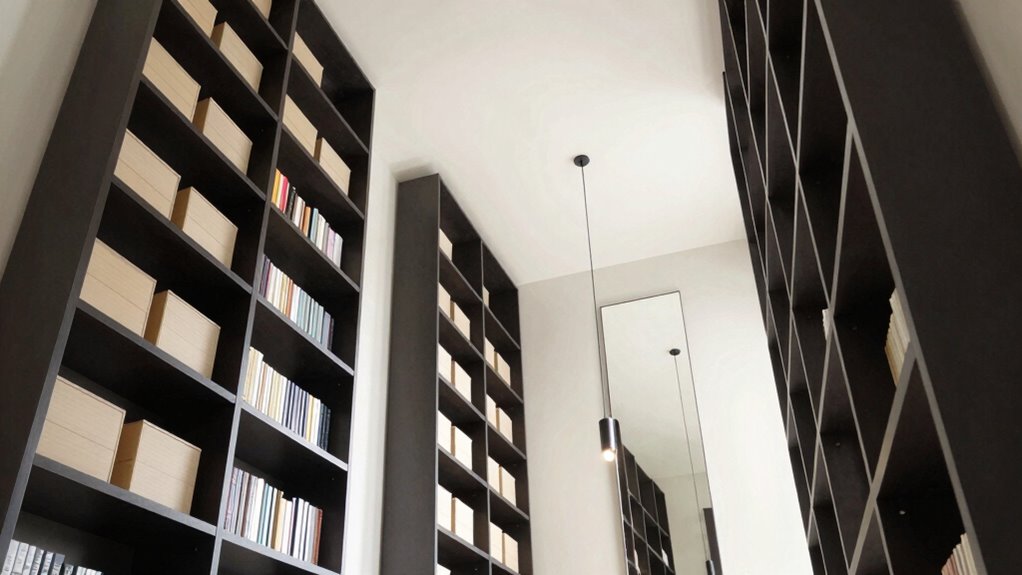
Maximizing storage space upward can dramatically reduce clutter and make your low-ceiling room feel more open. Vertical storage solutions help keep belongings out of sight, creating a cleaner, more spacious atmosphere. Use tall shelves, wall-mounted cabinets, or stacked storage units to utilize every inch of wall space. This region-specific approach can add a unique touch to your decor while also enhancing functionality. Overhead storage bins can free up floor space, and hanging organizers optimize vertical storage space. Implementing these ideas makes your room feel taller and more organized. Additionally, incorporating emotional needs storage solutions can create a sense of security and peace of mind in your space.
Hang Artwork and Mirrors to Create the Illusion of Height
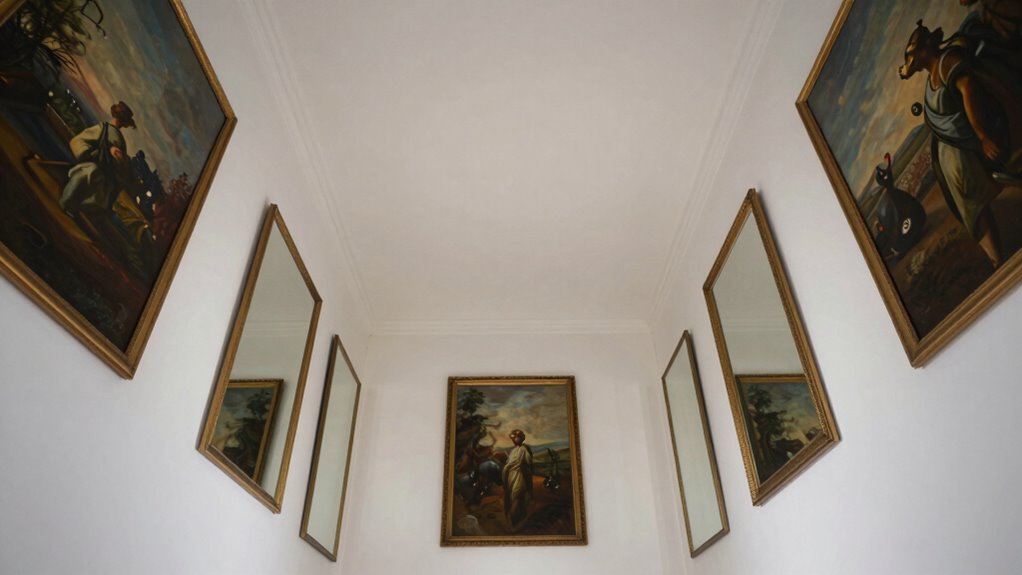
Hanging artwork and mirrors strategically can instantly make a low-ceiling room feel taller and more open. Wall-mounted art placed higher on the wall draws the eye upward, creating an illusion of height. Floor-to-ceiling mirrors reflect light and space, making the room seem larger. To maximize this effect, consider these tips:
Hanging art higher and using floor-to-ceiling mirrors instantly makes low-ceiling rooms feel taller and more spacious.
- Position wall-mounted art at eye level or slightly above to elongate the walls.
- Use large, continuous mirrors from floor to ceiling to create a seamless vertical line.
- Hang artwork and mirrors close to the ceiling to emphasize height and draw attention upward.
- Choosing the right type of decorative elements can further enhance the perception of space and height. Incorporating visual tricks like contrasting colors or patterns can also help emphasize vertical lines and make the room feel more expansive. Additionally, understanding exponential growth in visual perception can help you select the most impactful placement strategies. Recognizing how perceptual cues influence our sense of space can further improve your decorating decisions. Being aware of these visual perception principles allows you to create a more balanced and spacious atmosphere.
These choices help redirect focus upward, making your space appear more expansive and airy. Proper placement of artwork and mirrors is a simple yet effective way to enhance the perceived height of your room.
Apply Ceiling and Wall Treatments to Open Up the Room
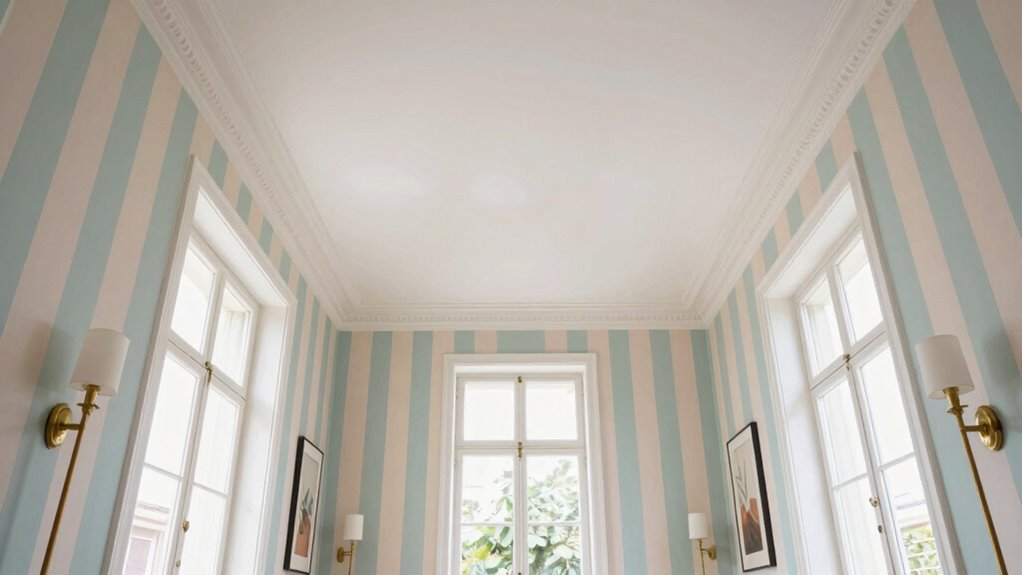
Building on the idea of visual tricks with artwork and mirrors, you can further enhance the sense of space by applying thoughtful ceiling and wall treatments. Choosing a subtle ceiling texture, like a smooth or lightly textured finish, helps reflect light and creates a seamless look that makes the ceiling appear higher. Wall murals, especially those with vertical or elongated patterns, draw the eye upward, emphasizing height. Opt for light, airy colors and simple designs to avoid overwhelming the room. You can also consider painting the ceiling a slightly lighter shade than the walls, which visually lifts the ceiling line. These treatments work together to open up your space, making it feel taller and more expansive without major renovations.
Consider Structural Changes to Make Your Space Feel Taller
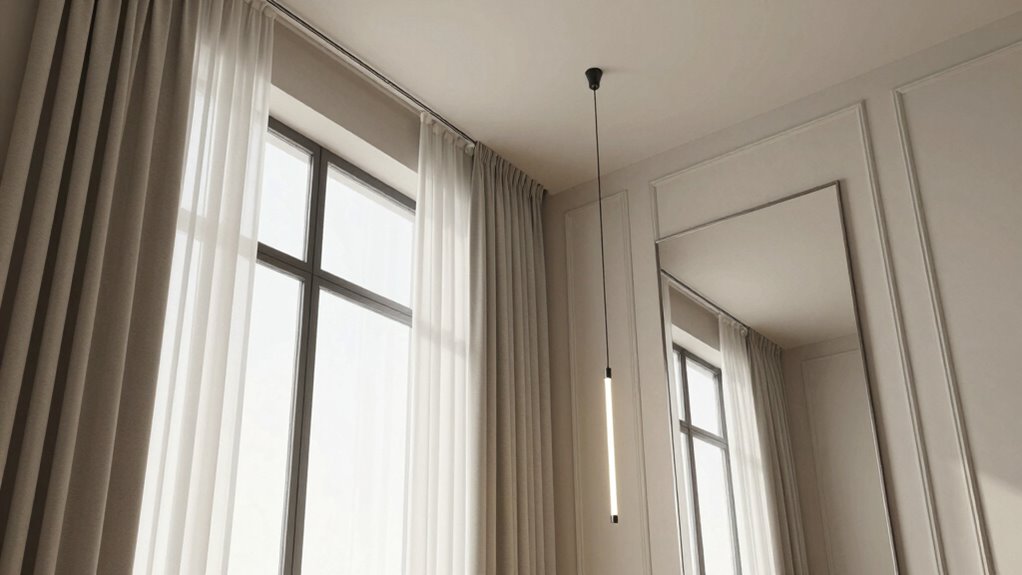
If you want to make a low-ceiling room feel taller, structural modifications can have a significant impact. One effective approach is ceiling expansion, which involves raising or altering the existing ceiling height for an open, airy feel. Additionally, consider removing or relocating bulkheads and dropped ceilings that shorten the perceived height. You can also add vertical elements, like tall built-in shelves or elongated curtains, to draw the eye upward. Here are some ideas:
- Ceiling expansion: Rebuild or modify your ceiling to increase height, creating an illusion of space.
- Remove obstructions: Eliminate dropped ceilings or bulky fixtures that cut into vertical space.
- Vertical accents: Incorporate tall furniture and elongated window treatments to emphasize height.
Frequently Asked Questions
Can Ceiling Fans Make a Room Feel Taller?
Ceiling fans can help make a room feel taller if you choose the right design. Opt for fans with downrods to add vertical emphasis, and pair them with lighting tricks like bright, upward-facing lights to draw the eye upward. Additionally, painting walls in light, neutral colors enhances the sense of space and height. These strategies combined create an illusion of higher ceilings, making your room feel more open and airy.
How Do Window Treatments Influence Perceived Ceiling Height?
Window treatments influence perceived ceiling height through color illusions and mirror placements. Light-colored curtains or blinds create an airy feel, making ceilings seem higher. Vertical blinds or curtains drawn upward draw your eyes upward, enhancing height. Strategically placing mirrors near windows reflects natural light and expands the room visually, further emphasizing height. These techniques work together to make your space feel taller and more open, even in rooms with low ceilings.
Are There Specific Flooring Choices That Enhance Vertical Space?
Think of your floor as a runway that guides your eye upward. Opt for flooring with vertical patterns or planks that run lengthwise to elongate the space. Light-colored flooring with subtle color contrast helps reflect light and adds a sense of openness. Avoid busy patterns that can clutter the floor and shrink the room’s perceived height. These choices work together to create a seamless flow that visually lifts your ceiling.
What Role Do Door Styles Play in Creating Height Illusions?
Door styles play a vital role in creating height illusions by choosing door frame styles that emphasize vertical lines, like tall, narrow frames. Incorporate molding designs that extend upward, drawing the eye upward and making the ceiling appear higher. You can also opt for doors with elongated panels or minimalistic trim, which help to accentuate vertical space. These choices subtly improve room proportions and make your low-ceiling room feel more spacious.
How Does Room Proportion Affect Height Perception?
Room proportion greatly influences how tall it appears. When your space maintains good spatial harmony and visual balance, it tricks the eye into perceiving greater height. Keep proportions in check by choosing furniture that’s scaled appropriately and avoiding overcrowding, which can make ceilings seem lower. Vertical elements like tall artwork or narrow shelving also enhance the sense of height, helping your room feel more open and airy.
Conclusion
Think of your room as a canvas, and each design choice as a brushstroke reaching for the sky. By elevating your space visually, you’re not just expanding the ceiling — you’re opening a portal to endless possibilities. When you draw the eye upward, you’re inviting the room to breathe, to grow, to inspire. Embrace these tips and watch your low ceiling transform from a limit into a launchpad for your creativity.