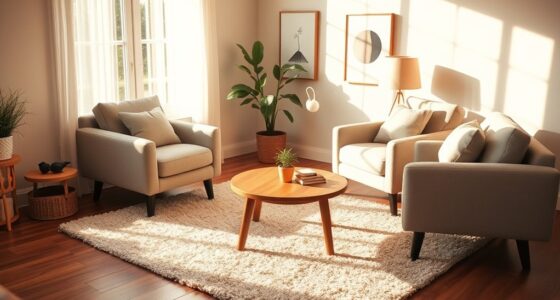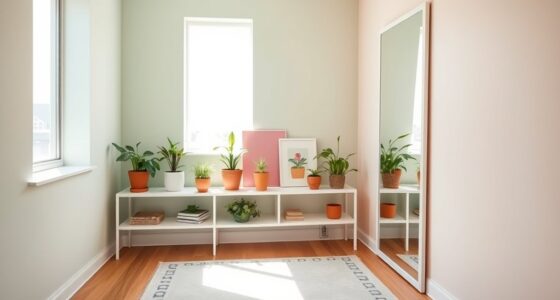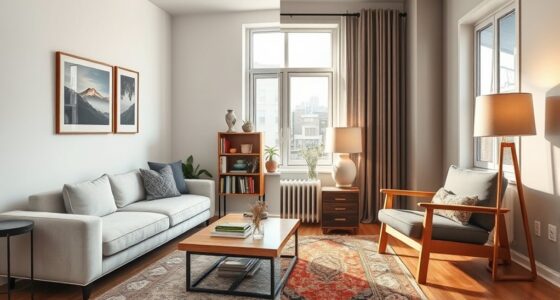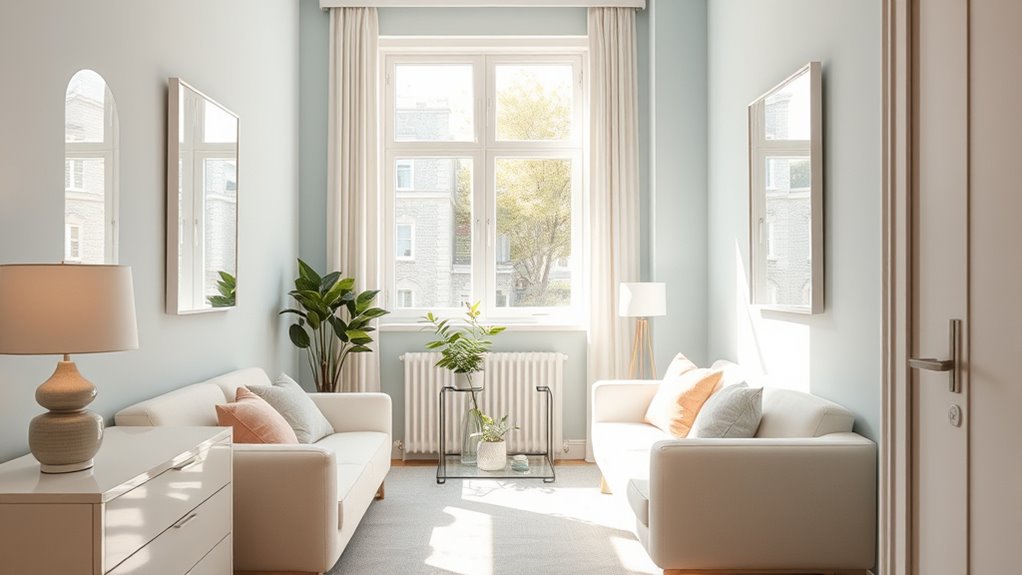

To make your tiny room feel more spacious, stick with light, neutral shades like whites, beiges, and soft grays, which reflect light and create an open feel. Layer your lighting with warm or cool tones to add depth and mood. Use an accent wall in a bold color or subtle pattern to create visual interest without overwhelming the space. Balancing these strategies guarantees your room feels larger and more inviting—exploring more tips will help you master the illusion.

Get garden gear delivered free with Prime
- Fast, free delivery on millions of items
- Prime Video, Amazon Music and more included
- Member-only deals all year
Key Takeaways
- Use light, neutral shades to reflect natural light and make small spaces appear larger.
- Incorporate layered lighting to add depth and highlight color choices.
- Create an accent wall with bold or dark hues to add visual interest without overwhelming the room.
- Choose colors based on psychology to evoke a welcoming and balanced atmosphere.
- Ensure cohesive color schemes and balanced design elements to maximize openness and style.

When it comes to small rooms, choosing the right colors can make a big difference in how spacious and inviting they feel. Light, neutral shades tend to reflect more light, creating an open and airy atmosphere. Think soft whites, warm beiges, or pale grays—these hues bounce natural light around the space, making it seem larger than it truly is. But color isn’t just about shades; lighting effects play a vital role. Incorporate layered lighting, such as wall sconces, table lamps, or even strip lighting, to enhance the room’s depth and highlight your color choices. Proper lighting can transform a simple paint scheme into a dynamic, welcoming environment. For example, warm lighting can make a neutral palette feel cozy, while cool tones combined with bright lighting can add a crisp, fresh vibe.
If you’re hesitant to go all-in on a light color, accent wall ideas are a smart way to add personality without overwhelming the space. A bold, dark hue on one wall creates visual interest and adds depth, making the room appear more expansive. For tiny rooms, opt for accent wall colors that complement the primary shade, like charcoal gray or deep navy paired with soft white or pastel accents. This technique draws the eye and adds dimension, without sacrificing the room’s openness. When choosing an accent wall, consider textures or patterns—subtle geometric designs, for example, can add depth without overpowering the space. Additionally, understanding color psychology can help you select hues that evoke desired moods and enhance the room’s ambiance.
Another effective strategy involves using accent wall ideas to break up the room visually. For small spaces, a feature wall with a different color or finish can create a focal point, diverting attention from the room’s size. Pair this with strategic lighting effects—such as a wall-mounted sconce or a spotlight—to emphasize the wall’s uniqueness. This not only adds style but also guides the eye around the room, making it feel more expansive. Keep in mind that the key is balance—don’t let the accent wall dominate the room. Instead, coordinate it with your overall color palette and lighting setup to produce a cohesive, spacious feel.
Products Worth Considering

Philips Hue Large Smart Light Tube, Black – White and Color Ambiance LED Color-Changing Light – 1 Pack

Philips Hue Bridge Pro Smart Lighting Hub
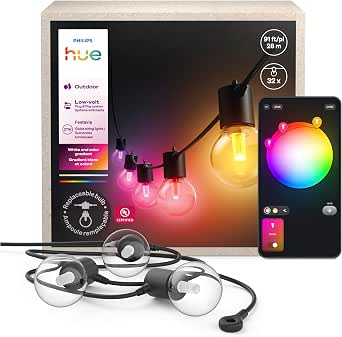
Philips Hue Festavia Globe Outdoor String Lights, 32 Bulbs, 91 ft
As an affiliate, we earn on qualifying purchases.
Frequently Asked Questions
How Can Mirrors Enhance Color Perception in Tiny Rooms?
Mirrors enhance color perception in tiny rooms through strategic mirror placement, which creates a sense of visual expansion. When you position mirrors opposite windows or light sources, they reflect natural light and vibrant colors, making the space feel larger and more lively. This reflection amplifies the room’s hues, giving the illusion of depth. By choosing the right placement, you can brighten your tiny room and make the colors pop more effectively.
What Lighting Options Best Complement Small, Colorful Spaces?
Think of your small space as a jewel box; choose lighting fixtures that highlight its colors. Opt for warm color temperature bulbs to create a cozy glow, or cool tones to make the room feel more expansive. Adjustable fixtures give you flexibility, allowing you to shift from vibrant daylight to soft evening hues. By carefully selecting the right lighting fixtures and color temperature, you’ll enhance your room’s lively charm and visual depth.
Are There Specific Color Combinations to Avoid in Small Rooms?
You should avoid dark hues and overly bright palettes in small rooms because they can make the space feel cramped and overwhelming. Instead, opt for lighter, neutral colors that open up the room and create a sense of airiness. Pair these with soft accents to add personality without cluttering the visual space. Staying away from intense contrasts helps maintain a calm, balanced atmosphere in your tiny room.
How Do Color Choices Impact Room Acoustics and Noise?
Your color choices can influence room acoustics by affecting sound absorption and reflection. Lighter, matte colors tend to absorb sound better, reducing echoes, while darker, glossy shades reflect sound more, potentially increasing noise. Additionally, color psychology plays a role—calmer hues can make noise feel less intrusive, creating a more comfortable environment. By selecting appropriate colors, you can improve sound quality and create a peaceful, balanced space.
Can Color Strategies Be Adapted for Rental or Temporary Spaces?
Sure, you can totally adapt color strategies for rental or temporary spaces. Just grab some portable paint or removable wallpaper—your best friends for quick, damage-free transformations. You’ll brighten your space without losing your deposit, and when it’s time to move, peel off and pack up. It’s like a magic trick, but for your walls. Who said temporary can’t be stylish? Not you, with these clever tricks!
Conclusion
By choosing the right colors, you can make your tiny room feel spacious and inviting. Remember, light shades can reflect more light, making the space appear larger, while bold accents add personality without overwhelming. Did you know that lighter colors can increase a room’s perceived size by up to 30%? So, pick your hues wisely, and watch your small space transform into a bright, open retreat you’ll love spending time in.