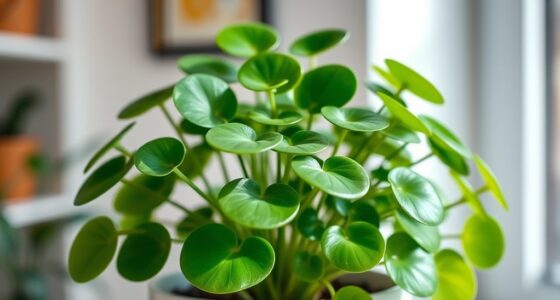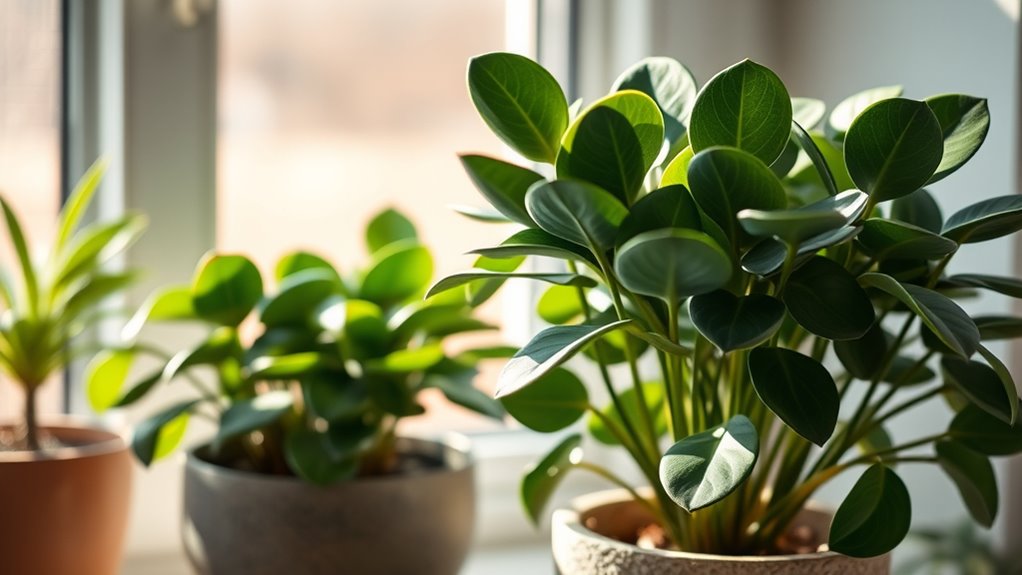

ZZ plants are drought-tolerant and thrive with infrequent watering. Wait until the top inch of soil feels dry before watering again, which is typically every 2-3 weeks in spring and summer, and less in winter. Use well-draining soil and a pot with drainage holes to prevent root rot. Place your ZZ in bright, indirect light for the best results. Keep learning more tips to keep your plant healthy and happy.
Key Takeaways
- Water the ZZ plant only when the top inch of soil is dry, roughly every 2-3 weeks in spring/summer and less in winter.
- Use well-draining soil like cactus or succulent mix to prevent water retention and root rot.
- Ensure the pot has drainage holes to allow excess water to escape and avoid overwatering.
- Place the plant in bright, indirect light to promote healthy growth and vibrant foliage.
- Adjust watering frequency based on environment, watering less in dry or warm conditions to prevent dehydration.

Wondering how to keep your ZZ plant healthy and thriving? The key lies in understanding its unique needs, especially when it comes to watering and soil. Unlike many houseplants, ZZ plants are incredibly drought-tolerant, so you don’t need to water them frequently. In fact, overwatering is one of the biggest mistakes you can make. To develop the right watering schedule, wait until the top inch of soil feels completely dry before watering again. During the growing season—spring and summer—you might water every two to three weeks, while in winter, once a month or even less might suffice. Always adjust based on your environment; if your home is particularly dry or warm, your plant may need more frequent watering. Remember, the goal isn’t to keep the soil moist but to give it just enough to prevent dehydration.
When it comes to soil requirements, ZZ plants prefer well-draining soil that prevents water from sitting around their roots. A standard cactus or succulent mix works well because it’s designed to drain quickly and reduce the risk of root rot. If you prefer to make your own soil blend, combine regular potting soil with coarse sand or perlite to improve drainage. Avoid using heavy, dense soils that retain moisture, as these can suffocate the roots and lead to rot. The soil should be loose and airy, allowing water to flow freely through it and roots to breathe. This way, you’ll foster a healthy root system that supports the plant’s resilience and low-maintenance nature. Additionally, ensuring your pot has drainage holes is essential to prevent excess water from accumulating. If your container doesn’t have drainage, you’ll need to be extra cautious with your watering schedule, as water can pool at the bottom and cause damage. Place your ZZ plant in a spot with bright, indirect light, and avoid direct sunlight, which can scorch its leaves. By paying attention to these soil and watering requirements, you’re setting your ZZ plant up for success. Its low-maintenance nature makes it an excellent choice for busy or novice plant owners, but giving it the right environment will ensure it stays vibrant and healthy. With patience and attentiveness, you’ll enjoy a thriving, drought-tolerant houseplant that adds lush greenery to your space without the fuss.
Frequently Asked Questions
How Often Should I Rotate My ZZ Plant for Even Growth?
You should rotate your ZZ plant every few weeks to promote even growth. This light rotation helps guarantee all sides receive equal exposure, preventing leaning and maintaining a balanced appearance. By regularly turning your plant, you encourage growth balance and sturdiness. Keep an eye on its position near your light source, and rotate it gently to give each side a fair share of light for healthy, symmetrical development.
Can ZZ Plants Survive in Low Humidity Environments?
Yes, ZZ plants can survive in low humidity environments, but humidity challenges might cause leaf tips to brown or curl. To help your plant thrive in your indoor climate, you can increase humidity with a pebble tray or a humidifier, or mist occasionally. Keep an eye on the plant’s condition, and adjust your care routine, ensuring your ZZ remains healthy despite the dry air.
What Are Common Pests That Target ZZ Plants?
You should watch out for common pests like spider mites, mealybugs, and scale insects that target ZZ plants. To prevent these pests, regularly inspect your plant and keep it clean, avoiding overwatering, which can attract pests. Use neem oil or insecticidal soap for pest prevention and control. Consistent care and early detection help keep your ZZ plant healthy and pest-free, ensuring it thrives in your home.
How Do I Propagate a ZZ Plant From Cuttings?
To propagate your ZZ plant from cuttings, choose healthy leaf or stem cuttings during spring or summer for best rooting. Let the cuttings dry for a day to prevent rot, then place them in well-draining soil or water. Use rooting methods like soil planting or water propagation, keeping the soil moist or water fresh. Roots typically develop within a few weeks, and once established, you can care for your new plant as usual.
Is It Safe to Keep a ZZ Plant Around Pets?
Think twice before bringing a ZZ plant into a pet-friendly home. It’s toxic plants like these that pose a danger to your furry friends. While beautiful and low-maintenance, ZZ plants can cause vomiting, diarrhea, and more if ingested by pets. To guarantee pet safety, consider alternative non-toxic houseplants. Protect your pets by choosing plants that are safe, so they can enjoy a healthy, hazard-free environment.
Conclusion
By mastering ZZ plant care, you can enjoy this resilient, drought-tolerant houseplant with minimal effort. Did you know that ZZ plants can survive up to three months without water? This astonishing statistic highlights their adaptability and low-maintenance nature, making them perfect for busy or forgetful plant owners. With just a little attention, your ZZ plant will thrive, adding lush greenery to your space effortlessly. Embrace its hardy spirit and enjoy the beauty it brings to your home.