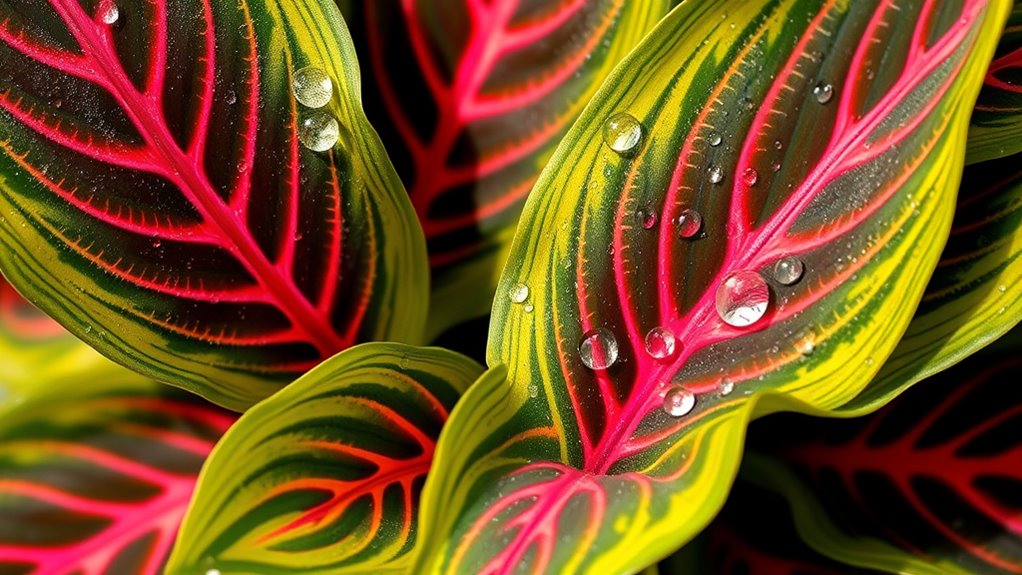

To keep your prayer plant’s maranta patterns vibrant, water it consistently when the top inch of soil feels dry, using room temperature water and ensuring thorough soaking without standing water. Maintain bright, indirect light and adequate humidity to support its leaf folding and unfurling cycle. Avoid overwatering or underwatering, as these can dull the leaves or cause wilting. By understanding and adjusting your care routine, you’ll help your plant stay healthy and its patterns striking—discover more tips as you continue.
Key Takeaways
- Maintain consistent watering to keep the soil evenly moist, avoiding both overwatering and underwatering.
- Provide bright, indirect light to enhance the plant’s vibrant leaf variegation and patterns.
- Ensure high humidity levels and proper drainage to support healthy foliage and prevent root issues.
- Observe leaf color and patterning; bright, vibrant leaves indicate good health, while dull or pale leaves suggest care adjustments.
- Adjust watering frequency seasonally, watering approximately once a week in warmer months and less in cooler periods.
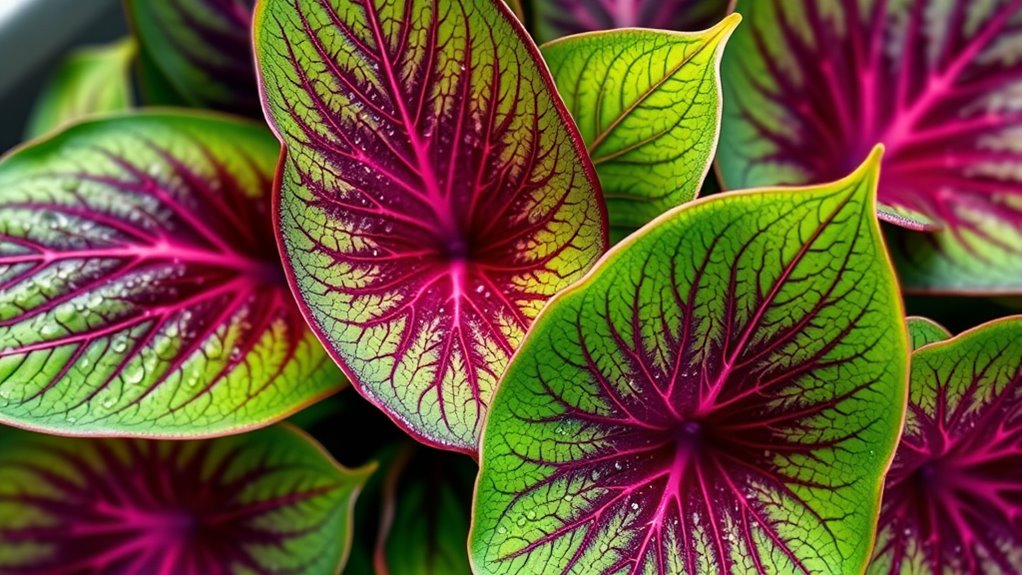
Taking care of a prayer plant is simple once you understand its needs. One of the most striking features of the Maranta leuconeura is its vibrant leaf variegation, which can include shades of green, red, and cream. To keep this patterning vivid and healthy, you need to pay attention to its watering schedule. The prayer plant’s leaves fold up at night and unfurl during the day, a movement that signals its well-being. Making sure proper watering is key to maintaining this natural rhythm and the plant’s striking foliage. Consistent care and understanding of its environmental needs help ensure the plant remains healthy and vibrant.
The first step is to understand the plant’s watering needs. Prayer plants prefer consistently moist soil but dislike sitting in water. Overwatering can lead to root rot, while underwatering causes the leaves to wilt and lose their vibrant colors. To strike the right balance, check the top inch of soil regularly. If it feels dry, it’s time to water. If it’s still damp, hold off for a few more days. During the growing season, usually spring and summer, you might need to water more frequently, perhaps once a week, while in cooler months, watering can be reduced to every two weeks.
When watering, use room temperature water to avoid shocking the roots. Water thoroughly until excess drains from the bottom of the pot, ensuring the entire root ball gets moisture. Empty the saucer afterward to prevent the plant from sitting in standing water, which could cause root problems. Consistency is vital; keeping a regular watering schedule helps the plant adapt and thrive, especially considering its sensitivity to water quality and moisture levels. Additionally, providing appropriate humidity levels can significantly enhance its health and leaf patterning.
Leaf variegation is a key indicator of the plant’s health. Bright, vibrant leaves with well-defined patterns mean your prayer plant is happy and receiving proper care. Pale or dull leaves, or a loss of variegation, can suggest overwatering, underwatering, or inadequate humidity. If you notice the leaf colors fading, revisit your watering schedule and make adjustments. Also, ensure your plant is in a location with bright, indirect light, which enhances leaf patterning without scorching the foliage.
Frequently Asked Questions
How Do I Propagate Prayer Plants Effectively?
To propagate prayer plants effectively, you should use root division. Start by carefully removing the plant from its pot and gently separating the root clumps with clean, sharp tools. Make certain each division has healthy roots and leaves. Plant the divisions in moist soil, and keep them in indirect light. Water regularly and maintain high humidity. Propagation techniques like root division give you new plants, keeping your prayer plant thriving.
What Are Common Pests That Affect Prayer Plants?
Aren’t pests frustrating when you want your prayer plant to thrive? Common pests like spider mites, mealybugs, and aphids often attack prayer plants. To prevent these pests, practice pest prevention by keeping leaves clean and avoiding overwatering. If pests appear, natural remedies like neem oil or insecticidal soap work effectively. Regular inspections help catch problems early, ensuring your prayer plant stays healthy and vibrant.
Can Prayer Plants Tolerate Low Humidity Environments?
No, prayer plants can’t tolerate low humidity environments well. They thrive in humid climates where moisture levels are high, mimicking their natural rainforest habitat. If you keep your prayer plant in a dry space, it might develop leaf browning or curling. To help, increase humidity around the plant using a humidifier, pebble trays, or misting regularly. Maintaining adequate moisture levels guarantees your prayer plant stays healthy and vibrant.
How Often Should I Fertilize My Prayer Plant?
You should fertilize your prayer plant every 4 to 6 weeks during the growing season, typically spring and summer. Use a balanced, water-soluble fertilizer to meet its nutrient requirements and promote vibrant leaf patterns. Avoid over-fertilizing, as this can cause leaf burn or root issues. During fall and winter, cut back on fertilizing since the plant’s growth slows. Stick to a consistent fertilizer schedule to keep your prayer plant healthy and lively.
What Are Signs of Overwatering in Prayer Plants?
You’ll notice overwatering symptoms in your prayer plant through leaf discoloration, such as yellowing or browning, and soggy soil that doesn’t drain well. The leaves may also become limp and soft, indicating excess moisture. If you see these signs, cut back on watering, let the soil dry out slightly, and make sure your pot has drainage holes. This helps prevent root rot and keeps your plant healthy.
Conclusion
Taking care of your prayer plant can be incredibly rewarding, especially when you see its beautiful leaves fold and unfold. Did you know that prayer plants are among the most popular houseplants, with over 10,000 varieties worldwide? By providing the right light, watering, and humidity, you guarantee your plant stays vibrant and healthy. Keep up with these simple care tips, and you’ll enjoy its stunning patterns and calming presence for years to come.