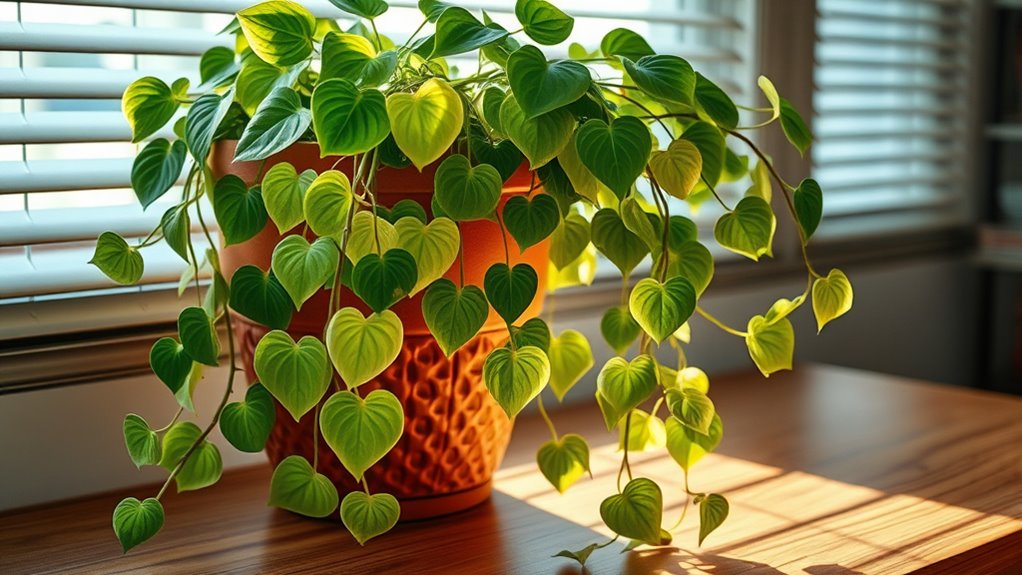

To keep your pothos thriving as lush, trailing vines, water only when the top inch of soil feels dry, and guarantee thorough watering until excess drains out. Adjust your watering schedule for the season and environment, and avoid overwatering to prevent root rot. Regular pruning keeps the vine full and tidy, removing dead leaves and controlling length. With simple care tips, you’ll enjoy vibrant, healthy vines—keep exploring to master all the secrets of pothos care.
Key Takeaways
- Water your pothos when the top inch of soil feels dry, adjusting frequency seasonally to prevent over or underwatering.
- Provide bright, indirect light to promote healthy, vibrant foliage and prevent leggy growth.
- Regularly prune to encourage bushier growth, remove yellowing leaves, and maintain a tidy, full appearance.
- Maintain proper humidity and temperature levels for optimal growth, especially in dry or cooler environments.
- Use well-draining soil and ensure thorough watering so excess drains from the pot’s bottom, avoiding root rot.
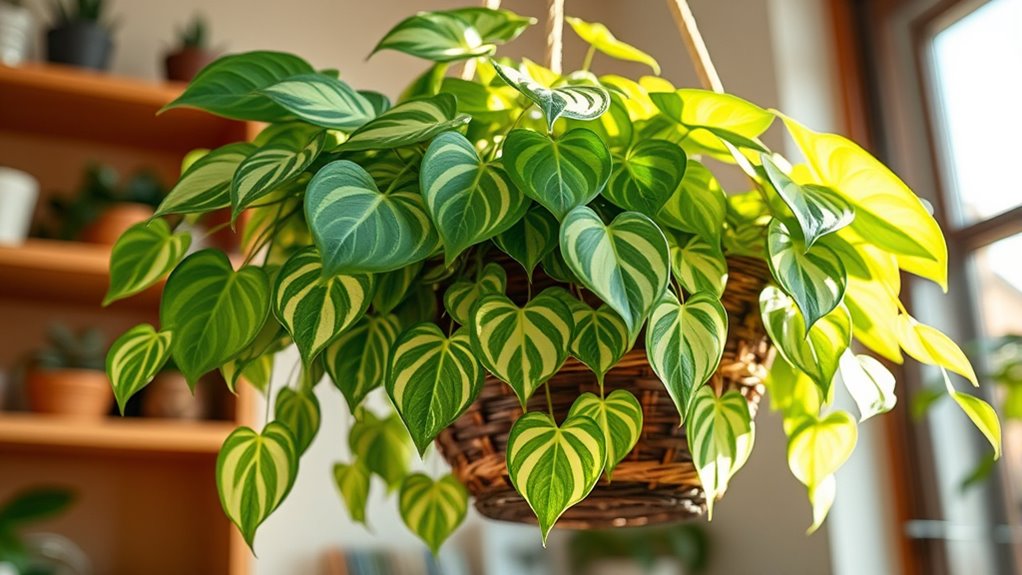
Pothos plants are a popular choice for both beginners and experienced gardeners thanks to their durability and attractive foliage. These trailing vines are forgiving and can thrive with minimal fuss, but understanding their care needs will help you keep them looking lush and vibrant. A key aspect of pothos care is establishing a proper watering schedule. You don’t want to overwater, as pothos are susceptible to root rot, nor do you want to underwater, which causes browning and leaf drop. The best approach is to check the top inch of soil; if it feels dry, it’s time to water. When you do water, do so thoroughly until excess drains from the bottom of the pot. This encourages healthy root development and prevents salt buildup. During the growing season—spring and summer—you might need to water once a week, but in cooler months, every two weeks may suffice. Always adjust based on your environment, as factors like humidity, temperature, and pot size influence watering needs.
Pruning techniques are equally important for maintaining your pothos’s health and appearance. Regular pruning encourages bushier growth and prevents the plant from becoming too leggy or overgrown. Use clean, sharp scissors or pruning shears to trim back any leggy vines or damaged leaves. Focus on cutting just above a leaf node—the point where leaves emerge from the stem—as this encourages new growth from that spot. Don’t be afraid to prune heavily if necessary; pothos can handle it and will bounce back quickly. You can also prune to control the vine’s length, especially if it’s trailing onto furniture or other areas you want to keep tidy. Remove any yellowing or dead leaves during your pruning sessions to promote better airflow and overall plant health. If you notice the plant becoming sparse or leggy, pruning can stimulate new growth and help maintain a fuller, more compact shape.
Together, a consistent watering schedule and thoughtful pruning techniques form the foundation of healthy pothos care. By paying attention to these details, you’ll ensure your trailing vines stay vibrant, lush, and full of life. Remember, pothos are resilient, so don’t stress if you make a few mistakes along the way. With a little attention to watering and pruning, you’ll enjoy a thriving plant that adds a touch of greenery to any space.
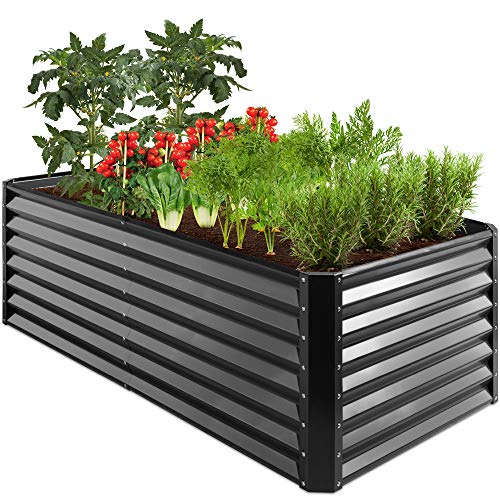
Best Choice Products 6x3x2ft Outdoor Metal Raised Garden Bed, Deep Root Box Planter for Vegetables, Flowers, Herbs, 269 Gallon Capacity, 100% Non Toxic Materials - Gray
2FT GROWING DEPTH: 24 inches of depth holds up to 269 gallons of soil-great for medium to deep...
As an affiliate, we earn on qualifying purchases.
Frequently Asked Questions
How Often Should I Repot My Pothos?
You should repot your pothos every 1-2 years or when it outgrows its current pot. Keep in mind your watering schedule; a bigger pot helps retain moisture better, reducing frequent watering. When repotting, choose a slightly larger pot with good drainage to support healthy growth. Regular repotting prevents rootbound conditions, promotes lush foliage, and guarantees your pothos stays vibrant and thriving in its environment.
Can Pothos Thrive Outdoors Year-Round?
Think of your pothos as a sun-loving friend who thrives in outdoor planting, but only if you meet its seasonal maintenance needs. It can’t thrive outdoors year-round in most climates, especially where frost occurs. During warmer months, you can enjoy its lush greenery outside, but when temperatures drop, bring it indoors. Keep an eye on the weather to guarantee your pothos stays happy and healthy, no matter the season.
What Are Common Pests Affecting Pothos?
You’ll often find pests like spider mites, mealybugs, and scale insects affecting your pothos. To prevent these pests, practice pest prevention by regularly inspecting your plant and keeping it healthy. If you notice pests, try natural remedies like wiping leaves with neem oil or soapy water. These methods can effectively combat pests without harming your plant or the environment, keeping your pothos vibrant and healthy.
How Do I Propagate Pothos Effectively?
Imagine your pothos thriving like a jungle! To propagate effectively, cut a healthy stem just below a leaf node, ensuring it has at least 2-3 leaves. Use propagation techniques like rooting in water or soil. Roots develop quickly with proper care—change water regularly or keep soil moist. Rooting methods are simple but powerful—your pothos will multiply effortlessly, turning your space into a lush paradise!
Is It Safe for Pets to Have Pothos Indoors?
You shouldn’t keep pothos indoors if you have pets, as it’s toxic to cats and dogs. For pet safety, always place pothos out of their reach or consider alternative plants. Toxicity precautions are essential—if your pet ingests any part of the plant, seek veterinary help immediately. Being mindful of pet safety helps prevent accidental poisoning and keeps your furry friends safe around houseplants.

Land Guard Galvanized Raised Garden Bed Kit, Galvanized Planter Garden Boxes Outdoor, Oval Large Metal Raised Garden Beds for Vegetables…………
Each raised metal garden bed size: 4×2×1ft ,7.14Cu
As an affiliate, we earn on qualifying purchases.
Conclusion
With the right care, your pothos will flourish like a lush jungle vine, weaving its way through your space with vibrant vigor. Think of yourself as a gentle gardener guiding this lively green cascade, nurturing its growth, and watching it thrive. Keep consistent with watering, lighting, and pruning, and your pothos will continue to spill over shelves and hang gracefully, transforming your home into a vibrant oasis. Embrace your green thumb, and enjoy the beauty of your thriving trailing vine.

PolarcoForgeco Self Watering Tall Black Planters Outdoor Set of 2, 24” Flower Pots Planters for Outdoor Plants, Modern Plastic Tall Planter for Front Porch, with Drainage Hole (Ribbed)
SELF WATERING SYSTEM: Our tall planter's innovative self-watering design uses a cotton rope to draw water directly from...
As an affiliate, we earn on qualifying purchases.

YNNICO 12 inch Large Self Watering Plant Pots, Flower Pots Planters with Multi Mesh Drainage Holes for Indoor Outdoor Garden Plants and Flowers
[EXCELLENT DRAINAGE HOLES] -Mesh drainage holes and deep planting space promotes root growth to keep plants healthy. It...
As an affiliate, we earn on qualifying purchases.