To care for your Pilea Peperomioides, keep the soil moist but not soggy by watering once a week, allowing the top inch to dry out first. Regularly prune dead or yellowing leaves and trim taller stems to promote bushier growth. guarantee the plant is in well-draining soil and monitor for pests or disease. Consistent care and attention will help your pancake plant stay healthy and vibrant—discover more tips to keep it thriving.
Key Takeaways
- Water when the top inch of soil feels dry, typically once a week during spring and summer.
- Prune dead or yellowing leaves regularly and trim taller stems to promote bushier growth.
- Ensure well-draining soil and proper drainage to prevent overwatering and root rot.
- Monitor for pests and treat with neem oil or insecticidal soap as needed.
- Adjust watering and care routines seasonally to support healthy growth and vitality.
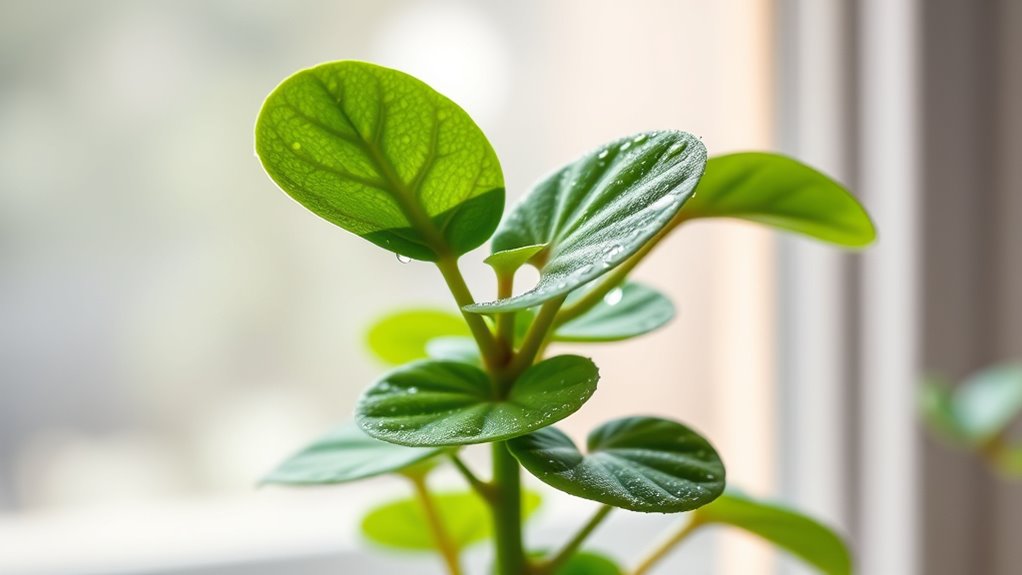
Pilea Peperomioides, often called the Chinese money plant, has become a popular choice for houseplant enthusiasts thanks to its unique, round leaves and easygoing nature. To keep your plant thriving, understanding its watering schedule is vital. Pileas prefer their soil to be moist but not soggy, so you should water them when the top inch of soil feels dry. During the growing season, which is typically spring and summer, you might find yourself watering once a week. In cooler months, reduce watering frequency to prevent overwatering, which can lead to root rot. Always make certain excess water drains well from the pot to avoid water pooling at the bottom. By paying attention to the plant’s moisture needs and adjusting your watering schedule accordingly, you’ll promote healthy growth and vibrant leaves.
Pruning techniques also play an indispensable role in maintaining the health and appearance of your Pilea Peperomioides. Regularly removing dead or yellowing leaves encourages new growth and prevents disease. You can prune your plant by snipping off these leaves with clean, sharp scissors or pruning shears, making cuts close to the stem without damaging the main plant. Additionally, if your plant starts to look leggy or overgrown, you can trim back some of the taller stems to encourage bushier growth. When pruning, don’t be afraid to cut just above a node—this promotes new side shoots and keeps your plant looking full and attractive. Always disinfect your tools before pruning to avoid introducing pathogens.
It’s also helpful to periodically check your plant for any signs of pests or disease during pruning sessions. Removing affected leaves promptly will prevent issues from spreading. If you notice any pests like spider mites or aphids, treat your plant with insecticidal soap or neem oil, and continue to monitor it regularly.
Top picks for "pilea peperomioid care"
Open Amazon search results for this keyword.
As an affiliate, we earn on qualifying purchases.
Frequently Asked Questions
Can Pilea Peperomioides Survive Outdoors Year-Round?
You can’t keep your Pilea Peperomioides outdoors year-round if you live in an area with outdoor winter or harsh climate considerations. The plant prefers warm, stable temperatures and is sensitive to cold, so outdoor winter temperatures will likely harm it. If you want it outside during warmer months, bring it indoors before temperatures drop and make sure it’s protected from frost and cold drafts.
How Do I Propagate Pilea Peperomioides From Cuttings?
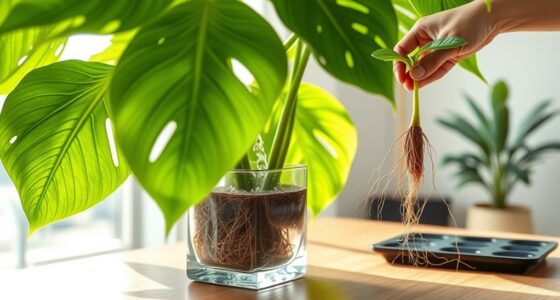
You can propagate Pilea Peperomioides from cuttings by selecting a healthy stem, making a clean cut just below a leaf node. Place the cutting in water or moist soil to encourage root development. Keep it in bright, indirect light and maintain consistent moisture. Within a few weeks, you’ll see root development, signaling it’s ready to be transplanted. This method guarantees successful cutting propagation and healthy new plants.
What Are Common Pests That Affect Pancake Plants?
You should watch out for common pests like mealybugs infestation and spider mite attacks on your pancake plant. Mealybugs appear as white, cottony spots, while spider mites cause fine webbing and speckled leaves. Regularly inspect your plant, and if you notice these pests, treat them promptly with insecticidal soap or neem oil. Staying vigilant helps keep your plant healthy and pest-free.
Does Pilea Peperomioides Need Fertilizer?
Yes, your Pilea peperomioides needs fertilizer to thrive. You should feed it with a balanced, water-soluble fertilizer every 4-6 weeks during the growing season. This helps meet its nutrient requirements and promotes healthy growth. In fall and winter, reduce fertilizer frequency or stop altogether, since the plant’s growth slows down. Regular fertilization supports vibrant leaves and overall plant health, making your pancake plant look its best.
How Can I Encourage My Plant to Produce More Pups?
To boost pup production and rejuvenate your plant, give it bright, indirect light that sparks new growth. Keep the soil consistently moist but not soggy, mimicking its natural environment. Gently separate and pot new pups when they’re a few inches tall, encouraging healthy development. Regularly fertilize with a balanced liquid feed during the growing season. This attentive care creates a lively, thriving plant, teeming with adorable new pups ready to brighten your space.
Conclusion
Taking care of your Pilea Peperomioides means understanding its needs, providing proper light, watering, and soil, and monitoring its health. It’s about creating the right environment, offering consistent attention, and enjoying the process. When you nurture your pancake plant with care, patience, and love, it rewards you with vibrant leaves and charming growth. Remember, good care leads to beauty, health, and happiness—so nurture your plant, enjoy the journey, and watch it thrive.