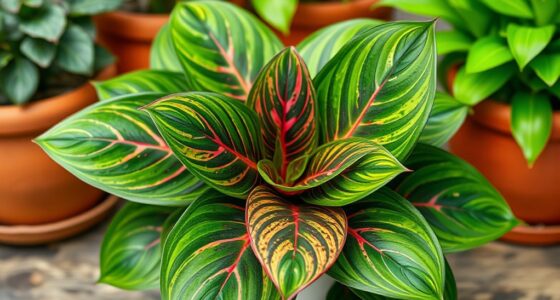
To keep peperomia varieties compact and thriving on your desk, place them where they get bright, indirect sunlight and water sparingly, letting the soil dry out between drinks. Avoid direct sun, which can scorch the leaves, and water too often, risking root rot. guarantee your plant’s soil drains well, and rotate it occasionally for even growth. Keep these tips in mind, and you’ll discover how easy it is to maintain a lush, desk-friendly peperomia.
Key Takeaways
- Choose compact Peperomia varieties like Peperomia obtusifolia or Peperomia caperata for desk spaces.
- Provide bright, indirect light and rotate regularly to maintain their compact, healthy growth.
- Water sparingly every 2-3 weeks, ensuring soil dries out between watering to prevent root rot.
- Use pots with drainage holes to avoid waterlogging and promote healthy root development.
- Keep soil slightly dry and avoid direct sunlight to sustain vibrant foliage in a desk environment.

Peperomia plants are popular for their low-maintenance nature and attractive foliage, making them ideal for both beginners and experienced gardeners. If you’re considering adding one to your desk or small space, understanding their basic needs is key to keeping them healthy and vibrant. One of the most important aspects is watering frequency. These plants prefer to be kept on the dry side, so you should water them sparingly. Typically, watering once every two to three weeks is enough, but always check the top inch of soil—if it feels dry, it’s time to hydrate. Overwatering can lead to root rot, so it’s better to err on the side of dryness. When you do water, ensure excess moisture drains away freely, preventing water from sitting at the bottom of the pot. During warmer months or if your environment is particularly dry, you might need to water a bit more frequently, but always pay attention to the soil’s moisture level rather than sticking to a strict schedule. Regularly inspecting the root zone helps prevent issues associated with waterlogged soil, promoting healthier growth.
Light requirements are just as vital for your peperomia’s health. These plants thrive in bright, indirect light, which mimics their natural habitat under the canopy of trees. If you place your peperomia on a sunny windowsill, make sure it’s shielded from direct sun, especially during the intense afternoon hours, as direct sunlight can scorch its delicate leaves. Conversely, too little light can cause the plant to become leggy and lose its compact form, so find a spot where it can receive plenty of filtered light. If natural light is limited, you can supplement with artificial grow lights, which work well to maintain the plant’s lush appearance. Keep an eye on your peperomia’s leaves; if they start to lose their vibrant color or become dull, it’s a sign they may need more light.
Maintaining the right balance of watering frequency and light requirements will help your peperomia stay healthy and attractive. These compact varieties are well-suited for desks because they don’t demand much space or fuss. Regularly monitor the soil moisture and adjust your watering schedule accordingly, especially as seasons change. Rotate your plant periodically to ensure even light exposure and prevent it from leaning toward the light source. With a little attention to these basics, your peperomia will flourish, adding a touch of greenery and elegance to your workspace. Remember, consistency is key—by providing the right amount of water and light, you’ll enjoy a thriving, beautiful plant that requires minimal effort.

Fanbulous 52'' Outdoor Ceiling Fans with Light and Remote,IP65 Wet Rated Waterproof Ceiling Fan with 6-Speed DC Motor, Farmhouse Gazebo Fan for Porch Patios Pavilion(Black)
Plug and Play Installation:Outdoor ceiling fan for gazebo (6" and 10" downrod ) can be mounted on ceilings...
As an affiliate, we earn on qualifying purchases.
Frequently Asked Questions
Can Peperomia Thrive in Low Light Conditions?
Yes, peperomia can thrive in low light conditions, but you should manage your indoor lighting carefully. It prefers bright, indirect natural sunlight but can adapt to dimmer spots. Place it near a window with filtered light or in a well-lit room to keep it healthy. Avoid direct sunlight, which can scorch its leaves. With proper lighting, your peperomia will stay vibrant and grow well, even in less illuminated spaces.
How Often Should I Repot My Peperomia?
Think of your peperomia as a growing artist needing fresh canvas. You should repot it every 1-2 years, especially when roots outgrow the current pot. Check that the soil drains well to prevent waterlogging and follow a consistent fertilizer schedule during the growing season. Repotting rejuvenates your plant’s environment, encouraging healthy growth, and guarantees it continues to thrive in your space.
Are Peperomias Safe for Pets?
Yes, peperomias are pet-safe plants and generally non-toxic for pets. You can confidently keep them around your furry friends without worrying about pet toxicity. However, it’s still a good idea to monitor your pets and prevent them from chewing on any plants, as even non-toxic plants can cause mild stomach upset if ingested in large quantities. Peperomia’s safety makes it an excellent choice for pet owners.
What’s the Best Watering Schedule for Compact Varieties?
You should water your compact peperomia when the soil moisture feels dry to the touch, typically every 1-2 weeks. Avoid overwatering by allowing the top inch of soil to dry out before watering again. This watering frequency helps prevent root rot and keeps your plant healthy. Remember, factors like room temperature and humidity can influence how often you need to water, so always check soil moisture first.
How Do I Propagate Peperomia From Cuttings?
Like a skilled alchemist transforming base metals, you can propagate peperomia through propagation methods using simple cutting techniques. To do so, select healthy stems, cut just below a leaf node, and remove lower leaves. Allow cuttings to callus for a day, then plant them in well-draining soil or water. Keep the soil moist and place in bright, indirect light. Roots should develop in a few weeks, giving you new plants to nurture.

Lorpies 52” Smart Ceiling Fan with LED Lights Remote,Quiet DC Motor,Voice Control via Alexa Google WIFI Phone,Outdoor Indoor Modern Ceiling Fans,Dimmable,for Bedroom Patio Porch,Gold and White Black
【Smart Voice/Phone/Remote】Using App to control the Lorpies ceiling fans with lights from anywhere. With an easy voice command...
As an affiliate, we earn on qualifying purchases.
Conclusion
With the right care, your peperomia can thrive on your desk, adding a touch of green to your workspace. But remember, these compact beauties hold secrets—hidden spots where new leaves might emerge or unexpected blooms could appear. Keep a close eye, and you’ll uncover surprises that keep your plant vibrant and your day a little brighter. Are you ready to discover what your peperomia has in store? The next moment could reveal its most stunning secret yet.

Amico Ceiling Fans with Lights, 42 inch Low Profile Ceiling fan with Light and Remote Control, Flush Mount, Reversible, 3CCT, Dimmable, Noiseless, Black Ceiling Fan for Bedroom, Indoor/Outdoor Use
Ceiling Fan with Light: Decorate your home with Amico ceiling fan! While bringing you coolness and comfort, it...
As an affiliate, we earn on qualifying purchases.

Sofucor 84 Inch Smart Ceiling Fan with Light, 8 Aluminum Blades Outdoor Black Ceiling Fan, Work with App/Alexa/Google, 6-Speed Reversible DC Motor for Industrial Large Garage Living Room Patio
Voice & App & Remote Control: Sofucor smart ceiling fan with light can be controlled in 3 ways....
As an affiliate, we earn on qualifying purchases.